Alexandra Jurecko, Montreal, Canada, SSH Blog Correspondent
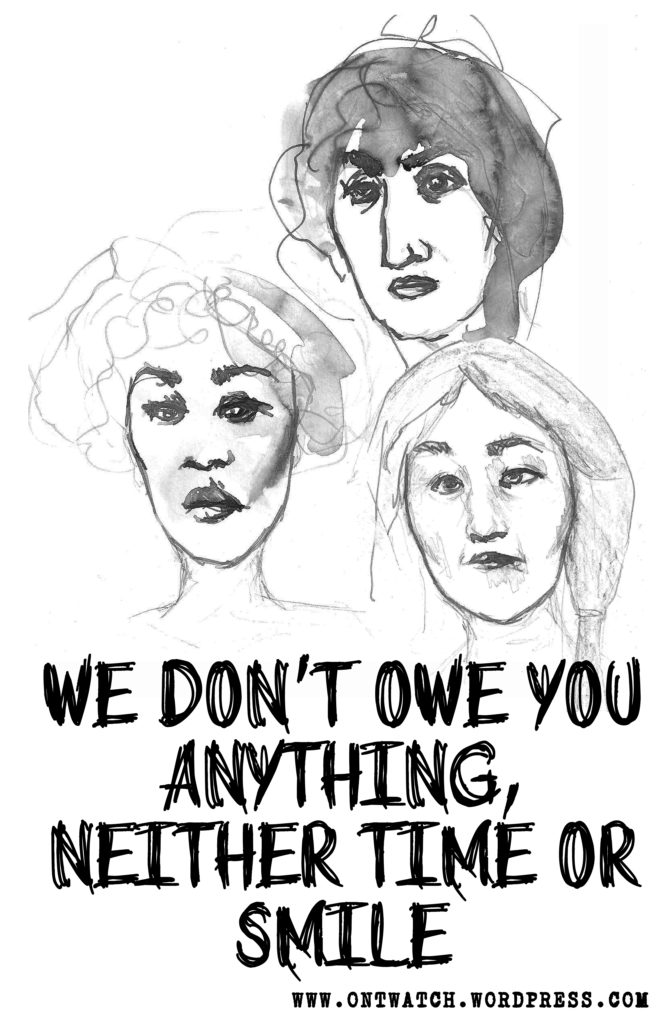
Montreal is often praised for its efforts in promoting women’s safety in the city’s public spaces, and examples of such programmes include the creation of glass-walled metro exits for greater visibility, or the between stops drop off-services provided to women travelling on city buses at night. While Montreal has taken steps to increase the safety and mobility of women, this does not mean that gender-based harassment is a thing of the past. Not even close.
Sexual assault, cat calling, groping, sexist slurs, and all the other forms of gender-based harassment are still a daily fare for many women, members of the LGBTQ community and even men across the city. As accusations of violent sexual assaults frequently find their way into the local news, experiences of street harassment or non-violent assault are often only shared on social media.
During this year’s International Anti-Street Harassment Week, Women in Cities International in partnership with Lucie Pagès and Noémie Bourbannais, took to the streets to raise awareness for street harassment issues in Montreal. In the resulting video, many of those interviewed shared their personal stories of street harassment, describing their experiences as “uncomfortable”, “demeaning” and even “threatening” at times.
After this year’s Osheaga festival, a well-known music and arts event held every summer in Montreal, a concert-goer took to social media to share her experience of sexual assault and to criticize the festival staff for their lack of support: “Getting drugged at a festival against your will and without your knowledge, with the premise of potentially taking advantage of your vulnerability is NO JOKE, and should never be brushed off as it is a serious security concern and a violation of someone’s body”.
Earlier this year, after recording an ever-increasing number of sexual harassment complaints on public transport, Montreal police have launched a campaign calling on transit users to report all such incidents to the police. According to a report published by the Montreal public transport agency, Société de transport de Montréal, 30 accounts of sexual touching and 35 complaints of exhibitionism have been reported by metro users in 2015. However, reading through the hundreds of entries on Montreal HollaBack, a blog mapping accounts of street harassment across the city, it becomes painfully clear that this is just the tip of the iceberg.
As numerous as the stories of sexual assault are, as great are also the efforts of those who work to end gender-based harassment in the city. Non-profit networks such as Women in Cities International with the support of local activist groups lead the way in raising awareness for sexual violence issues in Montreal. As Kathryn Travers from Women in Cities International says, “Once you open your eyes to this, you can’t close them again”.
In the following weeks, I would like to take this opportunity to talk about street harassment in Montreal by sharing the stories of Montrealers who have experienced gender-based assaults and who are speaking out against it.
Alexandra is a freelance writer and recent graduate of Heidelberg University in Germany, where she earned a BA in South Asian Studies and English Literature. Having moved across the pond to live and work in Montreal, she now focuses on refreshing her French skills while volunteering her time to various community-outreach programs. You can follow her on twitter @alexjurecko.

 Today marks the start of Freshers’ Week here in the UK. Over 400,000 undergraduates begin their first week of their first term of their first year at university. A longstanding institution, ‘Freshers’ Week’ – or ‘Welcome Week’, to give it it’s formal name – is fun, flirty and fabulous. A lot of planning goes into making it so and this year, more so than any other, a lot of effort has also gone into ensuring students’ sexual safety.
 Zoe Biel, Minnesota, USA
 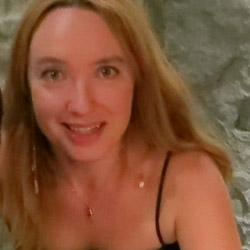 Alys was born and raised in France, lived for a time in Denmark and has lived in Spain for the past seven years. She likes researching, analyzing and writing about Women’s Rights, gender bias, and intersectionalism with a special focus on sexual violence, rape, rape culture, the impact of street harassment and how the media deals with these issues. She is currently working on a new project focused on how some media participate in the revictimization of victims. The objective will be to offer an alternative by rewriting the incriminated articles. She follows the work and activities of various organisations, especially
 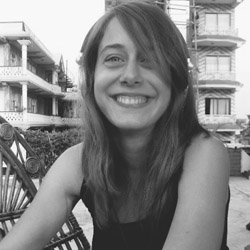 lexandra is a freelance writer and recent graduate of Heidelberg University in Germany, where she earned a BA in South Asian Studies and English Literature. During her time at university, Alexandra started her research on the role of women’s activism in post-colonial India. Inspired by this work, she’s committed to advancing the conversation around gender-based discrimination and sexual harassment across all societies, starting with her new home in Canada. Having moved across the pond to live and work in Montreal, she now focuses on refreshing her French skills while volunteering her time to various community-outreach programs. Here, she also hopes to pursue a degree in visual journalism, so she can tell her stories in colour. Alexandra drinks a lot of coffee, listens to a lot of podcasts and loves the great outdoors. You can follow her on twitter
 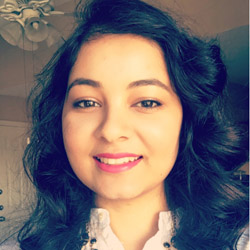 Suchita was raised in western India by loving and supportive parents who helped her and her sister to grow into strong, independent and career-oriented women. She’s a registered general practitioner in India and is currently preparing to obtain medical residency in the United States. She is passionate about women’s rights especially because she has had firsthand experiences of harassment and sexist behavior at public spaces, school and work. She believes that in order for women to enjoy equal rights and opportunities, the society needs to recognize that it’s a problem first. In her spare time, Suchita loves playing scrabble, hiking in woods and baking vegan double chocolate chip cookies.
 Sequoya is a Native American and Italian woman from Chicago who fell in love with New Orleans. She’s currently a Sociology Major at Loyola University New Orleans and supports her higher education habit by slinging drinks to the masses. She aspires to attain a PhD and write a best seller. She currently operates a
 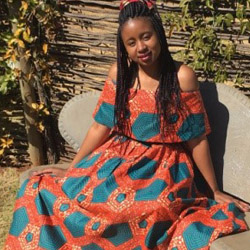 Nyasha is the public awareness coordinator at the Nisaa Institute for Women’s Development in Johannesburg, South Africa, where the main goal is counselling and sheltering survivors of domestic abuse. In 2013 she facilitated a book titled; “Rising Up, Moving On: Women writing our lives,’ written by survivors of domestic violence and again facilitated a book written by young adolescent South African girls in June 2016 titled “We are those girls: writing our stories.” Both books are available to download for free from the website
 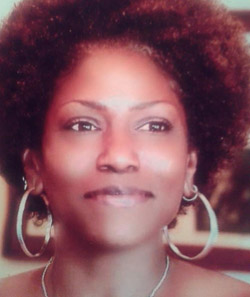 Shawn Ray is an avid traveler and freelance writer/photojournalist. Also a TEFL instructor, Shawn has visited over 70 countries and lived for a year or more in several foreign communities. In 2015, Shawn followed the migration of Syrian asylum seekers from Turkey through the Netherlands. A member of
  UNmuted Productions is a small multi-disciplinary production company founded by Ness Lyons and April Hughes in March 2016 to make punchy work about legal and social issues affecting women and young people. it’s debut short film, ‘I Smile Politely’, about street harassment, is being screened in competition at the prestigious international Encounters Short Film & Animation Festival on the 23rd September 2016. Ness wrote ‘I Smile Politely’, which is performed by April, after her young daughter experienced street harassment. Ness and April wish to encourage women and girls to speak up about all forms of sexual harassment and discrimination. Follow them on Twitter: @
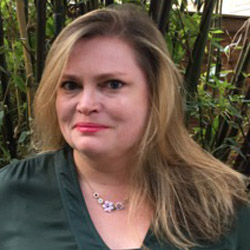 Ness Lyons is a playwright, filmmaker and spoken word poet. She runs UNmuted Productions, is a member of Soho Theatre Writers’ Lab and is currently developing a script with an award-winning production company. Ness’s plays have been performed at The Criterion Theatre and various Off-West End theatres, and her spoken word poetry’s been performed at The Southbank Centre as part of Women of the World Festival and at a cross-arts event hosted by filmmakers Shorts on Tap and the charity English PEN. Ness will be performing her new spoken word piece at the enat a cros. Her writing’s been published on The Pool website and as part of an online anthology of monologues. A former employment & discrimination lawyer, Ness also works as a freelance Legal Consultant and Storyline Creator for the LLB Legal Practice degree at City Law School, University of London. Follow her work at:
  April Hughes studied at East 15 School for Acting. TV Credits include 3 series of Dixi for Kindle Entertainment and CBBC. Theatre credits include ‘Girls Like That’ by Synergy Theatre and ‘Freak’ by Anna Jordan, for which April won The Stage Award for Acting Excellence. April is currently playing Sandra in the West End’s ‘The Play That goes Wrong’. Follow her on Twitter: @