Meet our newest blog correspondents! They will write monthly posts from May to August 2016.
Shahida Arabi, NY, USA
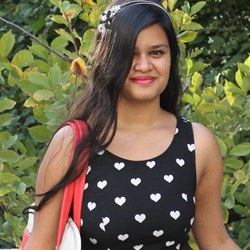 Shahida is a summa cum laude graduate of Columbia University graduate school and is the author of four books, including The Smart Girl’s Guide to Self-Care and Becoming the Narcissist’s Nightmare, a #1 Amazon Best Seller. As a passionate advocate for survivors of abuse, sexual assault and trauma, her writing has been featured on sites like The National Domestic Violence Hotline website, Elephant Journal, Dollhouse Magazine, Thought Catalog, and the Feministing Community blog. She studied English Literature and Psychology at NYU, where she graduated summa cum laude and was President of its National Organization for Women (NOW) chapter. Her blog, Self-Care Haven, has over 1.8 million views and has been shared worldwide in all 196 countries. Her work on emotional and psychological abuse has been shared by numerous clinical psychologists, mental health practitioners, bestselling authors, and award-winning bloggers. You can follow Shahida on Twitter and join her Facebook community.
Tharunya Balan, Bangalore, India
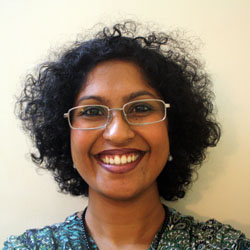 Tharunya is an urban planner and architect with a passion for issues of social, environmental and spatial justice, including the gendered ways in which urban spaces are designed and function. As a middle-class well-educated Indian woman in a large cosmopolitan city in the subcontinent, she constantly works to expand her understanding of gender, privilege, discrimination, and systemic oppression in her country and environment. She has a particular interest in including men in conversations around women’s issues and the ideas of safety, respect, and consent. She has a bachelor’s degree in architecture and a master’s degree in City and Regional Planning from the Georgia Institute of Technology, where she will be returning to obtain a degree in Geographic Infomations Systems Technology later this year.
Mariel DiDato, NJ, USA
 Mariel is a recent college graduate, feminist, and women’s rights activist. Although she received her degree in Nutritional Sciences, she plans to pursue graduate degrees in the fields of Public Policy and Women’s Studies to turn her volunteer activism into a career. She began her activism as a confidential crisis advocate for sexual and domestic violence survivors for Rutgers University’s Office of Violence Prevention and Victim Assistance. Since her training, she has become completely immersed into the field of women’s health and rights. Currently, she volunteers for a number of different organizations, including the Planned Parenthood Action Fund of New Jersey and the New Jersey Coalition Against Sexual Assault. She is passionate about ending sexual violence, and is determined to see the elimination of rape culture in her lifetime. You can follow her on Twitter at @marieldidato or check out her personal blog, Fully Concentrated Feminism.
Deborah D’Orazi, NY, USA
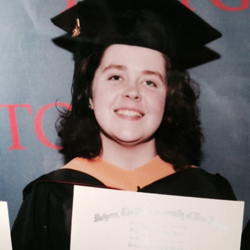 Deborah is a recent MSW graduate who also received certification from American University’s Women and Politics Institute and Rutgers’ Center on Violence Against Women and Children. In addition to social work, Deborah is looking to pursue an MPP/MPA in order to help create policies that empower many different members of society, particularly those who are dealing with trauma. Deborah hopes to use her passion and skills to continue advocating and writing for human rights, gender and racial equity, trauma, HIV and AIDS, reproductive health and maternal care, LGBTQ issues, and economic inequality. In addition to social justice issues, Deborah is also extremely passionate about the arts (theater, writing, film, television, fine art, poetry, performance art), history, and Hamilton.
Hope Herten, IL, USA
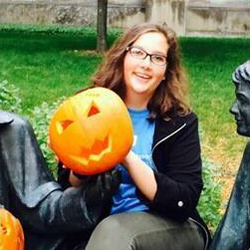 Hope is a full-time undergraduate student studying public health and Spanish in Chicago, IL. After graduation in Spring 2017, Hope wants to return to her hometown of Cleveland, OH, and help work on outreach programs to improve the overall health of the community by focusing on minorities and high risk populations. Street harassment is intimately linked to the health of women, and as such is a serious public health issue. During her time in Chicago, Hope has participated in many protests and events trying to call awareness to women’s issues on campus and in the broader Chicago community. Her role model is Michelle Obama, a powerful woman who has devoted her life to many great causes like children’s health equity, the advancement of young women, and gender equality. If you want to keep up with Hope you can follow her on Twitter @hope_lucille or check out her public health blog.
Minying Huang, Amman, Jordan
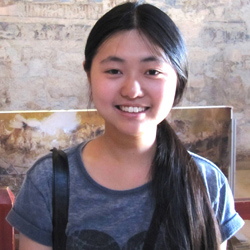 Minying is a 19-year-old British-born Chinese student from Cambridge, England. She is studying for a BA in Spanish and Arabic at Oxford University and is currently on her Year Abroad in Amman, Jordan, where she spends far too much time gorging herself on syrupy cheese pastries, drinking copious amounts of mint tea, and trying to figure out how best to deal with street harassers. She is particularly interested in transcultural dialogue and intersectional approaches to activism, exploring the ways in which overlapping identities shape both individual and collective experiences of oppression and marginalisation. Outside of study, she likes to read, write, and draw; she has written for Your Middle East, and her poems and illustrations have been published in a number of student publications including feminist and LGBTQ+ zines. You can follow her on Twitter @minyingh.
Manish Madan, Ph.D., NJ, USA
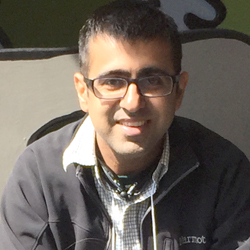 Manish is a Professor of Criminal Justice at Stockton University where his research focuses on examining sexual harassment, gender empowerment, spousal abuse and policing issues. It is grounded in policy, international and comparative research. He teaches both undergraduate and graduate students. His research has appeared in International Criminal Justice Review, Policing: An International Journal of Police Strategies & Management, Asian Journal of Criminology, and Journal of Criminal Justice and Security, and in many prominent media outlets including NY Times, India Today and The Economic Times. He was recognized with President’s Outstanding New Scholar Award by the Western Social Science Association in 2015. He frequently consults organizations on sexual harassment and gender issues. Manish earned his doctorate at Michigan State University and has Masters in Statistics, from India (Delhi) and Canada (Newfoundland). You can follow him @Prof_Madan or reach out to him at www.manishmadan.com.
Ginger Skinner, NY, USA
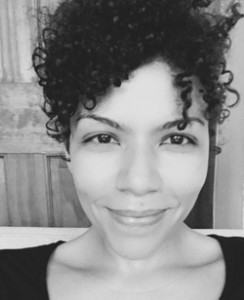 Ginger is a full-time reporter and long-time New Yorker with over 10 years of experience writing about health and wellness. Ginger is also a member of Brooklyn Movement Center’s No Disrespect anti-street harassment team, and is dedicated to deepening the conversations surrounding the causes of gender-based harassment and violence, and the intersections of race. She’s also a poet and essayist, currently working on a collection of poems on the impact of colorism on Black women and girls. She holds a BA from Howard University. Ginger enjoys drinking strong coffee, wearing shoes, listening to podcasts, and biking, and has an irrational fear of small talk and flying insects. Follow Ginger on Twitter at @ginger_skinner.
Turquoise A. Thomas, KS, USA
 Turquoise is a 26-year-old freelance journalist, program manager at the Wichita Women’s Initiative Network, and a junior at Wichita State University. Upon graduating she plans to attend a joint Juris Doctor/Masters of Social Work Program. A California native, with a background in youth development and law enforcement, her current work focuses primarily on women, children and gender. In Fall 2015 she expanded her fieldwork and academic studies outward from California to the Midwest with the intention of expanding women’s services in underserved states such as Kansas. Turquoise is an avid public educator and presents regularly as the founder of SHERO Coalition (SHERO Co). Feel free to follow her on twitter @anthroisms or join her growing coalition SHERO on Facebook!

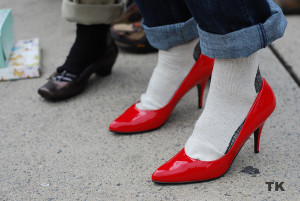 Every April, for Sexual Assault Awareness Month (SAAM), men all over the country stumble through public parks in high heels to raise awareness for the gender-based violence movement.