• About Us
    • What Is Street Harassment?
    • Why Stopping Street Harassment Matters
    • Meet the Team
      • Board of Directors
      • Past Board Members
    • In The Media
  • Our Work
    • National Street Harassment Hotline
    • International Anti-Street Harassment Week
    • Blog Correspondents
      • Past SSH Correspondents
    • Safe Public Spaces Mentoring Program
    • Publications
    • National Studies
    • Campaigns against Companies
    • Washington, D.C. Activism
  • Our Books
  • Donate
  • Store

Stop Street Harassment

Making Public Spaces Safe and Welcoming

  • Facebook
  • Instagram
  • Pinterest
  • Tumblr
  • Twitter
  • YouTube
  • Home
  • Blog
    • Harassment Stories
    • Blog Correspondents
    • Street Respect Stories
  • Help & Advice
    • National Street Harassment Hotline
    • Dealing With Harassers
      • Assertive Responses
      • Reporting Harassers
      • Bystander Responses
      • Creative Responses
    • What to Do Before or After Harassment
    • Street Harassment and the Law
  • Resources
    • Definitions
    • Statistics
    • Articles & Books
    • Anti-Harassment Groups & Campaigns
    • Male Allies
      • Educating Boys & Men
      • How to Talk to Women
      • Bystander Tips
    • Video Clips
    • Images & Flyers
  • Take Community Action
  • Contact

USA: Five Reasons Why I didn’t Report Street Harassment

January 27, 2016 By Correspondent

Julia Tofan, Connecticut, USA, SSH Blog Correspondent

I’ve experienced street harassment. The first time I did, I was 12 years old on a Girl Scout trip to New York. The most recent time, I was 16 years old hiking at a park with my mother and my sister. Both times, and every time in between, it felt wrong and it made me angry. Worst of all, however, it made me feel powerless. There have been so many incidents, and I have not reported a single one. I believe in being empowered, practicing self-confidence, standing up for my rights, and fighting for equality and justice, so I have to ask myself why I haven’t reported street harassment. These are five answers that began to explain it.

  1. Victim blaming: That’s the typical response to street harassment, even sometimes by police. Discussions on street harassment frequently involve a discussion of the victim’s modesty, clothing choices, and the time and location of the incident. Less frequently do these discussions involve the conscious decision a street harasser made. The truth is, street harassment is experienced by individuals in all types of clothing, all types of locations, and all types of times. The only factor consistent in every single case is that someone infringed on their right to safety. The last thing any victim wants to hear is “you were asking for it,” and that’s all too common a response.
  2. Street harassment can be dangerous, yet society doesn’t acknowledge this. A man in Queens, NY, slashed a woman’s throat for declining a date and walking away. In the news, he was referred to as a “ruthless Romeo,” equating his murder with a fictional romance of young teenage lovers. That same month, a woman on her way home from a funeral was shot after refusing to give her number to a male and explaining that she had a fiance. In the news, the criminal was described as “not fighting fair” when he fought with the woman’s fiance and pulled out a gun. The problem with this statement is that it implies fighting without a gun for a woman who did not want his advances was somehow acceptable. These situations are not unique. Victims of street harassment live in constant fear of retribution. It’s not just the cases that are featured on the news though. More than that, it’s the daily occurrences.
  3. Police officers don’t always help. The very people victims should be able to go to for help are engaged in blaming victims, and that doesn’t give victims access to the caring and understanding support that they deserve. Finding examples isn’t difficult. Just look at the 2011 incident in which Brooklyn NY police officers stopped women in short shorts and skirts and warned them that they could become victims of street harassment and sexual harassment. An alarming number of police officers — like Daniel Holtzclaw in Oklahoma — even are harassers and sexual abusers.
  4. Street harassment is not taken seriously. “Boys will be boys,” “it’s just a compliment,” and “lighten up” are embedded in our culture. Reporting an issue that is not taken seriously is infinitely more difficult than one that is labeled as a certain crime. To equate stalking, assaulting, catcalling, and objectifying females with the nature of boys and the nature of relationships is to erase a victim’s right to feel pain and dehumanization in a situation that is in every way painful and dehumanizing.
  5. Women grow up with street harassment and become groomed to accept it. Studies show that 65% of women have experienced street harassment with half reporting it starting by age 17. In a survey of students in grades 7-12, 48% reported sexual harassment. Forty-four percent of individuals in the same survey who admitted to sexually harassing another individual did it because they believed it was not a big deal, and 39% were trying to be funny. These are the viewpoints children are raised with, and changing that understanding of sexual harassment, a form of which may be street harassment, does not happen overnight.

These five answers helped me come to terms with the fact that I stayed silent. I hope to feel safe and supported next time I experience street harassment, and to feel comfortable enough to speak up and make myself heard, but I am not blaming myself for not reporting what happened. I am not displacing the blame from an adult to a minor, someone powerful to someone intimidated, and most importantly, a criminal to a victim.

Julia is a student in a rural town in Connecticut. She writes for Givology, a nonprofit dedicated to improving access to education, and Dreams That Could Be, an organization telling the stories of students facing great challenges but persevering in their education. Read her blog posts on Givology and Dreams That Could Be and follow her on Twitter @Julia_Tofan!


Share

Filed Under: correspondents Tagged With: boys will be boys, police, reporting, victim blaming, young age

USA: Harassment should not be an Intrinsic Part of Using Public Transportation

January 25, 2016 By Correspondent

Kathleen Moyer, Philadelphia, Pennsylvania, USA, SSH Blog Correspondent

Los Angeles Metro Ad“Why don’t we get off the bus right here and go get something to eat?” said the man sitting next to me, who had been harassing me since he got on the bus.

“No,” I responded immediately for what must have been the fifth consecutive time. When I looked out the grimy bus window at the surrounding area, I noticed there were no restaurants in clear sight and doubtfully wondered whether he really wanted me to get off the bus so he could take me somewhere to eat. Before he got off at his stop, he asked for my number. When I wouldn’t give it to him, he gave me his instead, leaning over me to make sure I was saving it in my phone. I guess he wanted to be sure that I had it, just in case I changed my mind and decided that his incessant remarks about my appearance were actually charming.

This was the first time that I experienced harassment on public transportation. Seeing as I live in a large city and don’t yet drive, I rely on public transportation often. Unfortunately, since that first incident, I’ve learned that harassment on public transportation is something that’s simply expected, especially if you’re a woman. Recently, I asked other frequent public transportation users I know about their experiences with harassment.

“The conversation started out normal, but then he started asking me uncomfortable questions,” one woman began. “He said that he had a wife that he didn’t live with anymore and some grown children, and asked if I’d like to come with him to a hotel for sexual interaction…I told him no thank you and how he should be loyal to his wife, but he kept insisting and told me he’d even pay me for my time, because in Russia, that’s what he used to do. He then put his hand on my thigh, and then I stood up and moved to another seat on the bus to get away from him.”

Another woman I spoke to shared an experience in which she was harassed by a clearly intoxicated man who should not have been on the bus in the first place. “I was on the bus leaving work…I started eating a hoagie and this drunk guy in the row next to me started moaning and making obscene gestures at me. Then he moved to the seat next to me and said ‘Do you want to play?’ and reached out to grab me. Before he could, I yelled ‘Get away from me!’ and luckily that was enough to make him run out of the bus before anything else could happen.”

Fortunately, this woman, as well as another woman I spoke to, was able to scare off her harasser. I assume that the harassers ran away in these instances because they were taken by surprise. After all, we’re taught to simply ignore harassers on buses and trains, because sadly, that’s usually the safest and easiest response. I believe that harassers know this and try to take advantage of it. That’s why they sometimes act in such a cowardly manner when their victims respond in a way that deviates from what they’ve come to expect. However, victims of harassment shouldn’t be solely responsible for addressing the issue.

Thankfully, some transit authorities have taken action to fight harassment, with Boston’s transit authority leading the way in 2008 and Chicago in 2009.

* Since 2012, Stop Street Harassment and Collective Action for Safes Spaces have worked on a campaign with the Washington, DC area transit authority that includes PSAs, an online reporting portal, and training for frontline employees.

* In 2014, the New York City Metropolitan Transit Authority created a webpage through which victims of harassment would be able to anonymously report incidents and submit photo evidence.

* Transport for London launched a campaign called “Report it to stop it” in April of last year. As the name suggests, the goal of the campaign was to encourage more people to report instances of harassment.

* A similar campaign called “Speak Up” was developed in Los Angeles, in October of last year.

* Also last fall, the French government launched a campaign in which public transportation lines were plastered with posters printed with sexual remarks typical of those frequently heard on public transport lines. The bottom of the posters say, “A woman’s life should not look like this.”

While these efforts are promising, the problem seems to still remain unaddressed in most areas, allowing harassment to continue to be seen as an intrinsic part of using public transportation. Perhaps public transportation companies know that most people who use their services do so because it’s their only method of transportation; the fact that these companies won’t lose customers could be a factor in them not prioritizing the issue. Perhaps local governments are not aware of how prevalent the problem is. No matter what is preventing the problem from being addressed, it must change immediately. No one should feel threatened anytime they travel via bus or train and unwanted sexual behavior should not be a normal part of someone’s daily commute.

As the posters in France say, a woman’s life should not look like this. No one’s life should look like this.

Kathleen is a full-time graduate student studying professional and business communication. She plans initiatives to increase awareness of sexual assault, domestic violence, and other related issues through her university’s anti-sexual violence group, Explorers Against Sexual Violence.

Share

Filed Under: correspondents, public harassment, Resources Tagged With: Boston, London, los angeles, metro, paris, philadelphia, public transportation, Washington DC

USA/India: We Need Equality in the Kitchen and the Streets

January 14, 2016 By Correspondent

Rupande Mehta, New Jersey, USA SSH Blog Correspondent

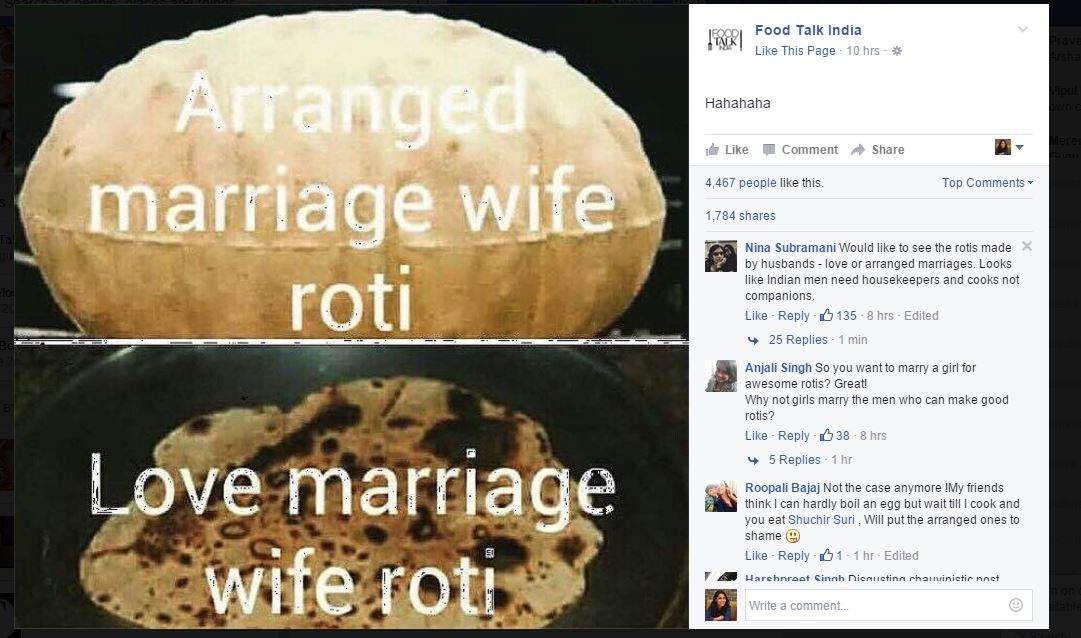
roti imageA few days ago I came across a picture on Facebook that compared rotis (Indian bread) made by wives through a traditional (arranged) marriage and love marriage. The arranged marriage wife’s roti looked excellent, had the desired plumpness and was extremely edible. It looked like something that comes out of my mom’s kitchen. The love marriage roti, on the other hand, looked far from edible; burnt and flat. It was nothing like what most Indian men would expect when they sit down to dinner. And if they did, their disappointment would be transparent or there would be facetious innuendo in reference to the wife’s culinary skills.

I don’t know how to make rotis, never learnt and frankly don’t care that I cannot make them. My husband can cook and we never discussed my inability to make a particular kind of food. Still, that picture bothered me. The collective consciousness inside me took a dramatic turn for the worse when a friend passed along the source of the link; a popular food curation portal, Food Talk India. Shared as a ‘funny meme’, the site claimed it posted the picture in ‘good humor’ but when there was backlash from several quarters of the society, they wisely took the picture down. Despite the criticism, the site though through one their cronies, sent Vagabomb what they thought of the controversy: a picture of a penis.

Now I am not a bra burning feminist, I like my bra where it belongs…thank you very much but such pictures and attitudes are at the very crux of the gender inequality debate. These are the ideas that propagate the belief that a woman belongs in the kitchen and the man does not. In India, where the last few years have seen stalwart economic progress, such pictures successfully demonstrate the long road women have to fight to get justice and equal societal norms. It shows the kinds of “standards” we expect from a woman of honor; the one who always “does the right thing” and knows how to keep her husband happy and her family cultured.

If we all engage in eating, is it not discriminatory to expect only the woman to cook? Putting a woman to such practices is no different than saying that she deserves to be catcalled on the streets or she has no right to dress a certain way and if she was assaulted it is definitely because she brought it on. It sets the stage for those other crimes that we get so passionate about and want to castrate men for.

I do not believe that any gender is superior. My feminism is not a fight to make one gender better than the other but to fight for equality. If I am expected to cook and clean so should my male counterpart. If I am told, “you have no marital prospects because your rotis are burnt”, so should a man. We do not live in a primeval world where the man hunts and the woman gathers. We have reached the era where men and women walk toe to toe and contribute equally to the welfare of a family.

In a day where women are constantly breaking the glass ceiling, why are we still circulating pictures of the rotis they can make? At which level is this funny? And how are such attitudes supposed to break the stereotypes that lead to other aggressive assaulting behaviors towards women? Believe it or not, these “hilarious” photos lay the foundation to prejudiced mentality and contribute in the next layer of beliefs that women can be harassed on the streets, raped or do not have the right to consent.

Perhaps Kalki Koechlin is right and the issue of women’s safety will forever burn in India. In her latest poem, “The Printing Machine”, the outspoken and fierce actor has succinctly laid down everything that is wrong with our culture. Making several references to the countless rapes registered in the country since 2012, she says, “How our great Indian heritage fell to its knees at the mercy of our innocent little printing machines.” Set to a percussive soundtrack, Kalki delivers a scathing attack on stereotypes, indifferent attitudes and India’s traditional culture that is used to primarily promulgate further discrimination of women.

In the end it is not about the dumb picture. Also, I am not making a big deal out of nothing. A subtle picture such as this goes a long way in showing that there still exist many educated men from our generation, who fought for Nirbhaya and stand for women’s safety, delving on attitudes where the size and texture of women’s rotis is used as a reminder of their real role in society. It goes to show that despite India’s equality and safety movement, my mom’s premonition for women, at some level, was accurate: no matter how educated we are; we will always end up in the kitchen.

A picture speaks a thousand words. This one did just that.

Rupande grew up in Mumbai, India, and now resides in the U.S. She has an MBA and is currently working towards her MPA, looking to specialize in Non Profit Management. You can find her writing on her blog at Rupande-mehta.tumblr.com or follow her on Twitter @rupandemehta.

Share

Filed Under: correspondents Tagged With: cooking, equality, harassment, India, kitchn, roti

Germany: In Cologne, Women’s Bodies Should Not Be Used to Promote Racism

January 12, 2016 By Correspondent

Editor’s Note: Our new Blog Correspondents ProChange in Germany wrote a piece for both Ms. Magazine’s blog and SSH… so this is cross-posted from Ms, with permission.

Following planned attacks on women on New Year’s Eve in Cologne, Germany, more than 500 reports have been made, 40 percent involving sexual assault. In other German cities such as Hamburg, Stuttgart and Düsseldorf, similar cases were also filed.

In Cologne, the police have arrested 21 suspects so far, most of whom have been identified as men from northern African or Arab regions.

Shockingly, in the beginning, there seemed to be no public outcry over the attacks. It was only on January 2, after the local media started covering the incidents and quoted eyewitnesses stating that the perpetrators looked northern Africa or Arab, that suddenly there was outrage.

But instead of turning the incident into an opportunity to stand up for women’s right to be safe in public spaces, many who are against the influx of refugees used the assaults to spread racist hate speech targeting asylum seekers, migrants and foreigners.

While there may have been asylum seekers among the perpetrators, as the newspaper die Welt reported, this racist response is unacceptable. The rhetoric is unjust to both the persons affected and to the many asylum seekers coming to Germany searching for a better life.

Certainly the perpetrators should be punished, no matter where they are from. The German state must use the rule of law to send a strong message that violence against women will not be tolerated. But it is disturbing to see that the body of the “German woman” is being used to promote racist hate speech, and it’s something that has been prevalent throughout the German debate on refugees.

For example, the philology association from Saxony achieved questionable fame for warning young girls against sexual adventures with Muslim men. Under the guise of protecting the young girls, racist stereotypes were promoted and combined with sexist ideas. While Muslim men were portrayed as a potential danger, young girls’ abilities to decide their own sexuality were denied. 

The wildest stories have circulated on social media. For instance, it was claimed that refugees were urinating on vegetables in supermarkets, and stealing goods worth several thousand Euros without punishment. When investigated, it turned out that those wild stories were lies. 

You might assume from scrolling through Facebook that crime has increased with the influx of refugees. But the image of the “criminal refugee” is not backed by crime statistics. In fact, refugees commit crimes at the same rate as the native German population, and the number of sex crimes committed by refugees is actually below 1 percent.

Right-wing political parties, such as the AfD (Alternative for Germany), warn against refugees as potential rapists of German women. Politician Björn Höecke, for instance, spoke about the special risk for blonde (!) German women.

It seems like the right-wing movements have finally discovered an interest in women’s rights. But while the potential rape of “our women” has stirred up hate for the “uncivilized other,” the fact that sexual violence is already prevalent within German society, or that it can affect non-German women as well, seems not to be of interest to them. 

In addition to racist backlash, there has also been a great deal of victim-blaming in the wake of these attacks. This was blatantly clear in the recommendation made by Cologne’s mayor, Henriette Reker, during a press conference following the New Year’s Eve attacks where she spoke about preventive measures for the upcoming carnival celebrations. When asked how women could protect themselves, she answered that it is always possible to maintain a certain distance of more than an arm length from men. Women turned to social media to mock her advice, using the hashtag #einearmlaenge (one arm length). She has since apologized, but the damage has already been done.

Following the attacks, this should be—and still can be—an opportunity to name street harassment and other forms of sexual violence as everyday sexism. It is also the right time to call for a revision of the German penal code to better address these types of offenses.

Every woman should have the right to safely be in public spaces, among men of all races, and in as close proximity as a crowded place dictates. The priority should be to ensure that that is the reality, not to punish the refugees, migrants and asylum seekers who are just as likely to be peaceful, law-abiding residents of Germany as those who are native-born, nor should it be the time to engage in needless victim-blaming.  

ProChange is a group of people between 20 and 64 years of age who have been active for several years or decades now. ProChange consists of a small group of core members (pictured left) in a network of other activists. Our main focus is on street harassment, sexism and sexualized violence. We are opposed to all forms of exploitation as we believe that they are all connected.

Share

Filed Under: correspondents, race, street harassment Tagged With: germany, mob attacks, racism, rape, sexual violence

Welcome, First Blog Cohort of 2016!

January 11, 2016 By HKearl

Since 2013, cohorts of people from around the world write monthly articles about street harassment and activism efforts in their communities in four month cohorts.

We’re excited to welcome our newest cohort (and welcome back LB Klein and the ProChange team who have been excellent correspondents before!!) and look forward to reading their articles!

Meet the Correspondents of the First Cohort of 2016

LB Klein, MSW, Atlanta, Georgia, USA

LBHeadshot2LB has dedicated her academic and professional career to ending gender-based violence, supporting survivors, and advancing social justice. She is currently an independent consultant based in Atlanta, GA. LB serves as a lead trainer for Prevention Innovations Research Center at the University of New Hampshire, through which she trains colleges, universities, and community organizations to implement Bringing in the Bystander®. She is also a graduate student in the Program on Gender-Based Violence within the University of Colorado Denver School of Public Affairs. Her research currently focuses on campus sexual assault and intimate partner violence prevention programs, trauma-informed organizational cultures, and compassion satisfaction. She holds a bachelor’s degree in history and a master’s degree in social work from Washington University in St. Louis and a graduate certificate in lesbian, gay, bisexual, and transgender health from Drexel University. LB previously lead Emory University’s Respect Program and the St. Louis County Domestic Violence Court volunteer program. She is a board member for Jane Doe Advocacy Center and the Association of Title IX Administrators. She serves on the founding leadership council of the Campus Advocates & Prevention Professionals Association (CAPPA). You can follow her on twitter @LB_Klein or on her website at http://www.lbklein.net.

Rupande Mehta, New Jersey, USA

Rupande MehtaRupande is a writer passionate about women’s rights in India and the world. Having experienced physical and sexual violence from a very young age has made Rupande a fervent advocate of violence against women. Rupande grew up in Mumbai, India where she was consistently subject to street harassment and various cultural norms that force women to live as second class citizens. All these experiences made Rupande’s resolve stronger to campaign for equal rights for women and girls. Rupande has an MBA and is currently working towards her MPA, looking to specialize in Non Profit Management. Rupande writes for the Huffington Post and various other websites. You can find her writing on her blog at Rupande-mehta.tumblr.com or follow her on Twitter @rupandemehta. In her spare time, Rupande loves to spend time with her family, cook healthy foods and read.

Kathleen Moyer, Philadelphia, Pennsylvania, USA

Kathleen Moyer 250Kathleen is a full-time graduate student studying professional and business communication. After earning her master’s degree, she hopes to pursue a career in which she’ll be able to dedicate her life to her greatest passion: social justice. As a proud feminist, Kathleen feels strongly about striving for equality in all areas of society. She is currently involved in planning initiatives to increase awareness of sexual assault, domestic violence, and other related issues through her university’s anti-sexual violence group, Explorers Against Sexual Violence. In addition to this work, she has also assisted with volunteer recruitment for Philadelphia’s 2015 March to End Rape Culture, and plans to be involved in organizing the United Nations Association of Greater Philadelphia’s 2016 International Women’s Day event. Some of her feminist role models include Alice Paul, Gloria Steinem, and Malala Yousafzai. Outside of her activism, Kathleen enjoys reading mystery novels, watching the Philadelphia Eagles, listening to U2, and anything involving dogs.

Kayla Parker, Washington, D.C., USA

Kayla Parker 250Kayla is a sophomore acting major at Howard University and is a native of Birmingham, Alabama. She is passionate about theatre arts and film and strives to use her craft to create positive societal change. In addition to focusing on school, she spends her time working on her web-series, “Black Girls R Us” that aims to uplift black women of all different shapes, sizes, and shades. For updates on episode releases, you can follow her on twitter at @TheTimidLioness.


Julia Tofan, Connecticut, USA

Julia-250Julia is a student in a rural town in Connecticut. She’s passionate about gender equality and feminism and she aspires to be an activist for marginalized populations. She first became interested in human rights when recognizing the great inequality in the world. She realized that education was a powerful way to combat inequality, so she joined Givology, a nonprofit dedicated to improving access to education, as a blogger. She now also writes for Dreams That Could Be, an organization telling the stories of students facing great challenges but persevering in their education, and is excited about being a Street Harassment Correspondent. She believes raising awareness about issues and educating others is the most powerful way to make a difference, and that’s what she seeks to do. Read her blog posts on Givology and Dreams That Could Be and follow her on Twitter @Julia_Tofan!
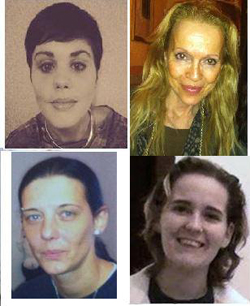
ProChange, Germany

members ProChange 250ProChange is a group of people between 20 and 64 years of age who are active. ProChange consists of a small group of core members in a network of other activists. Their main focus is on street harassment, sexism and sexualized violence. They are opposed to all forms of exploitation which are all inter-connected.

Share

Filed Under: correspondents, SSH programs Tagged With: blog correspondents, germany, India, usa

« Previous Page
Next Page »

Share Your Story

Share your street harassment story for the blog. Donate Now

From the Blog

  • #MeToo 2024 Study Released Today
  • Join International Anti-Street Harassment Week 2022
  • Giving Tuesday – Fund the Hotline
  • Thank You – International Anti-Street Harassment Week 2021
  • Share Your Story – Safecity and Catcalls Collaboration

Buy the Book

  • Contact
  • Events
  • Join Us
  • Donate
  • Facebook
  • Instagram
  • Pinterest
  • Tumblr
  • Twitter
  • YouTube

Copyright © 2026 Stop Street Harassment · Website Design by Sarah Marie Lacy