• About Us
    • What Is Street Harassment?
    • Why Stopping Street Harassment Matters
    • Meet the Team
      • Board of Directors
      • Past Board Members
    • In The Media
  • Our Work
    • National Street Harassment Hotline
    • International Anti-Street Harassment Week
    • Blog Correspondents
      • Past SSH Correspondents
    • Safe Public Spaces Mentoring Program
    • Publications
    • National Studies
    • Campaigns against Companies
    • Washington, D.C. Activism
  • Our Books
  • Donate
  • Store

Stop Street Harassment

Making Public Spaces Safe and Welcoming

  • Facebook
  • Instagram
  • Pinterest
  • Tumblr
  • Twitter
  • YouTube
  • Home
  • Blog
    • Harassment Stories
    • Blog Correspondents
    • Street Respect Stories
  • Help & Advice
    • National Street Harassment Hotline
    • Dealing With Harassers
      • Assertive Responses
      • Reporting Harassers
      • Bystander Responses
      • Creative Responses
    • What to Do Before or After Harassment
    • Street Harassment and the Law
  • Resources
    • Definitions
    • Statistics
    • Articles & Books
    • Anti-Harassment Groups & Campaigns
    • Male Allies
      • Educating Boys & Men
      • How to Talk to Women
      • Bystander Tips
    • Video Clips
    • Images & Flyers
  • Take Community Action
  • Contact

Tunisia: Street Harassment is Constant

April 5, 2013 By Contributor

By: Carla C. Avenia, SSH Correspondent

It might come as no surprise that street harassment is still very much prevalent in a country which is part of the Arab world. But actually, in the case of Tunisia, it is quite surprising. Tunisia is well known for being one of the most modern and forward countries in this area, a place where activism concerning equality has a strong presence, where particularly the youth – both men and women –  are engaged in fighting extremist right-wing (read Islamist) policies that try to cover up women against their will and institute laws depriving them of basic rights.

I spent ten days in Tunisia in order to attend the World Social Forum. This post gathers my experiences as well as those that where told to me directly by two different women.

Personally, I found it impossible to go out on the streets on my own without anticipating some sort of harassment, ranging from unwanted verbal communication to cat-calls, all the way to what can be called stalking. On my way to the hotel, a man followed me and even walked into the lobby. I was scared to check in until he left, because I didn’t want him to find out my name or room number. I tried to leave my hotel one evening at 7 pm in order to buy some food just a block away, and I ran back (luckily, food in hand) after I was cat-called once and two different cars full of men slowed down, yelling at me in Arabic and following me back to my hotel. Please keep in mind that, although it shouldn’t matter, I am quite culturally sensitive and my attire had nothing to do with attracting unwanted attention. I wasn’t wearing anything different than other local women wear, which is verified by the fact that given my complexion, many people that I interacted with on a daily basis (shop owners, taxi drivers) always spoke Arabic to me because “I look local.”

I met young locals and they told me that women, for their own safety, should not walk the streets alone after dark. Even in the center of the city, which was full of foreigners at the time because of the World Social Forum. From the moment I voiced these incidents, local friends made it a point to accompany back to the hotel every evening, or even pick me up in order to go eat or have a drink.

The worst incident took place one evening at a bar called Cafe Paris, right on Bourguiba Avenue, in the center of town. First, I should state that there are still some old-fashioned laws present in the country, one which allows only foreigners to drink alcohol while sitting outside on a terrace. Tunisians are not allowed to do the same. Even if they try to order something, they are simply not served. Which means that usually the terraces are full of foreigners, while the locals all sit inside. This place in particular was full of men, because local women prefer to go to higher-end bars which seem “safer”. I soon learned why.

That evening it rained, so my group of mixed foreign friends chose to go inside. The women in my group where the only women in the whole bar. We attracted a lot of stares, but by then, we were used to that. We endured uncomfortable, deep-seated stares almost everywhere we went. Particularly on the streets and at bars.

Having had a few beers, the call of nature manifested. So together with a colleague, we decided to make a line for the bathroom, which was located in the basement. We started feeling tense as soon as we got on that staircase heading to the basement. Local men swarmed around us, staring, checking us out, whispering things amongst each other. We made it halfway down before we chose to turn around and get out. But the swarm of men closed around us, and grab my colleague by the arm, telling her something in Arabic. The men laughed and got in even closer. She froze with fear for a moment and shook this man’s hand off, pushing her way through the laughing crowd of men, and luckily weaving an escape route for me too. We hurried back to our table in fear.

Then I remembered the stories from Tahir square. This is how it must start for the women who have suffered atrocities in Cairo: the swarm of laughing men closing around them, the unwanted touching, the sudden panic attack followed by an attempt to flee the situation. We were lucky enough to have made it out just with our feathers ruffled.

The male domination of the public sphere is commonplace. Most local and foreign women justifiably prefer to avoid certain places such as bars, or walking the streets at night, so as to not be subject to constant sexual harassment.

A French colleague told me how she was stalked for blocks while heading back to the hotel in broad daylight. A young man followed her closely, talking to her the whole way. She ignored him, but that didn’t stop him of following her for at least five blocks. The local passersby didn’t do a thing about it.

The worst story came from an Egyptian colleague, who came to a get-together at a house that I was at, sometime around 9 pm. She arrived in tears, so I walked her out the balcony so she could tell me her story. She said how in Cairo she’s constantly walking around with pepper spray, and wards off harassers on a daily basis. Older local women have told her to ignore them, but after the fifth or sixth incident she experiences on a daily basis, she just cannot keep her mouth shut and must verbally fight back.

She never expected to experience the same in Tunisia. As I, she knew that Tunisia was reputed for being quite modern, so she came unprepared to face what happened to her that evening. And unarmed, since she couldn’t pack her pepper spray.

She was walking on the street parallel to Bourguiba Avenue (the main street), looking for the apartment building in which this get-together was being held. Seeing the policemen guarding the French Embassy (which is surrounded by barbed wire), she weighed her options: although she didn’t trust policemen given the atrocities they were involved in back in Egypt, this was Tunisia, a liberal, free, forward-thinking country in which policemen could be trusted. Right?

Wrong. She asked the policemen for the apartment building’s number. They signaled the right way, which was through a narrow pathway squeezed between buildings on one side and barbed wire on the other. Yet, they started to initiate a conversation. She ignored them and followed on. They didn’t give up.

The group of policemen followed her and kept on harassing her. Making fun of her, enjoying her fear. As soon as they made it to the right doorway, the surrounded her, and closed in around her, trying to touch her. She started to cry and quickly forced her way through the main door, leaving the men roaring with laughter behind her.

The political situation might have changed in Tunisia, and it is – technically – slowly evolving towards a modern democracy. But there is no democracy without equality. And there is no equality when women are scared into avoiding public spaces, which are still dominated by an old-fashioned patriarchy who find satisfaction in the objectification and intimidation of women.

Carla is a proud feminist originally from Texas, who strongly believes in creating safer spaces for women. She holds a Master’s in Local Development, and she runs her own translation company from France. She is also a travel blogger. You can find her on Twitter.

Share

Filed Under: correspondents, Stories, street harassment

USA: International Anti-Street Harassment Week

April 2, 2013 By Contributor

By: Erin McKelle, SSH Correspondent

Did you know that Stop Street Harassment’s founder Holly Kearl also founded International Anti-Street Harassment Week? It takes place every spring, this year from April 7-13, and is a time where you can work even MORE actively to stop street harassment. Its purpose is to raise awareness about street harassment through active engagement and amplification.

Anti-Street Harassment Week gives you the tools to do practically anything you want to commemorate this week.

Want to go to an event? On their website, they have listings of events taking place around the world. Conduct a survey on street harassment? They have tips to show you how. Not sure what you want to do? They have a whole page full of ideas from street theatre to poster campaigns to sidewalk chalk!

Participating can even be as easy as raising awareness about street harassment to your followers on Twitter or your friends on Facebook. It’s amazing how a little awareness and education can go a long, long way. If you are posting to twitter, use the tag #EndSHWeek or #EndSH ! On Facebook, you can also change your profile picture to an image related to ending street harassment which can be found here http://www.meetusonthestreet.org/tools/.

On the tools page, there is also a myriad of content you can use in your efforts during the week! There are blank fliers that you can use to write a message on, bystander posters, logos and even pre-made fliers you can give out.

You can also support Anti-Street Harassment Week by donating to the cause! It’s a great way to show your support and is always welcomed and appreciated!

Becoming a co-sponsor is another option. The only requirements are that you advertise Anti-Street Harassment Week to your networks and participate in the week! So far, there are 128 groups in 19 countries that are participating.

Here is where you can sign up to officially participate! Anti-Street Harassment Week is important for raising awareness and doing anything, big or small, to join in is a great way to be actively partake in this work. Empower yourself and others on the street and meet us on the street during Anti-Street Harassment Week!

For more information, please visit: http://www.meetusonthestreet.org

Erin is an e-activist and blogger based in Ohio. You can find more of her work here and here.

Share

Filed Under: anti-street harassment week, correspondents, Resources, street harassment

Colombia: Promoting Masculinity that is Inclusive and Equitable

March 30, 2013 By Contributor

By: María Paulina López, SSH Correspondent

‘’The women’s fear to the violence of men, is the mirror of the men’s fear to fearless women.” – Eduardo Galeano

Recently, in the hallmark of a certification degree to educate and create conscience about preventing gender violence, given by the CES University and the Women’s Secretary  in Medellín, Colombia, there was published a book titled “Men caring for life.” This proposal of Denis Alonso Geldres, Rosamaría Vargas, Gladys Rocío Ariza y Silvia Gaviria Arbeláez, it’s dedicated to all Colombian women who have been victims of violence, and to the people committed to work for violence-free and equal societies.

With this model of awareness and formation they question the socialization of gender in the patriarchal model, educate men who multiply the feminist projects, involve them in the active struggle of women for equality and avoiding attitudes responsible for constant harassment.

One of the most important goals of this project is to make men conscious of the self-righteous respect women deserve in their constant interaction in the group they live in, and prevent street harassment. This abusive acts affects millions of people around the world, although there are a lot of actions we can take to try to stop street harassment, we can also make social conscience by community projects, and promote masculinities that search for inclusion and equality, compromised with women’s right to walk for our streets, to occupy freely our public spaces, to live safe and happy relationships and to have the same opportunities.

Maria is a psychology student, social investigator, and sexual educator. Follow her on Twitter, @MPaulinaLopez.

__________________________________________________________________________________________

En Espanol

“El miedo de la mujer a la violencia del hombre, es el espejo del miedo del hombre a la mujer sin miedo.” – Eduardo Galeano

Recientemente, en el marco del Diplomado de sensibilización y formación en masculinidades género sensibles y prevención de las violencias hacía las mujeres”, en convenio  de la Universidad CES con la Secretaría de la Mujer de la Alcaldía de Medellín, se ha publicado un libro titulado “Hombres cuidadores de vida”.  Esta propuesta de Denis Alonso Geldres, Rosamaría Vargas, Gladys Rocío Ariza y Silvia Gaviria Arbeláez, está dedicada a “las mujeres colombianas que han sido víctimas de feminicidios y a las mujeres y los hombres que están trabajando en pro de una sociedad equitativa, incluyente y sin violencia”

Con este modelo de sensibilización y formación se busca  cuestionar la socialización de género en el modelo patriarcal y formar hombres multiplicadores de propuestas feministas, involucrarlos para fomentar una transformación sostenible en el empoderamiento de las mujeres.

La importancia de esta iniciativa radica en la posibilidad de trabajar con los hombres para la prevención de la violencia hacia las mujeres, una de estas violencias es el acoso callejero, estos actos abusivos afectan a millones de personas en el mundo, y aunque existen muchas maneras de actuar cuando presenciamos que alguien está siendo acosada en la calle, también podemos realizar este tipo de ideas como una acción colectiva para prevenir el acoso callejero.

Sensibilizar y formar en nuevas masculinidades, es la manera de prevenir la violencia contra la mujer, incluyendo el acoso callejero. Masculinidades amantes de la inclusión y de una vida equitativa para todos, que se comprometan con los derechos de las mujeres a caminar tranquilas por la calle, a ocupar libremente los espacios públicos, a vivir relaciones de pareja seguras y felices y a tener igualdad de oportunidades.

Estudiante de psicología, investigadora social, educadora sexual MPaulinaLopez.

Share

Filed Under: correspondents, street harassment

USA: Speak Out with Street Art

March 28, 2013 By Contributor

By Sean Crosbie, SSH Correspondent

Last week, I attended an event called “Speak Out with Street Art” that was held at the offices of the Women’s Information Network in Washington, D.C.  This event was a collaboration among Collective Action for Safe Spaces (CASS), the Women’s Information Network (WIN), and Women, Action, and the Media (WAM!), as part of “WAM! It Yourself 2013,” a series of events being held in cities around the U.S. and Canada. These gatherings bring together local activists and others who are interested in advancing social justice and women’s representation in the media.

The purpose of “Speak Out with Street Art” was twofold: to explain CASS’s role in using “artivism” to empower Washingtonians to stand up to sexual harassment and assault, and to work with Graham, a D.C.-based artist, whose anti-harassment art is found around the city.

The evening started with an introduction by CASS’s Director of Community Outreach and Events, Zosia   Sztykowski, who applauded the efforts of local community organizations to bring attention to the issues of violence and harassment through art.  In addition to local efforts, Zosia showed the audience anti-harassment art from around the world, including one from the Egyptian Revolution showing Nefertiti in a gas mask.

Following this broad overview, Zosia turned the focus to Graham, a local artist who works in collaboration with CASS through the D.C. Artist Collective. A D.C.-area native, he has worked with numerous clients to create art that advances social causes.  Graham explained how one of the main functions of street art is to reclaim public space for the people, and not allow public areas to be auctioned off to the highest bidder (i.e. hotels, billboards, etc.). This philosophy has informed Graham’s work to a remarkable degree.

His work had an effect on me – the artwork definitely caught my attention when I saw it on the streets. I was instantly engaged and intrigued when I saw two of Graham’s artworks on the street in D.C., and I contacted Holly inquiring about the artist, and she let me know about this event.

After the presentation, the audience dispersed and separated into two groups:  one group joined Graham in wheatpasting a local D.C. neighborhood, and another joined Zosia at the office for a creative storytelling workshop, in which people shared their experiences about harassment. This was a great way to get people involved in “artivism,” and also to share their experiences in a supportive, open environment.

Street art is a great way to create an in-your-face message to combat street harassment and assault. Since both occur in public spaces, it is only fitting that the art be located in the same space, preferably on or near a site of harassment. This sends a message to the harassers that acts of disrespect and violence against women will not be tolerated—local activists will speak out!  The work of CASS and Graham are just some of the many efforts by local activists to send this message and to make a difference. Stop Street Harassment appreciates these conversations taking place and hopes for more in the future.

Sean has written for Stop Street Harassment since April 2011.  He is a library/research assistant at a labor union in Washington, D.C. and holds a Bachelor’s degree in economics from American University.

[Editor’s note, I attended the workshop too, here are my photos.]

Share

Filed Under: correspondents, street harassment

Colombia: Interview, One Billion Rising, Bogotá

March 25, 2013 By Contributor

One Billion Bogotá

By: Adriana Pérez-Rodríguez, SSH Correspondent

“Street harassment has become dangerously normal.” –Paola Adarve (one of the main organisers of One Billion Rising in Bogotá)

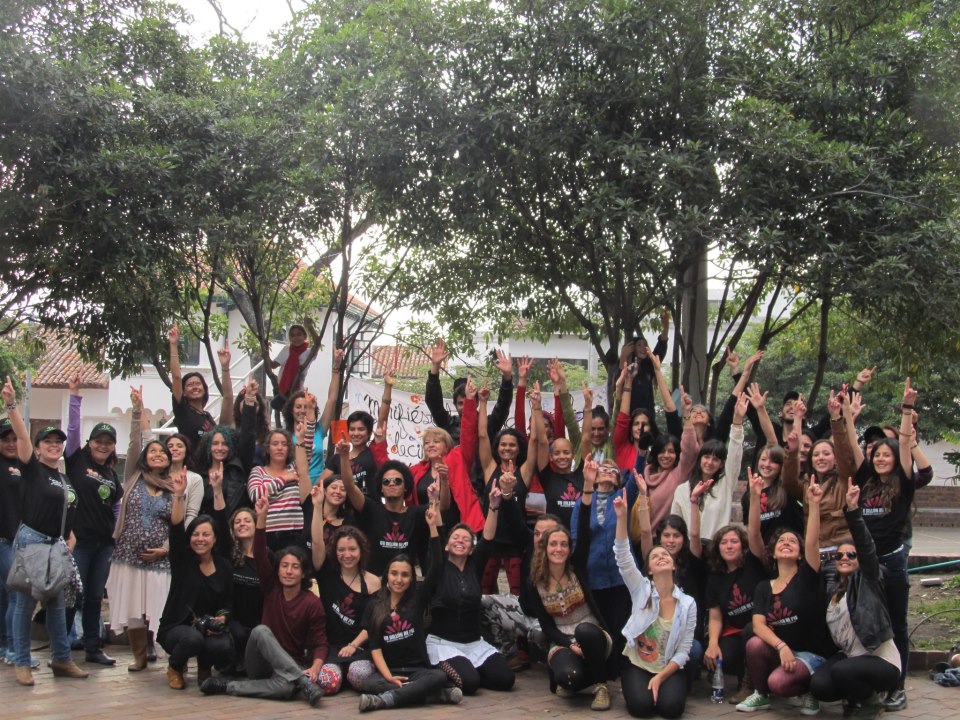
Within the framework of the International Anti-Street Harassment Week and One Billion Rising- Bogotá, I interviewed the organisers of the One Billion Rising event about street harassment Colombian women face daily and why this must change.

1. Adriana Pérez-Rodríguez (APR): Why One Billion Rising? How can it contribute towards the Colombian case?

One Billion Rising – Bogotá Organizers (OBR): One Billion Rising is a global action within the framework of V Day against violence against women, which includes verbal, psychological, physical, domestic and sexual violence in or outside of the context of the internal armed conflict. The Colombian context is meaningful if we take into account the cases of Rosa Elvira Cely, Angélica Bello, Yinnet Bedoya and many other women whose cases didn’t have such impact on the media. In Colombian, we need to rise to this situation and make people understand that such treatment is not right and that women can encounter violence within their houses, around the corner, in public transport, etc.

2. APR: Many people argue that we should not pay attention to these situations (street harassment), that it’s not highly relevant. What do you think about it? What could you say to these people?

(OBR): Street Harassment doesn’t happen in a vacuum. Failing to pay attention obeys a patriarchal culture that defines women as sexual objects and men as predators whose sexual appetite is uncontrollable –thus justifiable. Manifestations such as V-Day try to create conscience against it, stressing that ignoring street harassment, seeing it as irrelevant, will lead to ignoring everyday types of violence that women endure, normalising them.

 3. APR: What’s the best way to fight street harassment?

(OBR): The best way is uniting against: educating children in schools, organising women’s groups in local areas –for instance, groups such as ours which is organised in public spaces, attracting people’s attention in order to get heard. The most important part is not keeping quiet about or considering irrelevant any type of violence against women, recognising that we have the right to live a worthy, free from violence, life in our own houses and in the streets.

4. APR: When did you realise such behaviour needed to be changed? Why?

(OBR): It’s something that has grown with me. Colombia is a catholic and highly conservative country. Many of our mothers had to quit their job when they had their first child to take care of their houses. Many changed their last names, adopting their husband’s one and many were obliged to marry after falling pregnant before marriage. When we go out we’ve been shouted stuff at, we have witnessed horrible things been shouted at other women, while they just opt to walk faster most of the times and keep quiet. The change starts by the person who notices it, by whom shares its discomfort and tries to create conscience within their closest ones so that they spread it.

5. APR: Where do you think this behaviour (street harassment) stems from?

(OBR): From the sociocultural context that normalises notions about women and femininities like something sexualised, submissive and vulnerable. Moreover, what we see in public spaces also happens in private ones, a man who abuses his partner and feels he has power over her, is probably a man who will verbally harass women in the streets and who will probably consider that their role is to satisfy his needs. From little boys being taught that they must be “macho-like”, that only girls play with dolls and that if he doesn’t like sports he’s a “faggot”, a heterosexist and patriarchal pattern will be recreated and reproduced.

6. APR: Which are the biggest obstacles when educating people about this issue? Have you seen any changes in the social perception?

(OBR): The way boys and men are educated to treat women and the way girls and women are educated to put up with it and remain quiet. I do feel perception regarding this issue has changed a little thanks to collective actions and pressures from many sectors and women’s groups in both, urban and rural spaces. The 1257 law and the 094 decree are examples of normative and legal changes, which serve as tools to communicate to people, explain they have rights and that such behaviour should not be considered normal.

7. APR: How can the masculine public contribute towards this fight?

(OBR): This isn’t just a women’s fight. We have risen up because we are at the axis of violence, but the responsibility lies in everyone. Men, regardless their sexual identity, must be conscientious and help others do become so. The world is and must be for everyone. Women are not satisfaction machines, we are people, active citizens and we decide for ourselves.

8. APR: What would you recommend in case of street harassment?

(OBR): Do as you think best, knowing that street harassment IS NOT NORMAL. When people learn they shouldn’t put up with it, their way of acting starts changing. What I recommend is don’t to keep quiet, don’t put up with it because it’s not our obligation to do so. Our right is to feel safe in and outside our homes, to dress as we please, to go out with whomever we want to at the hours we want to and no men can steal that right from us.

Adriana is a Colombian national who’s passionate about all topics concerning social justice, especially gender-based justice.

_________________________________________

En Espanol

acoso sexual callejero se ha vuelto peligrosamente normal –Paola Adarve (una de las principal organizadoras de Un Billón de Pie en Bogotá)

Dentro del marco de Encuéntranos en las Calles, que va del 7 al 13 de abril, y hablando sobre Un Billón de Pie, las organizadoras de este evento conversan sobre el acoso sexual callejero que las mujeres colombianas tienen que enfrentar cotidianamente y porqué esto debe cambiar.

1. Adriana Pérez-Rodríguez (APR): ¿Por qué Un Billón de Pie? ¿Qué aportes podría dar al contexto colombiano?

Un Billón de Pie: Un Billón de Pie es una acción mundial en el marco del día V (V-day), en contra de la violencia hacia las mujeres, esto incluye violencia verbal, psicológica, física, doméstica, y sexual ya sea en el conflicto armado o fuera de él.  El contexto colombiano es significativo para esta campaña, si tenemos en cuenta los casos de Rosa Elvira Cely, Angélica Bello, Yinnet Bedoya, y de tantas otras mujeres que han sido ultrajadas sin que sus casos tengan resonancia mediática. En Colombia es necesario levantarse y hacer entender que no está bien la forma en que las mujeres son tratadas, que la violencia se encuentra en casa, a la esquina, en el transporte público, etc. Y debe ser detenida.

 2. APR: Mucha gente objeta que no hay que prestarle atención a esas situaciones (acoso sexual callejero), que no es de mayor importancia; ¿Qué piensa de esto? ¿Qué le podría decir a esas personas?

Un Billón de Pie: La violencia callejera no es aislada. No darle importancia a esto obedece a una cultura machista que concibe a las mujeres como objeto sexual y a los hombres como depredadores cuyo apetito sexual es incontrolable- y así excusable. Manifestaciones como V-Day buscan crear consciencia frente a esto, teniendo en cuenta que ignorar el acoso sexual callejero, pensar que no tiene importancia, es ignorar violencias cotidianas a las que son sometidas las mujeres de tal manera que se normalizan.

 3. APR: ¿Cuál creen que es la mejor manera para combatir el acoso sexual callejero? (Formación de colectivos, educación, fortalecimiento de conciencia colectiva, etc.)

Un Billón de Pie: La mejor manera es unirse: mediante la educación de los niños pequeños en colegios y escuelas, la organización de mujeres en los barrios, grupos como el nuestro que se organiza en espacios públicos llamando la atención de la gente para que escuchen nuestra causa, etc. Lo importante es que nosotras mismas no nos callemos ni le quitemos importancia a ningún tipo de violencia, es que nosotras mismas reconoscamos que tenemos el derecho a vivir una vida digna y libre de violencias, en casa o fuera de ella.

4. APR: ¿En qué momento se percató que ese comportamiento necesita cambiarse? ¿Por qué?

Un Billón de Pie: Es algo que ha crecido conmigo. Colombia es un país retrógado, católico y todavía muy conservador. Las madres de muchas de nosotras dejaron sus trabajos apenas tuvieron su primera hija o hijo, y se dedicaron al cuidado de la casa. Muchas se cambiaron el apellido al de su marido, muchas hasta se casaron obligadas al quedar embarazadas antes del matrimonio. Al salir a la calle nos han gritado cosas, hemos visto cómo les gritan frases horribles y morbosas a otras chicas, y ellas optan casi siempre por caminar más rapido y no decir nada. El cambio empieza por quien lo nota, por quien comparte su incomodidad y trata de crear consciencia en su grupo más cercano para que la inconformidad se riegue cada vez más.

 5. APR: ¿De dónde cree que se origina ese acoso?

Un Billón de Pie: En el contexto sociocultural, el cual normatiza algunas nociones sobre las mujeres y sobre lo feminino como algo sexualizado, sumiso, vulnerable; lo que sucede en el espacio público sucede también en el espacio privado, un hombre que abusa de su compañera en casa, que siente que tiene poder sobre ella, es muy probablemente un hombre que acosa verbalmente a las mujeres en la calle y que considera que el papel de las mujeres es satisfacer sus necesidades. Desde que a los niños se les enseña que está bien actuar “como machos”, que jugar con muñecas es de niñas, y que si no le gustan los deportes es un marica, se está forjando y dando continuidad a un patrón heterosexista y machista.

 6. APR: ¿Cuáles son los obstáculos más grandes a la hora de educar a las personas sobre el tema? ¿Han visto cambios en la percepción social?

Un Billón de Pie: La forma en que se les enseña a los niños, jóvenes y adultos hombres a tratar a las mujeres, y la forma en que se les enseña a las niñas, jóvenes y adultas a soportar y quedarse calladas frente a esto. Sí siento que ha cambiado un poco la percepción, gracias a acciones masivas y presiones de varios sectores y grupos de mujeres tanto en la ciudad como en las zonas rurales. La Ley 1257 y el Auto 094 son ejemplos en cuanto a normas y legislación. Estas son herramientas para que nosotras le hablemos a la gente, les hagamos escuchar que tenemos derechos, que soportar no es “lo normal”.

7. APR: ¿Cómo puede contribuir el público masculino en esta lucha?

Un Billón de Pie: Esta no es una lucha de sólo mujeres. Nosotras nos levántamos porque hemos sido el eje de las violencias, pero la responsabilidad recae en todas las personas. Los hombres, de cualquier identidad sexual, deben conscientizarse y conscientizar a los demás. Esta es una lucha conjunta, porque el mundo es y debe ser de todas y todos. Los hombres deben reconocer que no somos máquinas de satisfacción, que todas somos personas, ciudadanas activas, y decidimos por nuestras vidas.

8. APR: Ante una situación de acoso sexual callejero ¿qué recomendarían?

Un Billón de Pie: Hacer lo que le parezca conveniente, teniendo en cuenta que el acoso sexual callejero NO ES NORMAL. Cuando una persona comprende que el acoso sexual callejero no debe soportarlo, su forma de actuar cambia. No callarse es lo que recomiendo. No aguantar, porque no es nuestra obligación aguantar. Es nuestro derecho sentirnos seguras en las calles y en las casas, es nuestro derecho vestirnos como queramos, salir con quién queramos, a la hora que queramos. Y ningún hombre puede arrebatarnos este derecho.

Soy una colombiana apasionada por todos asuntos relacionados con la justicia social, especialmente justicia de género.

Share

Filed Under: correspondents, street harassment

« Previous Page
Next Page »

Share Your Story

Share your street harassment story for the blog. Donate Now

From the Blog

  • #MeToo 2024 Study Released Today
  • Join International Anti-Street Harassment Week 2022
  • Giving Tuesday – Fund the Hotline
  • Thank You – International Anti-Street Harassment Week 2021
  • Share Your Story – Safecity and Catcalls Collaboration

Buy the Book

  • Contact
  • Events
  • Join Us
  • Donate
  • Facebook
  • Instagram
  • Pinterest
  • Tumblr
  • Twitter
  • YouTube

Copyright © 2026 Stop Street Harassment · Website Design by Sarah Marie Lacy