• About Us
    • What Is Street Harassment?
    • Why Stopping Street Harassment Matters
    • Meet the Team
      • Board of Directors
      • Past Board Members
    • In The Media
  • Our Work
    • National Street Harassment Hotline
    • International Anti-Street Harassment Week
    • Blog Correspondents
      • Past SSH Correspondents
    • Safe Public Spaces Mentoring Program
    • Publications
    • National Studies
    • Campaigns against Companies
    • Washington, D.C. Activism
  • Our Books
  • Donate
  • Store

Stop Street Harassment

Making Public Spaces Safe and Welcoming

  • Facebook
  • Instagram
  • Pinterest
  • Tumblr
  • Twitter
  • YouTube
  • Home
  • Blog
    • Harassment Stories
    • Blog Correspondents
    • Street Respect Stories
  • Help & Advice
    • National Street Harassment Hotline
    • Dealing With Harassers
      • Assertive Responses
      • Reporting Harassers
      • Bystander Responses
      • Creative Responses
    • What to Do Before or After Harassment
    • Street Harassment and the Law
  • Resources
    • Definitions
    • Statistics
    • Articles & Books
    • Anti-Harassment Groups & Campaigns
    • Male Allies
      • Educating Boys & Men
      • How to Talk to Women
      • Bystander Tips
    • Video Clips
    • Images & Flyers
  • Take Community Action
  • Contact

India: Do you want to talk about it?

October 22, 2014 By Contributor

Our six Safe Public Spaces Mentees are half-way through their projects. This week we are featuring their blog posts detailing how the projects are going so far. This fifth post is from our team in India. Their projects are supported by SSH donors. If you would like to donate to support the 2015 mentees, we would greatly appreciate it!

It is a rainy day at my corporate job. Storm*, my intern, walks into work, dabbing raindrops off her arms, animatedly describing the downpour outside while waving her rain jacket around and sprinkling my office with water. She is upbeat as always: dressed in an olive green kurta** with pink tights, a light, long scarf that goes with her ensemble, thick black kohl underneath her determined eyes, her oversized headphones in place. “How are you still wearing your headphones in this rain?” a colleague asks, and she says, “I never take them off. They’re my talisman against the street porukkis***.” My colleague giggles awkwardly. “Well ladies need that, good for you”, he adds.

Storm, like several other women in Chennai, has one unchanging feature in her daily itinerary: to make it through the day without calling ‘unwanted attention’ to herself, and even if it happens, to have the patience to not let it affect her, and to not react. “These headphones remind me that I can have a day that does not include actually hearing half the things men shout to me on the street”, she says.

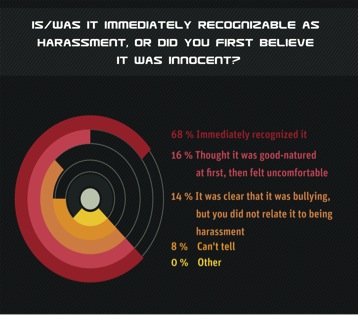
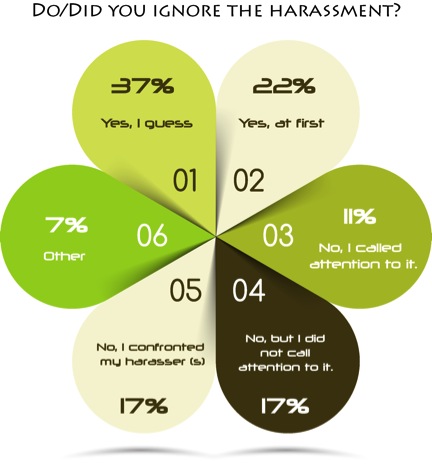
But not everyone is as brazen as Storm, making derisory mentions of street harassment in front of their bosses. It is not common that women talk about street harassment as an actual deviation from the norm in Chennai. In fact, it is so expected, that women often fail to recognize it as harassment, or call it that. To find out how many women identify verbal and physical harassment in public spaces, we circulated a survey among women of all ages who live in Chennai. Participants were allowed to choose all the responses that applied.
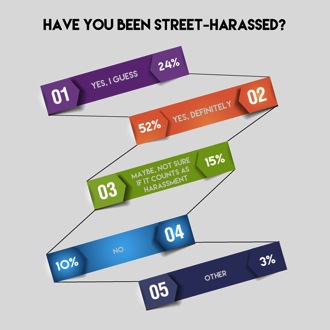
Public transport and streets seem to be the hubs of street harassment. “First, it will start with catcalls, if it is a deserted area it will move to degrading comments”.
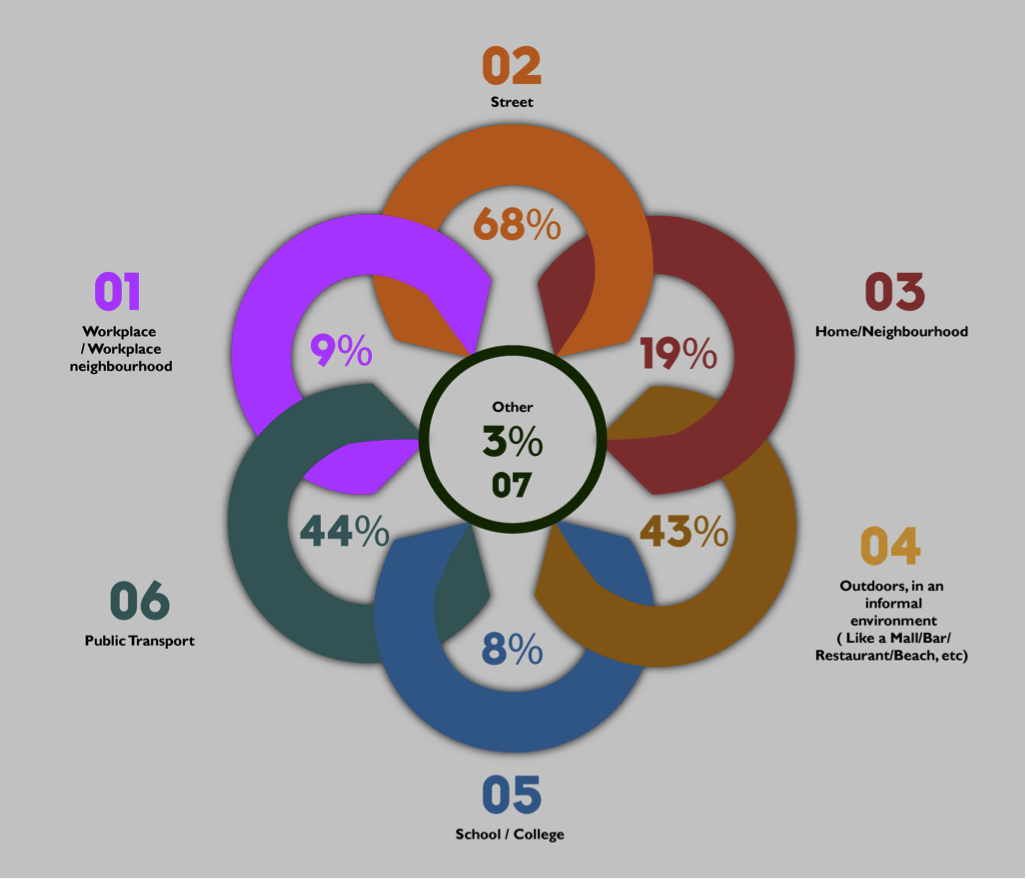
“I cycle to work, so most days I experience cat calls, honking at me to get my attention- so that they can make kissing gestures and other hand gestures that make me cringe, they sometimes even shout out words and make me feel uncomfortable. Aside from the men on the road who make such remarks I also face road safety issues thanks to many women and men who brush me off the road because I ride a cycle. Other men on cycles also make kissing gestures and other signals that make me feel uncomfortable. But all this I have only ignored. I have looked at them angrily, but somehow, showing them that you are angry makes them more excited and they accelerate towards you.”

“Most of the time, harassment happens when you are least expecting it; while walking down a busy road, at the railway station and sometimes in a crowded street, which you’re having a hard time navigating. It also largely occurs in public transport, where it can easily be brushed aside as lack of space. The point is, with me, it has mostly happened when I’ve been in a crowd, as against the empty or badly lit street back home.”

Verbal harassment isn’t the end of it. Physical harassment is more common than verbal, because in a city as crowded as Chennai, it is almost unnoticeable. “I am pinched/felt up/groped almost everyday on the public bus at rush hour”. Our survey reports incidents of physical harassment from strangers, while walking, driving, or taking any form of public transport, including cabs.

“It ranges from making lewd comments, singing and whistling to groping, rubbing up against me. I believe that even bothering me when I don’t want to talk — forcing me to make conversation or give them attention — and expressing an interest in me when I’ve made it abundantly clear that I’m not interested, is harassment. Fortunately, I’ve never been asked by strangers to smile.”

For Chennai, that’s fortunate indeed.

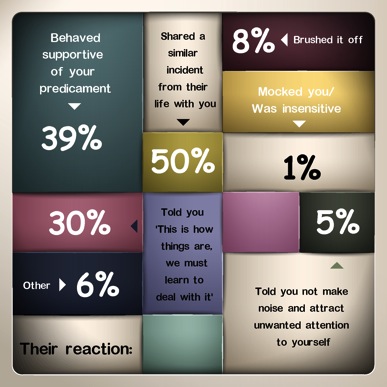
Is it that hard to have a constructive discussion about street harassment in Chennai? We asked our survey participants how they felt about speaking to people about their experience of being street harassed. “I am not told ‘Boys will be Boys’, I am told ‘Girls should be Girls!’ I am always made to believe I did something to bring this ‘attention’ to myself”. Many conversations about street harassment transform into situations where the confidante shares a similar story from their life, or brushes it off, saying “This is how things are in India” or “You should adjust”, or just more advice about dressing conservatively, and only going out in groups. There is not a dearth of support, just a deep sense of helplessness at the status-quo. “I am always told, ‘We must learn to survive. This is how life is’. It sure as hell needn’t be!”
Our mission is to move people of all genders to start acknowledging street harassment as a problem, and not a convention in Chennai. We want to get women to start talking about experiencing street harassment in Chennai. We want to educate teenagers to recognize, question, and intervene in street harassment.

As the next step towards these goals, we are now inviting participants of our survey along with other high school and college students to participate in group-discussions about street harassment. We will use our survey and the results from it as leading points, and the results of these discussions as content for our lesson plans and aids to discuss street harassment in the classroom.

Street harassment is currently being discussed in the classrooms of our participating high-schools: recognizing it, not trivializing it, reacting to it, talking about it, and most importantly, being an effective bystander. Our dream is to expand these discussions to every school, and every classroom in Chennai, and providing tools to aid these sessions.
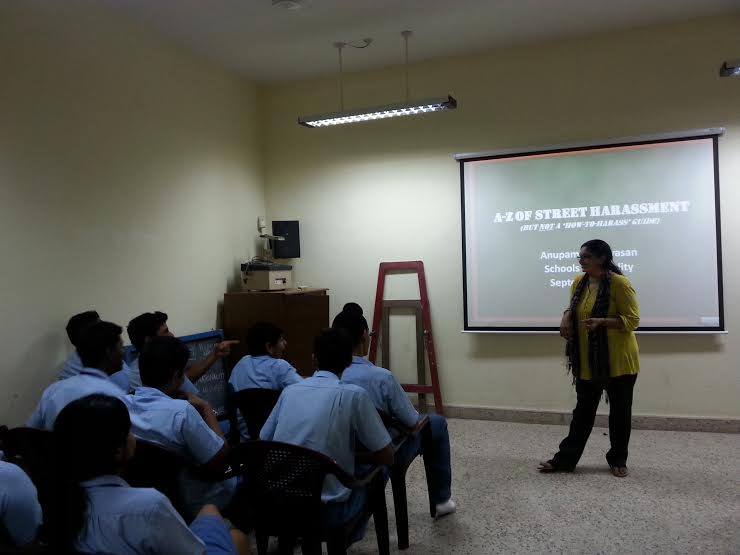
   

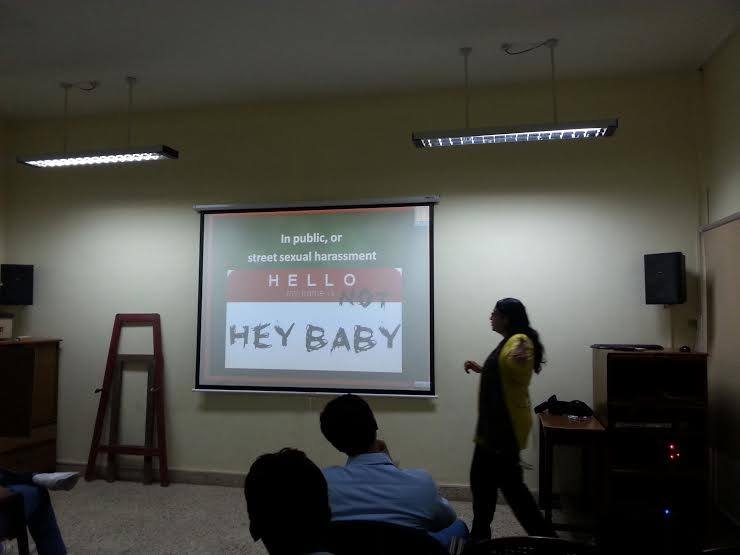
In the above photos, Anupama from Prajnya gives the students a ‘laundry list’ of what constitutes harassment: It is not about what the perpetrator intends, but how the person at the receiving end feels.

Most of all, we want these discussions to find ways to stop street harassment, a phenomenon that stems from inequality among genders: in power, safety, entitlement, and respect. Quoting a response from our survey, “I carry pepper spray, but it is shoddily packaged and I cannot use it in case of an emergency. I think for street harassment to really stop, such men have to develop respect towards themselves, only then can they respect others around them.”

*- Storm is not her real name (quite sadly for me)

** -A kurta is an Indian tunic

***- ‘Porukki’ is a word transliterated from Tamil, the native language spoken in Chennai. It loosely translates to ‘goon’, usually used in the context of someone lewd/lecherous. And yes, I’m ashamed that we have a word for that.

 Gayatri Sekar, Schools of Equality. Graphics by Samrudh Solutions

Share

Filed Under: SSH programs, street harassment

Nicaragua: Conducting Surveys at Bus Stops

October 21, 2014 By Contributor

Our six Safe Public Spaces Mentees are half-way through their projects. This week we are featuring their blog posts detailing how the projects are going so far. This fourth post is from our team in Nicaragua. Their projects are supported by SSH donors. If you would like to donate to support the 2015 mentees, we would greatly appreciate it!

Desde hace poco más de tres meses, un grupo de universitarias nos unimos con la idea de hacer algo contra el acoso callejero en Nicaragua. Empezamos a buscar información, y encontramos un financiamiento que brindaba Stop Street Harassment para una iniciativa bastante concreta. Nos pareció que lo primero que necesitábamos era una encuesta que nos arrojara datos sobre cómo vivían las mujeres esta forma de violencia  de género, y qué tan seguido les pasaba.

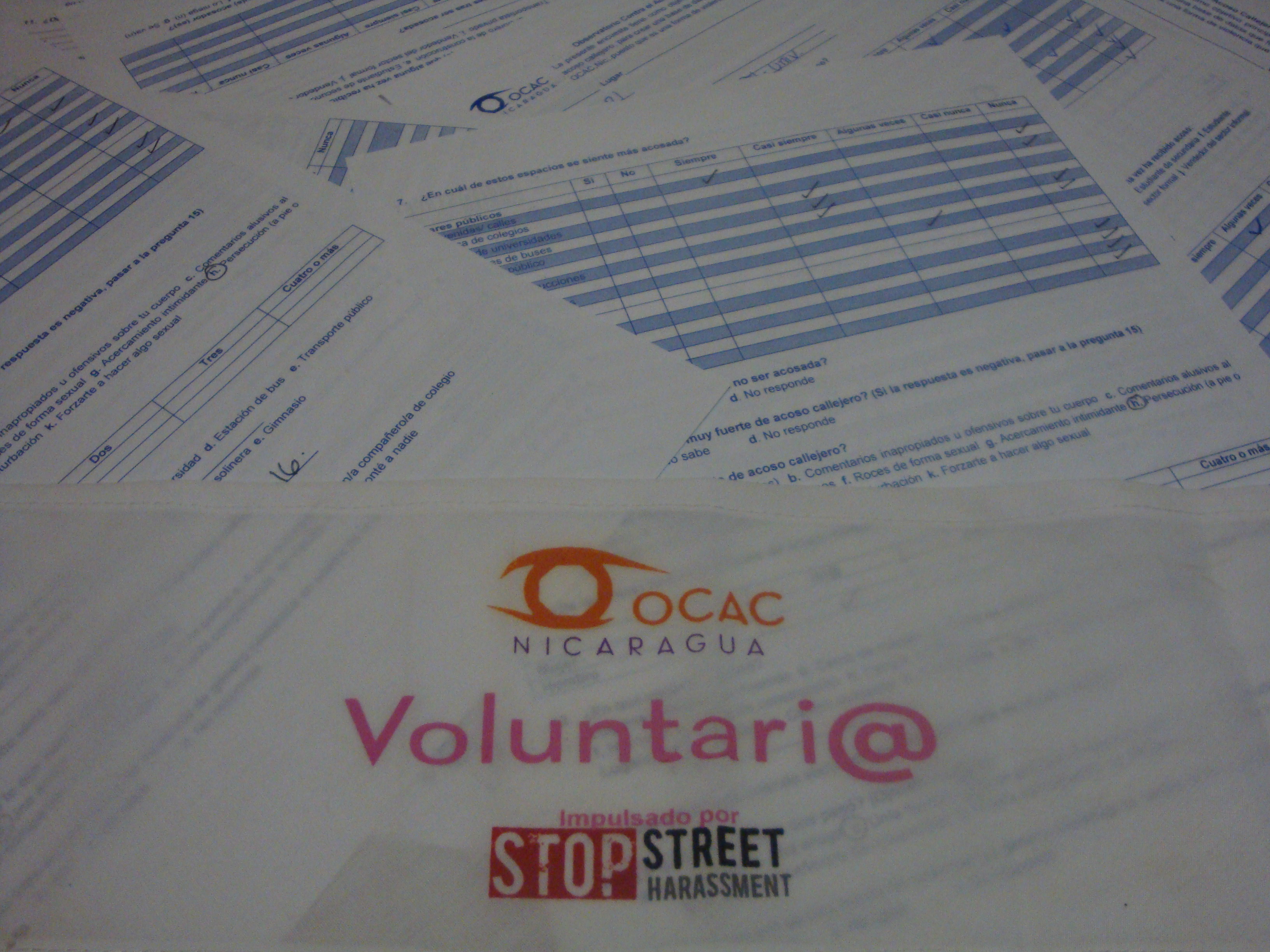
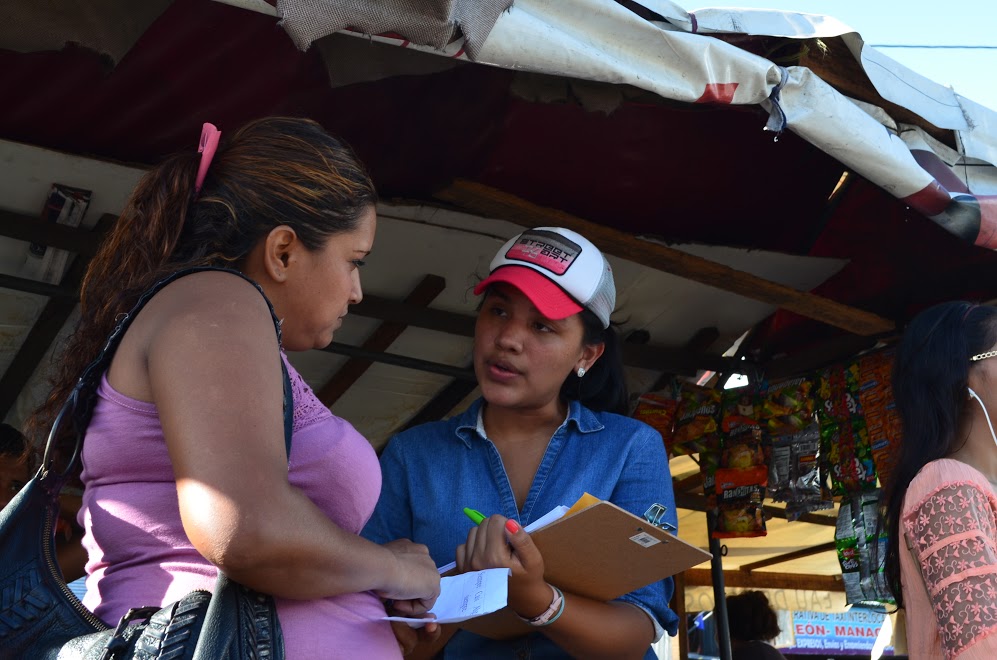
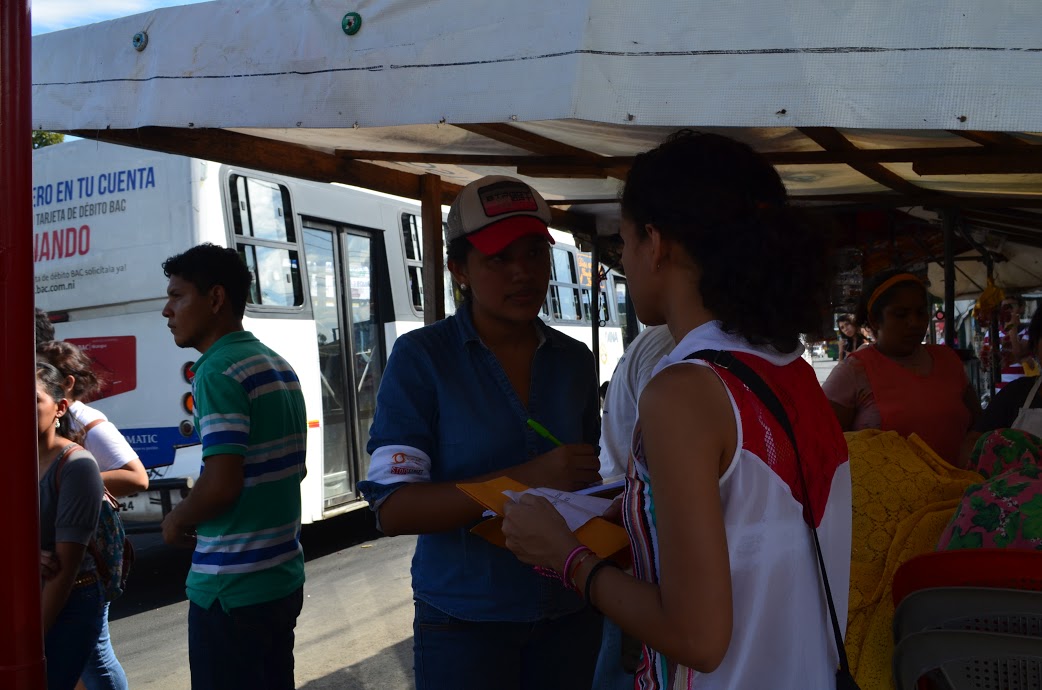
Así que empezamos, desde hace un mes (cuando obtuvimos el financiamiento de SSH), a aplicar una encuesta en las estaciones de buses a mujeres de 14 a 60 años. Las preguntas están enfocadas en descubrir los tipos de acoso callejero más frecuente, la especificación de una experiencia fuerte y la determinación de si el acoso callejero es o no violencia de género.

Y los resultados hasta el momento han sido sorprendentes. Un grupo fijo de ocho voluntarias hemos encuestado 5 días durante este último mes,  y nos encontramos con que esta experiencia nos ha servido para recopilar información estadística, pero más aún para conocer de primera mano lo que piensa la gente, su forma de actuar ante el acoso callejero y las opiniones que antes no pensamos encontrarnos (ya que además de contestarnos la encuesta, muchas de ellas nos brindan mayor información sobre sus múltiples experiencias).

Muchas mujeres se mostraban dispuestas a contar sus historias, porque nunca antes habían sido escuchadas, pero muchas otras también se mostraron sumamente incómodas o avergonzadas cuando les preguntábamos qué experiencia fuerte habían tenido. También nuestras voluntarias se encontraron con opiniones como: “si contestás los hombres te van a pegar y te van a violar”, “no es violencia porque no me están pegando” u otras expresiones que demostraban la naturalización del problema.

Además, nos encontramos con un alto porcentaje de mujeres  que calla. Muchas les expresaron a las voluntarias que no sabían cómo reaccionarían los hombres y que preferían ignorarlo.

Y por supuesto, el número de mujeres que han tenido experiencias fuertes de acoso callejero es significativo, aunque debido a la naturalización, en ocasiones, a las mujeres les es  difícil identificar que son o fueron víctimas de violencia. Algunas mujeres habían sido testigos de masturbación en público en autobuses, en caponeras, en taxis, en sus barrios y hasta afuera de su propia casa. Otro gran número de mujeres había sido víctima de exhibicionismo de genitales, la mayoría de ellas cuando eran pre o adolescentes. Una de las mujeres contó que mientras barría la acera de su casa, un ciclista le dejó ver su entrepierna. Ella sólo tenía 9 años. El caso más grave con el que nos encontramos hasta ahora fue el de una señora a quien un desconocido había intentado violar en la calle, cuando ella tenía 20 años.

Aún nos falta mes y medio para terminar de llenar las encuestas, y nuestro compromiso contra el acoso callejero ha incrementado, ya que nos convencemos cada vez más de que visibilizar el problema es el primer paso para lograr que las mujeres dejen de verlo como algo común y que los hombres están en libertad de hacer. Hoy más que nunca, esperamos lograr una incidencia positiva a raíz de los resultados obtenidos con este pequeño estudio.

In English (using Google Translate)

Just over three months ago, a group of university students came together with the idea of doing something against street harassment in Nicaragua. We started looking for information and found Stop Street Harassment was providing financing for a fairly specific initiative. We found that the first thing needed was to conduct a survey to collect data about women’s experiences with this violence and how often it happens to them.

So we started a month ago (when we got the financing SSH) to implement a survey at bus stations to women ages 14 to 60 years. The questions are focused on discovering the most common types of street harassment, the specification of a powerful experience and the determination of whether or not street harassment is gender violence.

And the results so far have been amazing. Eight volunteers have surveyed across five days during the past month, and we find that this experience has helped us to collect statistical information, but even more to learn first-hand what people think, how they react to street harassment and their opinions.

Many women were reluctant to tell their stories at first because they had never shared them before, and many were also extremely uncomfortable or embarrassed when we asked about their toughest experiences of street harassment. Also our volunteers heard opinions like: “If you reply to their words, men will hit you and rape you,” or “It is not violence, no one is hitting me,” and other expressions showing the naturalization of the problem.

In addition, we found a high percentage of women who were silent when harassed. Many expressed their concern that they did not know how men would react and so preferred to ignore it.

And of course, the number of women who have had tough experiences of street harassment is significant, although due to the natrualization of it, sometimes women find it difficult to identify who are or were victims of violence. Some women had witnessed public masturbation in buses, in taxis, in their neighborhoods and even outside their home. Another large number of women had been victims of genital exhibitionism, mostly when they were pre or teenagers. One of the women said that while sweeping the sidewalk outside her home, a cyclist showed her his crotch. She was only 9 years old. The worst case we encountered so far was that of a woman who had experienced attempted rape by a stranger on the street when she was 20.

We still have a month and a half to finish filling out surveys, and our commitment against street harassment has increased and convinced us more that exposing the problem is the first step in getting women to stop seeing it as common and something that men are free to do. Today more than ever, we hope to achieve a positive impact due to the results obtained with this small study.

Noelia Gutiérrez is founder of Observatorio Contra el Acoso Callejero, Nicaragua. 

Share

Filed Under: SSH programs, street harassment

Nepal: Self Defense Sessions and Forum Theater

October 21, 2014 By Contributor

Our six Safe Public Spaces Mentees are half-way through their projects. This week we are featuring their blog posts about how the projects are going so far. This third post is from our team in Nepal. Their projects are supported by SSH donors. If you would like to donate to support the 2015 mentees, we would greatly appreciate it!

The main goal of our project is to decrease the occurrence of street harassment in Kathmandu city. In the start of the month of October, we did an interactive program to discuss on issues about street harassment. About 15 people attended the event and we had a diverse group of participants ranging from school level students to even PHD research students. We asked the if they had ever faced street harassment or if they had ever witnessed street harassment among any members in their community. We also briefed them about our upcoming events. We also familiarized them with the website of Hollaback! Kathmandu and showed them ways that they could report their stories on the website if they ever faced street harassment.

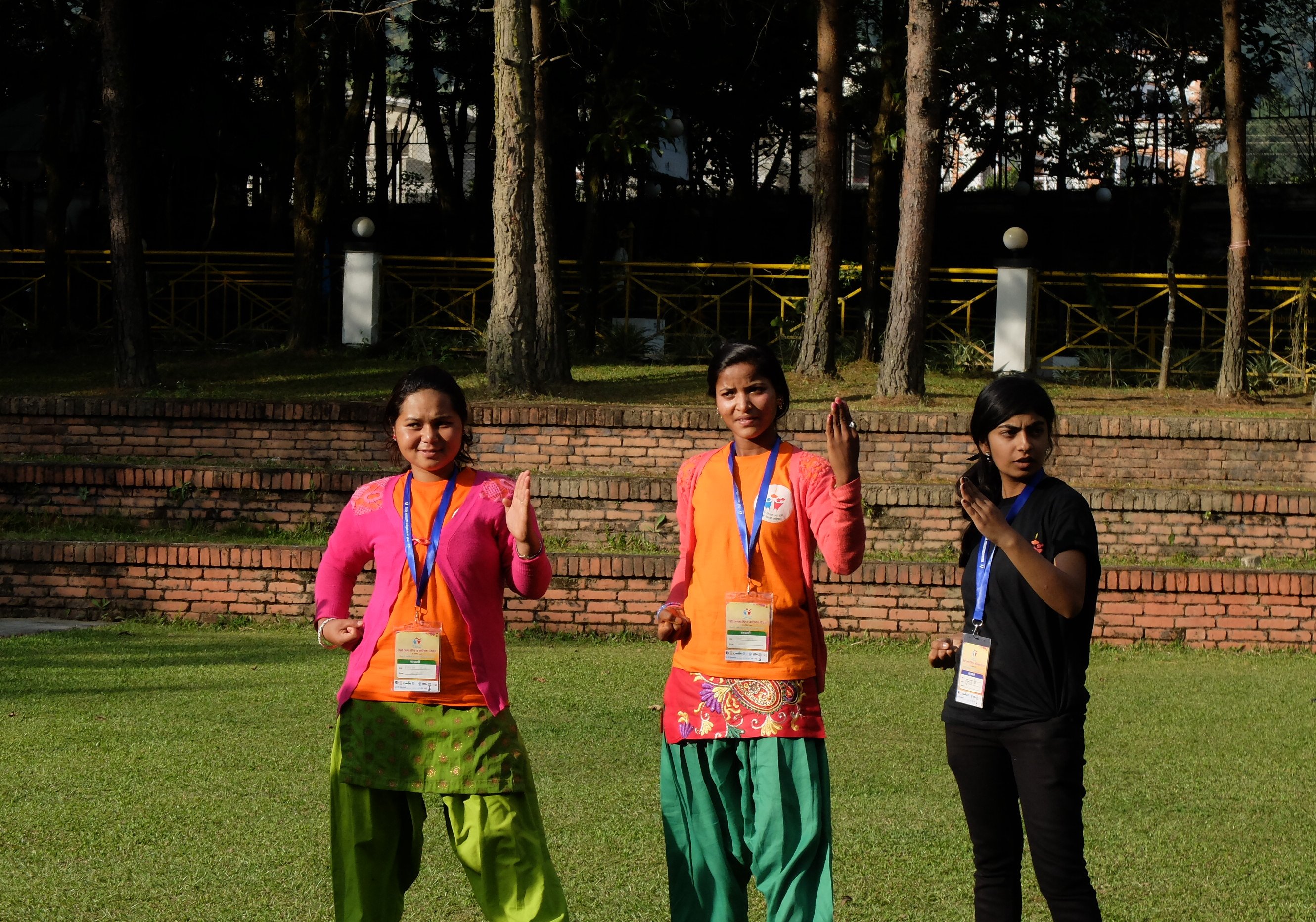
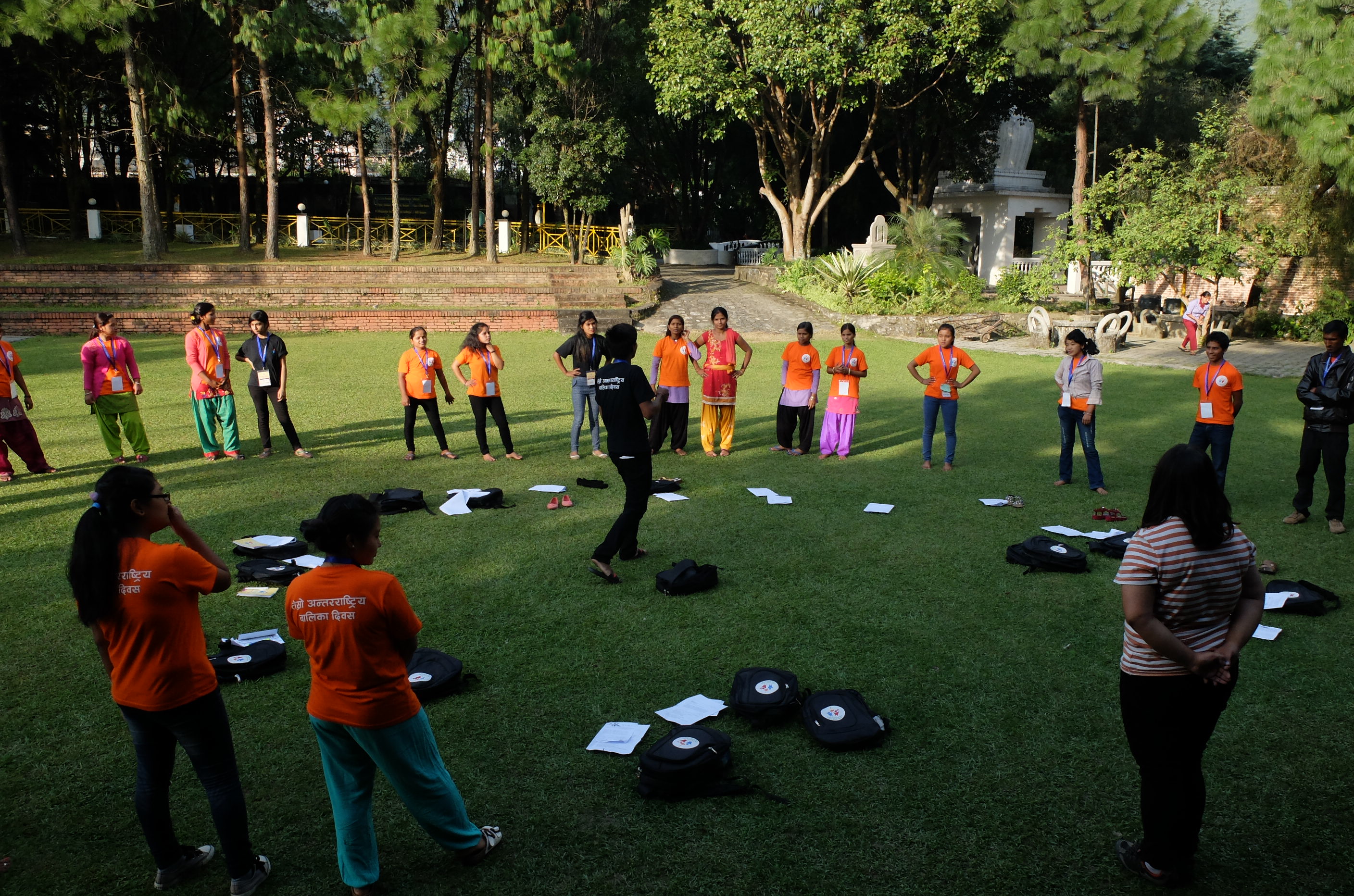
The other event that we recently conducted was the Self Defense session at the Girl Power Conference which took place from the October 11 013 for the Third International Day of the Girl Child. Thirteen organizations including Women LEAD Nepal, UNESCSO, UNHCR, UNICEF, UNFPA, Equal Access, Restless Development, VSO, CARE Nepal, CWIN Nepal, PLAN Nepal AMK and Yuwalaya organized the three day conference with a theme of empowering the adolescent girls and ending the cycle of violence.

The Self Defense session ran in two parts that were an hour long. A total of 30 participants in each group were present in one session. More than 62 participants total attended from over 31 districts of Nepal. During the Self Defense session, the participants held an interactive session about street harassment and the things that they should do if they were ever harassed- such as filing an FIR. There was a mixture of both boys and girls adolescents. We explained that they could learn these self defense techniques so as to protect their female members of their community and teach these techniques to their peers when they get back to school.

When asked to the participants what the best activity was of the day, most of the participants said that they really enjoyed doing the self defense sessions since it re-energized them and involved a fun physical exercise. They said that now they really felt empowered themselves and would also share their learning about self defense and ways to deal with street harassment when they would go back to their communities.

Another project on the pipeline for our SSH project is the forum theater for which we have recruited around 10 volunteers who are willing to commit their time for the activity. The volunteers are mostly high school students. We have also decided to collaborate with an expert on forum theater from a theater organization here in Kathmandu who will train our volunteers for the theater project. After the training session is over, we will visit different sectors and perform the forum theater project. We will shortly begin the training and then visit various schools, colleges and universities to do the forum theater and also conduct workshops and sessions on street harassment.

Since the 16 Days of Activism Against Gender Violence is going to be held in December, we are also making plans for how we can use that time to effectively bring attention to street harassment.

Aparna Singh is the Programs and Communications Associate for Women LEAD Nepal

Share

Filed Under: SSH programs, street harassment

Kenya: Preparing for a Campaign on the Ferry

October 21, 2014 By Contributor

Our six Safe Public Spaces Mentees are half-way through their projects. This week we are featuring their blog posts about how the projects are going so far. This second post is from our team in Kenya. Their projects are supported by SSH donors. If you would like to donate to support the 2015 mentees, we would greatly appreciate it!

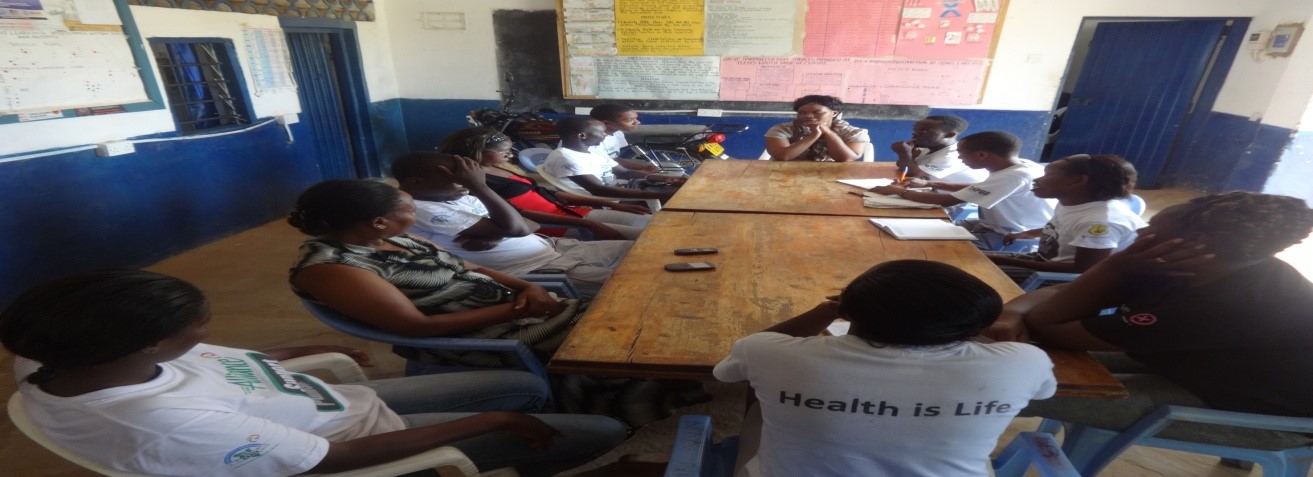
Planning about the ferry “Stop Gender Harassment” with our team at the Teens Watch Centre

We plan to hold a campaign about harassment on the ferry. Our pre-planning meeting in the community started with a word of prayer. Then Cosmos, the project manager, informed the participants that the purpose of the meeting was to learn more about street harassment, especially as we plan the five day exhibition at the stand on the ferry ramp dubbed “Stop gender based harassment on the ferry.”

Cosmos informed the participants that madam Holly at Stop Street Harassment had already raised and sent kshs. 22,000 which was for the support of the five day event. Cosmos expressed the situation on the ground that currently about eighteen women and two males had openly expressed their sadness on being badly touched or harassed on the ferry. Cosmos said that all was not in vain that fortunately one sex pest has been sentenced to two years prison term after a confident non fearing lady caught him and led him to the police post where he was immediately booked and taken to court the next morning.

Cosmos expressed that the reason for this campaigns is to have victims of this kind of harassment open up so that we can let people know that our Likoni ferry will not tolerate such kind of pests. He urged the participants to attend the exhibition in large numbers and support the campaign without fear.

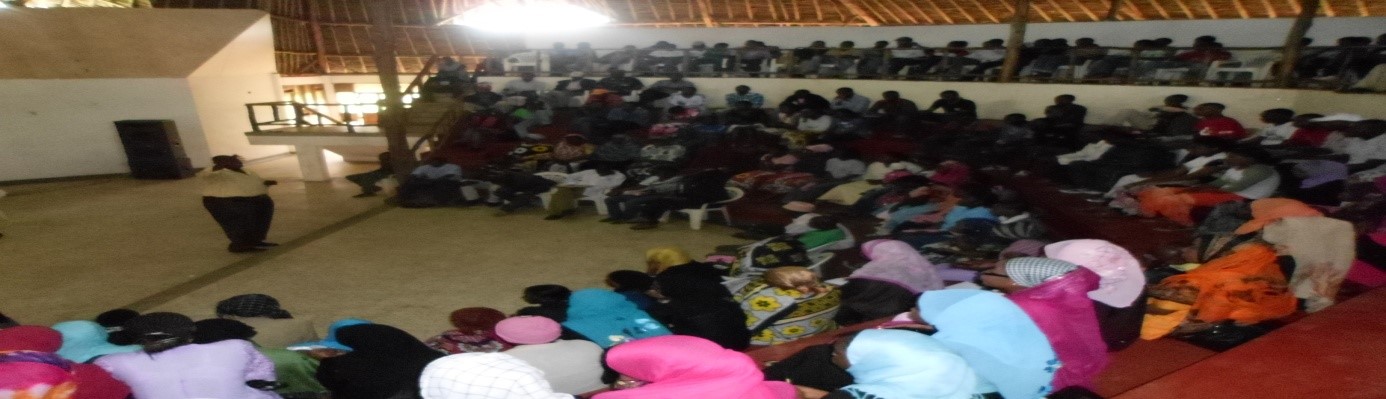
Talking to the Community about”stop gender harassment in our ferry” at the Kwale community hall

The pre-planning meetings have gone on well so far we have been able to reach out to three hundred and fifty participants from our community. This has included 112 males and 188 females. The most successful meeting was at the Kwale Community Social Hall where over 200 participants came to deliberate on the “Stop gender harassment on our ferry” campaign.  The participants arrived early and we discussed the topic in a participatory manner. One lady shared her story about how when she was carrying a baby in her back a man kept stroking her buttocks pretending he was playing with the kid. She expressed her sadness that no male who was around her on the ferry did anything but just stared at her and some laughed. She expressed her last sentiments with pain, “We are not toys to play with, respect our bodies” she pointed at the men.

A school girl also took the mike and expressed how a man old enough to be her dad kept rubbing his erect penis on her back in the crowded ferry. It felt so shocking and depressing she says. She ended with this message “Please, our fathers respect yourselves and we shall respect you. Zip-it-up”.

An elderly mother that we had invited to share her experience started by congratulating Teens Watch and the Stop Street Harassment campaign saying this campaign should not be a onetime event and we need to plan for it every year. She said she was one of the main victims of the sexual harassment on the ferry she said that it was around six o’clock when she boarded the ferry and as usual the ferry was packed with people, about two thousand to be exact. As a lady, she said, I tried my best to go towards where most women were packed. Of course the ferry as it is now it’s not a female friendly vessel. Soon the pushing and jostling started and I sensed a man patting my buttocks as if it was romance. I pushed further on and he kept following me pretending he was being pushed.

Suddenly I felt hard warmth pressing on me. By then the ferry was midway and everyone was concentrated on the ferry reaching the off ramp. The hardness was so uncomfortable I looked him straight in the eye harshly and he backed off. It was not until I reached the other side to get off that a lady screamed, “What’s on your back?” and as I turned and strained my neck behold a big lump of sperm was smeared on my back.

I was furious! Ladies came to my rescue wiped the sperm out. I tried to look for the man who had a yellow t-shirt on, but I couldn’t find him, there were so many people in yellow. In short, I am so annoyed with this pests, as you know I am not the only one. Many women are suffering quietly, but from now on, women I want to tell you to stand up for your rights. When a man dares to press on you, raise the red card, scream, and let his acts be known. And for the men and our brothers who are here, support us against this sex beasts that pretend to be men. She ended by saying, “a man does not count as a man because of pressing his penis on a helpless woman but by protecting women against harassment. Thank you.”

Resolutions passed in this pre-planning meeting

* That the Kenya ferry services should think about separating women from the men to avoid harassment.
* That the Kenya ferry should have CCTV cameras that work on the ferry and be operated at all times.
* That the Kenya ferry should allow the Teens Watch Centre to have posters displayed to Stop Street Harassment to create awareness and warnings to those intending to violate the rules.
* That the county senate should debate on a policy towards making street harassment or sex pest an act punishable by jail in Kenya.
* That women should speak up when assaulted or harassed and that men should support them when need arises.
* That we should identify a local women leader to push this campaign.
* That the five day exhibition and campaign should be held in December when schools are closed and more people are free so that they can participate.

Mr. Cosmus W. Maina is the Project Co-ordinator for the Teen Watch Centre in Diani Beach, Kenay, and the lead for the Safe Public Spaces team in Kenya.

Share

Filed Under: public harassment, SSH programs, street harassment

Serbia: Surveying Youth about Street Harassment

October 20, 2014 By Contributor

Our six Safe Public Spaces Mentees are half-way through their projects. This week we are featuring their blog posts about how the projects are going so far. This first post is from our team in Serbia. Their projects are supported by SSH donors. If you would like to donate to support the 2015 mentees, we would greatly appreciate it!

After the political change fourteen years ago, the civil sector in Serbia has been dealing with the transformation of extremely violent society. There are high rates of domestic violence, juvenile delinquency, slow judiciary, inadequate laws and even less adequate penalties, and a society that was not ready to change. These are just some of the problems that demanded immediate reaction. Thanks to consistent efforts of feminist groups and NGOs, we have a new set of laws and certainly more awareness about gender-based violence.

However, these circumstances led to the minimizing the issue of street harassment. Since there was no published survey, members of our group, Equity Youth Association, believed that the right way to start dealing with this issue is to collect the data, first. In Niš, Serbia, there is a University and over 19 secondary schools, so we decided to focus our survey on youth between 18 and 30 years old.

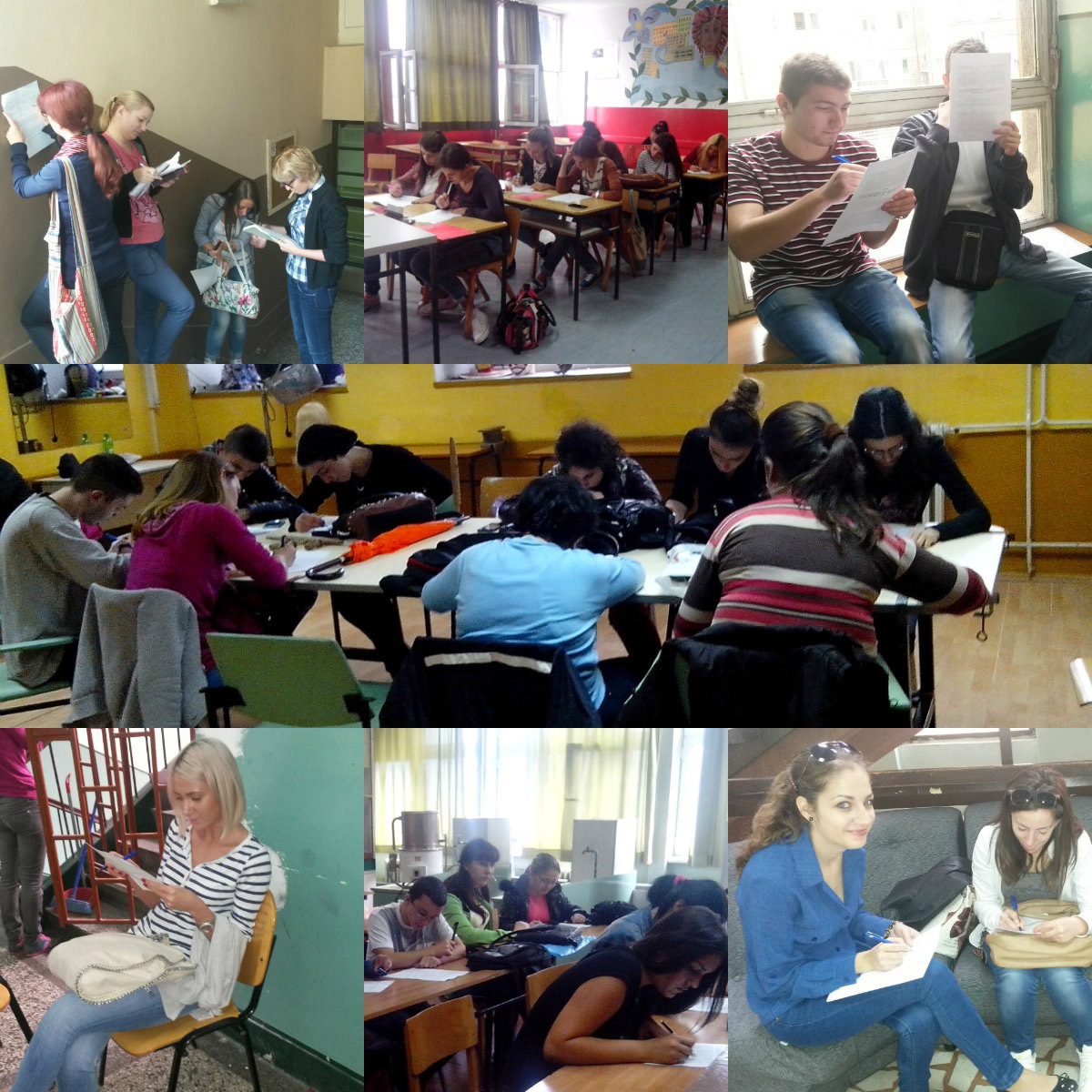
So far, we have conducted a survey in three secondary schools and at two Faculties. We weren’t very optimistic about how open schools and Facilities would be for collaboration since the education system had various difficulties at the beginning of the school year. We have been pleasantly surprised that we haven’t been rejected, yet.

Students taking their surveys!

What has encouraged us the most is the reaction of the psychologist of the school that has mostly female students: “I’m so glad you have brought up this subject. Our girls are completely unaware of what harassment is. And how couldn’t they be? We live in society where it is normal to stare and comment on everybody and everything. They are expecting to be looked at. They are taught that looking good is the only thing that matters. They validate themselves through how many offensive, primitive comments they receive daily. It’s disturbing.”

It was upsetting to hear that most of the described behaviors from our survey are seen as “normal” and an “every-day thing”. But, the fact that majority of girls aren’t feeling pleasant when they experienced these things was an indicator that this is something that can be changed.

Boys were quite honest, as well: “Of course I have done this. What is the other way to approach a girl, anyway? I have to draw her attention somehow. Once she meets me, she will know that I’m better than that.” So, they are aware that is wrong, they just don’t know what the alternative is.

One of the teachers shared her story with us: “During my class, in the classroom on ground floor, a man approached the window and started masturbating. Kids started to scream and he luckily ran away. But, I was so shocked that I was unable to move. When I come to think of it, I didn’t tell anybody about this, until now.”

We have also noticed that there are city parks where usually young people are gathered that are recognized as places where harassment occurs. Strangely enough, even though they are always full with young people, especially during the summer, street lighting in these places is not very good.

There are, as well, a few questions in our survey about the LGBT population, or people who are perceived as LGBT because of the stereotypes. These questions, as we have expected, were the one that have received the most reactions. One of the principals said that kids in his school are “normal” and have no idea what those words like gay and lesbian mean.

One of the girls got very angry when she read these questions. She had marched to her teacher and screamed: “Look what they are asking us. They are probably thinking that it’s ok to be a faggot or a dyke, but I would kill them all.”

The teacher was visibly uncomfortable because of the girl’s reaction and this is how she tried to make things right: “But, it’s not “their” fault that “they” are like “that”. I read about this. Something happens in mother’s body during third month of pregnancy that causes them to be like “that”.”

Living in homophobic society, we were expecting to get all kinds of reactions, but we weren’t prepared for this amount of ignorance. It is more than obvious that we need education among all structures of society.

The last set of questions in our survey is about legislation and the lack of the definition of sexual harassment in public places in our legal system. The students’ answers were rather discouraging. One law student wrote, “Making a legal frame won’t change a thing. Prosecutors are not able to prove there was a murder, let along street harassment. Rule of law is unattainable for us.”

However we are grateful for each and every reaction we get and every question answered. Hopefully, the results will indicate what should be our next step and what could really make a change.

Marija Stanković, Equity Youth Association and the lead SSH Safe Public Spaces Mentee in Serbia. 

Share

Filed Under: LGBTQ, SSH programs, street harassment

« Previous Page
Next Page »

Share Your Story

Share your street harassment story for the blog. Donate Now

From the Blog

  • #MeToo 2024 Study Released Today
  • Join International Anti-Street Harassment Week 2022
  • Giving Tuesday – Fund the Hotline
  • Thank You – International Anti-Street Harassment Week 2021
  • Share Your Story – Safecity and Catcalls Collaboration

Buy the Book

  • Contact
  • Events
  • Join Us
  • Donate
  • Facebook
  • Instagram
  • Pinterest
  • Tumblr
  • Twitter
  • YouTube

Copyright © 2026 Stop Street Harassment · Website Design by Sarah Marie Lacy