• About Us
    • What Is Street Harassment?
    • Why Stopping Street Harassment Matters
    • Meet the Team
      • Board of Directors
      • Past Board Members
    • In The Media
  • Our Work
    • National Street Harassment Hotline
    • International Anti-Street Harassment Week
    • Blog Correspondents
      • Past SSH Correspondents
    • Safe Public Spaces Mentoring Program
    • Publications
    • National Studies
    • Campaigns against Companies
    • Washington, D.C. Activism
  • Our Books
  • Donate
  • Store

Stop Street Harassment

Making Public Spaces Safe and Welcoming

  • Facebook
  • Instagram
  • Pinterest
  • Tumblr
  • Twitter
  • YouTube
  • Home
  • Blog
    • Harassment Stories
    • Blog Correspondents
    • Street Respect Stories
  • Help & Advice
    • National Street Harassment Hotline
    • Dealing With Harassers
      • Assertive Responses
      • Reporting Harassers
      • Bystander Responses
      • Creative Responses
    • What to Do Before or After Harassment
    • Street Harassment and the Law
  • Resources
    • Definitions
    • Statistics
    • Articles & Books
    • Anti-Harassment Groups & Campaigns
    • Male Allies
      • Educating Boys & Men
      • How to Talk to Women
      • Bystander Tips
    • Video Clips
    • Images & Flyers
  • Take Community Action
  • Contact

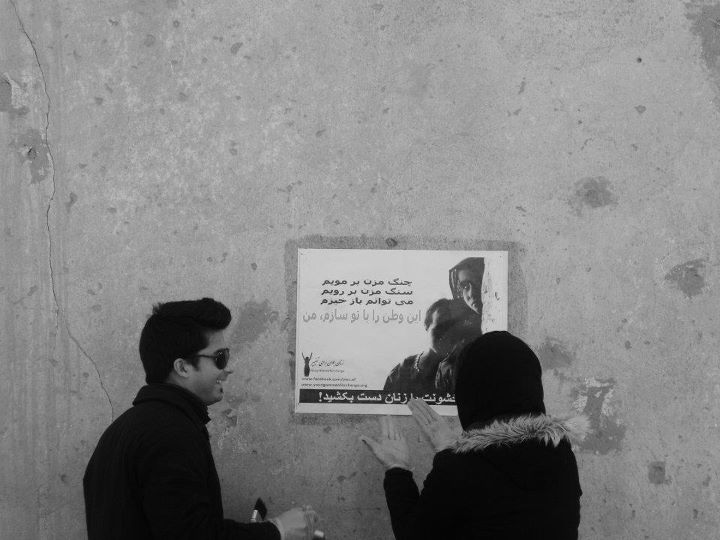
700 anti-violence posters pasted throughout Kabul, Afghanistan

December 26, 2011 By HKearl

These two blog entries are cross-posted with permission from the blog of Young Women for Change, a women’s rights group in Afghanistan:

Posting Our Voices on the City Walls

Friday, December 23, 2011, Young Women for Change (YWC) filled the streets of Kabul with posters about women rights messages.  It was another day of history, for the first time Kabul streets have seen women rights posters posted by Afghan men and women. We started poster advocacy from our Facebook page and website. Later, we decided to post it on the Kabul streets walls so it reaches every Afghan that crosses those streets.

I, like any other YWC member, was nervous about it, but as we moved through the city I felt stronger. It was rewarding when school students and every person on the street would read it, if they couldn’t read it, they would ask others to read it for them. After reading poster on the wall people would ask us to post posters on their cars.

I felt like my heart was going to melt down when we posted a poster and a shopkeeper who was there watching us posted it, couldn’t read it, and asked other person to read it. When he learned what the poster said, he started fixing the poster and glued it harder on the wall. Two policemen walked to the other side of the road to read our posters.

Others thought we were working for money and belonged to a foreign organization, without knowing the fact that we are an Afghan group and this project is funded by individual Afghans.  Maybe there are not to blame. We, youth, have not had much of ground level work and in the media, youth complain about what the government or others have not done instead of talking about what we can do.

The poster day was an example of how and with whom YWC wants to work. We want to reach every Afghan individually and work with them to change the stereotypes and bring the positive change to our country, ourselves. It is time we realized our responsibilities.

— By Anita Hadiary, YWC Co-Founder, 20

One Step Closer

The poster initiative began on Young Women for Change’s Facebook pages. Every week, we would post a poster about violence, street harassment or other forms of gender-based discrimination online. There would be debates on them. Many times, followers of our page would get into heated discussions with other Afghans who were favorable towards violence against women or practiced victim-blaming. The debates would reach to one hundred or more comments and tens of people would share the posters to their own Facebook pages or groups. It was striking how there were people among the so-called “educated people,” who had access to internet, and argued that it was somehow okay to beat a woman or disrespect her on the pretext of her clothing. At one point, a Kabul University student wrote, “my mother has her own place, but if my wife ever dares to disobey me, she will not be safe in my house.” Shocked, we shared the comment with others, and many women and men raised their voices to condemn it.

The amount of ignorance and misogyny we witnessed among the small percentage of people who had access to the internet and claimed to be intellectuals and educated, led us to believe in the need to do more advocacy in Kabul. To do this, we used our own money to print out posters, created some glue using ground wood and walked to the streets to post our views on the walls of Kabul city.

Today, about twenty five people, men and women, got together to glue 700 posters about violence against women and education for women on their city’s walls. Members of Young Women for Change and YWC Male Advocacy team led the initiative. A few members of other youth organizations, like Hadia and Afghan Intellectuals Network, also joined as we exited our modest office at around 11:00am. Four people had volunteered to give us their cars for transportation during the poster event. Ice was still shinning underneath our feet as we walked to the cars, divided up posters, brushes and glue among the groups and drove towards Sakhi Shrine in Karte Sakhi.

It was crowded there. Shopkeepers, laborer children who attempted to sell us gum or Bolany, a delicious Afghan dumpling, and women who had visited the shrine gathered around us as we organized and decided which areas to cover. We divided into four groups and each group hit one corner. Soon, one or two posters could be seen at the beginning of every street.

My team and I went to the front door of the shrine. We approached a shopkeeper to ask permission to post one of the posters on his wall.

– “What is this?” he asked me.

– “It is a poster about violence against women.”

– “I am against women. Don’t put this one on my walls. A man is a man. If he is angry, he beats. That is what men do. I am against this,” he said angrily.

I smiled with sadness and tried to convince him to give me permission to at-least glue the poster about education to his wall. I kept forcing myself to smile at him. My mother had warned me earlier in the day, that during the poster project I should keep my cool. “If you laugh about things, they will laugh too and eventually they will agree. If you are serious, they get angry more quickly thinking you are criticizing them,” she had said.

-“Let me study. Only one out of ten Afghan girls graduates high school,” I read the poster to him.

-“It is still about women,” he said.

– “It is about little girls. They need education otherwise our country will never be build,” I said with a smile. He shook his head reluctantly. My colleagues and I glued the poster to his wall.

Often, many we meet tell us we should do this sort of thing out of Kabul because people in Kabul are more educated and aware, but our conversations and encounters usually prove this statement wrong. Even in Kabul, the level of acceptance of a woman as an equal human is low. This encounter and many others during the day made us more confident that what we were doing is essential.

We went to Karte Char, Makrooyan, Taimani, Shahre Naw, Qalaye Fatullah and Khushal Khan Meena and we met many men and women who showed interest in our work, in addition to the ones who would oppose us. In Qalaye Fatullah, several laborer children gathered around a poster about early marriage and tried to read the poster to each other. Then, they ran over to the cars they were washing and told more kids about the posters. An old illiterate man, who polished shoes in Taimani, asked his friend to read it to him. Later, we saw him fixing the glue to save the poster from falling to the ground.

From the children who practiced reading with our posters, to older men and women who helped us and even to the men who argued with us and said that they did not want the posters, the hundreds of people we met and spoke with on Friday motivated us and gave us more energy. The reality that twenty-five Afghan women and men sacrificed their Friday, a weekend day, donated their money and resources and even endangered their safety to raise awareness among their people was another example of how Young Women for Change inspires Afghan youth to unite for creating a better Afghanistan.

– By Noorjahan Akbar, YWC Co-Founder, 20

Share

Filed Under: Activist Interviews, Stories, street harassment Tagged With: activism, posters, street harassment, young women for change

Snapshot of Street Harassment Stories, News, & Tweets: December 24, 2011

December 24, 2011 By HKearl

Read stories, news articles, blog posts, and tweets about street harassment from the past week.

** Sign up to receive a monthly e-newsletter from Stop Street Harassment ***

Street Harassment Stories:

Share your story! You can read new street harassment stories on the Web from the past week at:

Stop Street Harassment Blog

HarassMap Egypt

Resist Harassment Lebanon

Many of the Hollaback sites

In the News, on the Blogs:

* Gulf News, “Kuwait: Woman’s car smashed for ignoring admirer“

* New York Times, “Mass March by Cairo Women in Protest Over Abuse by Soldiers“

* Human Rights First, “Cairo Protests Persist as Clinton Criticizes Appalling Treatment of Women“

* Global Comment, “Evicted from Tahrir Square, a New Stage of Egyptian Protest Begins“

* Bloomberg, “Will Other Arab Women Follow Egyptian Sisters Into the Street?: The Ticker“

* Focus Taiwan, “Passengers urged to report sexual harassment on public buses“

* The Telegraph, “Sudden raids to tame teasers“

* Arab Times, “Sleuths nab Asian expat, seize 19.5 kg marijuana“

* Meme Burn, “Indian non-profit launches app to help fight sexual harassment“

* Huffington Post, “Violence Against Women: Keeping Up Our Resolve“

* Sonnet 87, “Street Harassment Will Always Get You Nowhere“

* Metro Boston, “Women Hollaback! at street harassment“

* The John Tesh Radio Show, “You Can Combat Street Harassment“

* In These Times, “Fighting Sexual Assault, One Tweet at a Time“

Announcements:

New:

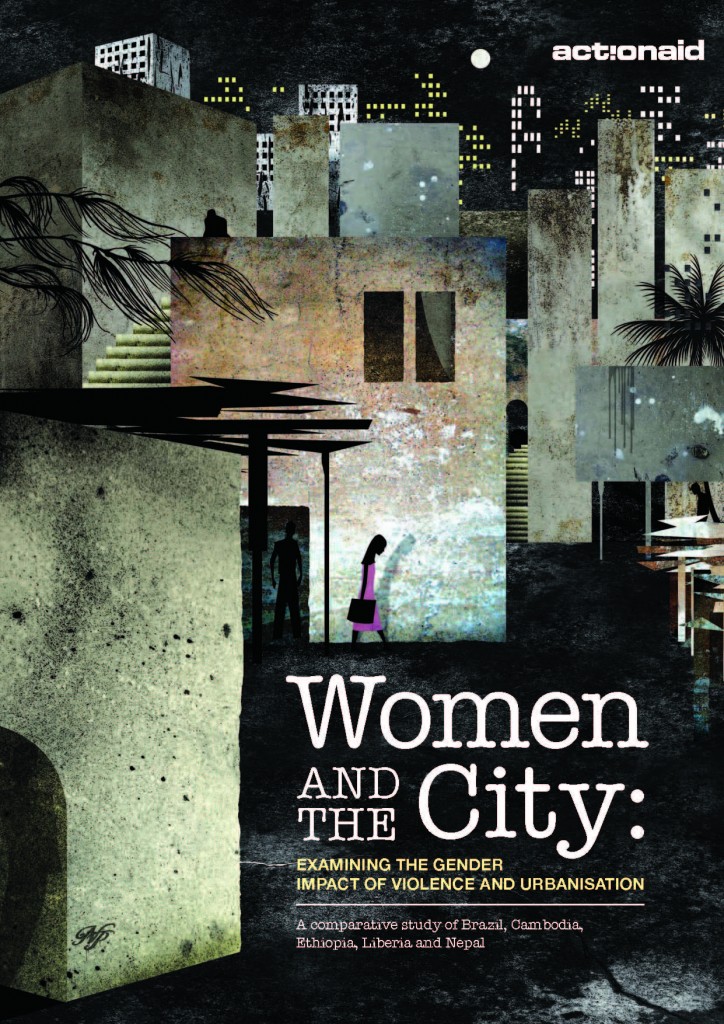
* Read the ActionAid report Women and the city: Examining the gender impact of violence and urbanisation.

Reminders:

* The Adventures of Salwa campaign launched a hotline for sexual harassment cases in Lebanon: 76-676862.

* In Bangalore, India, there is a new helpline for street harassment 080 – 22943225 / 22864023

* Find 6 ideas for holiday gifts that promote safe public spaces.

* The 5th edition of the prestigious textbook Women: Images & Realities, A Multicultural Anthology is now available. For this printing, they included a few pages about street harassment! (see #143)

* Students living in Bangor, Gwynedd, Wales, are encouraged to take a new street harassment survey. The survey is organized by Cymdeithas Y Merched Bangor Women’s Society.

* You can purchase the Stop Street Harassment book for 50% off right now!

20 Tweets from the Week:

1. allison_francis Lately I’ve realized the majority of men aren’t aware the majority of women experience street harassment. Blows my mind. It’s every day.

2. EmptyNestExpat I stayed home New Year’s Eve last year in #Istanbul because of the street harassment stories.Someone is taking action! tinyurl.com/c4ammfj

3. Caro130 Playing on phone as excuse to ignore sole fellow rider on this bus– asshole whispering “pretty” and making kissy noises. #streetharassment

4. BlackfeministUK Is anyone doing some thing for International Anti-Street Harassment week/day this spring in the UK? RT PLEASE

5. AmoAmmo #streetharassment RT @DawnHFoster: I just got sexually harrassed on Old Kent Rd by a man in a LEOPARD PRINT SLANKET. This is a new low.

6. Psypherize Soon the entire of #Egypt RT @randamali: The only place where I’m not scared of men is #Tahrir. #EndSH

7. chels7391 I hate when guys whistle or catcall at me, it’s desperate and just plain out rude!

8. sandychoi I know it’s rough, dudes in #Qatar, but driving up to a 7 mth pregnant woman on the sidewalk to catcall is a new low. HARAM, MUTHERF*CKER.

9. danielleprescod You can’t catcall me and ask me to help the homeless in the same breath

10. JessiDG RT @FarahSaafan: Men forming a cordon around women so no1 would harass us! Loud chants against Tantawi #Tahrir” streetharassment @HarassMap

11. nickol3465 One thing I hate is harassment your walking down the street then a person that u don’t even know starts to harass u (MAKES Me mad)

12. mernathomas Loud bang as the metro was taking off, women all screamed. Turned out just a sexual harasser banging on the window #weladKalb #endSH #Egypt

13. Hana_Zuhair Perverts, expect another #womenmarch soon. #EndSH

14. MahaElSherif Random strangers now feel inclined to condemn/stop harassment on the street #womensmarch #tahrir

15. EarthAngel1616 #Streetharassment is NOT OKAY. It makes people feel violated and unsafe in public spaces.

16. CorinneBA_Someone is following me! scary enough. he even have the guts to sit next to me in the bus, what should i do #endSH #nasawiya #lebanon

17. mernathomas No escape from sexual harassment, nt even @home. A harasser calls ur phone once “by mistake”,then continues calling night&day. #endSH #Egypt

18. clairesgould Note to middle-aged man at Tenley metro: don’t say hi to me like you know me, then wink. #ew #streetharassment

19. adventurecub Guy yelled after me “You’re a brainwashed moron!” because I ignored his catcall. I kindly doubled back showered him with obscenities.

20. jennpozner Strangers+street harassment=no consent. What context wld b OK? RT @RenZephyr @MsNicoleClark @ihollaback that depends on context &consent,no?

Share

Filed Under: News stories, Stories, street harassment, weekly round up

“The law shields perverts like him”

December 23, 2011 By Contributor

Though this happened a few months ago, it is my hope that by posting this story, I can alert someone else if this person happens to still be in NYC & still harassing women.

This was during the summer months, as I was still wearing shorts. He was a tall, thin white male, 20s-30s, with a blond crew cut. He was carrying a gym back & was in workout clothes. He could very well have been one of the military types or a skinhead.

It was about the early evening, around 7:30 p.m. as I was on my way to the theater to see a show. The train was crowded.

He took every opportunity to rub his hairy blond leg against mine. And even when I got off, he still spread his leg to try to cop one last feel. I dodged him successfully, but still ran into some of the other people in my attempt to get away from him.

Still shaken by what happened, I wasn’t sure if I should report him or not. So I circled the station & finally went to the MTA booth to report him. I waited 20 minutes until the police came & described the guy. The police couldn’t do anything because “no crime was committed.”

I don’t know if he was caught, but in case this guy is still out there, please be aware & continue to report him. The law shields perverts like him, and he probably knew what he could get away with.

As I am a petite Asian female, I don’t know if this guy thought he could get away with this because he thought I’d find it flattering, but whatever, men like him need to be stopped. Though I was not as bold as I wished I could be, I hope someone else can take courage from my story and serve this guy some good ol’ vigilante justice, especially if the NYPD can’t do anything.

– Anonymous

Location: New York City 50th Street station on the 1 train line

Share your street harassment story today and help raise awareness about the problem.
Find suggestions
for what YOU can do about this human rights issue.

Share

Filed Under: Stories, street harassment

“I hate how NORMAL it is, how it is part of my environment, like the weather”

December 22, 2011 By Contributor

I am 31 years old. For the past 13 years of my life I have endured street harassment from male strangers whenever I am in public alone. Over the years it adds up to hundreds upon hundreds of men who believe they have the right to do it and enjoy it.

One of the more memorable incidents was being followed closely by a group of four men in the middle of the day. They were loudly making sexual comments about my body. They kept following me until I angrily turned around and told them to fuck off.

I kept walking, shaking with rage and went into a book store to calm down a little and center myself again. Five minutes later one of them appears at the door of the shop, threatening to beat me. I refused to pay him attention so he walked up to me in the store and circled around me, telling me to “get my boyfriend down here” so he can beat him. At this point the shop owner told him to get out or she would call the police. He eventually left.

Male strangers have come up to me on the street asking to fuck me. If I stand up for myself and tell them where to go, there are two reactions. 1) They either hurl abuse at me, calling me a bitch or a cunt, or 2) they find it amusing that I am angry.

I have large breasts and at times of desperation I have thought of binding them. Summer is the worst. I now refuse to wear short skirts no matter what the weather. One of the last times I wore a short skirt in summeran old man came up to me on the street and whispered in my ear, “You looking good babydoll”.

I loudly told him he was a piece of shit for harassing women like that.

His response? “Why did you wear that skirt then?”

I don’t quite know how to deal with it anymore. So many days I will leave the house happy and then it happens and I want to scream or cry but I can’t do anything and I feel choked with rage.

I hate how NORMAL it is, how it is part of my environment, like the weather, and I feel powerless to change it. I want to be able to leave my house without men treating me as a piece of meat, as a collection of body parts. I want to been treated as person not a body.

– Emma

Location: Launceston, Australia

Share your street harassment story today and help raise awareness about the problem.
Find suggestions
for what YOU can do about this human rights issue.

Share

Filed Under: Stories, street harassment

Five Country Study on Women’s Safety in Cities

December 20, 2011 By HKearl

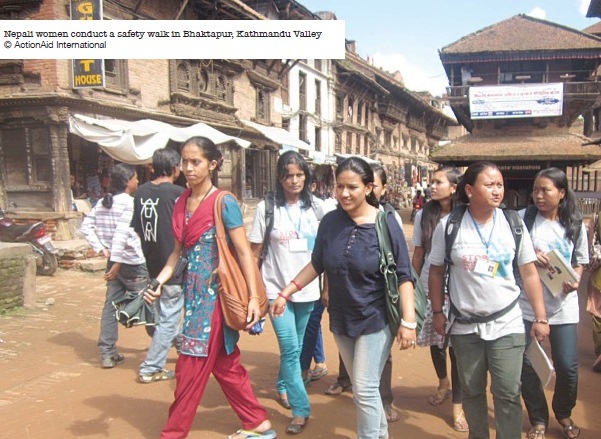
Nepali Women conduct a safety walk

“I carry safety pins with me while travelling. Whenever I feel that I am being harassed by someone around me, I poke him with my safety pin. It alerts the person who is conducting such violence on me. I was taught to do it by seniors in my college. I was hesitant to do it at first, but I found that when my friends did it, the person who harasses tends to back off. So that gave me confidence to use it by myself as well. .. ” – A college student in Nepal

“A woman I know felt safe in this community because of the [gangsters/traffickers] who took care of the community, who watched over everything that happened. But that only gives you security when they don’t have their eye on you [i.e., want to date you]…the man who watched over the entrance to the community one day decided he wanted to go out with her, and he told her to go get dressed up to go out the next day at 7 p.m. If she didn’t go out with him, he was going to kill her children and husband. She didn’t have a choice.” – A woman in Brazil

“When we [are] leaving factory, there are crowd[s] and gangsters often come to touch women’s bottoms and they laugh and feel it’s normal. There have also been instances where workers were sexually assaulted by gangsters during daylight hours.” – A garment factory worker in Cambodia

How safe are public places for women who work in factories in Cambodia, for university students in Liberia, for street vendors in Ethiopia, for women commuters in Nepal, and for women in Brazil?

The NGO ActionAid conducted a participatory study to find out the answer. Through using safety audits, focus groups, and mapping, groups of women discussed and showed what about their cities make them feel insecure. Unsurprisingly, there were a lot of reasons why they felt unsafe, including personal experiences of harassment or assault, wariness of local drug traffickers, and poorly lit roads.

The findings from the study and the recommendations for making cities safer for women are available in the fascinating report Women and the City: Examining the gender impact of violence and urbanisation.

I highly recommend reading the report as it provides an in-depth slice of information about five demographics of women in five different countries and because the study was conducted and written in such a way that the women were able to share their stories and speak for themselves.

Through email correspondences, the report author Alice Taylor told me why she thinks the study is important:

“I think it’s crucial to look at issues of how cities are developed and are growing — in ways that are equal and unequal to their citizens — and violence against women together, to see how different kinds of risk factors intersect to influence women’s lives.”

She also spoke to its challenges:

“It was challenging to analyze and bring together such different contexts and approaches into one report, but it demonstrated how prevalent forms of insecurity are for women across urban settings.”

And she shared three findings that stuck out to her the most from her process of writing the report:

“First, the ways in which women constantly have to calculate and avoid routes in their own cities – that was universal.

Second, the finding about the popularity of mapping, which I think holds a lot of promise as a community-based and participatory approach as well as a powerful advocacy tool.

Third, I think there’s a lot to develop in the future in terms of ethics and “do no harm” when doing research on women’s urban safety, as well as monitoring and evaluation to understand what works.

After the five country profiles, the report concludes with six recommendations for making cities safer for women (starting on page 61):

1.      Raise awareness of the problem

2.      Build government commitment

3.      Change social norms for prevention

4.      Build institutional capacity to address the problem

5.      Strengthen networks for advocacy

6.      Conduct research for evidence-based programmes and policies.

Their recommendations aligned closely with the ones I wrote in my book (e.g. raising awareness, changing social norms, and conducting research).

In conclusion, Taylor offers her thoughts on where further research is necessary:

“I think a big question out there, is to further articulate gender analysis around urban safety: which types urban violence/ insecurity are particularly dangerous for women (i.e., poor men experience higher murder rates and are also greatly affected by poverty), why, and what interventions can be designed.”

Share

Filed Under: News stories, Stories, street harassment Tagged With: ActionAid, Alice Taylor, brazil, Cambodia, Ethiopia, Liberia, Nepal, report, street harassment

« Previous Page
Next Page »

Share Your Story

Share your street harassment story for the blog. Donate Now

From the Blog

  • #MeToo 2024 Study Released Today
  • Join International Anti-Street Harassment Week 2022
  • Giving Tuesday – Fund the Hotline
  • Thank You – International Anti-Street Harassment Week 2021
  • Share Your Story – Safecity and Catcalls Collaboration

Buy the Book

  • Contact
  • Events
  • Join Us
  • Donate
  • Facebook
  • Instagram
  • Pinterest
  • Tumblr
  • Twitter
  • YouTube

Copyright © 2026 Stop Street Harassment · Website Design by Sarah Marie Lacy