• About Us
    • What Is Street Harassment?
    • Why Stopping Street Harassment Matters
    • Meet the Team
      • Board of Directors
      • Past Board Members
    • In The Media
  • Our Work
    • National Street Harassment Hotline
    • International Anti-Street Harassment Week
    • Blog Correspondents
      • Past SSH Correspondents
    • Safe Public Spaces Mentoring Program
    • Publications
    • National Studies
    • Campaigns against Companies
    • Washington, D.C. Activism
  • Our Books
  • Donate
  • Store

Stop Street Harassment

Making Public Spaces Safe and Welcoming

  • Facebook
  • Instagram
  • Pinterest
  • Tumblr
  • Twitter
  • YouTube
  • Home
  • Blog
    • Harassment Stories
    • Blog Correspondents
    • Street Respect Stories
  • Help & Advice
    • National Street Harassment Hotline
    • Dealing With Harassers
      • Assertive Responses
      • Reporting Harassers
      • Bystander Responses
      • Creative Responses
    • What to Do Before or After Harassment
    • Street Harassment and the Law
  • Resources
    • Definitions
    • Statistics
    • Articles & Books
    • Anti-Harassment Groups & Campaigns
    • Male Allies
      • Educating Boys & Men
      • How to Talk to Women
      • Bystander Tips
    • Video Clips
    • Images & Flyers
  • Take Community Action
  • Contact

Attention Artists: Have Your Work Featured by SSH and Feminist Apparel

June 5, 2016 By HKearl

I have an exciting opportunity to share —

Feminist Apparel is setting up collaborations with nonprofits like SSH where they will sell shirts and related products for us and the nonprofit will get a portion of each sale, to be split with the artist who creates the shirt designs. Also, the artists will get shoutouts/link love on the FA and SSH websites.

We’re looking for artists who are interested in having their designs considered for the products!

What file type/size should I send my design in?

Send vectorized files or photoshop or TIFF files, no less than 300dpi at 12 inch by 12 inch Also, make sure all images are on a transparent background.

Note: They already partner with Hollaback, so don’t want to duplicate any of their designs.

Send design ideas to Holly at HKearl @ Stopstreetharassment. org

Share

Filed Under: SSH programs, street harassment

“None of us were amused or thought he was joking”

June 4, 2016 By Contributor

I was at Target with three of my friends (all girls) and one of them wanted to get coffee from the Starbucks that was inside the Target. So the four of us went over and waited in line and it was moving pretty slowly and after a while this guy came up to us. He had a big cart and kindly asked us to let him through and as he was passing us he stopped. He stood really close to us and said, “Did you know that, in my past life, I was hanged for killing young intelligent women like you? I ran them over in a place just like this but of course it wasn’t called Target back then.” We all just stared at him. We were so creeped out. He continued, “Haha I’m just joking. Thank you pretty ladies for taking the time to let me joke with you today.”

None of us were amused or thought he was joking.

Fast-forward about 10 minutes. We had discussed creepy man and one of my friends said he reeked of alcohol and we had seen him talking to another group of people from our school (we were 14/15 at the time) and he touched one of their shoulders so when we had our drinks we got the hell out of there. We were trying to leave before he saw us again and just avoid him all together but that didn’t work so well. He abandoned his cart and followed the four of us for almost five blocks. He even took shortcuts to catch up to us and we sprinted away because we were so terrified.

We were so focused on getting away from him that we forgot about the police station right across the street that everyone said we should have gone to.

Optional: Do you have any suggestions for dealing with harassers and/or ending street harassment in general?

Educate people Educate people about how it is actually offensive and creepy, not a compliment.about how it is actually offensive and creepy, not a compliment.

– Anonymous

Location: Minneapolis, MN

Share your street harassment story for the blog.
See the book 50 Stories about Stopping Street Harassers for more idea.

Share

Filed Under: Stories, street harassment

“Now I am 19 and the trauma is still here”

June 3, 2016 By Contributor

I was 14 years old and I was heading to the swimming pool on the 4th floor of the building. It was in the winter so I wore a lot of clothes.

As I entered the elevator, three drunk men followed. During the elevator ride, one of them tried to hug me by my shoulder (it was obvious. It couldn’t have been an accident). I silently moved away, feeling absolutely disgusted. Then another one of them said in a repulsive tone, “Don’t harass such a little girl” (he said that in a way that made it sound so light and that it wasn’t a big deal at all).

The one who tried to harass me added, “Ewwwwww. I didn’t. How could I have my eyes on someone as unattractive as her.”

And then they reached their floor and left, leaving me alone in the elevator. I started crying not only because they completely ruined my evening and tried to harass me, but also because they left such a harsh comment on me. I was at a sensitive age and they action destroyed me.

Now I am 19 and the trauma is still here.

(the dialogue was originally in Chinese.)

– LL

Location: Shanghai, China

Share your street harassment story for the blog.
See the book 50 Stories about Stopping Street Harassers for more idea.

Share

Filed Under: Stories, street harassment

“This is Hollywood… What do you expect?”

June 1, 2016 By Contributor

Last night I was walking to Hollywood and Highland mall along Hollywood’s main strip. It was getting dark, but it wasn’t pitch black. A man walking towards me started to veer in my direction and I knew he was going to try to talk to me. He kept bothering me, asking me for my name and my IG, but I refused to give him said information and kept walking. He said that he was going to keep following me and even asked me if I thought he was crazy. I just did my best to ignore him, put in my headphones, and picked up my pace.

I walked about a block and a half when I looked over my shoulder and realized he was standing at the crosswalk with me. I didn’t panic but I did tell him to stop following me. He proceeded to say,”This is Hollywood… What do you expect?”

I’ve lived in Hollywood for a year. This isn’t the first time I’ve been followed; creepy, older men hit on me almost everyday. I’ve even been proposed to. However, this is the first time I’ve felt this unsafe. I actually still catch myself looking over my shoulder. I think the hardest part is, as a minority, my negative experiences will (more likely than not) be overlooked by on-goers, activists, and police alike. Is it because they assume that I want this attention? Or does my skin colour relegate me to a lesser need for security and safety? I don’t know.

Optional: What’s one way you think we can make public places safer for everyone?

I think loitering laws should be a lot stricter in Hollywood. Grown men shouldn’t just be allowed to laze about on street corners for the sole purposes of passing time and “hollering” at women.

– JCH

Location: Hollywood, CA

Share your street harassment story for the blog.
See the book 50 Stories about Stopping Street Harassers for more idea.

Share

Filed Under: Stories, street harassment

USA: My Literary Introduction to Street Harassment

May 31, 2016 By Correspondent

Deborah D’Orazi, NY, USA, SSH Blog Correspondent

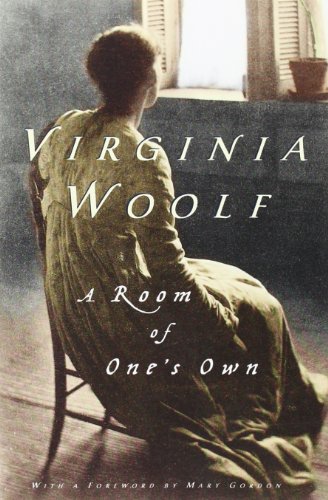
VWoolfThe first time I remember reading about street harassment and recognizing it for what it was was in Virginia Woolf’s iconic essay, A Room of One’s Own, when I turned 17. In the essay, Woolf sets out on a momentous task to speak on women and literature and ends up writing about her journey searching for women in literature, women who write literature, and why women are not more prudently featured within the realm of literature since they are so often portrayed as the inspiration for what are deemed some of the greatest and most romantic written words in the English language. To her dismay, Woolf finds little evidence of women in literature (outside of the occasional female ruler or writer and the consistent muse or romantic interest—typically always written by men). She is then determined to journey and figure out why. Ultimately, she comes to a remarkably economic conclusion stating that “a woman must have money and a room of her own if she is to write fiction”. What is even more profound is that Woolf demonstrates that this economic necessity for a woman’s career and independence within the private sphere is not at all possible without uncompromised, safe access to the public sphere, or public spaces without harassment or the threat of it.

This subject is explored early on in Woolf’s essay when she is beginning to contemplate and research her ideas. While Woolf encounters the beginning of an idea on a walk and starts to chase it she is promptly interrupted when “instantly a man’s figure rose to intercept me”.  Woolf is instantly aware of the power dynamics. She is a woman visiting a man’s college, thus despite the space being open for her and others to walk in, she must remain on the gravel while male college members walk on the turf. She notes that this territorial power play did not actually physically harm her, but she did lose her thoughts and ideas that were so precious to her.

I am sure many would argue that this incident was not street harassment because it took place in a seemingly private space or that this incident was just a mere a sign of the times Virginia Woolf lived in. However, this indicates the importance of understanding the very definition of street harassment.

At Stop Street Harassment we use the following definition: “unwanted comments, gestures, and actions forced on a stranger in a public place without their consent and is directed at them because of their actual or perceived sex, gender, gender expression, or sexual orientation.”

Virginia Woolf, who undoubtedly came from a very privileged background and lived a very privileged life, was still looked down up, criticized, and harassed because she was a woman taking up space within the public realm, where typically men dominated and still dominate today. As Woolf notes in her essay, “The only charge I could bring against the Fellows and Scholars of whatever the college might happen to be was that in the protection of their turf” which sent her ideas into oblivion.

Yet, how many ideas, leisure and social activities, or mere existences of women, racial and ethnic groups, religious minorities, LGBTQIA individuals, differently abled people, etc. have been disrupted because the public sphere is, in fact, not so public. It is important to note this intersectionality because women inhabit all of them and as women and other disenfranchised groups gain rights and visibility within the public sphere, harassment remains a constant. This constant serves as a reminder that people must remain within a social constructed role, no matter how much it inhibits or oppresses them. And it is often quite effective in limiting and changing where people travel geographically, whom they socialize with, and where a person may go for services. For example, if a girl is harassed on her way to school, depending on her individual situation, she may have to change her route, endure the harassment, or stop going to school all together. All of these situations create a legacy of trauma and undue economic burdens that disenfranchise an individual, community, and population. It is not at all uncommon for women to consider changing their routine or way they lived to avoid street harassment. As documented by a Penn, Schoen and Berland Associates survey from 2000 it was discovered that 84 percent of women would “consider changing their behavior to avoid street harassment.”  How much economic opportunity have women and other communities lost because of harassment? How much safety? Too much for my liking.

So, what should we do? Educate, advocate, organize, speak out, protest, create policy, listen, and support each other. Many people have experiences, some similar and some different, but recognizing the reasons for street harassment and the many forms it takes for different people and communities is important for an inclusive movement. It is a hard journey, but combating street harassment in its many forms as misogyny, racism, classism, homophobia, transphobia xenophobia, abelism, etc. is just as important as speaking out. So many have been harassed into silence, trauma, injury, hurt, and death in public spaces throughout countless years that it is important to note the many reasons why. Without this understanding and cooperation more people will be oppressed and more people will continue to be left out of public spaces and, consequently, public life.

Street harassment is a push back towards oppression and objectifying. Let us strive to make a world where people’s private and public lives can thrive and where people can have safe access to safe places and safe public and private lives. As Virginia Woolf wrote in another essay, “Thoughts on Peace in an Air Raid”, “mental fight means thinking against the current, not with it” and we must continue fighting against the current in order to achieve justice and equality for everyone to use public spaces freely.

Deborah is a recent MSW graduate who also received certification from American University’s Women and Politics Institute and Rutgers’ Center on Violence Against Women and Children. In addition to social work, Deborah is looking to pursue an MPP/MPA and she is also extremely passionate about the arts (theater, writing, film, television, fine art, poetry, performance art), history, and Hamilton.

Share

Filed Under: correspondents, street harassment Tagged With: literature, Virginia Woolf

« Previous Page
Next Page »

Share Your Story

Share your street harassment story for the blog. Donate Now

From the Blog

  • #MeToo 2024 Study Released Today
  • Join International Anti-Street Harassment Week 2022
  • Giving Tuesday – Fund the Hotline
  • Thank You – International Anti-Street Harassment Week 2021
  • Share Your Story – Safecity and Catcalls Collaboration

Buy the Book

  • Contact
  • Events
  • Join Us
  • Donate
  • Facebook
  • Instagram
  • Pinterest
  • Tumblr
  • Twitter
  • YouTube

Copyright © 2026 Stop Street Harassment · Website Design by Sarah Marie Lacy