• About Us
    • What Is Street Harassment?
    • Why Stopping Street Harassment Matters
    • Meet the Team
      • Board of Directors
      • Past Board Members
    • In The Media
  • Our Work
    • National Street Harassment Hotline
    • International Anti-Street Harassment Week
    • Blog Correspondents
      • Past SSH Correspondents
    • Safe Public Spaces Mentoring Program
    • Publications
    • National Studies
    • Campaigns against Companies
    • Washington, D.C. Activism
  • Our Books
  • Donate
  • Store

Stop Street Harassment

Making Public Spaces Safe and Welcoming

  • Facebook
  • Instagram
  • Pinterest
  • Tumblr
  • Twitter
  • YouTube
  • Home
  • Blog
    • Harassment Stories
    • Blog Correspondents
    • Street Respect Stories
  • Help & Advice
    • National Street Harassment Hotline
    • Dealing With Harassers
      • Assertive Responses
      • Reporting Harassers
      • Bystander Responses
      • Creative Responses
    • What to Do Before or After Harassment
    • Street Harassment and the Law
  • Resources
    • Definitions
    • Statistics
    • Articles & Books
    • Anti-Harassment Groups & Campaigns
    • Male Allies
      • Educating Boys & Men
      • How to Talk to Women
      • Bystander Tips
    • Video Clips
    • Images & Flyers
  • Take Community Action
  • Contact

Watch Activists from Four Countries Talk about Street Harassment

December 17, 2015 By HKearl

Last month, Bluestockings hosted the New York City event for the release of my new book Stop Global Street Harassment: Growing Activism Around the World (Praeger 2015).

I was joined by seven co-presenters who shared their personal street harassment experiences and activism stories. Bisi Alimi is from Nigeria and lives in London; Gaya Branderhorstof Straatintimidatie is from the Netherlands and lives in New York; Alicia Wallace of Hollaback! Bahamas is from the Bahamas and just moved to New York; Ileana Jiménez is a high school teacher in New York City who talks about street harassment with her students; she brought two of her students who shared their stories, Shana and StellaRose; and Brittany Brathwaite is a community organizer for Girls for Gender Equity (GGE) in New York City.

Documentarians Lola Godeau and Sophia Philip videotaped the whole event and kindly let me share it publicly with you all via our YouTube channel. It includes the audience Q&A.

Share

Filed Under: Activist Interviews, Events, hollaback, LGBTQ, male perspective, Resources, SSH programs, street harassment Tagged With: activists, bluestockings, stop global street harassment

The Netherlands: The Revolution Will be Tweeted

December 16, 2015 By Correspondent

Eve Aronson, Amsterdam, the Netherlands, SSH Blog Correspondent

What’s in a word? In a character?

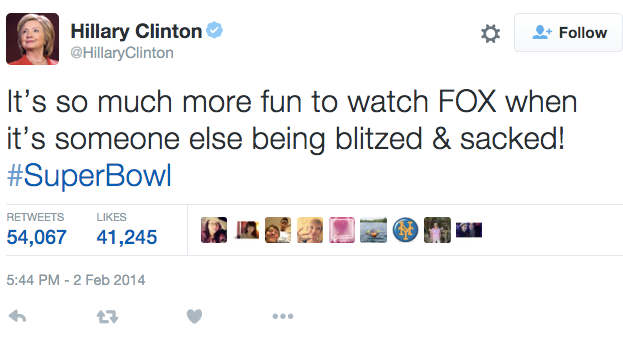
During last February’s Super Bowl Sunday in the US, presidential candidate Hillary Clinton found out.

hillaryclintonWith her excruciatingly ordinary tweet about American football and politics, Clinton unintentionally showed the power of 140 characters broadcast to 4.9 million vaguely- connected social media followers.

According to blogger Bridget Coyne, the tweet was retweeted over 57,000 times and prompted 33,600 new followers, ten times Clinton’s average daily follower growth.

While there are plenty of social media critics out there (and there are many), there is no denying the powerful potential of social media platforms to provoke engagement and build interest in everything from funny cats to presidential debates.

In the sphere of anti-street harassment, social media is being used to not only quickly broadcast people’s experiences but to connect and empower folks with shared experiences.

Not unlike Clinton’s wildly popular tweet, more and more people are engaging with social media platforms like Twitter, and important issues like street harassment are gaining some serious momentum.

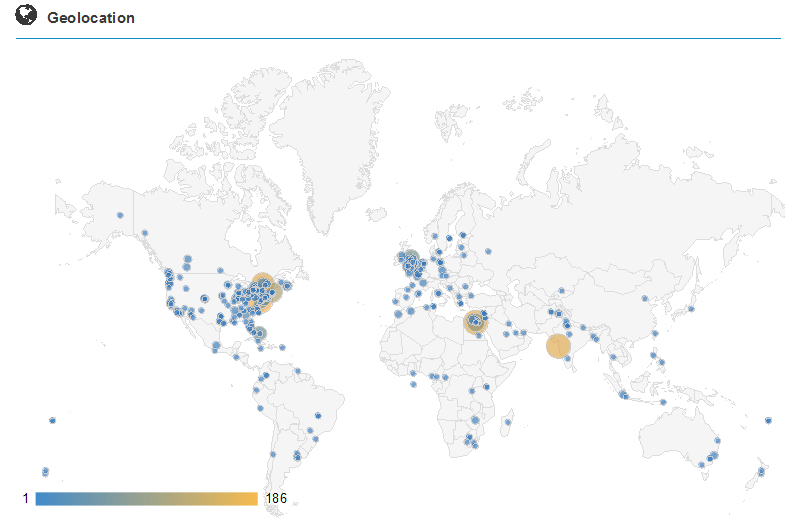
The figure below maps the global conversation about street harassment using the hashtag #endSH from 2014-2015:

endsheweek

(Source: Followthehashtag 2015)

With a reach of over 13 million, the above map speaks not only to global experiences of street harassment, but also to individuals around the world collectively exposing the phenomenon and, in doing so, working to unsettle and resist the power structures that sustain it.

Towards Sousveillance

We can also look at simple actions like tweeting as a means to empower those targeted in street harassment interactions— like women of all backgrounds and people of color or LGBTQ folks of all genders— by turning what is conventionally known as the “gaze” back onto harassers.

This practice of using social media to do this— either by sharing a story, an opinion or by offering virtual support to someone else posting about their experience— is what is called “sousveillance”.

Coupled with digital technologies like mobile phone apps, geo mapping or online platforms for sharing experiences about street harassment, what ‘sousveillence’ does is put the ball back into the court of the individual who experiences street harassment.

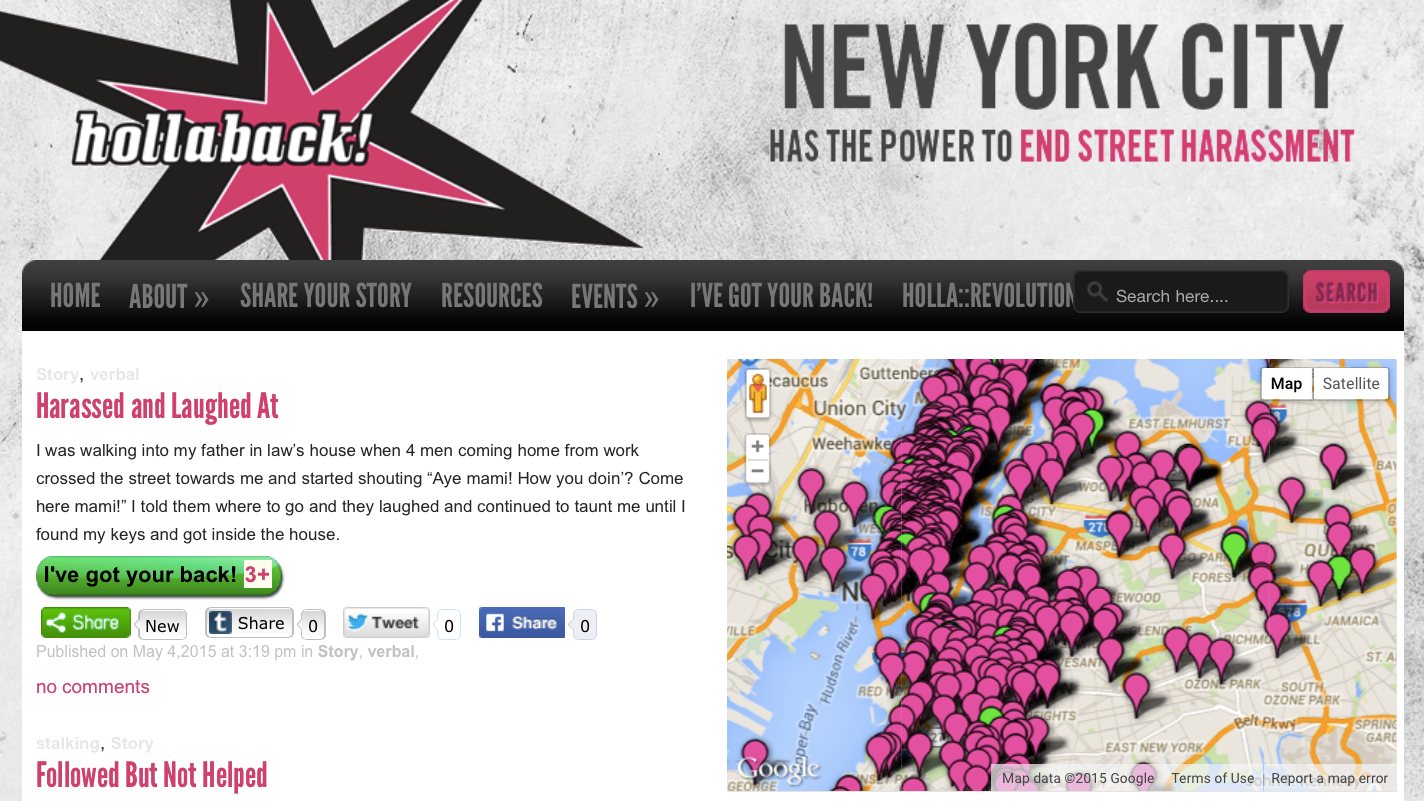
We can see in the map below how, for example, Hollaback! New York embeds geo mapping into its site to “sousvey” harassers as well as to visualize and map bystander presence. On the map, red dots represent reports of street harassment, while green dots represent individuals reporting bystander presence:

hb nyc

(source: Hollaback! NYC)

The image above isn’t just a bunch of red and green dots— each dot represents an experience of street harassment like hissing, leering or groping. And having experienced street harassment and knowing that you’re not along has a greater impact than you might think.

“[I]t makes me feel better to know that there are other women going through the same thing,” stated an anonymous submitter to Hollaback!. “I know I can be a little star on the map for someone else so they know they are not alone either”.

In the Netherlands Online

Although most Amsterdam survey respondents in my research earlier this year had not visited a specific website dedicated to combatting street harassment, almost half have tweeted or posted their thoughts or experiences of street harassment on social media. This finding is huge and signals a need that, for example, engaging more with these technologies could help to fill.

When searching for online platforms and digital technologies in the Netherlands being used to map and resist street harassment, Straatintimidatie (Street intimidation), an online campaign in the Netherlands that is vying for a law against street harassment, was the only online presence that I came across.

Straatintimidatie does not have a space—online or off—for community members to share stories and strategies about street harassment. Nevertheless, the campaign’s Twitter feed has a combined reach of over 52,000 people, which is considerable and indicates that engaging more in online activism about street harassment in Amsterdam and throughout the Netherlands could gain significant momentum with the introduction of more diverse online platforms.

As we saw with the hashtag campaigns above, there are evidently immense pools of people using these online platforms, which can be tapped into in the fight against street harassment in the Netherlands.

If a single tweet like Clinton’s can instantly engage tens of thousands, imagine the disruptive potential of billions of virtual voices— in the Netherlands and beyond— demanding an end to street harassment.

Hashtag activism is not only a lot of people talking; it’s a lot of people talking about specific issues that gain momentum over time and have the potential to effect change on unprecedented scales.

So the next time you sign onto your social media account, get excited. Get excited about the incredible amount of power at your fingertips; the millions of people ready to answer your call to action; and, one character at a time (but not more than 140!); it’s time to turn the tide against street harassment together.

You can find the full analysis of the Amsterdam survey results here or by contacting Eve atevearonson@gmail.com. Follow Eve and Hollaback! Amsterdam on Twitter at @evearonson and @iHollaback_AMS and show your support by liking Hollaback! Amsterdam’s Facebook pagehere.

Share

Filed Under: correspondents, street harassment Tagged With: EndSH, social media, twitter

“I’d just been harassed for the first time”

December 11, 2015 By Contributor

So one summer I was hanging out with my best friend for a day. Keep in mind, I was 15 at the time. It was pretty hot out that day, so I had on a fairly light outfit: a pink sundress that fell right between my knees and my fingertips lengthwise, a wide-brimmed sunhat, and a pair of plain white flip-flops.

Her mom came by my apartment and picked me up so I could go over to her house (she lives a little ways out of town, definitely not within walking distance) but they needed to stop at the grocery store first. I went in with them, since I was kind of hungry and had some money on me, with the intention of buying some snacks. They took a little while, since they had a whole list of stuff to get, but all I picked out was a package of brownies from the bakery and a couple candy bars that were on sale. Since they had a full cart and I only had three things, I decided to just go into the express lane while they went through the normal one next to me.

As I was putting my stuff on the counter, though, this creepy guy who had to be 50 or 60 or so with this huge, scraggly beard got in line behind me (there were three other lanes open) and started putting his stuff on the conveyor without putting up one of those divider sticks first. Naturally, the cashier got confused and asked me, “are you two together?” I know she meant PAYING together, and I just looked over at him for a second, looked back to her, and said no.

But this guy, this creep who was literally probably as old as or older than my grandpa, just looks at me with this creepy suggestive smile and says, “I wouldn’t mind if we were.” Like, this couldn’t have been the only time he’d done this. It just felt too planned. At this point I could literally just FEEL his eyes glancing all over me and checking me out. It made me want to lose my lunch right then and there.

My friend was still in the next checkout aisle over with her mom watching this all go down, and I could see her eyes go wide as I glanced over at her. It registered with me immediately that I’d just been harassed for the first time.

And although I was absolutely petrified on the inside, my face and voice remained completely deadpan as I looked over at the creep and said “I’m 15.” At this point even the cashier was giving the guy the “are you kidding me” stare.

And this guy’s expression didn’t even change, really. I mean, the news obviously came as a surprise to him, but he still looked intent on flirting with me. What a pervert. “You don’t look 15,” he said back to me.

Now I was really torn between just walking away and letting it go or just straight up slapping the guy, but I was inside a store, and my friend and her mom were literally right in the next aisle over, so I didn’t want to start up some big scene. I ended up just paying for my snacks and walking over to my friend (and kind of hiding behind her a little because my skin was crawling at this point) to wait for their cashier to finish ringing them up. My friend consoled me and tried to calm me down as we left, and thankfully I was feeling pretty much better when we got back to her house.

Seriously, though. Not only should that guy not have been hitting on me in a public place like that in the first place, but he should have at least stopped when I told him I was 15. I mean, come on. I’m a child, dude. And you’re, like, at least 50. That’s just sick. That was the first time I’ve ever been publicly harassed, and I have a feeling it won’t be the last.

– Abby

Location: Checkouts at the grocery store in town

Share your street harassment story for the blog.
See the book 50 Stories about Stopping Street Harassers for more idea
.

Share

Filed Under: Stories, street harassment

“Harassment is a serious crime that can emotionally damage a person”

December 10, 2015 By Contributor

An ex-boyfriend of mine posted flyers with my personal phone number, address, and work location. On the flyer it stated I was a drug addict/ dealer. Which I am not, I’m a pharmacy technician, and what he said on the flyer could of really hurt my career. I felt scared for my life, because people were actually believing the flyers harassing my phone, my residence, and even at my job. I went to the police, and they basically said they can’t help me until I was physically assaulted. So I put a restraining order against him. Now I’m just trying to recover, it’s very hard I’m still very fearful and a lot of anxiety. I go through therapy now, because I know that guy is still out there, apparently really close to where live I spoke up, because no one should ever have to go through or feel how I felt. Harassment is a serious crime that can emotionally damage a person.

– Tiana Sayas

Location: Oahu, Hawai’i

Share your street harassment story for the blog.
See the book 50 Stories about Stopping Street Harassers for more idea
.

Share

Filed Under: Stories, street harassment

#16Days of Activism: 16 Empowering Responses (Day 15)

December 9, 2015 By HKearl

This is cross-posted from Pixel Project’s website.

The Pixel Project is pleased to share the fifth annual blog list of 16 memorable stories of women dealing with street harassment which has been kindly compiled by Holly Kearl, Founder of our partner, Stop Street Harassment, and one of our 16 Female Role Models of 2010.

Empowering Response #1: #WhatMySHSaid – Instagram

Chloe Parker has been harassed since she was 12 years old. Now 17, she started an Instagram hashtag #WhatMySHSaid where people write their age and location and what their street harasser said to them. Many posts are liked thousands of times. Chloe wrote, “The average age is twelve [for the story submissions] and the average reaction is disbelief, but with the topic comes horrible responses as well. I have heard people defending these pedophiles who creep on these girls, or say that street harassment is because of what the girl was wearing. We live in a culture of blaming the victims, and by saying a twelve-year-old is asking to be followed as she walks home from school is a testament to this. We as a society can and should change this culture that we promote and live in. It should not be up to the victims to change their lives and patterns to make harassers comfortable. This is not a problem that should be ignored.”

Empowering Response #2: Parking Attendant Woes – Charlotte, North Carolina, USA

Every day for two weeks as a woman left a parking garage in Charlotte, North Carolina, the parking attendant would stare at her and say he wanted to see her smile and other similar remarks. She felt uneasy, and, as he continued day after day, she felt anxious and stressed. One day she pa0nicked and drove away while he was still talking. She resolved to talk to him and the next day. She asked him to stop telling her to smile as it made her feel uncomfortable. He said okay. She wrote, “I hope he’ll think before he makes these unwanted comments to anyone else. I didn’t complain to the company since he made an indication of respecting my wishes. I don’t plan to park there any more since I don’t want to see him again, but being able to say something took such a weight off my shoulders. I didn’t even realise how much this was affecting me until after I said something.”

Empowering Response #3: Standing Up Against Harassers – Kabul, Afghanistan

After witnessing a friend drop out of school because of harassment, Shafi in Kabul, Afghanistan, began standing up to harassers. She wrote, “Whenever I see people harassing girls or women in streets and university, I go to them and talk reasonably with them to stop them and explain to them that their act is wrong. I ask what if it happens to their sister or mother, what then? Now it is the time for everyone to start vanishing this bad and shameful culture. Yes, if we want to change then we can. We can start it right now!”

Empowering Response #4: Ladders Are Useful Items

ladder

Empowering Response #5: Caught on CCTV

After a drunk man grabbed a woman on a subway and kissed her, she reported him to the transit police. They found him on the train’s CCTV and circulated his image to local police stations. She wrote, “If you experience street harassment, report it to the police. It will make you feel proactive and powerful – and they might even catch the perpetrator.”

Empowering Response #6: No Free Pass for the Police – San Jose, CA, USA

A woman in San Jose, California, noticed a police sergeant (not in uniform) exposing himself and masturbating in a car. She turned away but he drove his car and parked so she had to see him again. She took photos of him and his license plate and he fled. She filed a police report and the investigators discovered he was a 13-year veteran of the police department. He was arrested and placed on administrative leave.

Empowering Response #7: Taking Harassment Seriously – Liverpool, United Kingdom

Two men in a car in Liverpool, UK, harassed a Russian woman. She felt too scared to say anything, but she ran back, called the police, reported what happened and gave their license plate number. She wrote, “The inspector rang me back to make sure I know they take it seriously. Then after an hour a female officer came to see me. It turned out it was a crime as section 5 public order offence, besides it was gender-based. The officer visited his house, etc. He now has a criminal record. Ladies, you don’t have to take this shit!”

Empowering Response #8: Facing Down Harassers… and Winning! – Tennesee, USA

When Bryanna was in college in Tennessee, a group of men would hang out by the door and harass her daily with sexual slurs. She felt humiliated and would try to run past them before they could say anything. But one day she decided to confront them. She wrote, “They whistled and said, ‘Damn!’ really loudly. So I turned around, marched right up to them (at least eight of them) and shouted, ‘What do you expect to happen from this? Do you really think a girl will turn around and say ‘Oh wow that’s such a compliment, being told my ass is fine by these complete strangers. Do you want to hook up?’ Has it worked for you yet?’ By the look on their stunned faces, I answered for them, ‘No, I didn’t think so. Get a life!’ and stormed off. The rush I felt was incomparable to anything else. I felt strong – like I could take care of myself.”

Empowering Response #9: Singing Against Harassment

Singer Empress Of wrote a song about street harassment called “Kitty Kat.” She said in an interview, “I remember a stranger saying something nasty to me on the street while walking home. I was so mad, but I couldn’t say anything back at that moment. What would be the point? When I got back I started to work on this aggressive sound on a track. As soon as I turned the mic on to record, I started to sing what I wanted to say to that guy on the street, but now I get to sing it every night in front of a crowd.”

Empowering Response #10: “That’s NOT a compliment!” – San Diego, CA, USA

A woman was walking her dog through downtown San Diego, California, when a man told her, “You have no idea how badly I want to play with your boobs.” She told him that his comment was inappropriate and he apologised. But then he told her she should “take it as a compliment.” She had already passed him, but turned around to yell back, “That’s NOT a compliment!” She wrote, “Let the harasser know what he is doing is wrong and unwelcome and that it’s not a compliment in order to help convert him to viewing it as a bad thing.”

Poppy SmartEmpowering Response #11: Sparking a National Debate – United Kingdom

After weeks of trying various tactics for dealing with street harassers along her route to work in the UK (the harassment included men purposely blocking her path), Poppy Smart took the matter to the police. She said in an interview, “It made me feel really uncomfortable and the fact it went on for so long was the main reason I reported it. If it had just been an isolated incident – one, two, three, four times – maybe I could probably brush it off because these things happen and you have to kind of accept these people’s ignorance.” Poppy says she spoke to the owner of the building site. “He just sort of apologised. He obviously can’t control all of his staff all of the time and I appreciated that. I just wanted them to realise it is offensive and I wanted it to stop.” Her story sparked a national debate about the issue.

Empowering Response #12: Sanctuary from Harassment – New York City, USA

A man on the train in New York City rubbed his penis against a woman’s butt. She elbowed him but he kept doing it. Because of the crowd, she couldn’t easily get away. A woman nearby noticed what was happening and gave up her seat for her saying, “Come sit down, that man is trying to rub himself on you!”

Empowering Response #13: Not Remaining Silent – London, United Kingdom

Y.E. in London, UK, was the target of public masturbation on the Tube. No one else was on and when she moved away, he followed her, only zipping up his pants after a man entered the carriage. When YE got off the train, he followed and she ran to report him to a transit worker. The police took her report. She also decided to write about what happened. “I hesitated several times whilst starting to write this and contemplated just keeping it to myself, considering the crude nature of this incident. However, it has come to my attention that this is no longer becoming a ‘once in a blue moon issue’ and it could have easily been burdened on a child, family member, or another member of the public. Looking back at the past struggles in history, since when has any change occurred from remaining silent?”

smallstepsEmpowering Response #14: Anti-Street Harassment Workshops – Romania

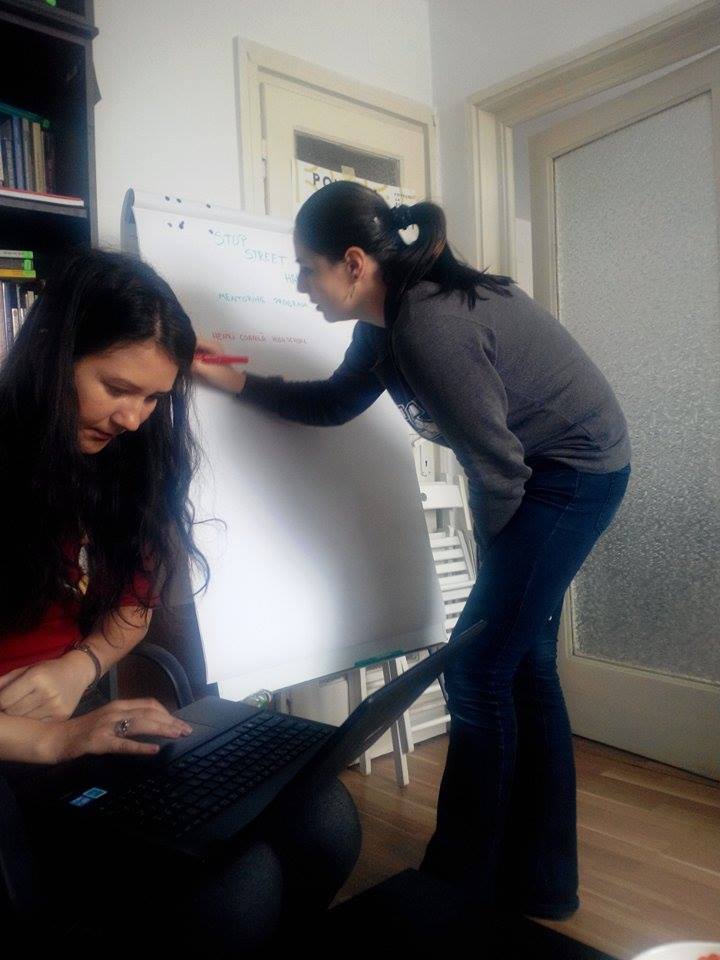
Aila in Romania used to face harassment from high school students as she walked from her hostel to the university. Now she and a group of other women at the NGO FILIA are in the process of working with that high school to bring street harassment awareness workshops to the students. She wrote, “Change can be done. I am not a victim anymore, I am a person who can bring change and can help the other girls who are still living in that hostel.”

Empowering Response #15: Open Letter Tactic – Washington D.C., USA

 Sara in Washington, DC wrote an open letter to the man who harassed her. In it, she thanked a woman who spoke up. “To the woman on the sidewalk who said, ‘That’s so rude’ and shook her head when he drove off, thank you. Your three simple words in solidarity were my saving grace and snap back to reality, that no one, not even myself, has the right to disrespect my body. So, dear man in the blue minivan, I will use my body in the best way I know how — to share this story and inspire others to feel a little braver when they step into a crosswalk. To be what the woman on the sidewalk was to me: solidarity.”

Empowering Response #16: Reporting an Unwanted Grope – San Francisco, CA, USA

After a man groped AB at a shopping mall in San Francisco, California, she dropped her bag and ran after him. She lost him, but filed a police report. She wrote, “I’ve been harassed many times, but I’d never run after someone. Something snapped in me. And something broke when no one would help. I was proud that enough was finally enough, and I did something, even though he got away with it. At the very least, it’s caused me to talk about it and snap back when I get hollered at on the street.”

Share

Filed Under: 16 days, Advice, Resources, Stories, street harassment Tagged With: responding to harassment

« Previous Page
Next Page »

Share Your Story

Share your street harassment story for the blog. Donate Now

From the Blog

  • #MeToo 2024 Study Released Today
  • Join International Anti-Street Harassment Week 2022
  • Giving Tuesday – Fund the Hotline
  • Thank You – International Anti-Street Harassment Week 2021
  • Share Your Story – Safecity and Catcalls Collaboration

Buy the Book

  • Contact
  • Events
  • Join Us
  • Donate
  • Facebook
  • Instagram
  • Pinterest
  • Tumblr
  • Twitter
  • YouTube

Copyright © 2026 Stop Street Harassment · Website Design by Sarah Marie Lacy