• About Us
    • What Is Street Harassment?
    • Why Stopping Street Harassment Matters
    • Meet the Team
      • Board of Directors
      • Past Board Members
    • In The Media
  • Our Work
    • National Street Harassment Hotline
    • International Anti-Street Harassment Week
    • Blog Correspondents
      • Past SSH Correspondents
    • Safe Public Spaces Mentoring Program
    • Publications
    • National Studies
    • Campaigns against Companies
    • Washington, D.C. Activism
  • Our Books
  • Donate
  • Store

Stop Street Harassment

Making Public Spaces Safe and Welcoming

  • Facebook
  • Instagram
  • Pinterest
  • Tumblr
  • Twitter
  • YouTube
  • Home
  • Blog
    • Harassment Stories
    • Blog Correspondents
    • Street Respect Stories
  • Help & Advice
    • National Street Harassment Hotline
    • Dealing With Harassers
      • Assertive Responses
      • Reporting Harassers
      • Bystander Responses
      • Creative Responses
    • What to Do Before or After Harassment
    • Street Harassment and the Law
  • Resources
    • Definitions
    • Statistics
    • Articles & Books
    • Anti-Harassment Groups & Campaigns
    • Male Allies
      • Educating Boys & Men
      • How to Talk to Women
      • Bystander Tips
    • Video Clips
    • Images & Flyers
  • Take Community Action
  • Contact

“That’s not a compliment. That’s my personal hell.”

November 17, 2015 By Contributor

I’ve been street harassed more times than I could possibly count or recall. Having said that, I need to be very clear about two thing: First, in society, it’s assumed that being “beautiful, sexy, pretty, hot, etc.” is a blessing and should be received with open arms. And two, it’s no hidden secret that individuals with certain “desired characteristics” tend to have more opportunities in social and economic settings. Consequently, it’s widely thought that the first sentiment and the second automatically mean an individual is comfortable with this privilege.

Yes, I’m calling it a privilege because it’s true- aesthetically pleasing people have more given to them. But it’s also true that what is given is NOT always wanted. I have been told on numerous occasions I am so beautiful, that to be shy or awkward when given attention is ludicrous. Honestly, people truly believe that my looks should instill in me a sense of pride and accomplishment. When in reality, I am self-conscious on so many levels because I know no matter what I wear, which type of style I pick for that day, I will be given unwanted attention. Very unwanted attention.

I can honestly say I will be street harassed at least once every week. Generally it happens on the way to and from work, when going to the gym, out buying groceries, going to a sporting event, and getting into my car after dinner. In case you missed it… IT HAPPENS EVERYWHERE!

For example: just last week I was at Walmart and waiting in the self-checkout line. I only had one item to buy and the man ahead of me had around twenty or so items. When he glanced back at me, saw that I had the one, he told me to go ahead because he would be a while. I said, “thank you” and smiled at his generosity. Little did I know that I was actually being asked to go ahead of him because, in his words, “I had a nice ass and was a fine piece of meat.” I stood there for 30 second while he moaned and whistled under his breathe and said that over and over again. For 30 second I was sexually harassed as I rushed through to get out of the store. I sprinted for my car and got in just in time to breathe.

Can you imagine feeling that way on a regular basis? That’s not a compliment. That’s my personal hell.

– DT

Location: Oklahoma City, OK

Share your street harassment story for the blog.
See the book 50 Stories about Stopping Street Harassers for more idea
.

Share

Filed Under: Stories, street harassment

On World Kindness Day – Ask if They are Okay

November 13, 2015 By HKearl

Eight years ago when I conducted research on street harassment for my master’s thesis, I attended a Street Harassment Summit in New York City organized by Girls for Gender Equity. During a breakout session, the women in the room, from various diverse backgrounds, took turns sharing a story.

While each story was moving and infuriating and I included several in my thesis, one woman’s story still stands out to me today. She shared this:

“Street harassment is a huge part of my day and it makes me very angry and I think it’s always tied in with my racial identity. The worst thing that happened to me lately was I was on my way to work at a new job and I was very happy, and this guy said something to me and I kept walking. Then he came up around me in my face and said, ‘You look just like Bin Laden’s sister.’

My mouth was closed, and I was like, why aren’t I responding? He continued to scream at me and I kept walking, and he said, ‘You should get home, women like you don’t work. Don’t your men keep you locked up? Oh that’s right, your men aren’t real men. I’ll show you what a real man is.’ And he proceeded to tell me the actions that real men do to their women.

People on the street were stopped and were staring at me but no one said anything.”

As terrible as every part of her experience was, I will never forget the pain and betrayal she voiced at the end: that no one said anything.

In the years since then, I have heard her hurt echoed in so many people’s stories who feel doubly traumatized by the lack of kindness or even simple acknowledgement from the people around them. The sentiments also appear in stories submitted to my blog Stop Street Harassment, including incidents in Denver, London, and the Bahamas.

Street harassment can be annoying and upsetting, but it can also trigger deeper concerns. A study released last year by researchers at the University of Mary Washington found that sexual harassment is often traumatizing for women, especially for those who have experienced sexual abuse. A 2014 national study on street harassment in the USA showed that it can be frightening; 69% of harassed women and 49% of men said they feared the harassment would escalate into something worse.

Feeling alone and as if there must be something wrong with you since no one around you is speaking up can add to these feelings of trauma and fear.

There are many reasons why people may not speak up when they see street harassment happening. They may not be sure it IS harassment. They may not know what to do. They may think someone else will intervene. They may fear for their own personal safety. Those are all legitimate concerns and organizations like Green Dot and government entities like New York Department of Health provide tools and trainings to walk people through them.

Image via http://bitsofpositivity.com

But as we commemorate World Kindness Day, in addition to the obvious request to be kind and NOT harass others, the plea that I have to bystanders is a simple one: Ask the person if she or he is okay.

I am not the first to say this, of course, and last year social worker and avid Twitter user Feminista Jones launched the hashtag #YouOkSis? to especially encourage persons of color to reach out to women of color who are being harassed to check in and possibly interrupt a street harassment situation. But it warrants repeating.

What I want to emphasize is that if you feel too unsafe or cannot react in time to interrupt harassment, you can still check in with the person after the harasser is gone or the harassment has stopped. Let the person know you saw what happened and that you understand it can be upsetting. Let them know what happened is not okay.

A woman named Sara recently penned an open letter to her street harasser, a man in a car who told her to “move her fat ass along” as she walked through a crosswalk. Included in her piece was this: “To the woman on the sidewalk who said, ‘that’s so rude’ and shook her head when he drove off, thank you. Your three simple words in solidarity were my saving grace and snap back to reality, that no one, not even myself, has the right to disrespect my body.”

After hearing so many stories about the devastation people felt when no one around them acknowledged what was happening or how much of a difference it made when someone did, whenever I overcame my shyness and began asking women I saw if they were okay.

The first time I did this was in 2011 in Florida. I was attending a conference and I was out on a run. As I approached a bus stop where a young woman was waiting alone, men in a car swerved over and it looked like they yelled at her. When I reached her, I stopped and asked, “Hey, were those men bothering you? Are you okay?” She said that the men had circled around and harassed her three times. I told her how sorry I was and offered to wait with her. The bus came around the corner then, so she said it was okay, she could get on the bus now. I told her about my website and told her to reach out if I could help.

The next time I did it I was in New York City at Penn Station. A woman and a man were walking toward me and he was gesturing and talking loudly and she looked very uncomfortable and like she was trying to inch away from him. As they approached, I said, looking directly at the woman, “Are you okay? Is he bothering you?” She thanked me and laughed and said he was her coworker and he was just messing around and being annoying but she was fine.

I felt a little foolish — and that’s a perfect example of not knowing if someone is a harasser or not – but I have no regrets about asking. What if she had needed help?

The third time I spoke out I was walking from my office in Washington, DC to the Metro and I could see that as a woman ahead of me passed by a man, he reached out to touch her and talk to her and she recoiled. By the time I caught up to her, he was gone, but I told her I saw what had happened and that I was sorry – she shouldn’t have to deal with that. I asked if she was okay. She gave me a quick yes and thank you before she hurried on to catch her bus.

Street harassment, especially the accumulation of it, can be so tiring. So upsetting. With the three kind words of “Are you okay” or “You ok sis?”, you can help lighten someone’s load just a bit and let them know they are not alone.

Share

Filed Under: Resources, street harassment Tagged With: bystander

Boston and NYC Street Harassment Events

November 8, 2015 By HKearl

On Nov. 4, I had the honor of facilitating a focus group on street harassment with Asian-American women in Boston. I will add a summary of the session to our 2014 national study on street harassment by the end of the month. A common theme among the participants was how often the harassment was racialized as well as sexualized and how often they were treated like geishas or fetishes. Many recall the harassment beginning when they were 9, 10, 11 years old. Also, it was almost never Asian-American men who harassed them, rather men of other races, especially white and black men.
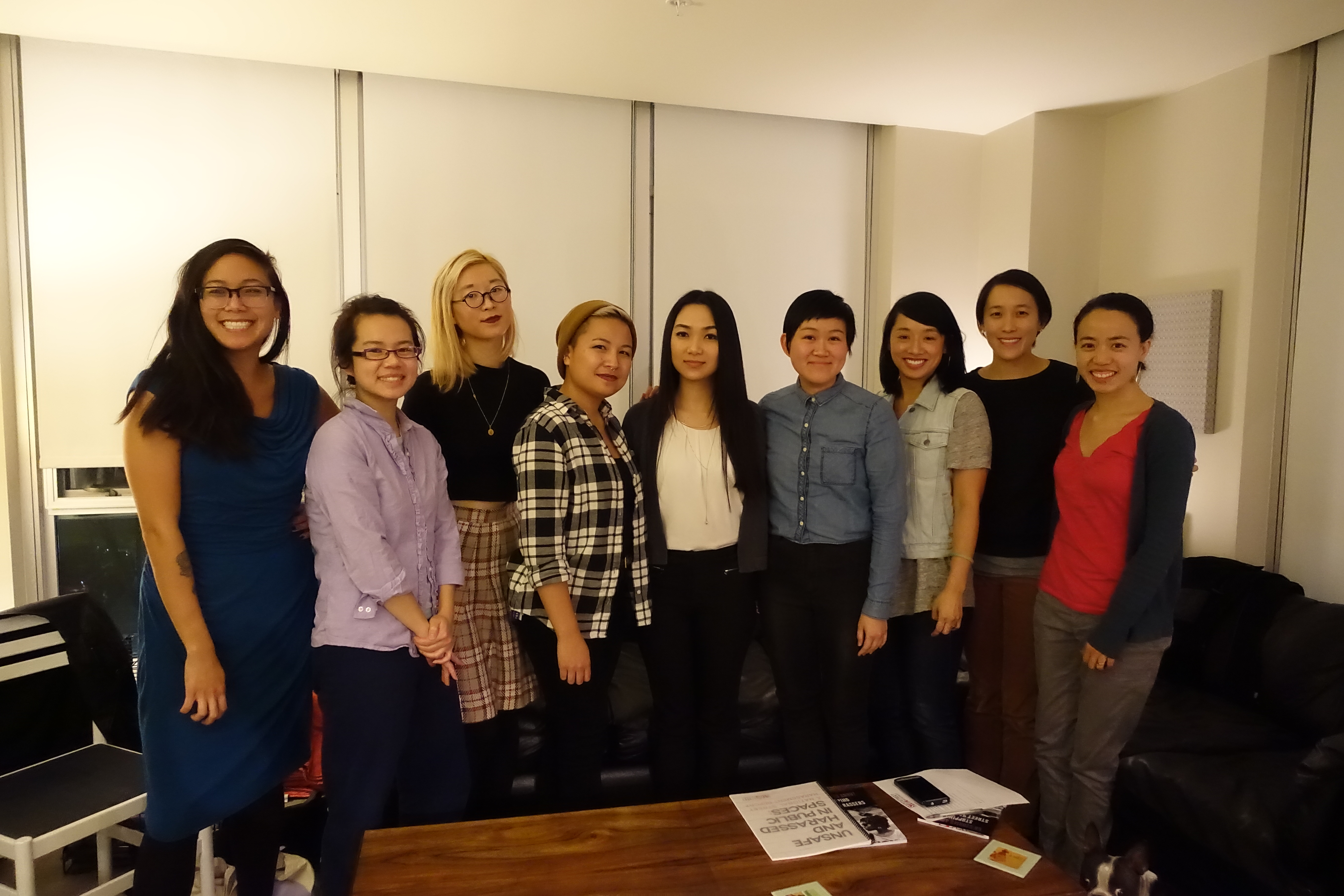
Asian-American focus group in Boston, MAAsian-American focus group in Boston

Many thanks to Sarah Chang for suggesting it and hosting it and thank you to her and the eight other women who bravely shared their stories.

Then on Nov. 5, Bluestockings bookstore in New York City hosted a book event for my new book Stop Global Street Harassment: Growing Activism around the World. I was joined by seven co-presenters. Bisi Alimi is from Nigeria and lives in London; Gaya Branderhorst of Straatintimidatie is from the Netherlands and lives in New York; Alicia Wallace of Hollaback! Bahamas is from the Bahamas and just moved to New York; Ileana Jiménez is a high school teacher in New York City who talks about street harassment with her students; she brought two of her students who shared their stories, Shana and StellaRose; and Brittany Brathwaite is a community organizer for Girls for Gender Equity (GGE) in New York City.
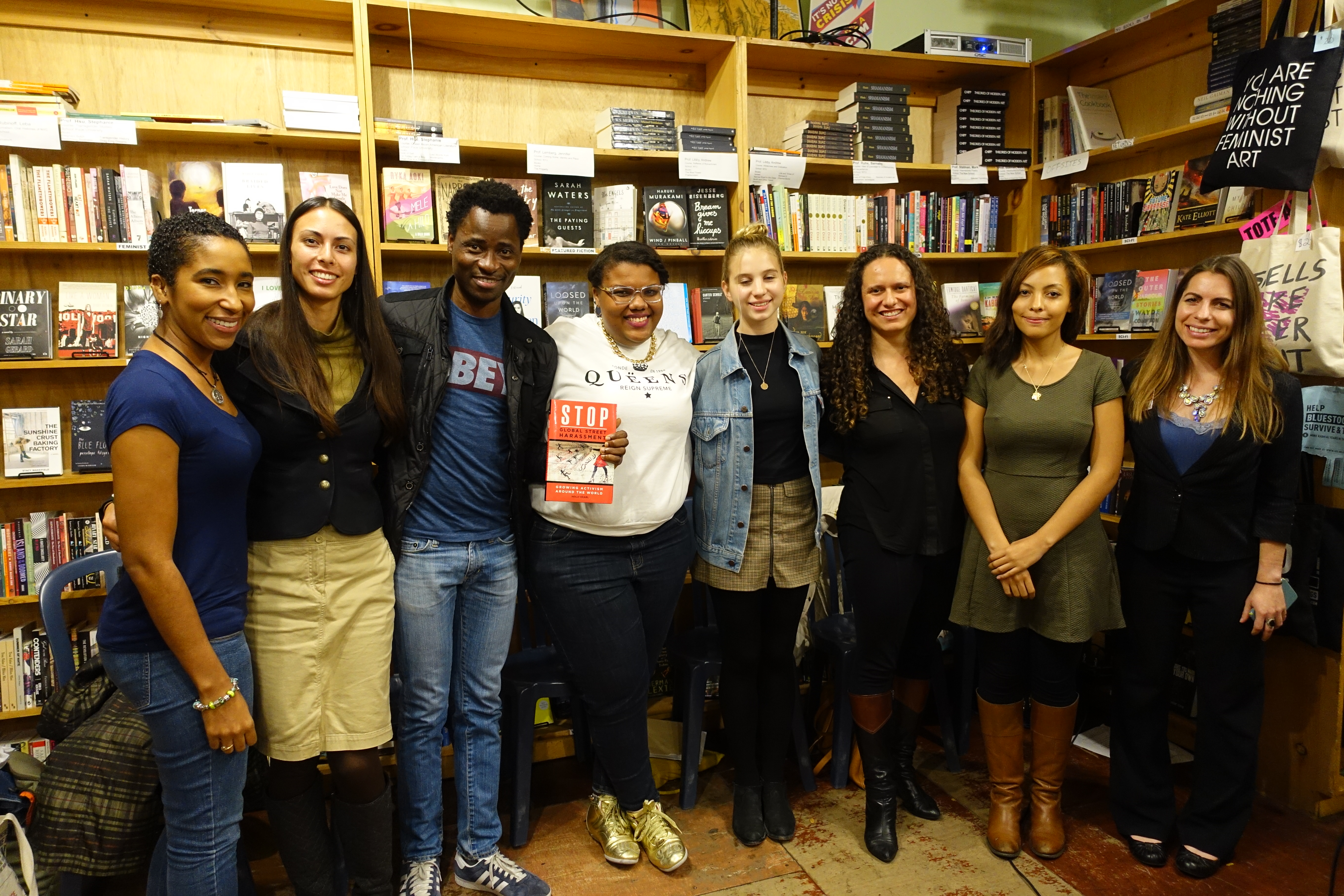
11.5.15 Bluestockings Bookstore talk in NYCBluestockings bookstore, NYC

We discussed what street harassment looks like in our communities, various activism actions underway to address it, and why it is so important to talk to youth about it (because they may already be experiencing it and perpetrating it and because street harassment is learned behavior that can be unlearned — or ideally, never learned). There was a rich Q&A with the audience. Two women documentarians filmed the event and will be sharing the footage with me soon. I’ll post it when I have it.

GGE, Ileana’s and Alicia’s work are all featured in my book.
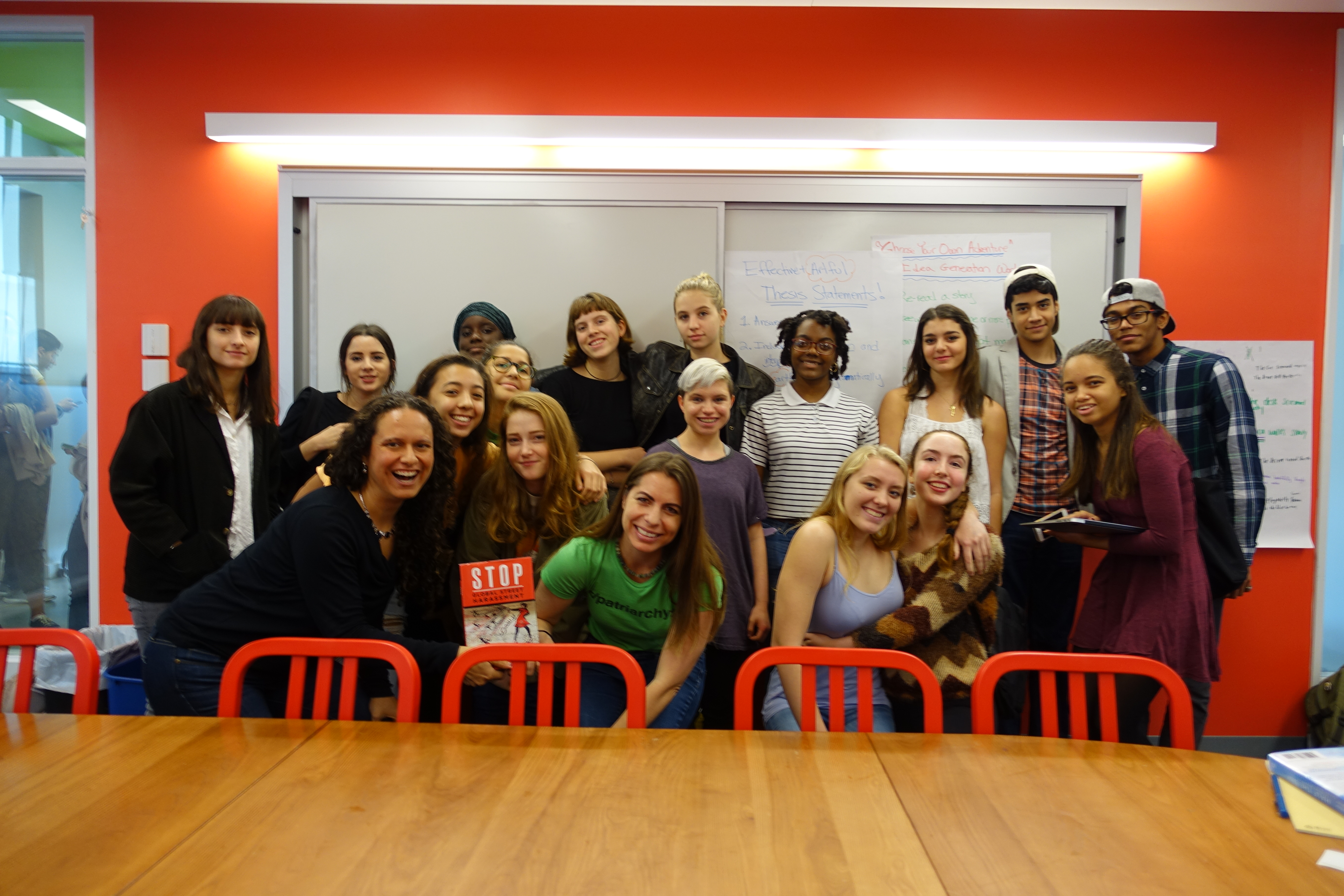
NYC High School ClassHigh school class, NYC

Lastly, on Nov. 6, I spoke with Ileana’s high school students at Elisabeth Irwin High School in New York City. Many of them are already routinely experiencing street harassment as well as sexual harassment in schools. Many thanks to Ileana for bringing this issue into the classroom and for caring so much about his students.

Share

Filed Under: Events, SSH programs, street harassment

“They are a bunch of creeps”

November 6, 2015 By HKearl

My neighbors always hire the same company to do there landscaping. The issue is this specific company happens to be extremely inappropriate. On many occasions me and other neighbors of mine have catcalled by them. My friend who is under age was sitting in her car waiting for the girl she is babysitting to get off the bus and the landscaping guys drove by and beeped the horn. Then they drove by again and were blowing kisses and beeping the horn. Keep in mind these are grown men dealing with an under age girl.

My friend was shaking. She called me and asked what to do. I told her if she was really scared the situation would escalate to call 911. This catcalling incident was probably the worst we have had with that company. However this summer there were many occasions I was running and they would drive by and stick there heads out the windows and yell something at me.

Honestly, I’m so over these perverts and I really hope my neighbors fire them because they are a bunch of creeps.

– Anonymous

Location: New Jersey

Share your street harassment story for the blog.
See the book 50 Stories about Stopping Street Harassers for more idea
.

Share

Filed Under: Stories, street harassment

“I just walked away feeling embarrassed and uncomfortable”

November 4, 2015 By Contributor

I was walking home alone after school and a group of men (in their 30’s) had their eyes on me. Luckily there were two boys from my school in front of me so I walked close to them. Then one of the men looked at me and screamed, “WOWZA!”

And I just walked away feeling embarrassed and uncomfortable.

– Anonymous

Share your street harassment story for the blog.
See the book 50 Stories about Stopping Street Harassers for more idea
.

Share

Filed Under: Stories, street harassment

« Previous Page
Next Page »

Share Your Story

Share your street harassment story for the blog. Donate Now

From the Blog

  • #MeToo 2024 Study Released Today
  • Join International Anti-Street Harassment Week 2022
  • Giving Tuesday – Fund the Hotline
  • Thank You – International Anti-Street Harassment Week 2021
  • Share Your Story – Safecity and Catcalls Collaboration

Buy the Book

  • Contact
  • Events
  • Join Us
  • Donate
  • Facebook
  • Instagram
  • Pinterest
  • Tumblr
  • Twitter
  • YouTube

Copyright © 2026 Stop Street Harassment · Website Design by Sarah Marie Lacy