• About Us
    • What Is Street Harassment?
    • Why Stopping Street Harassment Matters
    • Meet the Team
      • Board of Directors
      • Past Board Members
    • In The Media
  • Our Work
    • National Street Harassment Hotline
    • International Anti-Street Harassment Week
    • Blog Correspondents
      • Past SSH Correspondents
    • Safe Public Spaces Mentoring Program
    • Publications
    • National Studies
    • Campaigns against Companies
    • Washington, D.C. Activism
  • Our Books
  • Donate
  • Store

Stop Street Harassment

Making Public Spaces Safe and Welcoming

  • Facebook
  • Instagram
  • Pinterest
  • Tumblr
  • Twitter
  • YouTube
  • Home
  • Blog
    • Harassment Stories
    • Blog Correspondents
    • Street Respect Stories
  • Help & Advice
    • National Street Harassment Hotline
    • Dealing With Harassers
      • Assertive Responses
      • Reporting Harassers
      • Bystander Responses
      • Creative Responses
    • What to Do Before or After Harassment
    • Street Harassment and the Law
  • Resources
    • Definitions
    • Statistics
    • Articles & Books
    • Anti-Harassment Groups & Campaigns
    • Male Allies
      • Educating Boys & Men
      • How to Talk to Women
      • Bystander Tips
    • Video Clips
    • Images & Flyers
  • Take Community Action
  • Contact

“I live in fear”

November 21, 2015 By Contributor

This morning I stepped out of my apartment and started walking to the subway station – four blocks from my apartment. After two blocks, a man walking from around the corner ends up on the same sidewalk as me, about five yards behind.

Immediately, I hear, “Daaaamn, when you walk like that it jiggles. Looks good from here though. Bless you AND ya mama. Bless you.”

I have two options here. I can ignore him and keep walking, picking up my pace a bit to distance myself. But then he’ll take notice of this passive (almost submissive) behavior, and he might want to take advantage of that. He might keep following me. He might make more comments. He might even take action. He might grab me.

My other option is to turn around and look him dead in the eye and stand up for myself, telling him it’s not okay for him to speak to someone that way. But then he might get offended. He might not appreciate that I spoke at all – I’m supposed to just be an object, right? He might want to shut me up and put me in my place. He might try to attack me. He might try to rape me. He might try to hit me.

While I’m mulling over my two absolutely stellar options on this empty street in Brooklyn at 11 o’clock in the morning, I wonder to myself, “Should I not have worn these leggings? Should I not have worn these booty heels? Is it somehow my fault?” FU** THAT. These leggings are comfortable as shit, and it’s fu**ing cold outside. And I like these shoes – I think they’re cute. That’s why I fu**ing picked them out at the store and bought them. That’s why they were manufactured – for women to wear outside. Not for men to attack women for wearing them.

I should mention I’m also wearing a baggy t-shirt and a huge soccer backpack. I could have been wearing a sack and this man would have found a way to comment on my ankles or my hair or the fact that I have a skeleton covered in skin.

I ended up choosing the first option – saying nothing, picking up my pace (which of course I’m realizing makes “it jiggle” even more – great!). I ducked into the first coffee shop I came upon and waited a few minutes for the coast to be clear. After this all happened, I found myself wishing I had stood up for myself and said something. After all, that’s the only way he’s going to learn that he did something wrong.

However, in this situation, standing up for yourself also means risking your safety and your life. I’ve never been raped. I’ve never been physically assaulted. I live in a nice enough neighborhood. And yet, I live in fear of the day someone will find me in a vulnerable situation and take advantage of me.

No woman should have to live in fear. No woman should have to be alert for rape – no woman should be responsible for preventing it from happening. The next time you try to tell me that men are just “paying me a compliment,” think twice. Say nothing.

Optional: What’s one way you think we can make public places safer for everyone?

Educate young men.

– Kerry

Location: Brooklyn, NY

Share your street harassment story for the blog.
See the book 50 Stories about Stopping Street Harassers for more idea
.

Share

Filed Under: Stories, street harassment

Young Boy is a Bystander Hero!

November 19, 2015 By Contributor

Note: This is cross-posted from author Julia Price’s Facebook page.

Julia Price, from her Facebook post

I was on my usual running path when I heard an older man yelling loudly enough for me to hear through my headphones. “Sexy lady, hey hey hey sexy lady!” He kept screaming it and I decided to just ignore him and keep running.

This ignoring seemed to piss him off so he lashed out and said “eff you, dumb B****!” Now let’s keep in mind he was well-dressed and appeared to be on his lunch break from an office job.

That was my trigger point. The B word. I ripped off my headphones prepared to stand up for myself when this little boy who was walking alongside his mother and little sister in a stroller looked at the guy and said, “Hey. That is not nice to say to her and she didn’t like you yelling at her. You shouldn’t do that because she is a nice girl and I don’t let anyone say mean things to people. She’s a girl like my sister and I will protect her.”

The man was immediately embarrassed and started gathering his lunch to leave. I asked the mother if I could hug the little boy (his name is James) and I told him how grateful I was for him. He just shrugged and said “Well I just wanted to make sure your heart was okay.”

According to his mother, this is a typical day in the life of James. Thank you so much to the mothers and fathers who are raising the next generation to be brave and courageous, and to be little earth angels for all. I am so touched.

Share

Filed Under: Stories, street harassment Tagged With: bystander, running, success story

Croatia: It’s Never Too Soon to Talk to Children

November 19, 2015 By Correspondent

Marinella Matejcic, Croatia, SSH Blog Correspondent

As I was finishing my chores for the day, my daughter began sharing a story from her class with me. She goes to elementary school, is very calm, mature, and has a strong sense of justice. “So, do can you even imagine what did this boy did..”

“Which one?” I asked gently, trying to hide my ignorance. “This X kid or the Y kid?”

“Neither of them, it was the XY, he pushed a girl to the ground and tried to kiss her. We didn’t tell anyone, and he decided to let her go. But can you imagine?”

The unexpected sorrow got to me because the sad part is – I could imagine. That boy is the theoretical boy who later on continues to hassle other people. That boy represents the one who never hears no from his peers because they’re afraid of him. Boys like that get to be local mini-bully that grow up to a typical bully and possibly later on develop a file with the police. That kind of behaviour is the starter pack for harassment that includes catcalling and other forms of street harassment.

What bugs me is this – when and why and where did that boy decide it would be okay to harass someone? I don’t feel that kind of behaviour is congenital. Are the patriarchal patterns so deeply incorporated into our culture that we are successfully implementing them from that early age? I’m not thinking about general gender-roles expectations, but – is the violence that comes from hatred and the urge to dominate so easily being ignored, just for the sake of letting “boys be boys?”

I firmly believe that it’s never too soon to talk to our children about these serious topics — consent, personal boundaries, acceptance, freedom, and discrimination – even though they keep our throats dry and heart rates high. Those are the topics we should discuss at home since children carry their respect to others from home.

What is the exact moment when the let “boys be boys” changes into a hate crime, sex crime, whatever? In situations like that, when we’re talking about children and parenting, it’s important not to blame it on the kid – it’s never the kid’s fault. At the same time, we have to keep in mind that at some point, the child will start making informed or less informed choices and we are here to help them carry out the good ones by promoting healthy life choices and providing positive models to look up to.

Society changes step by step, and we are the society, so wouldn’t it be logical to teach our children the same values we desire? We can talk about how to combat street harassment with activities, rallies, and websites, but we will not make as big of a positive impact until we start teaching the next generation how to avoid becoming those harassers.

Marinella is a freelance journalist/writer, feminist activist, and soon-to-be administrative law student. She writes for Croatian portal on gender, sex and democracy called Libela.org and covers CEE stories for globalvoicesonline.org. Follow her on Twitter @mmatejci.

Share

Filed Under: correspondents, street harassment Tagged With: children, parents

“That’s not a compliment. That’s my personal hell.”

November 17, 2015 By Contributor

I’ve been street harassed more times than I could possibly count or recall. Having said that, I need to be very clear about two thing: First, in society, it’s assumed that being “beautiful, sexy, pretty, hot, etc.” is a blessing and should be received with open arms. And two, it’s no hidden secret that individuals with certain “desired characteristics” tend to have more opportunities in social and economic settings. Consequently, it’s widely thought that the first sentiment and the second automatically mean an individual is comfortable with this privilege.

Yes, I’m calling it a privilege because it’s true- aesthetically pleasing people have more given to them. But it’s also true that what is given is NOT always wanted. I have been told on numerous occasions I am so beautiful, that to be shy or awkward when given attention is ludicrous. Honestly, people truly believe that my looks should instill in me a sense of pride and accomplishment. When in reality, I am self-conscious on so many levels because I know no matter what I wear, which type of style I pick for that day, I will be given unwanted attention. Very unwanted attention.

I can honestly say I will be street harassed at least once every week. Generally it happens on the way to and from work, when going to the gym, out buying groceries, going to a sporting event, and getting into my car after dinner. In case you missed it… IT HAPPENS EVERYWHERE!

For example: just last week I was at Walmart and waiting in the self-checkout line. I only had one item to buy and the man ahead of me had around twenty or so items. When he glanced back at me, saw that I had the one, he told me to go ahead because he would be a while. I said, “thank you” and smiled at his generosity. Little did I know that I was actually being asked to go ahead of him because, in his words, “I had a nice ass and was a fine piece of meat.” I stood there for 30 second while he moaned and whistled under his breathe and said that over and over again. For 30 second I was sexually harassed as I rushed through to get out of the store. I sprinted for my car and got in just in time to breathe.

Can you imagine feeling that way on a regular basis? That’s not a compliment. That’s my personal hell.

– DT

Location: Oklahoma City, OK

Share your street harassment story for the blog.
See the book 50 Stories about Stopping Street Harassers for more idea
.

Share

Filed Under: Stories, street harassment

On World Kindness Day – Ask if They are Okay

November 13, 2015 By HKearl

Eight years ago when I conducted research on street harassment for my master’s thesis, I attended a Street Harassment Summit in New York City organized by Girls for Gender Equity. During a breakout session, the women in the room, from various diverse backgrounds, took turns sharing a story.

While each story was moving and infuriating and I included several in my thesis, one woman’s story still stands out to me today. She shared this:

“Street harassment is a huge part of my day and it makes me very angry and I think it’s always tied in with my racial identity. The worst thing that happened to me lately was I was on my way to work at a new job and I was very happy, and this guy said something to me and I kept walking. Then he came up around me in my face and said, ‘You look just like Bin Laden’s sister.’

My mouth was closed, and I was like, why aren’t I responding? He continued to scream at me and I kept walking, and he said, ‘You should get home, women like you don’t work. Don’t your men keep you locked up? Oh that’s right, your men aren’t real men. I’ll show you what a real man is.’ And he proceeded to tell me the actions that real men do to their women.

People on the street were stopped and were staring at me but no one said anything.”

As terrible as every part of her experience was, I will never forget the pain and betrayal she voiced at the end: that no one said anything.

In the years since then, I have heard her hurt echoed in so many people’s stories who feel doubly traumatized by the lack of kindness or even simple acknowledgement from the people around them. The sentiments also appear in stories submitted to my blog Stop Street Harassment, including incidents in Denver, London, and the Bahamas.

Street harassment can be annoying and upsetting, but it can also trigger deeper concerns. A study released last year by researchers at the University of Mary Washington found that sexual harassment is often traumatizing for women, especially for those who have experienced sexual abuse. A 2014 national study on street harassment in the USA showed that it can be frightening; 69% of harassed women and 49% of men said they feared the harassment would escalate into something worse.

Feeling alone and as if there must be something wrong with you since no one around you is speaking up can add to these feelings of trauma and fear.

There are many reasons why people may not speak up when they see street harassment happening. They may not be sure it IS harassment. They may not know what to do. They may think someone else will intervene. They may fear for their own personal safety. Those are all legitimate concerns and organizations like Green Dot and government entities like New York Department of Health provide tools and trainings to walk people through them.

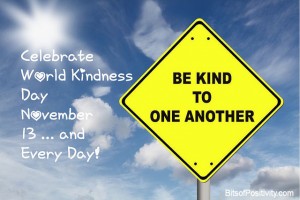
Image via http://bitsofpositivity.com

But as we commemorate World Kindness Day, in addition to the obvious request to be kind and NOT harass others, the plea that I have to bystanders is a simple one: Ask the person if she or he is okay.

I am not the first to say this, of course, and last year social worker and avid Twitter user Feminista Jones launched the hashtag #YouOkSis? to especially encourage persons of color to reach out to women of color who are being harassed to check in and possibly interrupt a street harassment situation. But it warrants repeating.

What I want to emphasize is that if you feel too unsafe or cannot react in time to interrupt harassment, you can still check in with the person after the harasser is gone or the harassment has stopped. Let the person know you saw what happened and that you understand it can be upsetting. Let them know what happened is not okay.

A woman named Sara recently penned an open letter to her street harasser, a man in a car who told her to “move her fat ass along” as she walked through a crosswalk. Included in her piece was this: “To the woman on the sidewalk who said, ‘that’s so rude’ and shook her head when he drove off, thank you. Your three simple words in solidarity were my saving grace and snap back to reality, that no one, not even myself, has the right to disrespect my body.”

After hearing so many stories about the devastation people felt when no one around them acknowledged what was happening or how much of a difference it made when someone did, whenever I overcame my shyness and began asking women I saw if they were okay.

The first time I did this was in 2011 in Florida. I was attending a conference and I was out on a run. As I approached a bus stop where a young woman was waiting alone, men in a car swerved over and it looked like they yelled at her. When I reached her, I stopped and asked, “Hey, were those men bothering you? Are you okay?” She said that the men had circled around and harassed her three times. I told her how sorry I was and offered to wait with her. The bus came around the corner then, so she said it was okay, she could get on the bus now. I told her about my website and told her to reach out if I could help.

The next time I did it I was in New York City at Penn Station. A woman and a man were walking toward me and he was gesturing and talking loudly and she looked very uncomfortable and like she was trying to inch away from him. As they approached, I said, looking directly at the woman, “Are you okay? Is he bothering you?” She thanked me and laughed and said he was her coworker and he was just messing around and being annoying but she was fine.

I felt a little foolish — and that’s a perfect example of not knowing if someone is a harasser or not – but I have no regrets about asking. What if she had needed help?

The third time I spoke out I was walking from my office in Washington, DC to the Metro and I could see that as a woman ahead of me passed by a man, he reached out to touch her and talk to her and she recoiled. By the time I caught up to her, he was gone, but I told her I saw what had happened and that I was sorry – she shouldn’t have to deal with that. I asked if she was okay. She gave me a quick yes and thank you before she hurried on to catch her bus.

Street harassment, especially the accumulation of it, can be so tiring. So upsetting. With the three kind words of “Are you okay” or “You ok sis?”, you can help lighten someone’s load just a bit and let them know they are not alone.

Share

Filed Under: Resources, street harassment Tagged With: bystander

« Previous Page
Next Page »

Share Your Story

Share your street harassment story for the blog. Donate Now

From the Blog

  • #MeToo 2024 Study Released Today
  • Join International Anti-Street Harassment Week 2022
  • Giving Tuesday – Fund the Hotline
  • Thank You – International Anti-Street Harassment Week 2021
  • Share Your Story – Safecity and Catcalls Collaboration

Buy the Book

  • Contact
  • Events
  • Join Us
  • Donate
  • Facebook
  • Instagram
  • Pinterest
  • Tumblr
  • Twitter
  • YouTube

Copyright © 2026 Stop Street Harassment · Website Design by Sarah Marie Lacy