• About Us
    • What Is Street Harassment?
    • Why Stopping Street Harassment Matters
    • Meet the Team
      • Board of Directors
      • Past Board Members
    • In The Media
  • Our Work
    • National Street Harassment Hotline
    • International Anti-Street Harassment Week
    • Blog Correspondents
      • Past SSH Correspondents
    • Safe Public Spaces Mentoring Program
    • Publications
    • National Studies
    • Campaigns against Companies
    • Washington, D.C. Activism
  • Our Books
  • Donate
  • Store

Stop Street Harassment

Making Public Spaces Safe and Welcoming

  • Facebook
  • Instagram
  • Pinterest
  • Tumblr
  • Twitter
  • YouTube
  • Home
  • Blog
    • Harassment Stories
    • Blog Correspondents
    • Street Respect Stories
  • Help & Advice
    • National Street Harassment Hotline
    • Dealing With Harassers
      • Assertive Responses
      • Reporting Harassers
      • Bystander Responses
      • Creative Responses
    • What to Do Before or After Harassment
    • Street Harassment and the Law
  • Resources
    • Definitions
    • Statistics
    • Articles & Books
    • Anti-Harassment Groups & Campaigns
    • Male Allies
      • Educating Boys & Men
      • How to Talk to Women
      • Bystander Tips
    • Video Clips
    • Images & Flyers
  • Take Community Action
  • Contact

Queer Review Launch Party

July 30, 2015 By HKearl

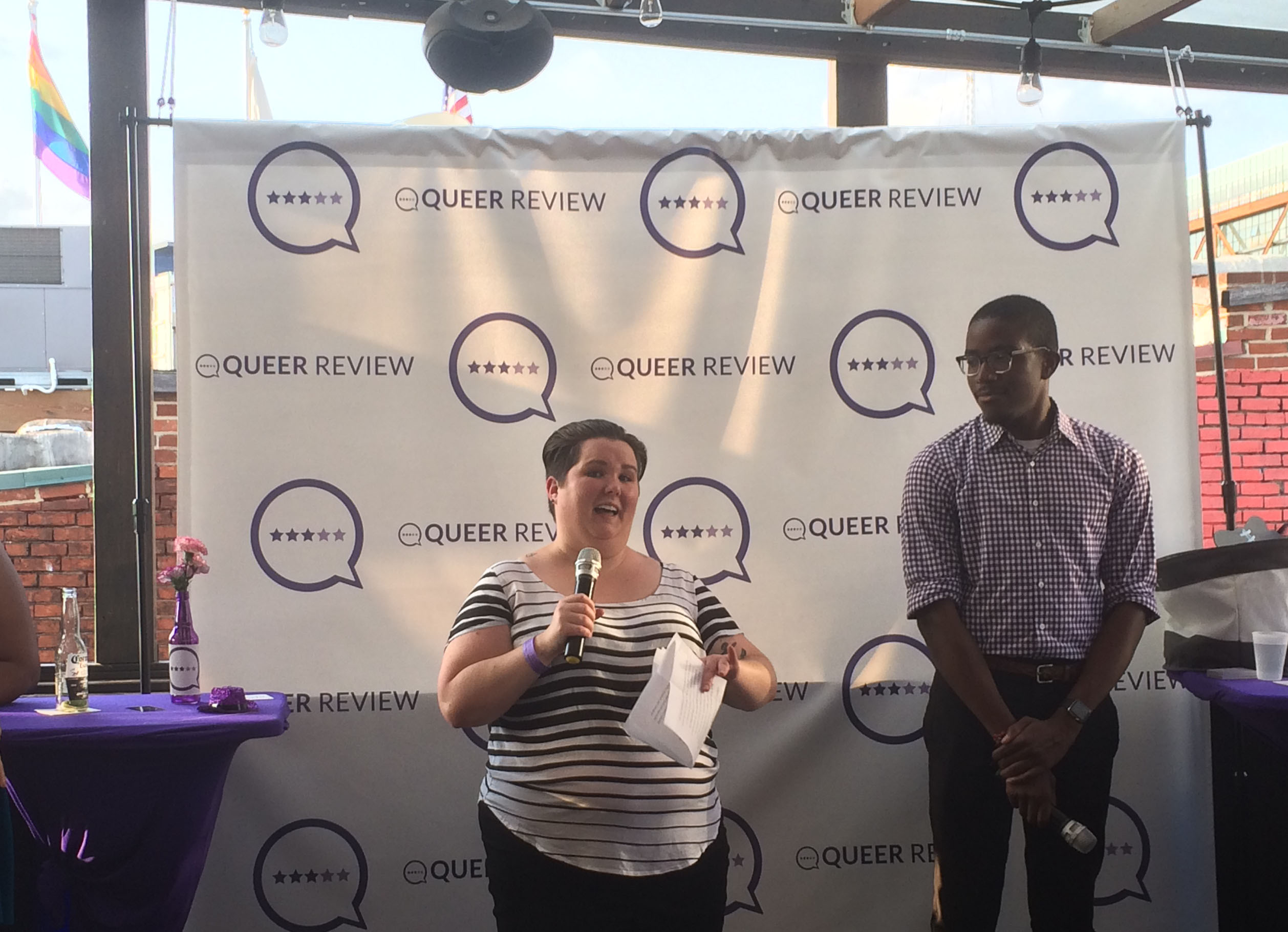
Kesha Garner and Kevin Hawkins at the Queer Review launch party

“When Kevin Hawkins was 16 and living in an area of Maryland still struggling to accept queer people, his mother disowned him. Down in South Carolina, Kesha Garner, who now lives in Washington, D.C., remembers growing up without adequate resources for LGBTQ+ people.

“Every time I drive the nine hours home, I worry about stopping to use the restroom.”

And even though D.C. is comparatively very progressive, Kesha knows the city, like every city across the country, is still home to an uncomfortable level of discrimination in public spaces. So they’re trying to do something about it.

Their new website, Queer Review, launched on Monday to give LGBTQ+ people around the world the opportunity to share their experiences in a variety of places, like restaurants, bars, hair salons, and movie theaters.”
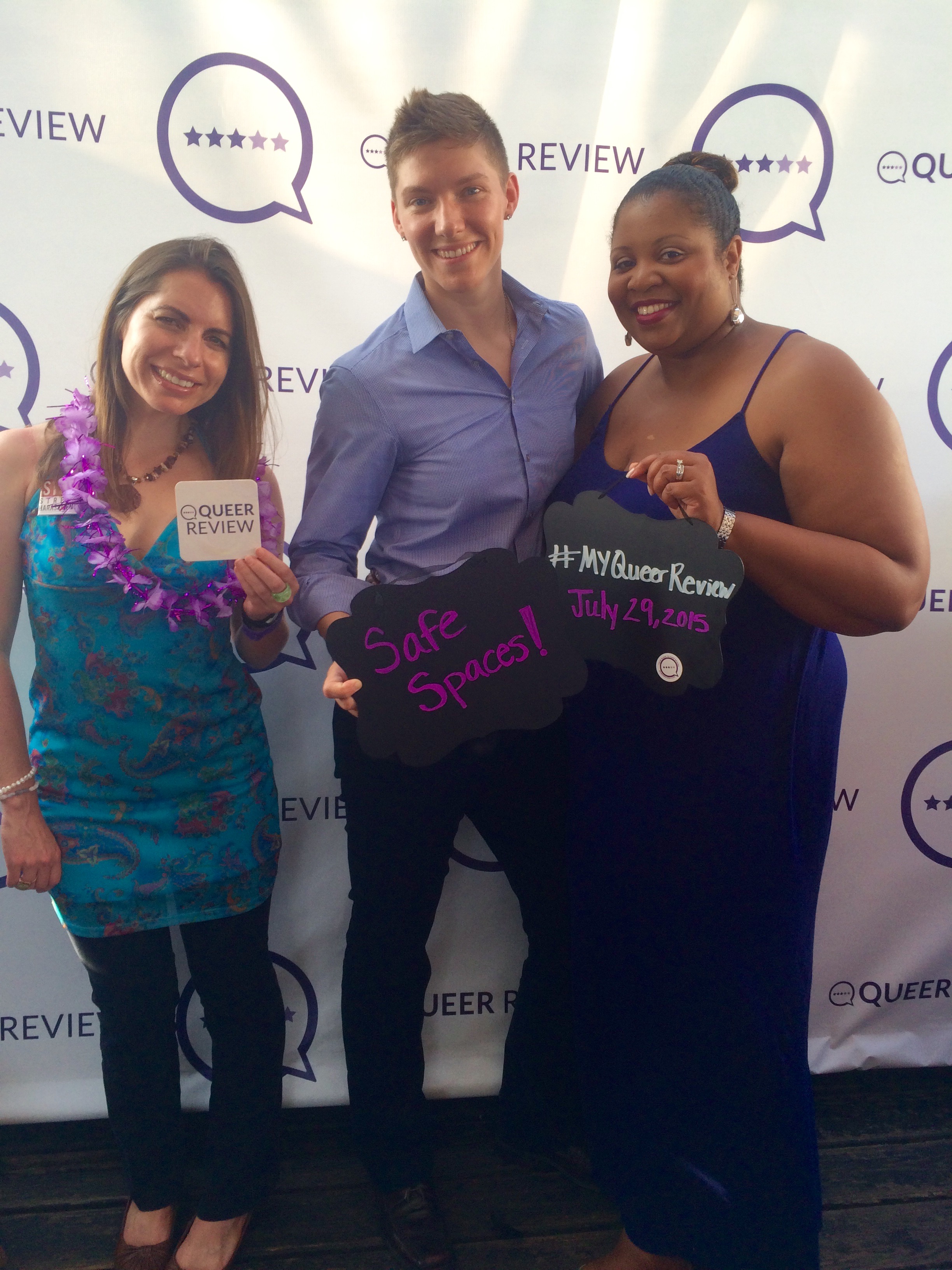
Queer Review Launch Party

Read the full Huffington Post article written by SSH Board Member Patrick McNeil.

Kevin and Kesha put the website together in three months and threw an awesome party last night at DC9 Nightclub in Washington, DC to celebrate its launch. I was honored to speak about the harassment LGBQT+ people face and why a tool like this is so important. The founder of Casa Ruby LGBT Community Center spoke about discrimination against LGBT people and the shelters they run for youth and adults. All of the shelters have 30+ people on waiting lists. (Donate to support their important work!)

The event had a really welcoming vibe and had stations where people could write what a safe space means to them, make note of gender-neutral bathrooms in the DC-area, and write business reviews at a laptop station.
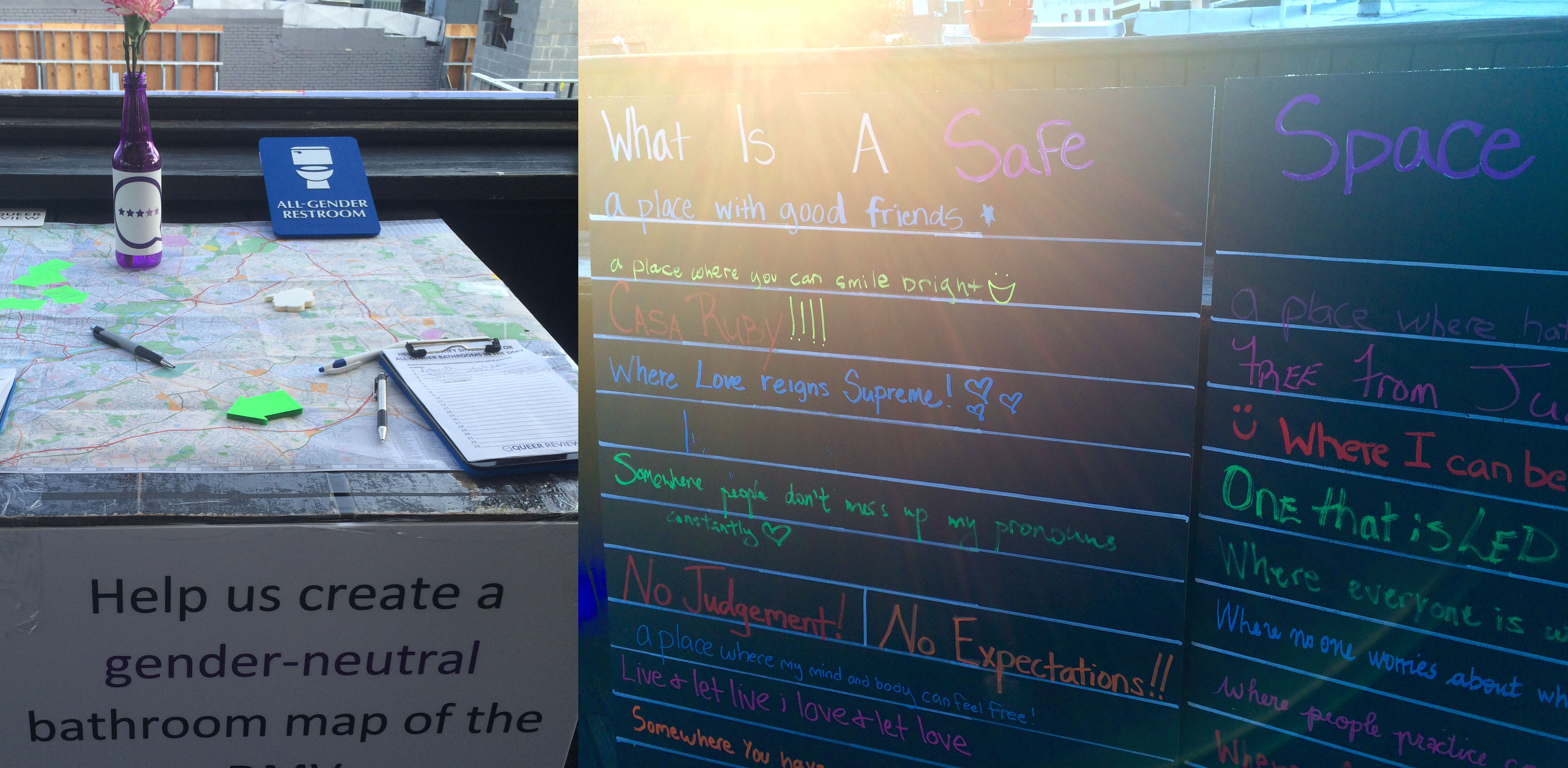
Queer Review launch party stations

Take a moment to write a review and also, use the reviews to choose where to go. Take your business to places that ARE welcoming and safe. Maybe if they lose customers, other businesses that are not will want to change.

Share

Filed Under: Events, LGBTQ, street harassment

“I started saying over and over that I needed to go”

July 30, 2015 By Contributor

I was returning to the parking lot where I parked my car and I saw a man standing right near my car. When I got closer, he told me he was homeless and asked if I could give him some money for food, and I gave him some money. He thanked me, but then it gradually turned into sexual harassment.

After he thanked me, he hugged me, which at first made me feel slightly uncomfortable but he prolonged the hug so long I started to get more and more uncomfortable. He said I was beautiful in a way that made me a little uncomfortable and I started saying over and over that I needed to go. I managed to get in my car, but as I was getting in he made a kissing face and said something about how he wanted to kiss me, and at that point I started to feel scared. He stayed so close to the car that I was worried I wouldn’t be able to drive away without hitting him. I managed to leave in my car but felt icky and uncomfortable my whole drive home.

Optional: What’s one way you think we can make public places safer for everyone?

Teach men in particular about what sexual harassment is, why it’s wrong, and what it does to women. Teach them how to intervene in these situations and create situations where men start talking with each other about sexual harassment. Make it more socially unacceptable to harass women than to talk about being harassed.

– CD

Location: Parking lot near H Mart, corner of Essex Street and Bishop Allen Drive, Cambridge, Massachusetts, USA

Share your street harassment story for the blog.
See the book 50 Stories about Stopping Street Harassers for more idea

Share

Filed Under: Stories, street harassment

Spain: Col·lectiu Punt 6: Shaping public spaces with a gender approach

July 29, 2015 By Correspondent

Rebecca Smyth, Spain, SSH Blog Correspondent

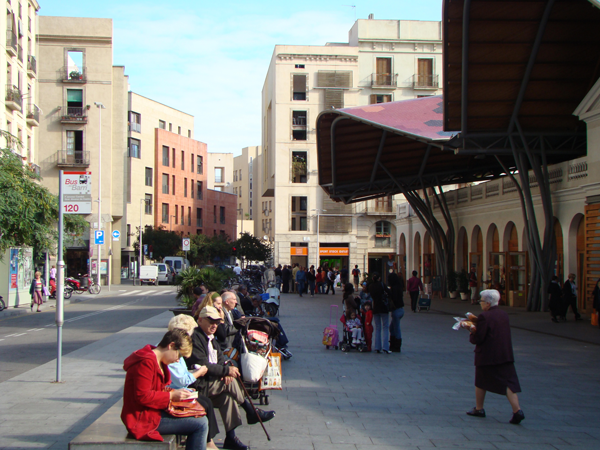
Espacio vital y equipado delante del Mercado de Santa Caterina_barrio de la Ribera_Barcelona

Tucked away down one of the many labyrinthine streets of Barcelona’s El Born district, Col·lectiu Punt 6 is an organisation formed by and intent on forming the space which it occupies. They very kindly invited me along for a chat on Tuesday to tell me about their origins, development and objectives.

The first seeds were planted in 2004, when the Catalan government of the time passed the so-called ‘Llei de barris’ (Llei 2/2004 de millora de barris, àrees urbanes i viles que requereixen una atenció especial to give it its full title; it roughly translates to ‘law for the improvement of neighbourhoods, urban areas and towns which require special attention’). An ambitious project, the law aimed to improve civic participation and social inclusion through a multi-pronged approach to urban planning and development.

In order to receive funding, any proposed project must include action on eight ‘points’, the sixth of which is the promotion of gender equality in the use of public space and facilities – hence the collective’s name. It began life as a project sponsored by l’Institut Catala de la Dona (Catalan Institute of Women) in collaboration with l’Universitat Politecnic de Catalunya (Polytechnic University of Catalonia) and hasn’t shown any sign of slowing down since.

From 2006 to 2011, the group gained momentum, members and influence. It facilitated workshops with diverse groups and provided formal and informal training. 2011 saw the formalisation of the collective, which operates on a cooperative-type basis.

And goodness are they a formidable bunch: architects, sociologists and activists, often all in one, Punt 6 is a group on a mission. They have an extensive list of publications to their names (available here and here) as well as a strong presence in the vibrant world of Barcelona activism. They organised a Jane’s Walk in May of this year and have collaborated with other feminist organisations in Barcelona in the innumerable marches, festivals and street parties that punctuate daily life in the city.

As if that wasn’t enough for a group of people trying to write their doctoral theses, they also have projects in Málaga, Argentina and Colombia. The link between Punt 6 and Latin America is a strong one, given that one of their founding members, feminist architect and activist Zaida Muxí Martínez, is originally from Argentina.

I had the privilege to meet Blanca Gutiérrez Valdivia, Sara Ortiz Escalante and Roser Casanovas on Tuesday morning, and bombarded them with questions about their experiences thus far.

If there’s one thing that struck me as I sat and chatted away with them, it was just how much can be achieved by a small group of people with a clear idea of what they want to do. I felt and still feel immensely buoyed up by having witnessed first-hand their impressive work.

Having talked about where they’d come from, the conversation moved to where they hope to go and how they want to get there. Ultimately, their goal is to reshape urban space so that it takes into account women’s needs and experiences. This in turn requires an intersectional approach to six key themes: public spaces, facilities, mobility, housing, public participation and safety. This boils down to whether or not women and other minorities not only feel safe passing through public spaces, but also feel welcome to participate in them. They want to make women’s experience of urban space more visible, and also facilitate women’s awareness of urbanism and how to influence it. Along with this grassroots approach, they’ve worked in conjunction with local government initiatives. Like I said, a formidable bunch.

When asked about the wider political and social context here in Barcelona, Catalonia and Spain, all three women were unanimous in their agreement that it has shaped their work. There’s a longstanding tradition of political engagement and activism in this corner of the world, and the impact of the recession has also increased the already-existing desire for a social and political system that protects everyone’s interests and wellbeing. When asked about the interminable independence debate, theirs was a collective shrug. “Whatever happens,” Sara said, “We’ll continue our work.”

** For more information on Col·lectiu Punt 6, visit http://punt6.org/. Sincere thanks to Blanca, Sara and Roser for their time and willingness to share their experiences. **

Rebecca is currently living, working and stumbling through ballet classes in Barcelona. Originally from Kilkenny, she has a degree in European Studies and a Master’s in Gender and Women’s Studies from Trinity College Dublin, and will be doing an LLM in Human Rights Law in Edinburgh this fall.

Share

Filed Under: Activist Interviews, correspondents, street harassment

“I refused to cry until I got home”

July 29, 2015 By Contributor

I got off of the bus on the way home. As soon as the bus left my stop I was waiting to cross the street, but a black car went flying by. The guy on the passenger side had his window rolled down and he yelled, ʺF***ng Whore!ʺ I was shocked it took me an entire 2 minutes to unfreeze my body. I refused to cry until I got home.

– Anonymous

Location: State College/PA/Centre

Share your street harassment story for the blog.
See the book 50 Stories about Stopping Street Harassers for more idea

Share

Filed Under: Stories, street harassment

“This evil harassment makes my life intolerable”

July 28, 2015 By Contributor

Whenever I go shopping in a supermarket, or a mall, I find myself being followed by crude, loud people. In fact it seems that everybody – especially hard-faced women – are giving me evil stares, coughing at me etc. This evil harassment makes my life intolerable. It is bullying and happens even if I am with my young children.

– Anonymous

Location: England

Share your street harassment story for the blog.
See the book 50 Stories about Stopping Street Harassers for more idea

Share

Filed Under: Stories, street harassment

« Previous Page
Next Page »

Share Your Story

Share your street harassment story for the blog. Donate Now

From the Blog

  • #MeToo 2024 Study Released Today
  • Join International Anti-Street Harassment Week 2022
  • Giving Tuesday – Fund the Hotline
  • Thank You – International Anti-Street Harassment Week 2021
  • Share Your Story – Safecity and Catcalls Collaboration

Buy the Book

  • Contact
  • Events
  • Join Us
  • Donate
  • Facebook
  • Instagram
  • Pinterest
  • Tumblr
  • Twitter
  • YouTube

Copyright © 2026 Stop Street Harassment · Website Design by Sarah Marie Lacy