“Laverne Cox (Orange is the New Black) made a powerful speech about her experiences with street harassment, cissexism, sexism and racism as a trans woman of color.”

Making Public Spaces Safe and Welcoming
“Laverne Cox (Orange is the New Black) made a powerful speech about her experiences with street harassment, cissexism, sexism and racism as a trans woman of color.”
My friends and I have been stared at and such multiple times by older men whilst walking around downtown before, but there are a few times that stick out in my mind:
Once my cousin and I were walking around and taking some pictures on my camera with the pretty buildings in the background, (we’re both 16) and she wanted me to step up and sit on a ledge for one of the pictures. I attempted to climb up and sit, and right then a wind blew and my flowy skirt flew right up for a second. I panicked and grabbed my skirt, hoping no one saw, but a group of construction workers walking by saw it and one of them winked at me. I felt so violated.
A friend and I were also hanging around the same area another time when we realized that two older men we had seen taking pictures in the distance had snuck up to a bush 20 feet behind us and were pretending to take pictures of the scenery around us but were actually zooming the camera in on our butts. They ran as soon as we glared at them. I am so sick of old perverts ruining everything.
– Anonymous
Location: Downtown Atlanta, GA
Share your street harassment story for the blog.
Check out the new book 50 Stories about Stopping Street Harassers!
Katie Monroe, Philadelphia, PA, USA, SSH Blog Correspondent
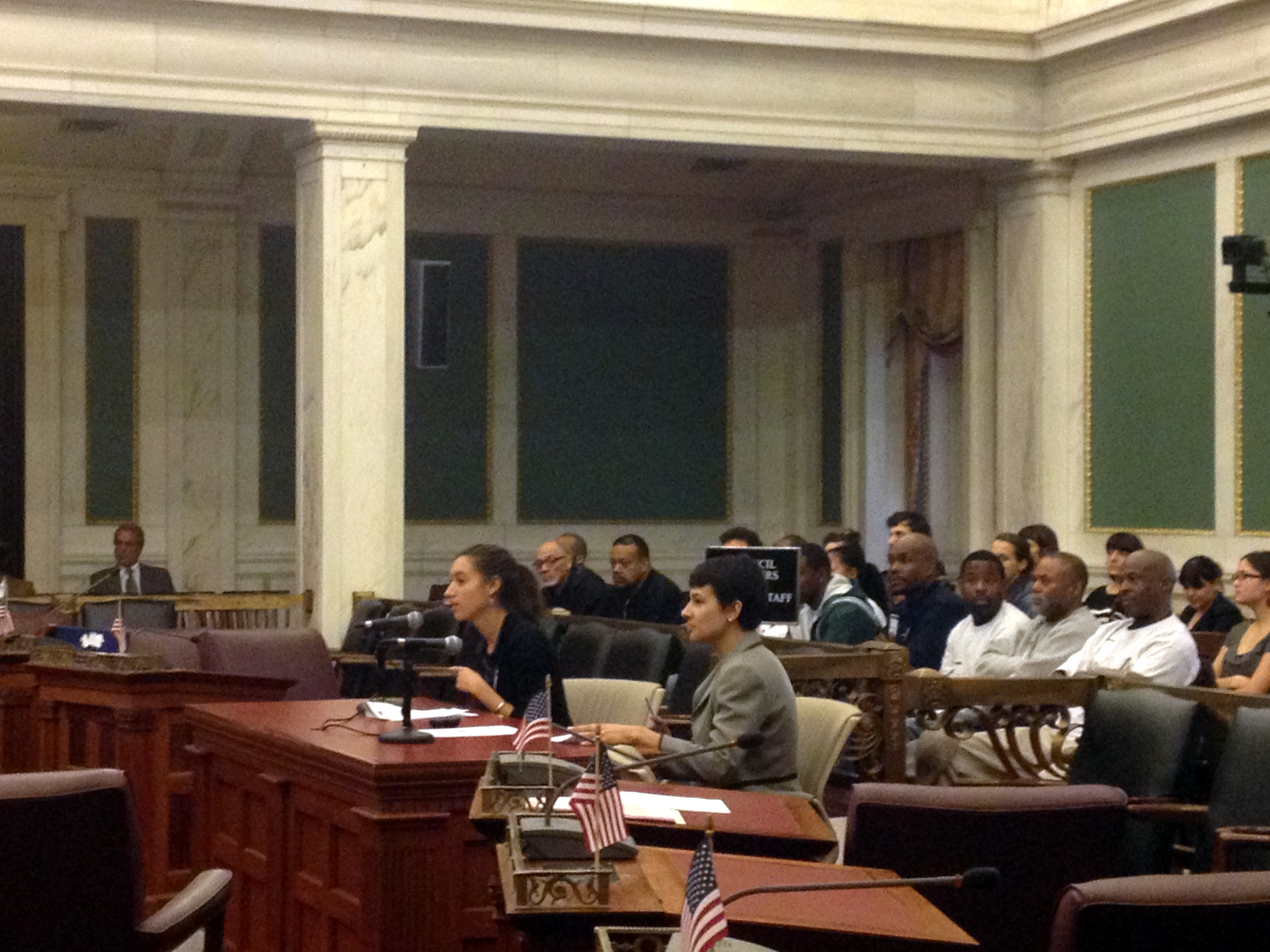
On November 7th, Hollaback! Philly organized the second-ever City Council Hearing on Street Harassment. Stop Street Harassment’s Holly Kearl attended the event and documented it thoroughly.
I was invited to testify from my position as a feminist bicycle advocate in Philly. In 2013, I founded the Bicycle Coalition of Greater Philadelphia’s Women Bike PHL program, which provides rides, workshops, and social events to help Philadelphia women get the skills and community support they need to start riding a bicycle. Last fall, I also started working for Gearing Up, a Philly nonprofit that gives women in transition from incarceration, addiction, and/or abuse the opportunity to ride a bicycle for exercise, transportation, and personal growth. If there are two topics in this world I care about, they are bicycles and gender equality. At the City Council hearing in November, my testimony (watch it here or read it here) focused on my personal experiences as a woman bicyclist in Philadelphia, and also drew from the experiences of some of the women bicyclists I’ve met through my work.
Conversations about street harassment often focus on the experiences of pedestrians. However, as more and more people start to use bicycles for transportation, especially in cities, I think it’s important to bring the experiences of bicyclists into conversations about street harassment as well. Similarly, perspectives from women — including their experiences being harassed while riding — tend not to be at the forefront of the bicycling advocacy movement. This also needs to change. (I’m working on it.)
In my testimony in November, I spoke about how riding a bicycle can feel like an escape from the gender-based street harassment that plagues me as a pedestrian. I ride my bike through neighborhoods where I wouldn’t feel safe walking. I’m moving too fast to be forced to respond to harassment — even if someone calls out to me from the sidewalk, I can often just ignore it and pedal on. Biking is door-to-door transportation that eliminates the periods of waiting at the bus stop, or walking to the subway, where street harassment is such a constant threat. Biking for transportation, to me and to many other women in Philadelphia, can be profoundly liberating.
But there’s a flipside — and I spoke about this in my testimony, too. In reality, biking isn’t actually a magical escape-button from harassment. The harassment doesn’t go away. It just changes. When I get on my bike, I might feel safer from men walking on the sidewalk — but men and women driving cars pose a whole new threat.
When I asked the Women Bike PHL Facebook forum for stories about being harassed while riding their bikes, the stories I got were mostly not gender-based. (Some were, of course — e.g. men calling out “I wish I were that bike seat”). More often, though, the stories were about harassment based on transportation mode — women were being harassed because they were riding a bike, not necessarily because they were women. Women frequently spoke about aggressive drivers honking, trying to run them off the road, and yelling at them for taking up lane space to which the motorists thought they had exclusive rights. (Guess what? They don’t. But it’s pretty hard to argue with someone commanding a two-ton piece of metal.)
These experiences certainly aren’t unique to female cyclists. Unfortunately, every biker I know has had terrifying experiences with aggressive drivers these while riding on city streets. For women, though, it can feel like a double bind: if you leave your house, there’s no escape from harassment of some kind — whether you’re on two feet or two wheels.
I find both bike-based harassment and gender-based harassment completely unacceptable, and I am actively working to fight both of them. However, while they can sometimes occur simultaneously, it’s important to maintain a distinction between them. Yes, both are fundamentally based in power imbalances, and it is tempting to draw a clean analogy between “car privilege” and “male privilege.” But as feminist bike advocate and writer Elly Blue thoughtfully explores in a recent piece, Is Bicycling A Civil Rights Issue?, they’re not the same. After all, I don’t choose to be a female-bodied person when I’m walking down the street. I do choose to get on my bicycle.
What’s the takeaway? I’m not sure yet. I am interested in whether anyone is doing more formal research on the distinctions between, and intersections among, different forms of street harassment. (My “data” is merely anecdotal, however powerful the anecdotes may be!) I certainly think that harassment of bicyclists by motorists is a form of street harassment. It makes people who are lawfully using public space feel unsafe, and efforts to fight it should be under the umbrella of the anti-street-harassment movement. At the same time, bike-based harassment is different from gender-based harassment (experienced, as we know, in all modes of transportation) in fundamental ways, and we can’t lose sight of that, either.
Katie Monroe founded the Women Bike PHL campaign at the Bicycle Coalition of Greater Philadelphia and she works at the Philly nonprofit Gearing Up, which gives some of Philadelphia’s most marginalized women – those in transition from incarceration, addiction, and/or abuse – the opportunity to ride bicycles for exercise, transportation, and personal growth. Follow her on Twitter, @cmon_roe.
** Sign up to receive a monthly e-newsletter from Stop Street Harassment **
Street Harassment Stories:
Share your story! You can read street harassment stories on the Web at:
Collective Action for Safe Spaces
The Hollaback Sites
Street Harassment in the News, on the Blogs:
* Firstpost, “Eve-teasing, molestation of NE women common in metros: Survey”
* Daily Illini, “Catcalling not synonymous with flattery”
* Pakistan Daily Times, “Man killed for stopping youth from eve-teasing”
* SBM, “The Introvert Struggle, Street Harassment, and Where the Good Guys Are”
* The Concordian, “Cat got your tongue: Responding to street harassment”
* Collective Action for Safe Spaces, “5,000: The Number of Dollars We Need to Raise to Paint An Anti-Street Harassment Mural in DC”
* HollabackMUMBAI, “Reclaim The Streets, Reclaim Your Right, Demand The #RightRepublic”
* The McGill Daily, “Catcalls and the violence behind them”
* Creative Boom, “City of Brotherly Loves takes a stand against men who catcall”
* BuzzFeed, “8 Reasons A Catcall is Not A Compliment”
* XO Jane, “Street Harassment“
Announcements:
Reminders:
* We’re collecting stories about the street harassment of LGBQTAI people for a new web section — please consider sharing yours, if relevant!
* Meet SSH’s newest board member, Patrick Ryne McNeil, who specializes in the street harassment of gay and bisexual men.
* SSH’s first Blog Correspondents cohort of 2014 launched this month. They will write monthly articles through April.
10 Tweets from the Week:
* @juliemastrine Getting followed on my walk home. Told him “I don’t want to talk” & “Stop harassing me.” Seems to be gone but now I’m spooked 🙁 #endSH
* @msbrandiebrown: @britnidlc Today a man described my pregnant appearance as “juicy and fresh.” *gags* #endSH
* @Libitina2 People talking about street harassment and how it’s the worst in the summer. Yet I’ve gotten harassed every day this week. (1/?)
* @JAMyerson: @CapobiaNB Good rule: if you are worried your flirtation might be harassment, don’t do it.
* @kay_fil “No Scrubs” is the best anti –#streetharassment anthem of all time – only scrubs think it’s fly to holla at girls from cars so stop doing it
* @citygirldc Please explain 2 me why a dude would roll down his car window in the cold just 2 demand I change my facial expression. #streetharassment
* @Dontharassmebro Dude grabs my arm when I walk by and hisses “hey baby. that dressss…” In what universe is that okay? #streetharassment #dontharassmebro
* @kerrydiekmann I need #feminism bc when someone warned me about the sidewalks being icy on my walk home, I 1st assumed SH @StopSTHarassmnt @SafeSpacesDC
* @aslibharat Raise your voice against eve teasing. Be a man not evil. #eveteasing
*@juliemastrine: @dana_hoyes Not getting harassed/groped/sexualized etc on the street *is* a basic human right. #streetharassment
Yesterday evening I was outside WinCo Foods 7330 NE Butler St, Hillsboro, Oregon. I was at the store entrance picking some plants. A very calm, collected normal looking white male came close to me and said inappropriate sexual sentence about their intention to do something sexual to me. I did not want to believe what my ears heard (being an international non-native English speaker i am used to making sure that I understand exactly what people are asking/ saying to me) so i said almost in disbelief, “What?” He repeated the inappropriate sexual words. I was shocked, startled, angry.
“What did you just say to me?” I asked loudly and a few people entering or leaving the store heard me and started looking at us. Then the guy loudly said, “I just said you look pretty.” I told him, “No this is not what you said,” and he started moving away and I almost grabbed his collar but he took off running. I was really mad and shouted, “Stop right there…why are you running away like a coward if you didn’t say/do anything inappropriate.”
People carried on with their business but one kind young lady came to me and told me to come back to the well lit store entrance and be safe, she helped me calm down and made sure that I was ok and feeling safe. I felt insulted, threatened and many thoughts came to my mind like was this man following me? Did he know where I have parked my car? What if they come back with a weapon or something. I reported the incident to police and gave the description of the man.
What the man did was totally unacceptable and inappropriate. I suspect he targeted me because I am a brown female. I am also very petite so he might have thought that I am incapable of confronting a male. I hope this person will never repeat it because they can be charged with 1) harassing someone because of their nationality/color, 2) picking a fight/provoking someone to act violently and 3) disrupting peace at a public place. All these charges can lead them to jail.
– Anonymous
Location: WinCo Foods 7330 NE Butler St, Hillsboro, Oregon
Share your street harassment story for the blog.
Check out the new book 50 Stories about Stopping Street Harassers!