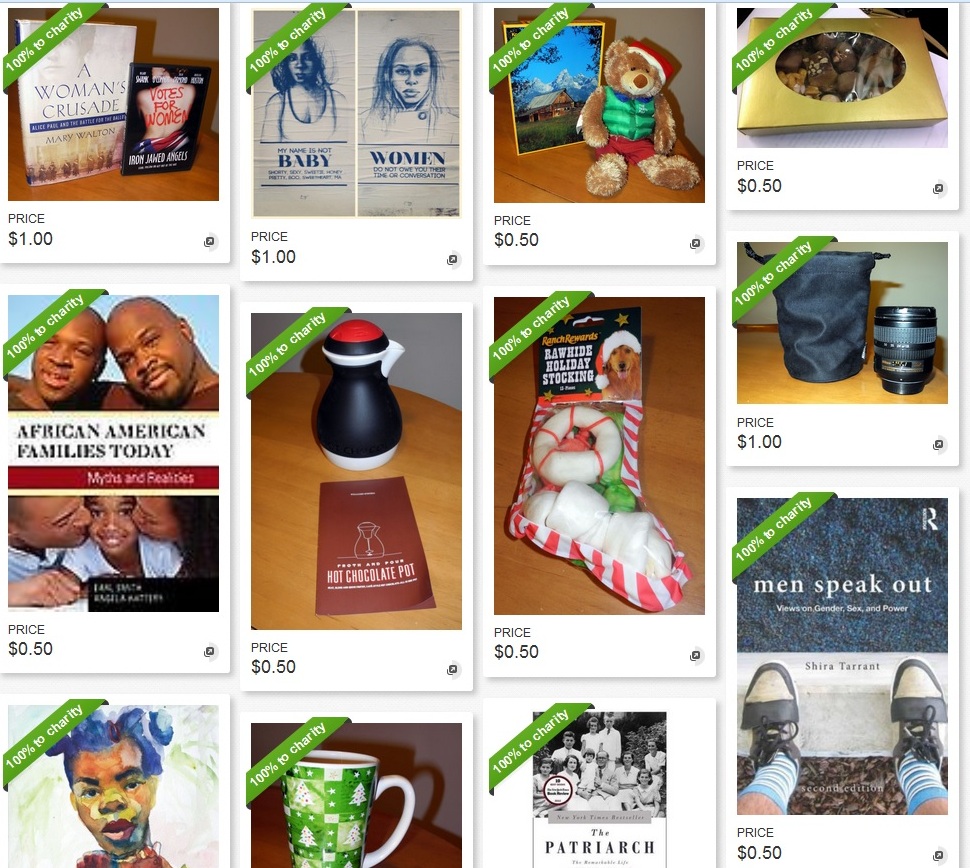
We’re hosting an online auction (100% of money raised goes to funding our work) through Sunday that includes 20 items that could each be great gifts for friends and family…including two items for dogs!

Making Public Spaces Safe and Welcoming
We’re hosting an online auction (100% of money raised goes to funding our work) through Sunday that includes 20 items that could each be great gifts for friends and family…including two items for dogs!

The Mayor-elect of New York City, Bill de Blasio, released a document with his vision for New York City and on page 63, he addresses street harassment!!
“End Street Harassment and ‘Subway Grinding.’
As mayor, Bill de Blasio will continue to aggressively push to make ‘subway grinding’ a felony punishable by jail time. Bill de Blasio will also further his efforts to prevent sexual assault by launching a wide-scale Public Services Announcement campaign that expands awareness and empowers bystanders to confront harassment when they see it, be it on the streets or in the subways.”
This is a refreshing and very positive change from how Mayor Michael Bloomberg viewed street harassment (“I know for a fact that any self-respecting woman who walks past a construction site and doesn’t get a whistle will turn around and walk past again and again until she does get one.”).
With the New York City Council and Manhattan Borough President’s Office already strong allies on this issue — for example, representatives from each spoke at New York City’s street harassment rally in April for SSH’s International Anti-Street Harassment Week effort — the possibility for comprehensive change in New York City is huge!
Thanks for being an ally and advocate, Bill de Blasio!
H/T to Hollaback!
It’s #GivingTuesday! If you’ve ever been street harassed or if one of your loved ones has been, please consider donating $10 or more to help fund the first-ever national study on street harassment. We need this data to better address the issue. We’re only about $21,000 away from our goal!!!
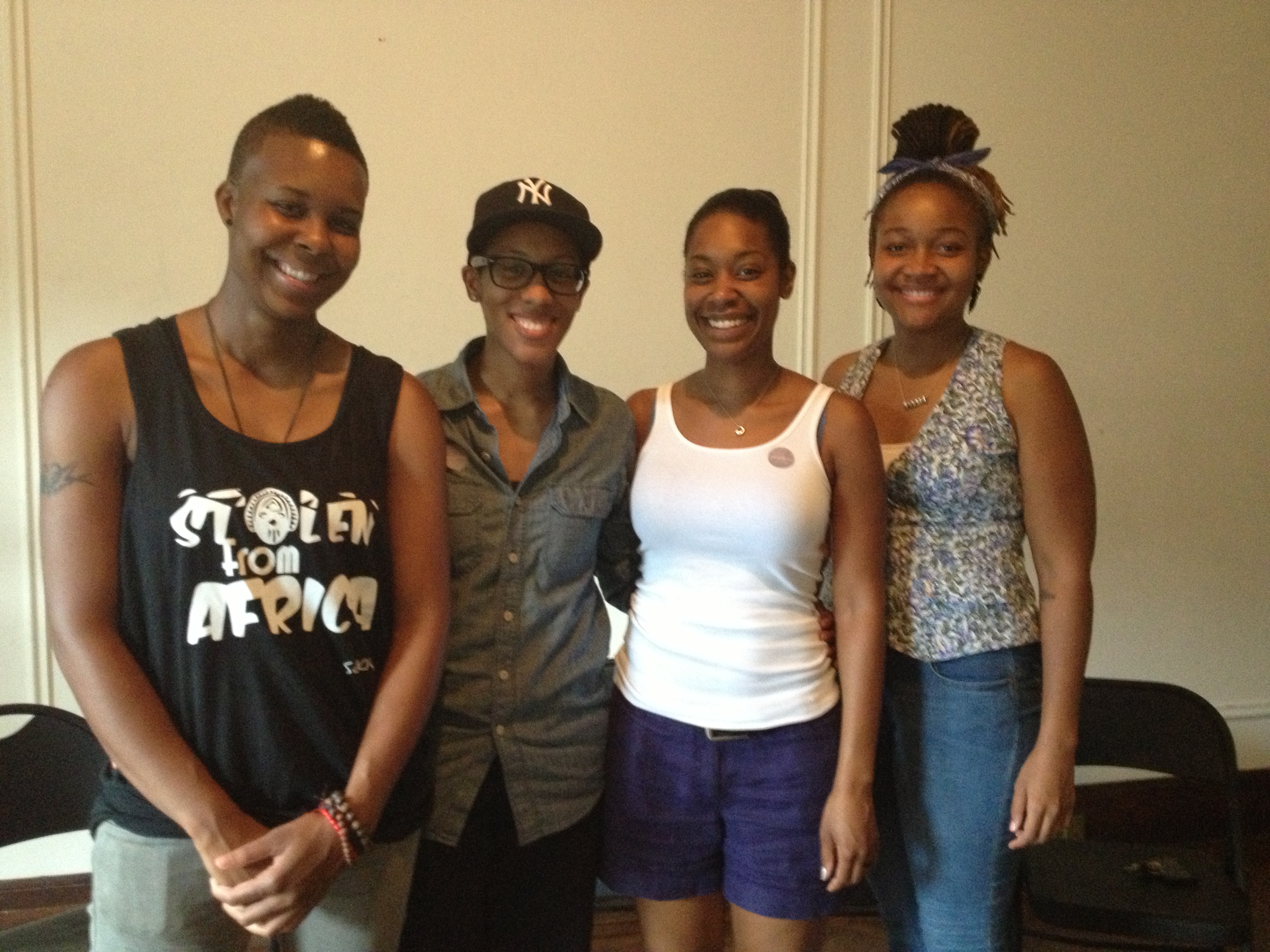
The study will include a 2,000 person national survey (which is why it costs so much) as well as 10 focus groups with under-represented voices. Already, we’ve done these focus groups with Native Americans in South Dakota, queer women of color in New York, and GBTQ men in Washington, D.C., as well as some regional focus groups in places like Los Angeles and Brooklyn.
There are various perks you’ll get in return for your donation, including a signed copy of the new book 50 Stories about Stopping Street Harassers!
With your donation, you can make a difference in people’s lives, especially the next generation of girls and boys. Everyone deserves to be safe in public spaces but it will take all of us to make that happen.
I work in a branch of psychological research that emphasizes: structural change, policy influence, and empowerment of marginalized groups as they exist within their communities. These are the tools and theories that have guided my work, and similarly, what attracted me to Stop Street Harassment. But what happens when structural change isn’t enough? What happens when the policies change but the culture doesn’t? I had an experience the other day that reminded me of my work—and reminded me that even when the policy and legislature are clear, I have to continue to work to change the culture.
The other day on my way home, having just dedicated hours to working on a section of the “Know Your Rights Toolkit,” I ended up in the transit center for about 30 minutes.
In a mere 30 minutes, mid-day, I was harassed, threatened, and berated by over half a dozen men. I had one man invade my personal space from behind and then simulate beating me with a crutch when I moved away in disgust. I had another pace back and forth staring at me as I was reading alone against a wall. I had one scream at me to smile in a voice that actually sounded annoyed. I was angry and exhausted and for the rest of the day—I actually felt a bit helpless. I knew my rights—and I did nothing. Even more, I was disappointed in the dozens of men who stared on, watched others treat me this way, yet said or did nothing.
When I finally got home, and was able to relax and calm down, I reminded myself that the toolkit was not intended to make victims feel guilty for not reporting—it was created so that we know our rights. And I do.
In the following days, I talked to a mutual acquaintance who is a police officer stationed in the transit center about keeping an eye on the harassment and let him know which areas were the most problematic. I took solace and satisfaction in knowing that my city offers online reporting, and that I can snap a camera phone picture of the particularly heinous offenders in the future. I felt proud of the way I chose to handle those particular harassers in that moment, and I felt grateful for my safety. The experience not only served as a reminder of the challenges in my work, but also reminded me that however I choose to respond that day, is the right way, and that the same remains true for all of you. I hope you all find the toolkit informative and possibly empowering when it releases on December 10. You can join our Tweet chat at 1 p.m. EST that day.
Rickelle Mason is Stop Street Harassment’s fall 2013 intern. She is an undergraduate senior at the University of North Carolina at Charlotte. With a major in Psychology and a minor in Women’s and Gender Studies, she has a passion for feminist psychology, and using community-based participatory research to dismantle gender-based violence. She has worked for several years in the university’s Community Psychology Research Lab, which was recently the recipient of the “Outstanding Training in Community Psychology” International Award.
What about people who get harassed for being ugly? I get laughed out, pointed out and ridiculed by people ranging from kids to old age pensioners. I have also been spat at from a car and had men walk right up into my face to have a good stare at me so they report back to their friends that l am “ugly”.
One of the worst cases of harassment l have experienced was from a car across the road at a roundabout. One of them had its top off as it was summer and he leaned out of the car and began screaming abuse at me. It was totally unprovoked. So was the spitting .
Another time l was walking home in the dark and this group of young men were going into the local train station. Again l was on the other side of the road – One of them stopped and started shouting at me, “Why are you hiding behind your hair? Are you an old hag? Are you an old hag?” He was virtually screaming and again l had done nothing wrong.
I think street harassment also needs to include harassment based on people’s negative reactions to appearances also and equally. My life has been made hell and l know if l tell anyone they won’t believe me.
– LC
Location: Everywhere l walk
Share your street harassment story for the blog.
Check out the new book 50 Stories about Stopping Street Harassers!