• About Us
    • What Is Street Harassment?
    • Why Stopping Street Harassment Matters
    • Meet the Team
      • Board of Directors
      • Past Board Members
    • In The Media
  • Our Work
    • National Street Harassment Hotline
    • International Anti-Street Harassment Week
    • Blog Correspondents
      • Past SSH Correspondents
    • Safe Public Spaces Mentoring Program
    • Publications
    • National Studies
    • Campaigns against Companies
    • Washington, D.C. Activism
  • Our Books
  • Donate
  • Store

Stop Street Harassment

Making Public Spaces Safe and Welcoming

  • Facebook
  • Instagram
  • Pinterest
  • Tumblr
  • Twitter
  • YouTube
  • Home
  • Blog
    • Harassment Stories
    • Blog Correspondents
    • Street Respect Stories
  • Help & Advice
    • National Street Harassment Hotline
    • Dealing With Harassers
      • Assertive Responses
      • Reporting Harassers
      • Bystander Responses
      • Creative Responses
    • What to Do Before or After Harassment
    • Street Harassment and the Law
  • Resources
    • Definitions
    • Statistics
    • Articles & Books
    • Anti-Harassment Groups & Campaigns
    • Male Allies
      • Educating Boys & Men
      • How to Talk to Women
      • Bystander Tips
    • Video Clips
    • Images & Flyers
  • Take Community Action
  • Contact

USA: The Customer is Always Right (Even When He’s Harassing Me)

July 14, 2013 By Correspondent

By Angela Della Porta, SSH Correspondent
I live in a small town. It goes without saying that I see many of the same people over and over again. I also work at a convenience store for the summer, which certainly has its downsides. (I could write a book about the drags of working customer service, but now isn’t the time.)

I experience street harassment every time I’m walking down the street. Despite the bigoted assumptions people often make about where and by whom street harassment is perpetrated, I am often greeted with harassing comments by “family men” in the rural, racially homogenous area in which I live. Being in a small town, there are very few places to shop, and I’m constantly faced with the situation of forcing myself to be friendly, helpful, and polite to men who harassed me hours before. More often than not, their harassment doesn’t stop there – I get lewd comments on a regular basis, ones I have to accept jovially with a smile for fear of being scolded by my boss. While it’s never fun to paint on a smile for customers when you don’t really feel like it, it’s somewhat different to be forced to smile and accept sexually harassing comments from people you know you’ll see every day. If I had a dollar for every time a man made a comment about my appearance, told me he’d “show me a good time” when buying alcohol, or told me he’d like to buy me (people have actually said that) when asked how he can be helped, I’d double my wages. I’ve actually been told that I should be friendlier to these men and laugh because they’re just joking.

Now, as a community of people against street harassment, we’ve decided that saying something to your harassers is an excellent tactic to put them in their place. However, that’s not always easy – or even possible. When I’m harassed among my friends, I often feel hesitant about shouting back because I don’t want to embarrass or upset them. When I’m with my family, I know saying something to a harasser will seem like an overreaction and potentially cause a scene. If I feel as if I might be putting myself in danger by saying something, I won’t speak up. There are many reasons why the decision whether to speak up against street harassment may be ambiguous or difficult to make. However, until now, I had never had that decision taken away from me: I cannot respond to my harassers or I will lose my job.

While speaking up personally against harassment can be a huge tool for anyone who is constantly bombarded with comments and gestures, it’s not enough. We’ll have to continue to fight against misogyny and patriarchy to really change hearts and minds. That’s why the work that Stop Street Harassment does is so important, and why getting involved can really make a difference. Share your stories. Write, tweet, Facebook, submit your stories here! Until we’ve created a culture in which it is inappropriate to harass women, men will continue to do it whenever and wherever they can. So, make your voice heard whenever you can.

Because at the moment, I can’t.

Angela Della Porta is a recent graduate of Clark University in Worcester, MA. She will join with Teach for America in Detroit in the fall. Until then, she’s spending her time in rural Maine. Follow her on Twitter: @angelassoapbox

Share

Filed Under: correspondents, Stories, street harassment

We Support Racial Justice

July 14, 2013 By HKearl

Update: One of our donors asked for her donation back after seeing me post similar messaging on Facebook. I am sending her a check for her $60 tomorrow. I stand by what I said.

Update 2: Thank you to SSH supporters Candace, Josef, and Allison for donating to SSH to make up for it. So kind.

For others who want to donate, I’d suggest making donations to groups that are working more directly on racial justice, such as Southern Poverty Law Center, NAACP, Girls for Gender Equity, etc.

I am heartbroken that there was no ‪#‎JusticeforTrayvon‬ last night.

Why does this verdict and what it says about race in the USA matter to this community?

Not only because it impacts many of our supporters and their loved ones, but also because gender-based street harassment, racial harassment, racial profiling is all inter-related. It all is a way for harassers & murderers & “justice” systems to dictate who “belongs” in public spaces and who matters. But we all belong there. We all matter.

We stand with those who fought for justice for Trayvon Martin and we support and join efforts to achieve racial justice & equality.

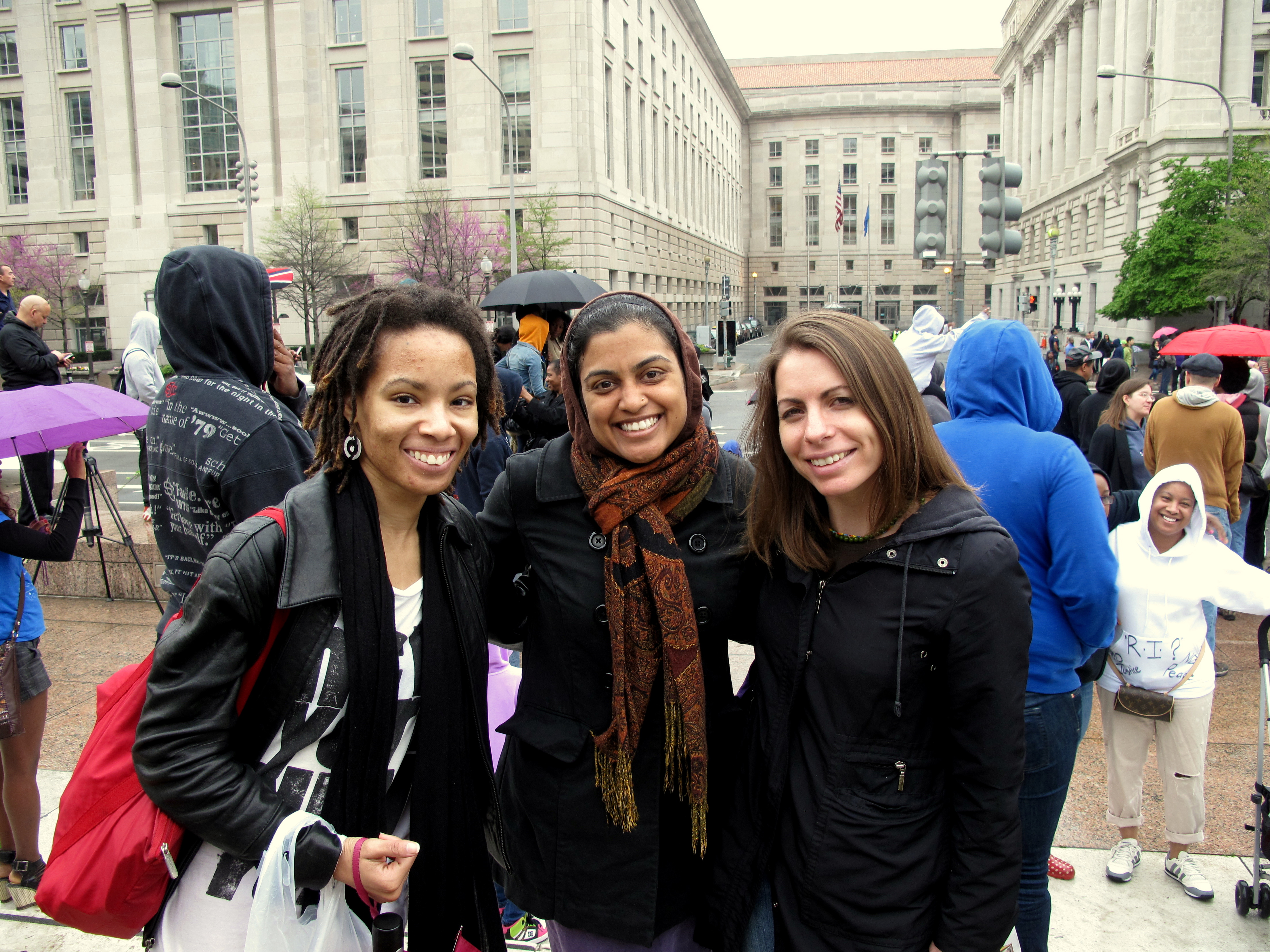
L to R: SSH supporter Dienna Howard, Collective Action for Safe Spaces co-founder Chai Shenoy, and SSH founder Holly Kearl at a rally for Trayvon Martin in 2012

Share

Filed Under: street harassment Tagged With: racial justice, racial profiling, Trayvon Martin, trayvonmartin

Help stop harassment in Egypt TODAY!

July 14, 2013 By HKearl

Today is the last day of HarassMap‘s fundraiser campaign – the funds will allow them to significantly increase their efforts.

“Sexual harassment in Egypt has reached catastrophic levels. In a UN Women 2013 study, 99.3% of Egyptian women surveyed said that they have been sexually harassed in their everyday life. The same study revealed that, in 85% of the cases, none of the bystanders actually intervened to help.

This epidemic has taken an even uglier turn. Sexual violence is now being used as a tool against women participating in political and public life. In just six days of mass protests between June 28 and July 7 2013, over 185 cases of horrific mob sexual assault and rape have been reported in Tahrir Square….

We need your help to fund a nationwide campaign of TV commercials, print ads, radio ads, guerilla marketing, pop culture, and graffiti to combat this epidemic.”

Please donate if you can and help support these heroes.

On a personal note – a year ago today, my dad and I met with the leaders of HarassMap in Egypt. We were so impressed to see how they work TIRELESSLY in often unsafe and chaotic conditions to make public places safer. He and I have both donated to support their campaign.

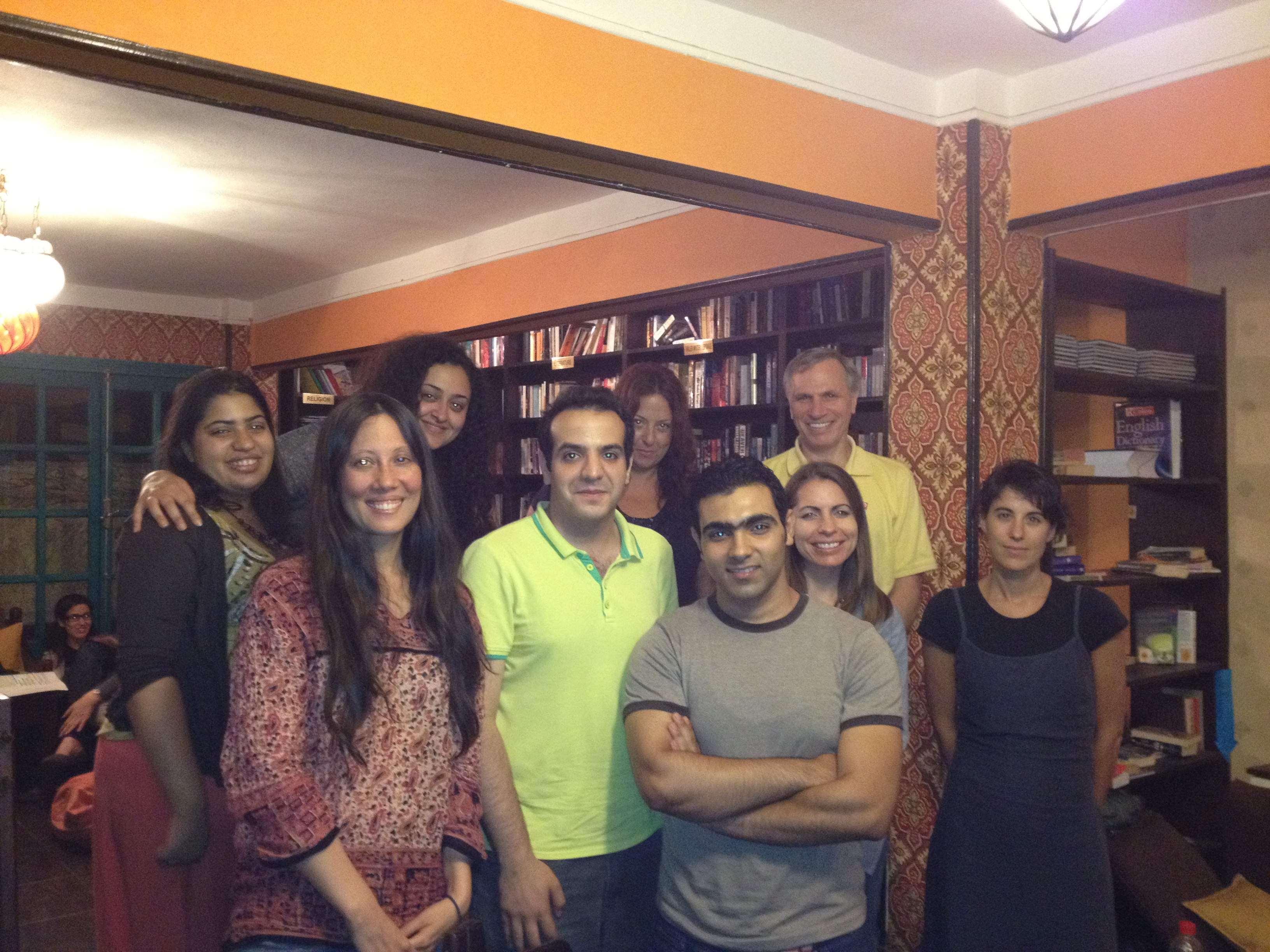
HarassMap meets on Saturday evenings
Share

Filed Under: street harassment Tagged With: Egypt, HarassMap

Libya Campaign Against Street Harassment

July 12, 2013 By HKearl

Via The Libya Herald

“A Libyan women’s rights organisation is mounting a powerful media campaign against domestic violence, street harassment and public denigration of women.

The Noor  (“Light”) campaign is setting up billboards on streets in some 20 cities across Libya to raise awareness about street harassment. TV and radio adverts are also used as part of the efforts.

“We hope that this campaign will help change the current situation,” project manager, Nadia El-Fallah told the Libya Herald. “We want to give confidence to all women with vision to play a part in the building of the new Libya,” she added.

The Voice of Libyan Women (VLW) launched its Noor initiative following research on women’s perceptions about security conducted in eight different Libyan cities. Around 150 women shared their opinions on security concerns and the impact of security on women’s participation in public life.”

Share

Filed Under: News stories, Resources, street harassment

USA: Street Harassment is an Important Problem

July 12, 2013 By Correspondent

By Britnae Purdy, SSH Correspondent

I have a thing for coincidences. The very same day that I accepted this role as a correspondent for SSH, my local newspaper posted a Facebook status asking for commentary from women who have experienced street harassment in the Fredericksburg, VA, area, to be used for an upcoming story. I was excited – until I read the quickly-accumulating comments below the status. The most-repeated sentiment was, “Don’t we have more important things to worry about than catcalling?” closely followed by “Why can’t women stop being so uptight and just take it as a compliment?”

It upset me, especially because equal amounts of these comments were coming from women as from men. I admit to being an overly sensitive person at times, and these comments bothered me, to the point where I briefly considered re-thinking this whole feminist-writing thing and staying in bed all day instead –I was having a bad hair day already, after all (thank you, Virginia humidity). But I couldn’t help thinking it through a little.

Start. Don’t we have more important to things to worry about than cat-calling? Let’s see – violent crime, corrupt governance, prime time television…Yes, it would appear that we, the collective, faceless “we” that make up our sense of modern society, do indeed have bigger things to worry about.

But let me ask you this – do I have bigger things to worry about than my own personal safety and well-being? No. I do not. As an individual being, keeping myself safe is my own top priority, and that is what is threatened when I am yelled at, followed by, or touched by strangers in a public place.

Expand. As an active member of my community, I am similarly concerned with the safety and well-being of my friends, family members, coworkers, and the super-friendly Starbucks barista who made my much-needed latte this morning. And as a contributing (financially and otherwise) member of my community, I expect my safety, health, and concerns to be just as respected and adequately addressed of those of my non-harassed male counterparts.

As for “taking it as a compliment” and “not being so uptight?” If you, as a self-assured, intelligent, confident woman can take a whistle or sexually-explicit comment and use it as fuel to brighten your day, then all the more power to you. I cannot. There are times when a “compliment” is actually the indicator of more aggressive behavior to come, and I need to be scared in order to stay safe – if I act a little too “uptight” about a whistle, it is because I am remembering that time I was followed home at night.

Regardless of threat level, a lewd, unwelcome comment is indicative of a patriarchal society that grants men verbal, visual, and physical access to my body with or without my consent. I fear that saying anything you want about a woman’s body with no consequences is only a few steps away from feeling like you can do whatever you want with a woman’s body. A society that does not equally value the safety of its women cannot be trusted to ensure the safety of any of its members that are not white, privileged, heterosexual males. Cue violent crime. Cue corruption and lack of morals. Cue media that perpetuates the image of women as weak, sexualized commodities meant for consumption.

Conclusion. We don’t have bigger problems because the mentality behind street harassment provides the basis for most of society’s “bigger” problems. I cannot just take it as a compliment because that would mean accepting a second-class version of myself, and even on the worst of bad hair days, that is not something I can bring myself to do.

Britnae is a graduate student at George Mason University, in Virginia, where she is pursuing a Master of Arts in Global Affairs with a specialization in Security and Conflict Studies. She also writes for First Peoples Worldwide and you can read more of her writing on their blog and follow her on Twitter.

Share

Filed Under: correspondents, Stories, street harassment

« Previous Page
Next Page »

Share Your Story

Share your street harassment story for the blog. Donate Now

From the Blog

  • #MeToo 2024 Study Released Today
  • Join International Anti-Street Harassment Week 2022
  • Giving Tuesday – Fund the Hotline
  • Thank You – International Anti-Street Harassment Week 2021
  • Share Your Story – Safecity and Catcalls Collaboration

Buy the Book

  • Contact
  • Events
  • Join Us
  • Donate
  • Facebook
  • Instagram
  • Pinterest
  • Tumblr
  • Twitter
  • YouTube

Copyright © 2026 Stop Street Harassment · Website Design by Sarah Marie Lacy