• About Us
    • What Is Street Harassment?
    • Why Stopping Street Harassment Matters
    • Meet the Team
      • Board of Directors
      • Past Board Members
    • In The Media
  • Our Work
    • National Street Harassment Hotline
    • International Anti-Street Harassment Week
    • Blog Correspondents
      • Past SSH Correspondents
    • Safe Public Spaces Mentoring Program
    • Publications
    • National Studies
    • Campaigns against Companies
    • Washington, D.C. Activism
  • Our Books
  • Donate
  • Store

Stop Street Harassment

Making Public Spaces Safe and Welcoming

  • Facebook
  • Instagram
  • Pinterest
  • Tumblr
  • Twitter
  • YouTube
  • Home
  • Blog
    • Harassment Stories
    • Blog Correspondents
    • Street Respect Stories
  • Help & Advice
    • National Street Harassment Hotline
    • Dealing With Harassers
      • Assertive Responses
      • Reporting Harassers
      • Bystander Responses
      • Creative Responses
    • What to Do Before or After Harassment
    • Street Harassment and the Law
  • Resources
    • Definitions
    • Statistics
    • Articles & Books
    • Anti-Harassment Groups & Campaigns
    • Male Allies
      • Educating Boys & Men
      • How to Talk to Women
      • Bystander Tips
    • Video Clips
    • Images & Flyers
  • Take Community Action
  • Contact

Discussions, rallies, photography competitions: Anti-Street Harassment Week in Delhi, India

March 29, 2012 By Contributor

(Editor’s Note: This guest blog post was written by the Safe Delhi Campaign Team to recap their efforts during International Anti-Street Harassment Week in Delhi, India)

CONTEXT:

Delhi has changed a lot in the past decade. Skyscrapers, flyovers, shopping complexes rapidly covered the city making it for a particular section of the society. But, a general animosity and a sense of belongingness lacks in the city. Equal participation in the city and the right to ownership is not guaranteed for women. The sense of enjoyment, of loitering and of using public places in the way they desire are very limited and at times non- existent. Their presence in this ‘urban city’ has to be constantly negotiated and compromised. The fear of and the incidence of being sexually harassed in public spaces have unfortunately become a part a woman’s experience in the city.

Women’s access to safe and violence free public spaces is her right. Sexual harassment in public spaces restricts choices and opportunities for women in education, livelihood, health and decision making. The gendered nature of public spaces not only denies their access but also ‘legitimizes’ the invisibility of women after a particular hour of the day. It is the right of every citizen to enjoy public spaces irrespective of gender, caste, class, sexuality, disability or any other social identity. The responsibility of society to ensure equal rights for all has to increase. Safety and right to the city can be guaranteed with a more sensitive and effective service delivery for all the citizens. It is time to understand and address factors of safety and make the city accessible and inclusive for all.

Global Week on Anti Sexual Harassment and Safe Delhi Campaign:

Delhi University 2011

100 co-sponsors across the world have joined hands to mark the International Anti-Street Harassment Week, a program of Stop Street Harassment . A core team of activists led by Holly Kearl volunteered their time to make the campaign possible. Last year, the first Anti Street Sexual Harassment Day was celebrated in Delhi and saw the largest turn out worldwide. The march coordinated by Safe Delhi Campaign and a group of students from University of Delhi,  saw participation from students, faculty and police constables. This year the plan has been expanded for a week.

Safe Delhi Campaign co-sponsoring the event in India called for action from different partners across the city -from individuals, to organizations to media houses. The intent was to involve people from different walks of life to talk about the issue and address it in their own way.

Objective of the Campaign:

  • To initiate dialogues and discussions among students in different colleges and universities on safety in public spaces.
  • To spread awareness on factors of safety through advocacy materials of the campaign.
  • To initiate and moderate discussions on social media platforms on safety in public spaces and right to the city.
Campaigning On Streets:

Dialogue with Students: ‘Let’s Reclaim Public Spaces’

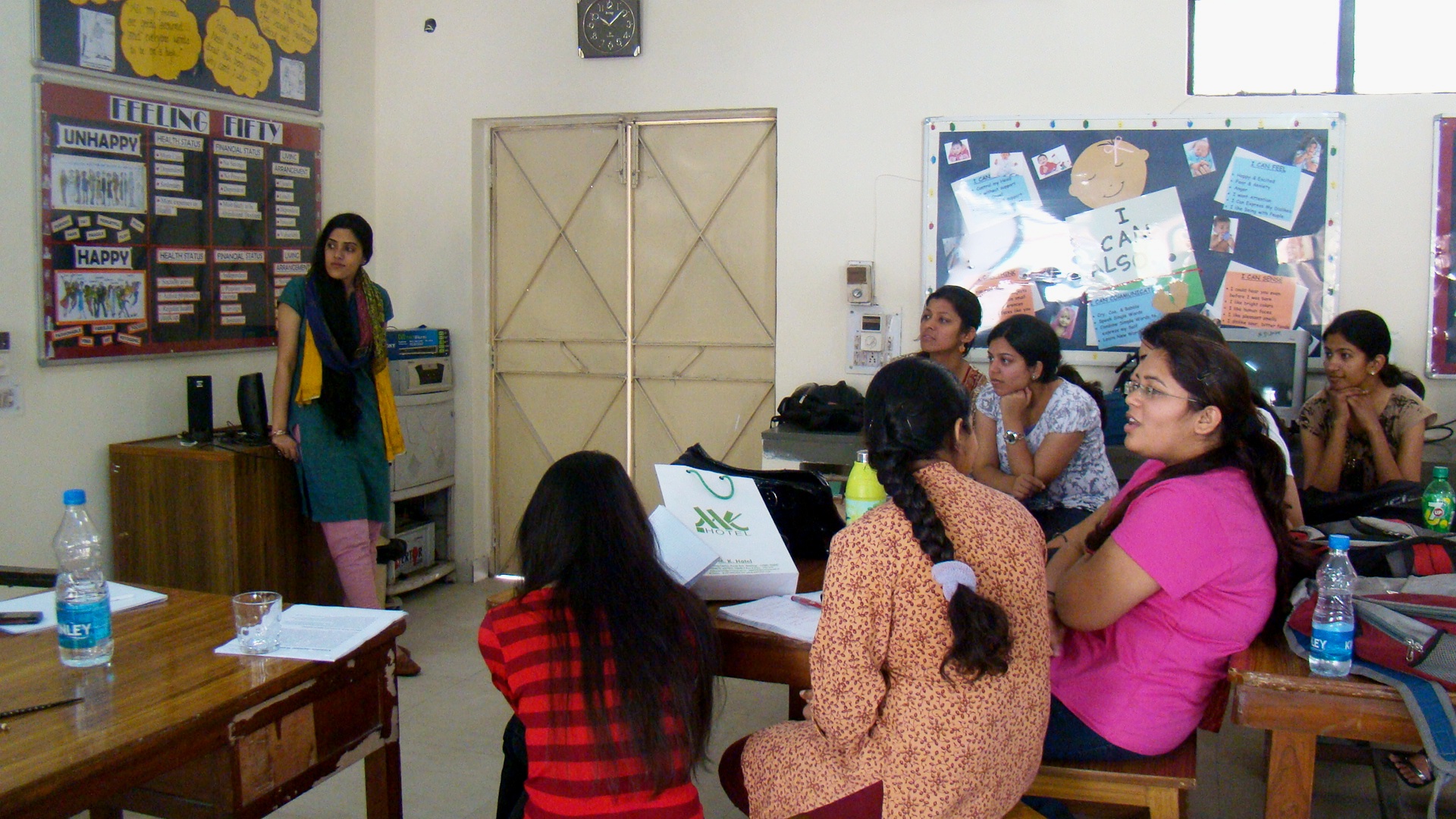
The first day of  The Global Anti Street Harassment Week 2012 was marked by an extensive discussion on gendering of public spaces with students from the Department of Human Development of Institute of Home Economics. Students shared their personal experiences of ‘gender’ as an identity that impacts their choices and opportunities to live equally in the city. The students deliberated on gaps in emergency helpline numbers for women.
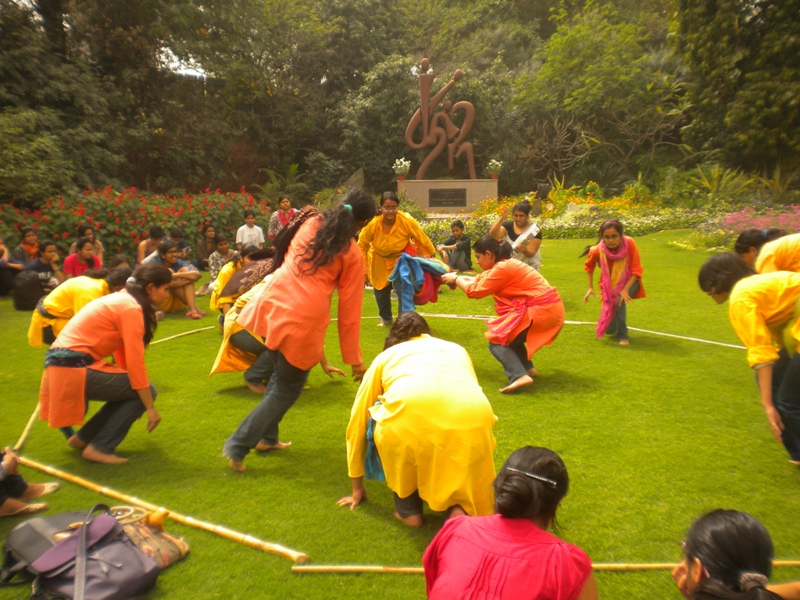
Service provisions like public toilets or well lit parks to also talking about the role of larger society to create an enabling environment for all. With the remark that safety is a woman’s right to the city, the students undertook a ‘class to class campaign’, sharing with students the message against sexual harassment on streets and also sharing some.

An open lawn discussion at Lady Sri Ram College for Women on ‘Reclaiming Right to Public Spaces’ was called by students from National Service Scheme on Tuesday, the 20th of March, 2012.  There was an interesting discussion on the factors that attribute a place as being safe and unsafe. A street play by the college theatre society marked the beginning of the discussion.  The students were shared helpline booklets, poster and other relevant material after the discussion. More than 100 students participated in the discussion.
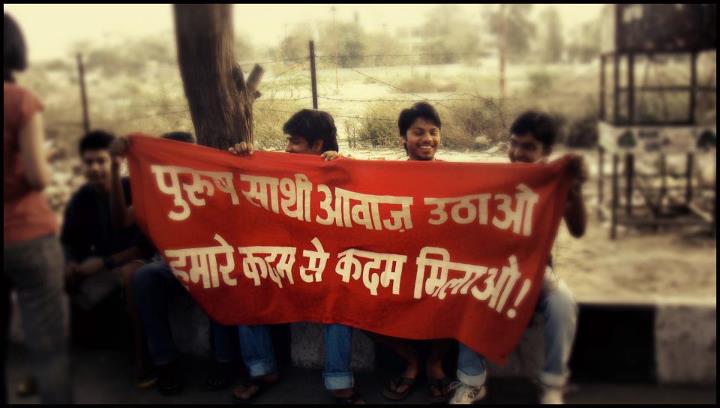
Let’s Make Delhi Safe for Women! Reclaiming Right to Public Spaces:

The recent weeks in the National Capital Territory of Delhi has seen an sudden increase of reported sexual assaults on women, mostly while their presence in public spaces. Following such incidences were remarks given to women to not work after 8 p.m. or to not wear “revealing clothes.”
The blame of these and many more incidences was left on the woman. This led to agitation not just among the civil society group of the city but also individual masses. Everybody across the city decided to stand against violence on women and say no to unsafe public spaces.

The first public protest was called in Gurgaon as a response to the incident that took place outside one of the malls in the area following which remarks by police representatives on girls should stay home after 8:00 pm was called for. The protest was joined by women’s groups, youth organisations, individuals from the city and several media houses as well.  Following the first protest, a Citizen Charter of Demands was drafted and a petition to state agencies to implement the same was circulated all across. Social networking pages to public campaigns to meeting individuals where ever possible, the petition was taken all across the city.
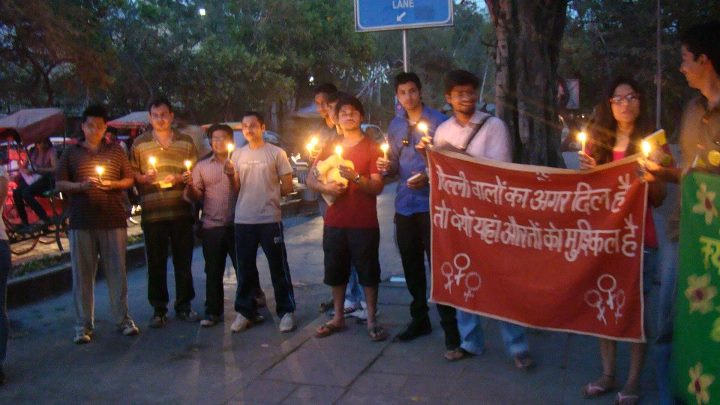
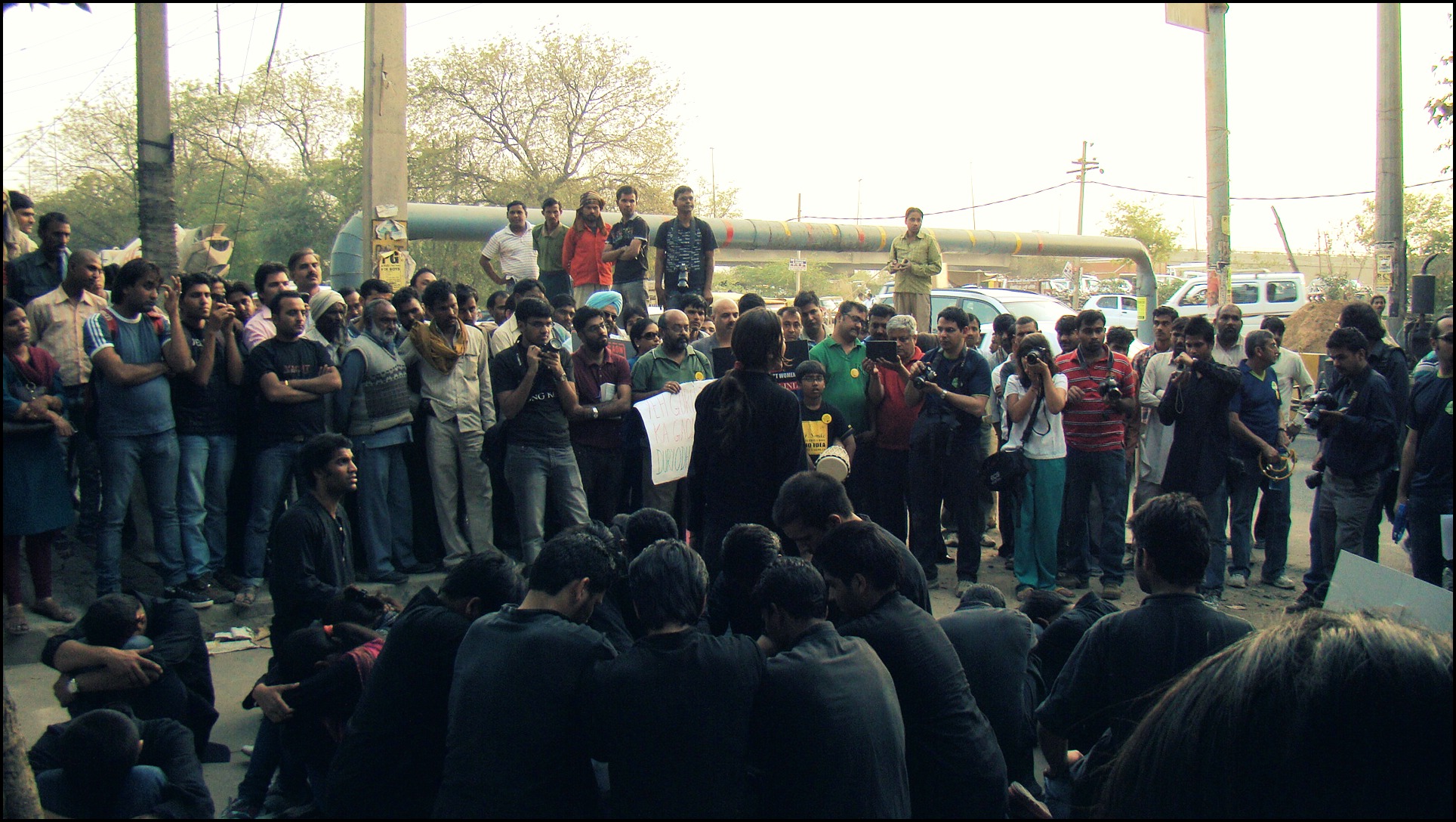
The city saw a series of public protests in different places and through different forms. To mark the end of the Global Week, the students from  the University of Delhi called for a candle light vigil to “Reclaim your Right to Safe and Violence free City for Women.”  The vigil was held on March 24, 2012, in the evening and was participated by residents of the area, students, individuals from the city asking for a right to safe public spaces. An appeal to more men to join

Winning entry by Aranyaka Verma.

and for police support was constantly being made during the protest and that actually led to more people joining in the middle of the protest. More than 100 hundred people signed the petition and participated in the march.

CAMPAIGNING ONLINE

Photography Competition on Right to A Safe And Inclusive City

An online photography competition in solidarity with the Global week was hosted on the Safe Delhi Campaign Facebook page. The competition was well received and saw multiple entries. A panel of judges was formed to choose the winning photograph. Discussion around factors to make city safe was also initiated online.

 

Share

Filed Under: anti-street harassment week, street harassment Tagged With: global activism, Jagori, rape, Safe Delhi, sexual harassment, street harasment

Street theater about street harassment by The Saartjie Project

March 29, 2012 By Contributor

(Editor’s Note: This is cross-posted with permission from The Saartjie Project (TSP) Tumblr page. The article is written by @JessSolomon, the founding producer. TSP wrote and performed street theater about street harassment in Washington, DC, for International Anti-Street Harassment Week.)

We are a home-grown performance ensemble made up of black women exploring and creating at the intersections of race, gender and power, intentionally and without apology. We create in community and perform on stages, at universities, in multi-purpose rooms, galleries and now …the street. We fiercely believe in the power of our narratives and those of our allies, so to co-sponsor Washington DC’s Anti-Street Harassment Week was a no-brainer (I give thanks for @mdotwrites exposing me to texts like Dr. Bernice Johnson’s Working in Coalition – it grounds me in the importance of this kind of work). It was deciding what we’d do as a co-sponsor that was the challenge.

After much discussion and sisterly debate about “what” we’d do, we decided to perform somewhere we’ve known Street Harassment to take place. There is power in reclamation of spaces.

We crowdsourced a performance location and Gallery Place/ Chinatown – one of the busiest areas in the District – won hands down. (Adams Morgan and Georgetown were close contenders.)

Process

As allies and supporters, it’s important that you understand the context of this “performance”. (Please note: I use that term loosely. Sometimes “performance” conjures up fancy notions like curtains and lights and seats and backstage.) At its essence, our performance was an output of a personal process. We sat around and asked ourselves, “Why are we doing this? Who are we doing this for? What does a world without Street Harassment look like? Feel like?” We talked about feeling safe enough to perform. “What if someone approached us? Touched us? What did we want spectators to walk away with? What would their call to action be?”

3.24.12 The Saartjie Project street theater in Washington, DC
We didn’t have all of the answers immediately and some came at the 11th hour, but we knew we had to know our truths, with all our guts, before we began shouting them on the corner of 7th and G Street.

Holding Space

We are still so grateful to the people who intentionally showed up on a rainy Saturday afternoon to witness and hold space for us on the street. Supporters who marked it in their calendar and invited their friends. We are still so grateful for those that weren’t there but were thinking about us. We are also still so grateful for those who had no idea that they’d become an important part of some bold magic happening on the street.

Some Reflections from the Saartjie Crew

Shonda said, “… people stopped and shared their stories.  Young women seemed to appreciate that we were speaking about our lives in public.  And young men felt comfortable enough to jump in and assist!  I appreciated all of the people who included themselves even if that just meant bearing witness.”

Saartjie Project members experienced street harassment directly after our performance. Yup.

As Farah recounted, “A man who observed our show twice walked up to me and Shonda to share what we initially thought to be feedback about our performance.  Instead, he told us that we didn’t have to dress like nuns and that people might be more attentive if we showed a little breast and thigh.   I felt anger rising up in me, but said “God bless you.  And I pray that one day, you won’t street harass women how you’re harassing us” and walked away from him.  The man continued to ramble and followed us until I made a scene and asked him to say the same thing to my husband who happened to be volunteering.

I questioned if the performance was effective—a man who looked engaged still doing exactly what we had been speaking against – to us directly! But I weighed his ignorance with the positive responses we received—those from a young man who helped us pass out brochures about Street Harassment and confessed that he’s been guilty of harassing women; an older woman who said that she’s still a victim of street harassment; and the teenage girls who nodded and said that they too have experienced street harassment.  I knew that I couldn’t let one person affect the importance of what we did. We started conversations and used art to address a social issue that was proven to not only be relevant and current, but personal.”

So now…

Anti-Street Harassment Week is over but our work isn’t. This experience/experiment taught us that we must continue to tell our stories, recognize the responsibility in being a bystander and that in the midst of fighting for justice someone who you think is a supporter may not be. And that teaching moments show up all the time…even when you’re performing on the street.

Next year, I envision performances like ours happening simultaneously all over the District, perhaps all over the planet! Imagine how powerful that would be.

One last thing…

Some readers may be wondering about the origin of our name.

Saartjie Baartman was a South African woman taken from her homeland under false pretenses and crudely displayed in Europe from 1810 – 1815.  She was given the show name “Hottentot Venus”, locked in a cage for 11 hours a day, dressed in feathers and sheer clothing to “enhance” her pronounced buttocks and labeled as hypersexual and subhuman.  Her silhouette became in inspiration for the Victorian bustle worn by women of that time. Upon her death her body was dissected and publicly displayed in a museum in Paris until 1974. After much international political and social discourse over where Saartjie Baartman “belonged,” her remains were flown back to her homeland in May 2002, and laid to rest almost 200 years after she was taken to Europe. Our work revolves about bringing humanity to her life and the many paradoxes and crooked rooms we live in as black women.

Share

Filed Under: anti-street harassment week, street harassment Tagged With: street theater, The Saartjie Project

“How sad that reaching adolescence means getting harassed”

March 28, 2012 By Contributor

I am almost 62 years old and have been getting harassed by strangers in public since I was about 11. It has included men exposing their genitals, many times, as well as being spoken to by strangers and pressured to engage in conversation, yelling, whistling, and name-calling and insults if I didn’t respond. Most of these things have happened routinely to my daughters as well. We have been “ogled” in our cars at red lights by other drivers, been followed and had comments made about our various body parts, even while pregnant and in the presence of small children.

How sad that reaching adolescence means getting harassed and that old age is looked forward to so it will stop.

No place is safe, no place is comfortable. It changes who we are.

I have never understood why this is tolerated and not considered a crime, particularly a hate crime. When it was directed at one race by another, it is a hate crime. Why isn’t it a hate crime when it’s directed toward one gender by another??? All my life, I have spoken out about this and been treated like I was being ridiculous; thank you for taking this seriously. I am a psychotherapist and I can tell you it really affects females in very harmful ways.

– LG

Location: DC, Montgomery County, and PG County, in school, on the street, in public transportation, in stores, parking lots, my own car by other drivers, everywhere.

Share your street harassment story today and help raise awareness about the problem.
Find suggestions
for what YOU can do about this human rights issue.

Share

Filed Under: Stories, street harassment

“What started as a small group of 5 grew to over 200.”

March 27, 2012 By Contributor

This guest blog post is by Manak Matiyani, who is involved with the Delhi-based group in India called The Youth Collective. This is about an impromptu rally he helped organize in Delhi earlier in March in response to the gang rape of a woman who was heading home from work at night. Their actions around safe spaces continued throughout International Anti-Street Harassment Week.

Photo from Kuber Sharma's FB Wall

How does one feel living in a city where rape, molestation and eve teasing have become regular news.., so much so that the newspapers are advised not to print about them on the front page as people might get upset. Where well meaning reporters have to compete with well paying socialites for space in the city supplements and a human interest angle must be made interesting to get eyeballs. A city were development has never been for every class, caste and gender and walking on the streets without fear or being self conscious is a luxury not available to half the population.

Scared? Helpless? Frustrated?

I felt all of these when I read about the case of a young woman who was dragged out of a taxi, abducted and gang raped by 7 men. Her 15 year old brother who was with her tried to get the cops to act fast, but didn’t succeed. “Another working woman gangraped in Gurgaon” said the headline.

“Another” was qualified by highlighting many other similar cases that had happened in the same area in the last six months.

“Another” was what made me feel angry about the fact that we as residents of a city have resigned ourselves to reading such news stories and not be bothered beyond feeling sympathy for the victim and telling the women we know to be more careful and not go out late alone. What frustrated me was the fact that the woman worked at a pub, was out late at night, and was apparently an escort to allow stags (single men) to enter the couples-only pub made it into the news as significant details!

It was with all the same frustration and anger that I circulated a facebook note asking others who were angry and wanted to do something.. anything…to come out and join a protest demonstration at the place where the kidnapping happened.

A few of my friends were prepared to stand there with placards even if no one else showed up. But as the note got shared by those friends, and more and more people began reading, it was clear that there were at least some others who were angry. Some friends took it on themselves to get their organisations involved and others contacted the press. Organisations involved included Jagori, Center for Social Research, Halabol and Pravah, and, of course, Must Bol and The Youth Collective, where it started. All the people at Lets Walk Gurgaon took it up as their own personal cause and are continuing the public efforts. All my friends who were in this with me and all the others who have come together to ask difficult questions to the authorities and to themselves and play their part in starting this process of change.

By the next day I had had phone and email conversations with many strangers who felt equally angry. The media captures the slick posters and the catch phrases but sometimes leaves out the very grounded fear of parents whose children are out by themselves. The nervousness of brothers and others who as men are given the duty to accompany their women friends out late in the night. Many of them came out the night of the demonstration.

They came out to demand safety and justice not just for their own loved ones, but for all women. Women came and spoke about their own experiences and how they dealt with fear. Men came and exhorted other men who were passing by to join.

What started as a small group of 5 grew to over 200. Many passers by stopped, heard us out and joined in, talking about their own anger at the situation our city was in. We ended the demonstration by taking a silent march through the mall outside which many of these incidents including the most recent one had taken place. Shoppers, staff, pub managers and patrons all joined in the march, expressing their solidarity with the cause. We all hoped that the fervour wouldn’t die down after that day…thankfully it didn’t.

Citizens groups and residents of some areas are taking this protest further. They have organised more demonstrations and kept up the pressure on the authorities to take preventive and punitive action. They have even started an online group to bring more people together on the ground.  A group of organisations that work for women’s rights and some others that don’t have got together to create a charter of demands.

Two leading newspapers have started small campaigns on women’s safety and continuously supported all of us in creating awareness and public action.  The policemen on duty that night who were approached by the victim’s brother have been suspended and action against them and the rapists initiated. One of them as young as 18 have been apprehended.

But that’s not all. That, should not be all. This has been a time to question how we’ve come to a situation where women are afraid to seek justice and errant men are not afraid of justice being served. Why we blame clothes, alcohol, pubs, malls, new money, bad education, the women themselves and never blame the men and the feeling of entitlement and invincibility that a patriarchal society gives them.

It is nice to see in the subsequent gatherings that people are beginning to think, “what have I done to create this situation and what I can do to change it.” How what we tell our little girls and boys creates the men and women who we call society and that “society” must change from inside before it changes outside.

Share

Filed Under: Activist Interviews, anti-street harassment week, male perspective, street harassment

Teachers: Address street harassment

March 27, 2012 By Contributor

Editor’s Note: This is cross-posted with permission from Feminist Teacher.

The success of last week’s International Anti-Street Harassment Week was astonishing. Organized by leading anti-street harassment activist Holly Kearl, founder of the well-known blog Stop Street Harassment, the week featured the work of the most cutting-edge activists in the field, including dance performances by Sydnie Mosley and her Window Sex Project and a viral video featuring Joe Samalin and other male allies telling men to just stop harassing women in both English and Spanish.

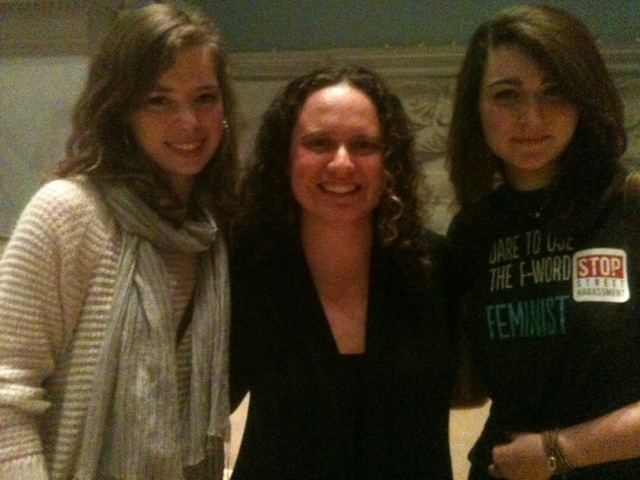
Grace, Ileana, and Emma

As part of the week’s events, two of my students, Grace and Emma, and I spoke at the Meet Us On the Street rally in New York. Grace shared a portion of the testimony that she read to last year’s New York City Council hearing on street harassment and Emma, who is also a SPARK blogger against the sexualization of girls and women in the media, shared her own vision for safer streets and communities not just for herself but also for her own sister.

I spoke about the importance of engaging teachers in the global movement against street harassment as an education and health issue for schools.

But the work doesn’t stop there. It’s important to show students that activism needs to be consistent, and not done in a flavor-of-the-month style. That’s why last fall, students in my high school feminism course partnered with other students at our school to create their own anti-street harassment public service announcement (PSA).  Their goal: to educate their peers about the gravity of street harassment in their daily lives.

As part of the background work to create the video, I invited activists from Girls for Gender Equity, Hollaback!, The Line Campaign, Men Can Stop Rape, and Right Rides to talk to my students. Activist Shelby Knox also visited to talk about her film, The Education of Shelby Knox. Each of them shared their expertise, provided students with materials, and ultimately inspired them to create their PSA.

You can create your own PSA with your students too. Start, as I did, with educating your students about the issue by inviting activists to your classroom. Then have students envision a PSA that would be relevant and engaging for your school community. Screen the PSA at an upcoming assembly. Then join the revolution.  See above for inspiration.

Ileana Jiménez has been a leader in the field of social justice education for 15 years. A 2010-11 recipient of the Distinguished Fulbright Award in Teaching, her research in Mexico City focused on creating safe schools for Mexican LGBT youth. Currently a teacher at the Little Red School House & Elisabeth Irwin High School (LREI) in New York, she offers courses on feminism, LGBT literature, Toni Morrison, and memoir writing. In addition to teaching at LREI, Ileana is also an associate faculty member at Bard College’s Institute for Writing and Thinking.

Share

Filed Under: anti-street harassment week, Stories, street harassment Tagged With: anti-street harassment week, Ileana Jiménez, NYC, spark summit, street harassment

« Previous Page
Next Page »

Share Your Story

Share your street harassment story for the blog. Donate Now

From the Blog

  • #MeToo 2024 Study Released Today
  • Join International Anti-Street Harassment Week 2022
  • Giving Tuesday – Fund the Hotline
  • Thank You – International Anti-Street Harassment Week 2021
  • Share Your Story – Safecity and Catcalls Collaboration

Buy the Book

  • Contact
  • Events
  • Join Us
  • Donate
  • Facebook
  • Instagram
  • Pinterest
  • Tumblr
  • Twitter
  • YouTube

Copyright © 2026 Stop Street Harassment · Website Design by Sarah Marie Lacy