• About Us
    • What Is Street Harassment?
    • Why Stopping Street Harassment Matters
    • Meet the Team
      • Board of Directors
      • Past Board Members
    • In The Media
  • Our Work
    • National Street Harassment Hotline
    • International Anti-Street Harassment Week
    • Blog Correspondents
      • Past SSH Correspondents
    • Safe Public Spaces Mentoring Program
    • Publications
    • National Studies
    • Campaigns against Companies
    • Washington, D.C. Activism
  • Our Books
  • Donate
  • Store

Stop Street Harassment

Making Public Spaces Safe and Welcoming

  • Facebook
  • Instagram
  • Pinterest
  • Tumblr
  • Twitter
  • YouTube
  • Home
  • Blog
    • Harassment Stories
    • Blog Correspondents
    • Street Respect Stories
  • Help & Advice
    • National Street Harassment Hotline
    • Dealing With Harassers
      • Assertive Responses
      • Reporting Harassers
      • Bystander Responses
      • Creative Responses
    • What to Do Before or After Harassment
    • Street Harassment and the Law
  • Resources
    • Definitions
    • Statistics
    • Articles & Books
    • Anti-Harassment Groups & Campaigns
    • Male Allies
      • Educating Boys & Men
      • How to Talk to Women
      • Bystander Tips
    • Video Clips
    • Images & Flyers
  • Take Community Action
  • Contact

Male Allies, Take Note

September 14, 2011 By Contributor

My fiancé brought an article to my attention this weekend in The Guardian that should make male allies take pause. It describes the current legal action being taken against the London School of Economics (LSE). The suit is being filed by a former student who claims that the master’s program he was in at the LSE’s Gender Institute was “sexist” by not emphasizing the male perspective. As the author of the Guardian article points out, gender studies discipline allows people from across the spectrum to share their ideas and views in an accepting, supportive environment.

A post written by The F Word, a UK-based feminist blog, debunks the claim to sexism by outlining the important role that Women’s and Gender Studies programs have played in the lives of women and LGBTQ folks. In a male-dominated academic landscape, women needed a safe and open space to express their views.

At first glance, this suit just tells another story of radical feminists hatching an anti-male agenda behind the halls of academia and stuffing it down the throats of innocent men. There is a wider and more sinister angle to this story, however. This reaction to women’s spaces as being “anti-male” is symptomatic of a worldview that places heterosexual male perspective as the only valid viewpoint.

Misogynistic practices that dominate both space and discourse, such as street harassment and traditional academic disciplines, are only possible within a society that views men as being more acceptable than women. Women are essentially “renting” space in the park or on the sidewalk in the same sense as they are still renting space in intellectual life. The “landlords” are free to impose the rules and fines.

Male allies can play a role in changing this paradigm. By working to end violation of women’s spaces, we are affirming the validity of those spaces. Our primary goal should be a pluralistic society in which everyone’s space and view is included.

– Sean Crosbie

This post is part of the weekly blog series by male allies. We need men involved in the work to end the social acceptability of street harassment and to stop the practice, period. If you’d like to contribute to this weekly series, please contact me.

Share

Filed Under: male perspective Tagged With: discrimination, London School of Economics, male allies, privilege, street harassment

Impact of 9/11: “You look like Bin Laden’s sister”

September 11, 2011 By HKearl

Like most Americans, today I am remembering the terrorist attacks that occurred ten years ago. It’s a day that must be so painfully difficult for everyone who lost loved ones and I can’t even fathom how hard the last 10 years have been for them. No one should have to live through so much pain and sorrow.

During my reflection I’ve thought a lot about the impact of the 9/11 attacks. As we keep hearing over and over in the news, our country and our lives were forever altered, from the way we go through airports to the way we perceive our own security and sense of nationhood.

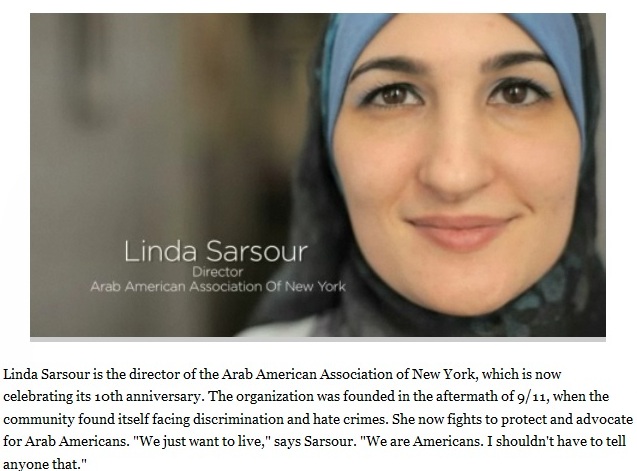
A few days ago when I was watching a powerful video clip featuring Linda Sarsour, director of the Arab American Association of New York, a few of her comments alluded to the impact 9/11 has had on the types of street harassment Muslim and Arab women face. It reminded me about some of the stories I’ve heard over the years.

Before 9/11, women who previously could wear a hijiab in public without facing harassment suddenly were told things like, “Go back to your country, stupid bitch,” by people they didn’t know on the streets. It didn’t matter to the harassers that there are plenty of “home grown” terrorists or that 99.9% of the population in every country around the world are not terrorists; they used 9/11 as an excuse and an opportunity to harass certain people, to engage in racial profiling. That is not okay.

One woman who shared a story for my Stop Street Harassment book said:

“As a Muslim woman who wears hijab (the headscarf and modest clothing), most of the feelings I have are due to religious discrimination and anti-immigrant sentiments. (Even though I am not an immigrant). I am constantly worried about being attacked verbally or physically because it has happened to friends of mine.”

And many women who do not wear hijabs but who simply have heritage in countries in the Middle East faced a different kind of street harassment after 9/11, too. I will always remember a story a woman shared during a workshop I attended at a Street Harassment Summit in New York City in 2007. She said:

“Street harassment is a huge part of my day and it makes me very angry and I think it’s always tied in with my racial identity. The worst thing that happened to me lately was I was on my way to work at a new job and I was very happy, and this guy said something to me and I kept walking and he came up around me in my face and said, ‘You look just like Bin Laden’s sister.’

My mouth was closed, and I was like, why aren’t I responding?  He continued to scream at me and I kept walking, and he said, ‘You should get home, women like you don’t work.  Don’t your men keep you locked up?  Oh that’s right; your men aren’t real men.  I’ll show you what a real man is.’

And he proceeded to tell me the actions that real men do to their women.  People on the street were stopped and were staring at me but no one said anything.”

She was visibly upset and shaken when she relayed this horrifying incident. It had layer upon layer of offensiveness and hate. Given the hostility that some Americans willfully feel toward people they perceive to be potential terrorists, these kinds of street harassment incidents can be very frightening.

So, today, as we honor and remember all of those whose lives were lost, let us also vow to make sure our country becomes free from harassment, hate, racial profiling, and hostility for everyone. Call out people who harass others, show that it’s unacceptable. Help out people facing harassment. Every person should be able to feel safe and un-harassed in public, hijab or no hijab, dark skin or light skin, gay or straight. That’s how America should be.

Share

Filed Under: street harassment Tagged With: 911, bin laden, linda sarsour, sexual harassment, street harassment

Men Will Never Truly Understand A Day In The Life of Women. But Shouldn’t We Try?

August 31, 2011 By Contributor

This excerpt from an important post by male ally Yashar Ali is cross posted with permission. Please read the full post on his site.

The other day, my friend Dina was talking about her experiences of being catcalled—street harassment is a more accurate term—while walking around the streets of New York.

This wasn’t the first time I’ve heard about the epidemic of street harassment. Many of my women friends have remarked about experiencing and dealing with this kind of harassment and how unsafe it makes them feel.

For Dina, one particular instance of harassment on the streets of New York was cemented in her memory. She was walking alone, during the day, on the Lower East Side of Manhattan, when she heard a man taunt her, “Hey baby, you’re lookin’ good…”

“Don’t call me baby,” she responded.

He looked her up and down and said, “…fucking dyke.”

For the record, Dina is straight—not that it would have been okay if she weren’t.

This wasn’t the first, nor will it be the last time Dina faces street harassment. She has been harassed in public places, and on a number of occasions, followed by men. Many studies indicate that almost 100 percent of women will face some sort of street harassment at one point in their lives.

Most men don’t even realize street harassment exists as a very real, serious problem. Yet, many women see this kind of harassment as part of daily life. For the few men who are aware of it, they assume the extent of street harassment is something akin to harmless, or at worst, annoying flirting, which still problematic if that attention is unwelcome.

The reality of street harassment is far worse than what most men think or believe. In cities large and small, women have to contend with comments that range from the mildly offensive to the disgusting. Beyond being verbally harassed, many women are followed and some women are even forced to deal with the same harasser on a daily basis. And for some women, this “harmless” harassment leads to assault.

But I realized, as Dina was telling me her story, that I have never actually been witness to the kind of street harassment my women friends tell me about. If a woman is walking down the street with me, other men generally won’t engage in any kind of harassing behavior towards her because street harassment, like all forms of harassment, is about attacking the vulnerable.

And despite what some readers of this column may think about my gender, I will never know what it feels like for a woman to walk down the street alone. How am I to fully relate to the pain, fear, and humiliation of street harassment when I have never witnessed its full form and lack the the personal experience of being harassed on the street?

Street harassment is simply one issue that plagues women in their everyday life. They are constantly barraged with discriminatory obstacles that we don’t even see as obstacles.

My passion and main concern with respect to combating sexism has been about revealing hidden forms of sexism; my fight lies in overturning the idea that women and girls are subject to a certain biological destiny, and revealing what we think to be biological destiny as actually the problematic ways in which we condition girls and women in our society. This conditioning creates a lens through which women see the world and approach their life—a conditioning that itself is discriminatory.

….

We don’t know what it’s like to have our intuition dismissed, especially when we sense danger and feel unsafe. How would we know? We men are perceptive and women are just overreacting.

This is why the sexism we have to combat in this country is the kind we don’t even notice. It’s the sexism that we wave off as, “That’s the way things are.” It’s the kind of sexism we haven’t even started to address in our society at large. And because we refuse to dig deeper to learn about the everyday struggles of women, we persist with behavior that simultaneously hurts women and drives the issue of gender discrimination deeper into a hidden underworld.

My friend Mike gets very frustrated with my writing about women because he doesn’t see a need for it. He sees the way men and women relate to each other in the world as a competition, instead of as an opportunity for us to help and defend each other.

Just the other day, he asked me, “Why don’t you defend men?”

Without the support and care of women, without their consideration of our aspirations and how we feel, we wouldn’t be who we are. Our daughters, wives, co-workers, mothers, sisters, girlfriends, need to understand that a day in their life doesn’t have to be lived alone.

Having consciousness about the daily struggles of women is something that I am still learning how to do. Like so many men, I have been conditioned by our society to think that women are here to support my needs, instead of learning that we are here to support each other.

Last weekend, I had an experience that reminded me to think about the struggles of women. After leaving a dinner meeting, I walked to a bank of elevators that led to the parking structure where my car was parked. When the elevator doors opened, I was greeted by a woman who was headed to the same parking garage. Given the situation—it was late at night with no one around—I told her, “I’ll take the next one.”

I’m not a saint. I still have so much to learn. But at that moment, I, as a man, made the conscious decision to calculate how riding elevator late at night with a strange man would make this woman feel. And by putting myself in her shoes (as much as I could), I adjusted my behavior accordingly.

This woman knew nothing about my intentions and nothing about me. Did I want her to spend the next thirty seconds wondering what was going to happen to her at 11pm at night? Nope. I wonder if she would have asked me to take the next elevator. I know she has probably been conditioned to think, like so many women, that asking a man to take the next elevator would be rude and presumptuous.

That night, I did what most women do for men on an everyday basis: I considered her needs. I thought about how the situation would make her feel—not because I wanted to avoid a reaction, but because I wanted to support her. It’s just not something men do as easily for women.

Hopefully, my decision was a respite for her.

But I know it was a brief one.

Because the next morning, she’ll have to start the process all over again: living in a country— and a world—that may respect her on the surface, but finds a way, every minute, every hour, to make her feel like she’s different from me.

Share

Filed Under: male perspective, Stories, street harassment Tagged With: street harassment, Yashar Ali

“Eid in Egypt is safe everywhere”

August 29, 2011 By HKearl

Via - Al-Masry Al-Youm

HarassMap, an amazing anti-street harassment group in Egypt, is running an anti-harassment campaign for Eid called “Eid in Egypt is safe everywhere.”

This week is the start of Eid, a Muslim holiday marking the end of Ramadan. Just as in the U.S. there often is an increase in street harassment during certain holiday times like Mardi Gras, St. Patrick’s Day, and Halloween, unfortunately in countries like Egypt where Eid is widely celebrated, it can also be a time of increased street harassment.

For example, in both 2008 and 2006, there were mass sexual assault attacks on women in the streets of Egypt during Eid and police officers were observed standing by, doing nothing.

Sadly, then, a targeted anti-harassment campaign is needed.

HarassMap writes about how to get involved,

“Help make this Eid in Egypt safe, we won’t tolerate yearly sexual harassment Eid incidents. Egyptian men and women deserve to enjoy Eid in respect, dignity and safety. Join us as we raise awareness online this Eid. You can tweet, blog, facebook or anything, or offline you can raise awareness in your community or graffiti or talk to your friends and neighbors! Speak up and let’s have a safe Eid!“

Use hashtag #EndSH on twitter. More information via Facebook.

Share

Filed Under: Events, News stories, Stories Tagged With: Eid, sexual harassment, street harassment

Snapshot of Street Harassment Stories, News, Tweets: August 28, 2011

August 28, 2011 By HKearl

Read stories, news articles, blog posts, and tweets about street harassment from the past week and find relevant announcements and upcoming street harassment events.

Street Harassment Stories:

From Springald's Leap

Share your story! You can read new street harassment stories on the Web from the past week at:

Stop Street Harassment Blog

How Many Women Find Street Harassment Flattering?

Hollaback

Hollaback Baltimore

Hollaback Berlin

Hollaback Buenos Aires

Hollaback Chandigarh

Hollaback Croatia

Holla Back DC!

Hollaback Dortmund

Hollaback Israel

Hollaback Istanbul

Hollaback Mexico DF

Hollaback NYC

Hollaback Philly

Hollaback Wellington

In the News, on the Blogs:

*Feministing.com, “When dads hollaback“

* Guardian, “Feeling Harassed? Do Something About it!“

* The Washington Times, “Sexual assaults on subways pose a serious problem“

* The Times of India, “Chennai police will assign women police personnel as decoys to prevent eve-teasing in MTC buses and outside the colleges.”

* The Frisky, “Would You Want Women-Only Subway Cars To Stop Sexual Harassment?“

* XO Jane, “Never, Ever Tell Me to Smile“

* The Good Men Project, “My Personal Street Harassment Screed“

* BlogHer, “Why Teaching LGBT History in Public Schools Combats Gender-Based Harassment for Young Women“

* ABC 24, “Memphis Boxers Impressed by MATA Guard’s Wild Street Fight“

* CJOnline, “Lawrence group wants an end to harassment”

* The San Pedro Sun, “Catcalling the Lioness: Street Harassment in Paradise“

* Early Bird Catches the Worm, “Magazines: I Ain’t No Hollaback Girl—Street Harassment in CLEO.”

* Microagressions, “It doesn’t make sense…“

Announcements:

New:

* From Holla Back DC!: CASTING CALL! Help us put a face to street harassment. Check it out bit.ly/phMba5

* Young Women for Change in Afghanistan released a video about how Islam forbids the harassment of women.

Reminders:

* Sign Mend the Gap’s petition to address subway harassment in Delhi, India

* Are you in Egypt? Use HarassMap to report your street harassers

* Have an iPhone? Download the Hollaback iPhone app that lets you report street harassers

15 Tweets from the Week:

1. CLButler76 The ‘Hey redhead, HEY, redhead…’ guy was in the High St again today. MP3 player on loud meant I could ignore him! #streetharassment

2. BelindaBlignaut ‘we need a zero tolerance approach to street harassment’ SlutWalk Cape Town, 20 Aug 2011 wp.me/p1eZfZ-iE

3. abigailcollazo @RosamundUrwin I and all of my friends hate it! Those who are flattered by it don’t understand it #streetharassment #fem2

4. KhiriaE I fear that the guys will still continue their street & other public place ‘mo3ksat’ (verbal harassment) after this revolution. #Libya

5. Feminist_Inti Women of colour and trans women are disproportionally affected by it showing there’s an intersection of abuses of power in street harassment

6. SaraLabib @Daloosh @Aziza23 I will know Egypt is on the right track when sexual harassment lessens & women don’t hv to walk dwn street like robots

7. ashleyrebeccah To the CTA bus driver who just hit on me: just bc I’m standing at a bus stop does not mean I want to be harassed. Kthnx #streetharassment

8. lunadire biking in a skirt + no street harassment = #AWESOME

9. el_zilcho A woman was jogging down my street in a sports bra, and I actually saw a jackass honk and catcall her. I thought that was only in movies!

10. skizzrrr calling girls who don’t respond to your catcall “lesbian” #stopthatbro

11. HollabackOttawa Think you can get away with #streetharassment? We are here to #stopthatbro

12. AlreetYorkshire Say “NO” to street harassment! It’s really not my day today 🙁

13. gavinsaywhat the city is a battleground with lots of collateral damage RT @CEMcFarland: I hate street harassment.

14. K_MaceFace DYK: if ur catcalled from a car while on a bike in the rain & out of annoyance u catcall back, ur a ‘cunt’ #sexism #inequality #menarepigs

15. ruthie_dee I have successfully had a #streetharassment free day. This is more like it, Barnsley!

Share

Filed Under: Events, hollaback, News stories, Stories, street harassment, weekly round up Tagged With: street harassment

« Previous Page
Next Page »

Share Your Story

Share your street harassment story for the blog. Donate Now

From the Blog

  • #MeToo 2024 Study Released Today
  • Join International Anti-Street Harassment Week 2022
  • Giving Tuesday – Fund the Hotline
  • Thank You – International Anti-Street Harassment Week 2021
  • Share Your Story – Safecity and Catcalls Collaboration

Buy the Book

  • Contact
  • Events
  • Join Us
  • Donate
  • Facebook
  • Instagram
  • Pinterest
  • Tumblr
  • Twitter
  • YouTube

Copyright © 2026 Stop Street Harassment · Website Design by Sarah Marie Lacy