• About Us
    • What Is Street Harassment?
    • Why Stopping Street Harassment Matters
    • Meet the Team
      • Board of Directors
      • Past Board Members
    • In The Media
  • Our Work
    • National Street Harassment Hotline
    • International Anti-Street Harassment Week
    • Blog Correspondents
      • Past SSH Correspondents
    • Safe Public Spaces Mentoring Program
    • Publications
    • National Studies
    • Campaigns against Companies
    • Washington, D.C. Activism
  • Our Books
  • Donate
  • Store

Stop Street Harassment

Making Public Spaces Safe and Welcoming

  • Facebook
  • Instagram
  • Pinterest
  • Tumblr
  • Twitter
  • YouTube
  • Home
  • Blog
    • Harassment Stories
    • Blog Correspondents
    • Street Respect Stories
  • Help & Advice
    • National Street Harassment Hotline
    • Dealing With Harassers
      • Assertive Responses
      • Reporting Harassers
      • Bystander Responses
      • Creative Responses
    • What to Do Before or After Harassment
    • Street Harassment and the Law
  • Resources
    • Definitions
    • Statistics
    • Articles & Books
    • Anti-Harassment Groups & Campaigns
    • Male Allies
      • Educating Boys & Men
      • How to Talk to Women
      • Bystander Tips
    • Video Clips
    • Images & Flyers
  • Take Community Action
  • Contact

Romania: “Small Steps for Change”

October 21, 2015 By Contributor

Our four Safe Public Spaces Mentees are half-way through their projects. This week we are featuring their blog posts about how the projects are going so far. This first post is from our team in Romania. Their projects are supported by SSH donors. If you would like to donate to support the 2016 mentees, we would greatly appreciate it!
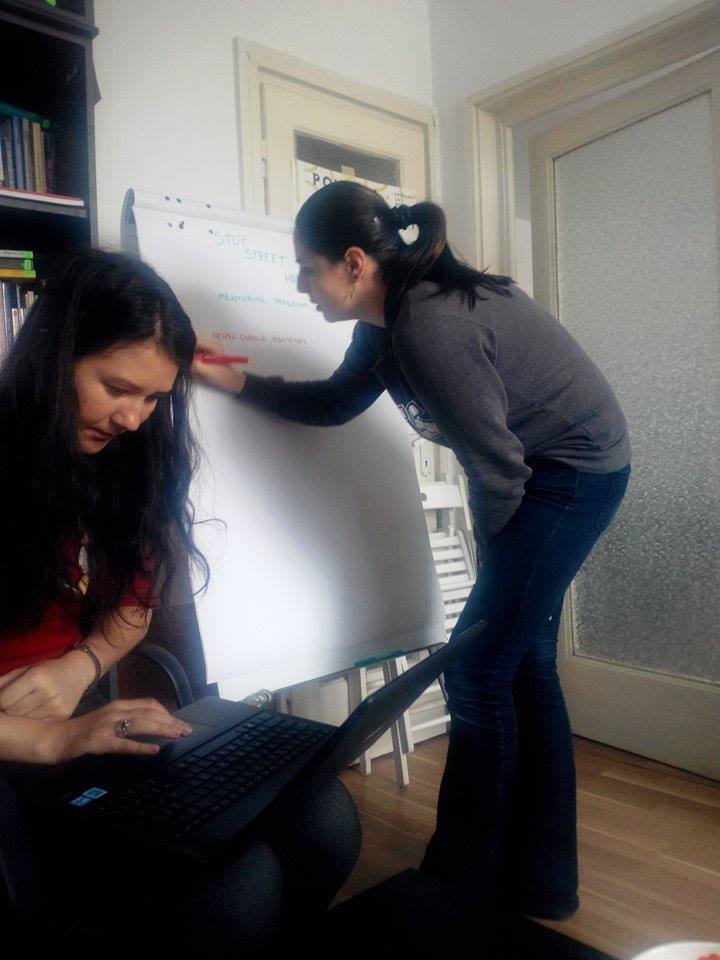
The Romanian team at one of their planning meetings. Oct. 2015

Hy. My name is Aila and I am studying my BA in Political Science. Three years ago, I decided to come to the Romanian capital to study at one of the best universities in the field. I chose to stay at the university’s hostel because, as many students think nowadays, all the fun you can have during student years is in hostels.

Well, unfortunately for me and for many other girls, it wasn’t quite like that. I ended up being harassed almost daily by some boys and girls who were studying at the college located near the hostel. After one year I began scheduling my programme after the high school’s programme. In order to avoid the “unwanted attention,” I had to go out of the hostel at specific hours when they had classes, especially during winter when I risked a violent snowball/half-iced fight. Moreover, I always tried not to walk alone or to come home when it was dark outside.

At the beginning, I tried to ignore it sometimes when I heard, “Hey, kitty/gorgeous/baby” as well as the aggressive words connected to my Asian eyes. Then I began to feel so fed up that I started to respond. But it was worse. I was only one and they were always in groups. I had no chance and no help. Sometimes, there were guards but they enjoyed the situation or laughed or only said something mild just to make sure their job is safe.

Today, I can proudly say that I am in a NGO called FILIA that supports gender equality. Today I know that what I went through is called sexual harrasement and it’s a crime. Today I can make something about it.

Thanks to my colleagues from FILIA but also to the Stop Street Harassment team, we are currently developing a mentoring project in that same high school where students harassed me. We want to deliver workshops concerning the topic of street/sexual harassment. It is absolutely necessary for these kids to know about this phenomenon because we consider that they are young and can still change their behaviour.

My group has met a couple of times during the past weeks and we set the framework of the activities. Change can be done. I am not a victim anymore, I am a person who can bring change and can help the other girls who are still living in that hostel.

Aila is a member of the Romanian NGO FILIA. 

Share

Filed Under: SSH programs, street harassment

USA: A Costume is Not an Invitation for Harassment

October 21, 2015 By Correspondent

Chelsea Cloud, Michigan, USA, SSH Blog Correspondent

sexy costume
Image via Flickr

For women, deciding on a Halloween costume is a careful science.  Too sexy is slutty.  Not sexy enough is prude.

I wore pants to a college bar on Halloween one time and I am not exaggerating when I tell you I was the only one out of hundreds of women.  I felt weird.  There’s also the time I wore a sexy Princess Peach costume.  Halloween in Michigan is cold.  Also, teetering around on sky high heels like a newborn giraffe just to complete my outfit was hard work.  But there are far worse implications than just being cold.  These costumes make us objects.  And sadly, many people just see these costumes and not the women wearing them.

Let me be clear, I am not arguing against sexy costumes, I am angry that it’s our only costume option.  It also doesn’t seem to be a fading trend, if anything it’s getting more popular.  EVERYTHING is being sexualized now.  Oh, you want to be a female superhero?  You better believe your store- bought costume interprets female superheroes with maximum cleavage and a micro-mini skirt.  Women just love to fight crime whilst making sure they don’t have a nipple slip.

Go ahead and peruse the ‘career section’ of Party City.  Female swat team members must wear black tutus and cleavage boosting bulletproof vests.  Female nurses find that their 12 hour shifts are more comfortable in garter belts and thigh highs.  Have I made my point clear yet?  The only store- bought option is a sexy one. This disturbing trend is trickling down to teens and even younger.

Just last month a mother wrote an open letter to Party City about the disturbingly sexualized toddler costumes.  In the article there is a side by side photo of the boy cop and the girl cop and the difference is glaringly obvious.  The boy is given the option to look like a legitimate cop while the girl’s option is clearly a feminized and sexy version, complete with skirt.

Corporate America is telling girls at a young age what their worth is and that they don’t deserve to feel empowered.  And while girls should wear what makes them happy, that option should also be age appropriate and include authentic career attire.  The pressure only get’s worse as girls get older.

A teenager in the recent New York Times article about Halloween costumes addresses the pressure to go with the trend:

 The pressure to be sexy without being slutty can ruin the holiday. “It used to be my favorite holiday, but now it’s like if you don’t look good in a mini skirt and cropped top, you might as well not dress up,” says Evelyn, who has never worn a sexy costume. “I am fearful that other people will see me as a ‘slut.’ It’s kind of a bummer.”

As if teenagers don’t have enough to worry about when it comes to their image, they now have to carefully construct their costume to fit a wavering definition of sexy while not being judged or bullied by their peers.

But instead of slut shaming, the yearly ‘sexy costume debate’ should be seen as an opportunity to discuss the real problem: the harassment that inevitably happens when wearing a revealing costume.  Street harassers are equal opportunity offenders, but a female in a sexy costume is a very easy target. Even still, we hear disturbingly little about harassers. Instead, we live in a society that loves to victim blame and slut shame.

Related, lately the cosplaying community has been bringing this issue into the public eye because harassment at comic conventions is a common occurrence. The social media movement “Cosplay is not consent” started after cosplayers got fed up with being harassed verbally and physically at events.  A survey about sexual harassment at conventions such as San Diego Comic-Con revealed that 13% of attendees had received unwanted sexual comments and an alarming 8% percent had been physically assaulted.

Halloween can be viewed as a wide scale cosplay event and instead of seeing sexy costumes as an easy way to gauge someone’s willingness to participate in sexual advances and how much harassment they will tolerate, people should recognize that a “sexy” costume does not invite harassment.

While I think it’s unfair to judge anyone based on their costume choice (as long as it doesn’t cross any borders into offensive), it’s also unfair that women don’t have a choice in the matter and then are blamed if they are harassed.

A respectful man would let a woman walk by wearing whatever she wants without harassing her. Let us take this annual conversation and use it to remember that boys need to be raised to respect women no matter what they are wearing.  A costume is not an invitation for harassment.

Chelsea is a full-time sales assistant for an advertising company in West Michigan and a part-time Graphic Design student. She is proud to call herself a feminist and feels passionately about speaking up for women’s rights. You can find her on twitter @LitSmitten.

Share

Filed Under: correspondents, News stories, street harassment

India: Whistle for Whistle

October 19, 2015 By Contributor

Our four Safe Public Spaces Mentees are half-way through their projects. This week we are featuring their blog posts about how the projects are going so far. This first post is from our team in India. Their projects are supported by SSH donors. If you would like to donate to support the 2016 mentees, we would greatly appreciate it!

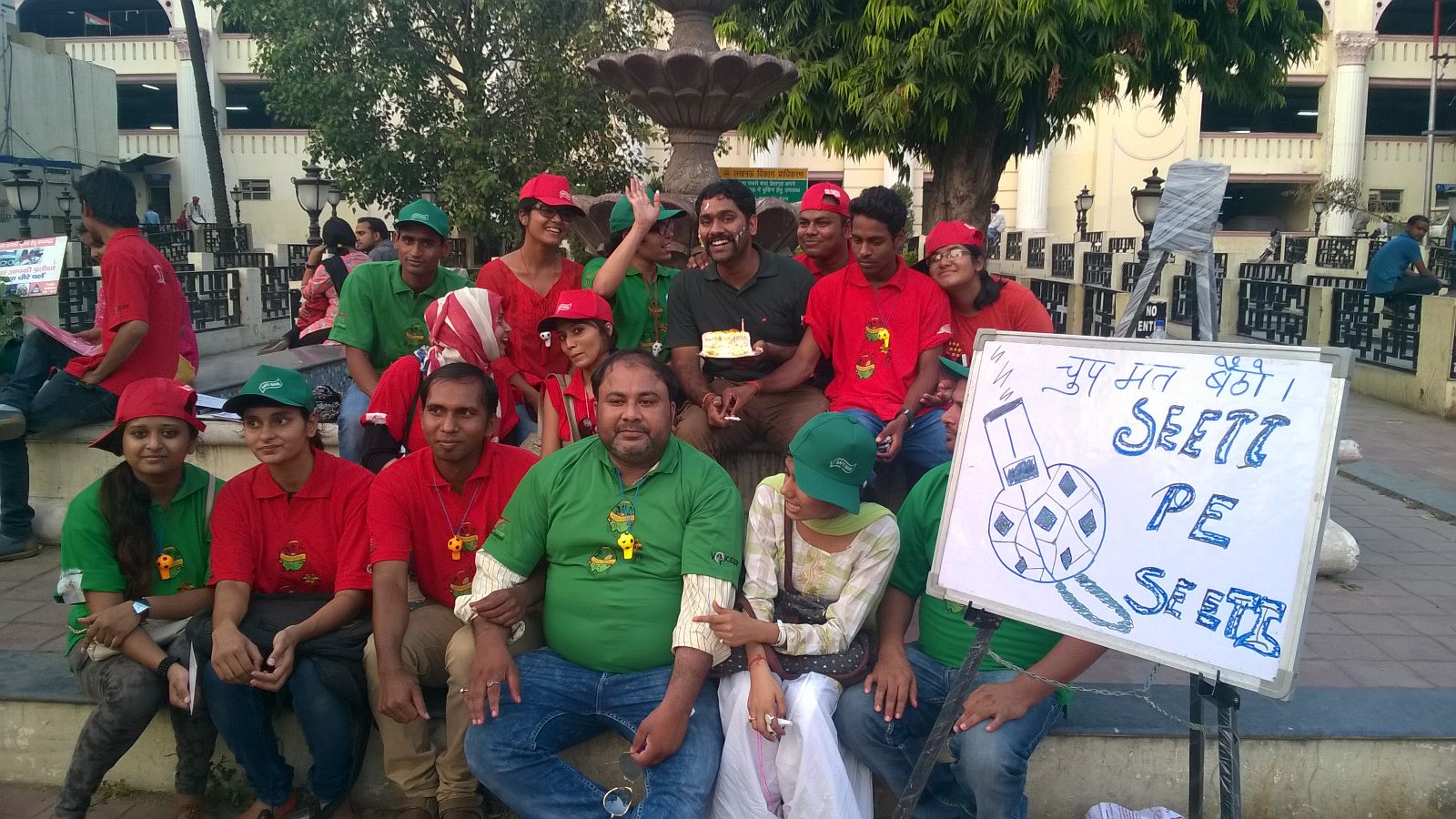
Safe Safar Team, Oct. 2015

Street harassment and eve-teasing are common phenomenon in India, especially in public transport and public places. Girls and women usually ignore this ever increasing scourge which is destroying the social fabric of our society. It becomes a source of continuous mental harassment for them and as they face it regularly, then they suffer from low self esteem. In short, they lose their own existence after some time. For example, they keep themselves confined to their homes and rarely move about.

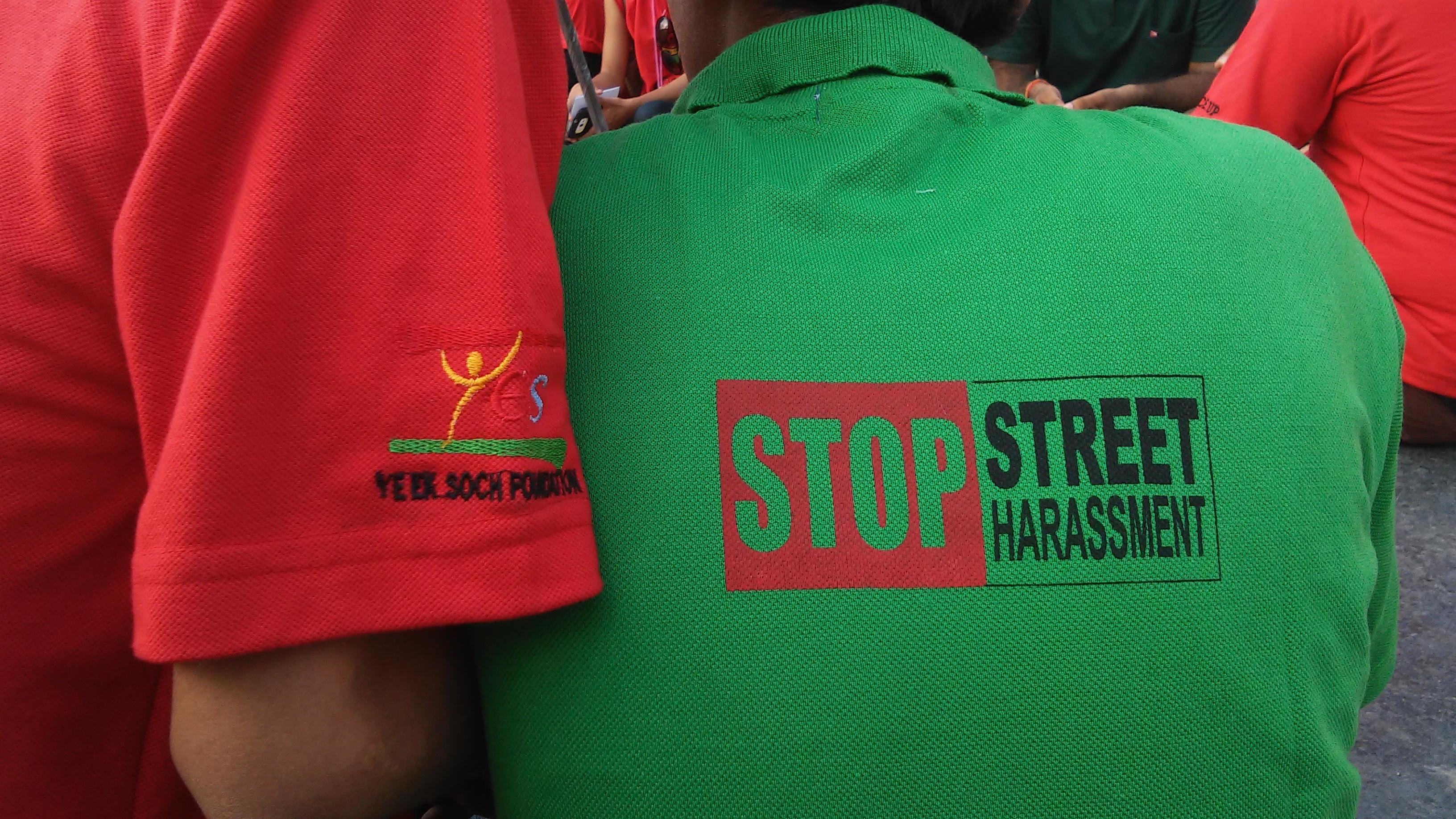
Since, 2010, Safe-Safar has been working to stop street harassment. We have been working to ensure the safety of women on public transport in Lucknow. Through our latest initiative, we are raising awareness about the issue on the streets, pavements, bus stands, railway stations, schools and colleges etc to aware about ‘eve teasing”.

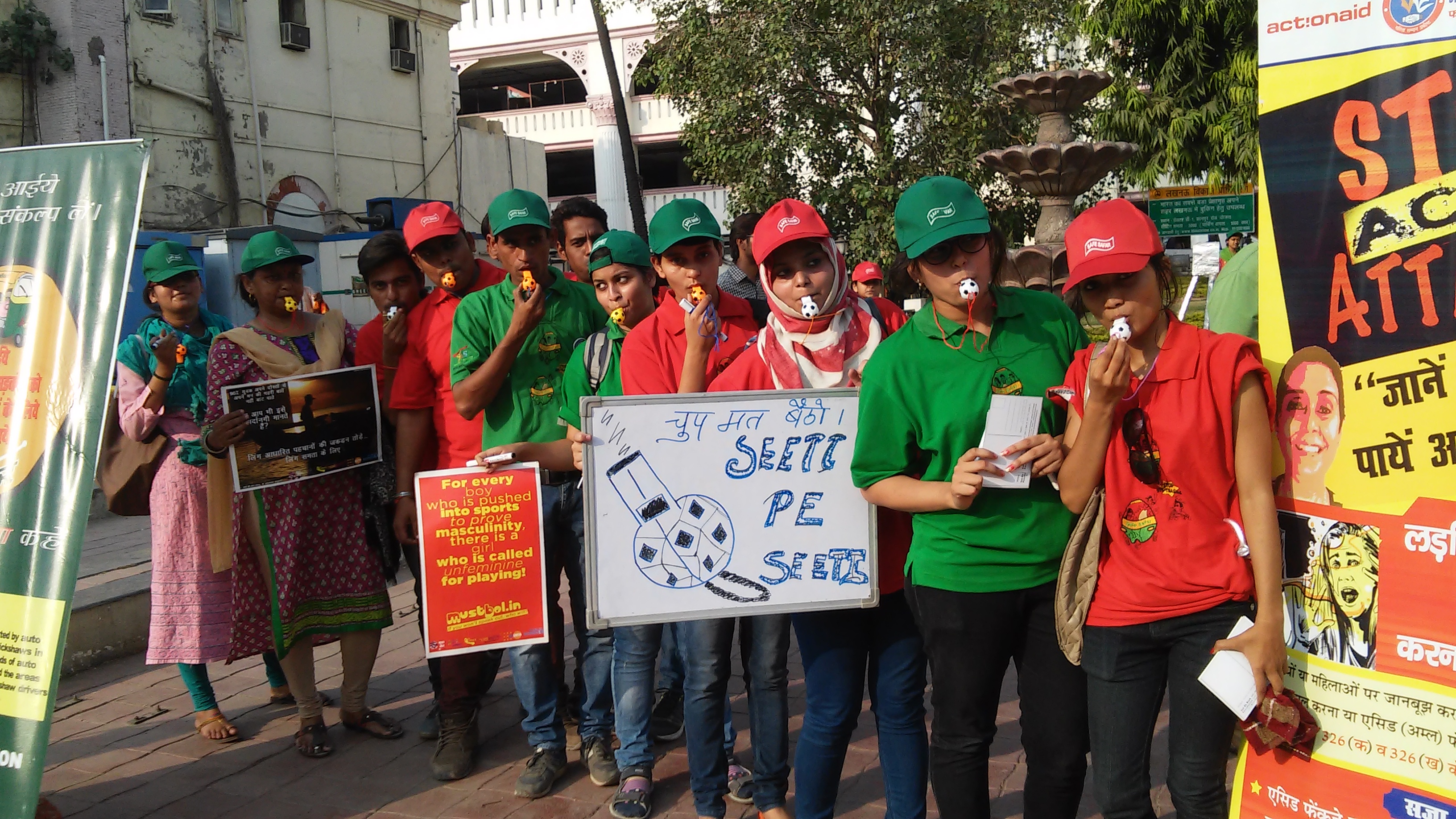
In essence, the Siti Pe Siti or “Whistle for Whistle” is an initiative started by the Yeh Ek Soch Foundation under the Safe-Safar program and is supported by Stop Street Harassment. “Sitis” are a common form of street harassment. When boys whistle at girls, it is termed teasing and society doesn’t view it to be bad. However, if the girls do it to boys, then it is considered bad.

whistle for whistle campaign in India

To address this normalized phenomenon, we have come up with “siti pe siti” concept, “whistle for whistle,” where we empower girls and women with a “siti” or “whistle” and the girls can whistle back at boys who whistle at them as a way to draw attention to what they did instead of pretending to ignore the boys and staying silent. This will give the girls a sense of confidence, especially for those who didn’t know what to do when boys whistled at them.

20151014_163438Our goal is to equip the girls with an arm (siti) for giving a timely response to this ever increasing phenomenon happening in colleges, universities and public places, be it railway station, bus stands, etc.

In short, the thing which was proving to be wrong for girls, has in fact become her strength.

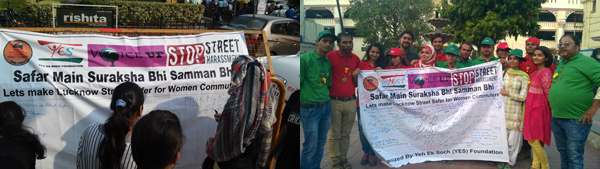
Teams of 10 people are raising public awareness at different places through “dialogues” and “nukkad nataks”. The whole campaign will take place across three months. We held the first events this month. On 10th October, 60 youth joined a discussion about street sexual harassment where they discussed the types of harassment and how they stop it in public places. On 14th October, we did a public “seti pe seti” “whistle for whistle” event where we raised public awareness and had people sign pledges to stop street harassment. We are gearing up to hold street plays and more awareness-raising sessions in public places. We plan to hold two activities on a monthly basis. We will also hold a “Safety-Audit” of Metro routes in different areas of Lucknow.

signatures

Radio show!
Radio studio!

We will close this campaign with a public dialogue.

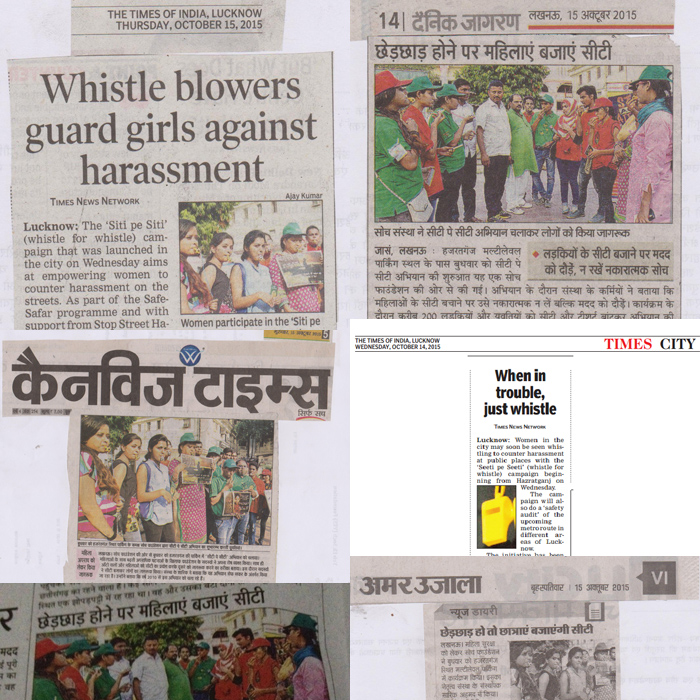
Our campaign has received a lot of coverage in local newspapers and we were on interviewed on radio city 91.1, a national radio station.

newsclippings

Mohammad Zeeshan is based in Lucknow, Uttar Pradesh, India and founded and oversees the Safe-Safar program. 

Share

Filed Under: SSH programs, street harassment

Pakistan: Stop Staring

October 19, 2015 By Correspondent

Fasiha Farrukh, Pakistan, SSH Blog Correspondent

“While standing at the street corner of a crowded residential area in an early evening, I was waiting for auto rickshaw to arrive so I would not have to walk to my friend’s place. It took pretty long for any public vehicle to show up at that side; still I continued to wait as the distance was quite lengthy to the house. It was quite uncomfortable to stand there and wait. I noticed strange stares in my direction. I was unsure if they were staring at me because of my dress or because I had been standing there alone for a long time.

I was dressed appropriate to the surroundings, but as the time passed by and I could not get any rickshaw to stop, I felt it more and more that the men passing by stared hard at me and scanned me like I was some character. It started to get on my nerves and I decided to walk towards my friend’s home. I was walking fast and felt like crying after experiencing these cruel stares from these men who were harassing me only with their eyes.  All the way from that street corner to the house was the most hideous experience that I would never want to relive ever in my life.”

This was the story my friend told me after reaching my place exhausted and nearly in tears. This is the story of every woman who goes out and faces these kinds of harassing stares from the men around us.

These incidents arise only one question in my head that why are we still an ‘alien’ for the men? We are not the first generation of women or girls, we are not something unique, so why are men still unable to understand that we are normal human beings like they are?

Staring at someone is because you deem them to be an unusual thing is absolutely weird when girls and women exist everywhere. Staring at someone with lust is the most common and creepiest thing and is a form of harassment!

Of course, not all men stare and I have seen many who dislike such acts by other men and even help women when they get uncomfortable with the stares.

But still, we go through these stare harassment all the time. This is not the story of just one street, one city or one country, it happens everywhere, even in the developed ones, and it is entirely unacceptable. It crashes women’s confidence and makes them feel vulnerable. In fact, many men feel amused in an ill way by making women uncomfortable with the stares.

The only way to end this street stare harassment is by making men understand that it is not going to give them any satisfaction and this could happen to women about whom they care, possibly to whom they are related. Therefore, the best way is to end this way of harassment by not staring yourself!

Let’s have a healthy society for the next generation instead of one that is hateful and daunting.

Fasiha is a Contributor for UN Women Asia & the Pacific where she writes about gender-related issues, mainly gender equality, sexual harassment, and economic empowerment of women. You can find her on Facebook and Twitter, @FasihaFarrukh

Share

Filed Under: correspondents, street harassment

“I’m feeling like a reflection of a human being”

October 18, 2015 By Contributor

I’m not sure why I care. As a woman, I’ve grown accustomed to various forms of unwanted attention, scratch that, harassment. I tend to shrug it off, ignore it or make a joke out of it.

Tonight, he yelled something about my appearance and said I needed a dick in me. I hadn’t even made eye contact. I was minding my own business waiting to cross the street. It isn’t the first time and it won’t be the last time. Since middle school I’ve heard sexually directed comments. It’s always f- this, f-that, I would or wouldn’t f-you. Ah, gee thanks. Does it matter what I do or don’t want?

I’ve endured stares. Been grabbed, groped. Had lewd comments and gestures directed at me. I’ve witnessed public masturbators. Men driving in cars have honked at me or pulled over asking how much? And before that question comes up, it happens no matter what you wear! I know prostitution exists but this isn’t some example of mistaken identity when you’re wearing a parka. I’ve reacted. I’ve not bothered to.

Today, I pretended I didn’t notice. I hate to admit I noticed. I can intellectualize why it happens. I can understand the concepts of aggression, power and a culture that devalues women. I can also believe I’m a human and deserving of better or, can I? After tonight, I’m feeling like a reflection of a human being. As if I should be grateful that at least I wasn’t grabbed. Worse could have happened. I’m not sure how I can care. I’m not sure why I care.

– Anonymous

Location: Canada

Share your street harassment story for the blog.
See the book 50 Stories about Stopping Street Harassers for more idea
.

Share

Filed Under: Stories, street harassment

« Previous Page
Next Page »

Share Your Story

Share your street harassment story for the blog. Donate Now

From the Blog

  • #MeToo 2024 Study Released Today
  • Join International Anti-Street Harassment Week 2022
  • Giving Tuesday – Fund the Hotline
  • Thank You – International Anti-Street Harassment Week 2021
  • Share Your Story – Safecity and Catcalls Collaboration

Buy the Book

Search

Archives

  • September 2024
  • March 2022
  • November 2021
  • April 2021
  • March 2021
  • January 2021
  • April 2020
  • March 2020
  • February 2020
  • December 2019
  • November 2019
  • September 2019
  • August 2019
  • July 2019
  • June 2019
  • May 2019
  • April 2019
  • March 2019
  • February 2019
  • January 2019
  • December 2018
  • November 2018
  • October 2018
  • September 2018
  • August 2018
  • July 2018
  • June 2018
  • May 2018
  • April 2018
  • March 2018
  • February 2018
  • January 2018
  • December 2017
  • November 2017
  • October 2017
  • September 2017
  • August 2017
  • July 2017
  • June 2017
  • May 2017
  • April 2017
  • March 2017
  • February 2017
  • January 2017
  • December 2016
  • November 2016
  • October 2016
  • September 2016
  • August 2016
  • July 2016
  • June 2016
  • May 2016
  • April 2016
  • March 2016
  • February 2016
  • January 2016
  • December 2015
  • November 2015
  • October 2015
  • September 2015
  • August 2015
  • July 2015
  • June 2015
  • May 2015
  • April 2015
  • March 2015
  • February 2015
  • January 2015
  • December 2014
  • November 2014
  • October 2014
  • September 2014
  • August 2014
  • July 2014
  • June 2014
  • May 2014
  • April 2014
  • March 2014
  • February 2014
  • January 2014
  • December 2013
  • November 2013
  • October 2013
  • September 2013
  • August 2013
  • July 2013
  • June 2013
  • May 2013
  • April 2013
  • March 2013
  • February 2013
  • January 2013
  • December 2012
  • November 2012
  • October 2012
  • September 2012
  • August 2012
  • July 2012
  • June 2012
  • May 2012
  • April 2012
  • March 2012
  • February 2012
  • January 2012
  • December 2011
  • November 2011
  • October 2011
  • September 2011
  • August 2011
  • July 2011
  • June 2011
  • May 2011
  • April 2011
  • March 2011
  • February 2011
  • January 2011
  • December 2010
  • November 2010
  • October 2010
  • September 2010
  • August 2010
  • July 2010
  • June 2010
  • May 2010
  • April 2010
  • March 2010
  • February 2010
  • January 2010
  • December 2009
  • November 2009
  • October 2009
  • September 2009
  • August 2009
  • July 2009
  • June 2009
  • May 2009
  • April 2009
  • March 2009
  • February 2009
  • January 2009
  • December 2008
  • November 2008
  • October 2008
  • September 2008
  • August 2008
  • July 2008
  • June 2008
  • May 2008

Comment Policy

SSH will not publish any comment that is offensive or hateful and does not add to a thoughtful discussion of street harassment. Racism, homophobia, transphobia, disabalism, classism, and sexism will not be tolerated. Disclaimer: SSH may use any stories submitted to the blog in future scholarly publications on street harassment.
  • Contact
  • Events
  • Join Us
  • Donate
  • Facebook
  • Instagram
  • Pinterest
  • Tumblr
  • Twitter
  • YouTube

Copyright © 2026 Stop Street Harassment · Website Design by Sarah Marie Lacy