• About Us
    • What Is Street Harassment?
    • Why Stopping Street Harassment Matters
    • Meet the Team
      • Board of Directors
      • Past Board Members
    • In The Media
  • Our Work
    • National Street Harassment Hotline
    • International Anti-Street Harassment Week
    • Blog Correspondents
      • Past SSH Correspondents
    • Safe Public Spaces Mentoring Program
    • Publications
    • National Studies
    • Campaigns against Companies
    • Washington, D.C. Activism
  • Our Books
  • Donate
  • Store

Stop Street Harassment

Making Public Spaces Safe and Welcoming

  • Facebook
  • Instagram
  • Pinterest
  • Tumblr
  • Twitter
  • YouTube
  • Home
  • Blog
    • Harassment Stories
    • Blog Correspondents
    • Street Respect Stories
  • Help & Advice
    • National Street Harassment Hotline
    • Dealing With Harassers
      • Assertive Responses
      • Reporting Harassers
      • Bystander Responses
      • Creative Responses
    • What to Do Before or After Harassment
    • Street Harassment and the Law
  • Resources
    • Definitions
    • Statistics
    • Articles & Books
    • Anti-Harassment Groups & Campaigns
    • Male Allies
      • Educating Boys & Men
      • How to Talk to Women
      • Bystander Tips
    • Video Clips
    • Images & Flyers
  • Take Community Action
  • Contact

“I don’t have to smile for you”

October 22, 2013 By Contributor

I was walking to return a video in my neighborhood, and a block ahead I saw a man loitering on the corner. I knew even before I approached him that he was going to say something to me. Sure enough, he told me to smile, it’s a beautiful day. I ignored him and he continued calling after me to smile and not be so mean. After I returned the video I almost went around the block to come back a different way, but I didn’t want to allow him that much impact on me so I returned the same way, but luckily he was gone. I was so annoyed that I searched for a better response and found this site.

If I had it to do over again, I would stop and say, “I don’t have to smile for you. I’m going down the street and when I come back, if you’re still here, you can say ‘Good afternoon,’ or nothing at all.”

– RS

Location: Ballard neighborhood, Seattle, WA

Share your street harassment story for the blog. Check out the new book 50 Stories about Stopping Street Harassers. 50% goes to fund our programs.

Share

Filed Under: Stories, street harassment

“I refuse to change myself, when it is the harassers who need to change”

October 22, 2013 By Contributor

My name is Heather, and I am a 21 year old female from Florida. I have experienced street harassment everyday since I was a young teenager. I moved to Miami Beach when I was 18, and immediately noticed an increase in the amount of harassment I received.

I remember a terrifying experience I had right after I moved. It was probably around 9 or 10 p.m. at night, and I had had an argument with my boyfriend. I stepped out of the apartment to take a walk around the block. A man pulled up along side me, and asked why I looked sad. I told him no reason and hoped he would leave. He continued to drive next to me, and told me that if I wanted, he could buy me some alcohol, and we could hang out. I declined and turned the corner. The man continued to follow me, and at this point I started to run. The store was in sight, and I knew I needed to get inside. As I got inside the store the man stopped and stared at me through the glass doors. He stayed there for a couple minutes and then drove off. That is when the danger of street harassment became real to me. All I had to protect myself was pepper spray, which would have been useless against a pick up truck.

When I vent my frustrations about constantly being harassed, people usually tell me that I shouldn’t walk alone, and I should try putting more clothes on. I have already changed my routes so I’m always on a busy street. I always look at the ground when people pass me on the sidewalk so they won’t try to talk to me.

I’m tired of being whistled at like a dog, and being called a bitch when I don’t reciprocate. I refuse to change myself, when it is the harassers who need to change. I had given up on my dream that I would one day be respected, until I found this website. I sincerely thank you.

– Heather

Location: Everywhere, particularly Miami, FL

Share your street harassment story for the blog.

Share

Filed Under: Stories, street harassment

Passenger stops air marshall from taking upskirt photos

October 21, 2013 By HKearl

Federal air marshal Adam J. Bartsch is accused of using his cell phone to take pictures underneath women’s dresses as they boarded a flight Thursday morning at Nashville International Airport. He was on official duty and he was thwarted by a fellow passenger!

Via WSMV:

Passenger Rey Collazo “was sitting next to Bartsch when he noticed the alleged actions of the federal air marshal.

“He did it at least three or four times,” Collazo said. “After that, that’s when I looked at him. I says, ‘Man, you ought to be ashamed of yourself.'”

Collazo alerted the flight crew, and in the midst of the confrontation, grabbed Bartsch’s cell phone to keep him from deleting the pictures.

“He was trying to combat me, but I grabbed the phone and crimped on it. Twisted his wrists,” Collazo said.

Bartsch escaped and soon ran from the plane, right into police.

The flight was delayed by about an hour as officers investigated, and Bartsch was then booked into the Metro Jail downtown on a charge of disorderly conduct.

The man who confronted him seems to just wonder how long it had been happening.

“I have a wife. I have a daughter, and I have a granddaughter. And I have zero tolerance for disrespect to any lady,” Collazo said.

“Taking pictures of ladies without them even knowing that you’re doing that? That’s bad,” Collazo said. “I mean, he’s a law enforcement officer. C’mon!”

Bartsch posted bond Thursday evening and remains out of jail. He lives in Maryland but will return to Nashville to face his disorderly conduct charge next month.”

Way to go, Rey! Thanks for speaking out and stopping harassment.

Share

Filed Under: News stories, Stories, street harassment

UK: Our Reality Isn’t Your Fantasy

October 21, 2013 By Correspondent

By: Tilly Grove, London, UK, SSH Correspondent

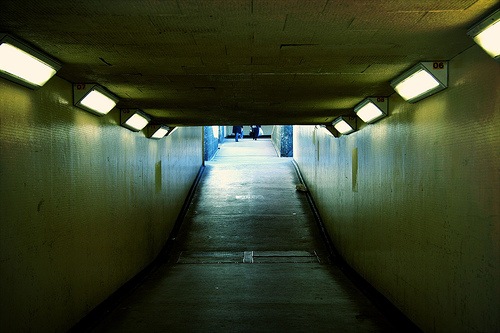
I was nervous enough about having to use the underpass in the early evening wearing my new dress, so when the men walking past decided to wolf-whistle at me, I was a little shaken. My immediate response in these circumstances is to contact someone, to make me feel less vulnerable; I chose to message a close male friend. Instead of the sympathy I had been hoping for, he replied, wistfully: “I’ve never been whistled at.”

It is a sentiment I have heard often from straight men; no matter how distressed street harassment evidently makes women, they’re positive that the inverse is something that they’d quite like. They like the idea that a woman might come up to them and grab their backside, or make comments that implied (or outright stated) sexual attraction. Some of them might even like the idea of another man doing these things to them. They think that when a stranger catcalls, wolf-whistles, or gropes you, they are merely revealing their attraction to you, and that this would be an incredibly flattering thing to happen.

It may be that this thinking is so flawed through lack of experience, but regardless, it is hardly surprising that street harassment is so prevalent when men feel this way. Even if these men would never themselves holler at women on the street or touch them without consent, the fact that they think the act is inherently complimentary means that they help perpetuate the behaviour. It means they’re less likely to challenge it.

But they are basing their opinion on what street harassment is like from a fantasy. Many men really can only dream of what it’s like. The fact is, it’s not someone coming up to you every now and then to tell you that you look good, or to ask you out. It’s not someone hot pinching your butt in a flirty way, or making their sexual attraction to you known. It is strange men who have no reason other than their evident belief of their entitlement over women to think that you want to hear their opinions or intentions, shouting explicit things at you from across the road or pawing at you without warning or invitation, every time you leave the house. We are sick of men objectifying us whenever we walk by, sick of men intimidating us whenever we go outside. It will never be a compliment in this context.

So, if men actually want to compliment women they see on the street, they should politely get their attention and talk to them. They should keep their hands to themselves, not shout, and not make inappropriate comments or noises. These things are not complimentary; they are disrespectful, and when they come from men who we are acutely aware could easily stalk or overpower us, they become terrifying. We know that the vast majority of men perpetrating street harassment are not doing it to flatter, because it is these methods which they employ most of all. We need men as a whole to acknowledge this, whether they choose to partake in it or not, if we have any hope of seeing an end to it.

Tilly is studying for a BA in War Studies at King’s College London, where she is writing her dissertation on the effect that perceptions of gender have on the roles which women adopt in conflict. You can follow her on Tumblr and Twitter, @tillyjean_.

Share

Filed Under: correspondents, Stories, street harassment

India: Commodification of Women

October 21, 2013 By Correspondent

By Pallavi Kamat, Mumbai, India, SSH Correspondent

In India, as all over the world, the commodification of women in the media is a very common thing. The women are either shown as docile homemakers at the beck and call of their husbands or they are shown as sex symbols trying to convince the public at large to buy the product. The latter reflects in products as varied and unrelated as cement and residential buildings being sold by skimpily clad women.

How is this related to street harassment you wonder? Walking down the street, women and men are exposed to these advertisements. If a woman ever raises her voice in public over an issue, she is asked to not express her opinion and behave like the calm housewife. Posters of skimpily clad women have been reported to result in violence against women.

Apparently, the general public is unable to distinguish between the advertisement models and the women they see in the social sphere. Or they believe that since the models are unattainable, they can take out their feelings on these women. Either ways, it is the women who have to bear the brunt of such portrayals.

I believe organizations have a certain responsibility in this. At the cost of making profits, they are ignoring their social obligation. After all, they are just as much a part of this society. It is unfair that they use women to sell anything from a soft drink to a tile.

Other than media, the daily soaps and cinema has an equal role to play. In the soaps, women are either meek wives or villainous vamps. Either case, they send our wrong signals. A wrong portrayal of women in the domestic sphere affects the lives of married couples. They expect their wives to be like the ones in the soaps – waiting on their every requirement. The incessant bickering between mothers-in-law & daughters-in-law is responsible for marital discord in many households. And the clichéd stereotyping is not helping at all.

And the Indian cinema industry (Bollywood) only adds fuel to the fire. With the recent spate of movies featuring item songs whose sole purpose is to commodify women & titillate the men, they are not helping the cause.  The movie-makers that claim this is the demand of society and reel only replicates the real. However, that is only shirking their responsibility.

However, all is not lost. If the media and the cinema decide to be a little more responsible in their portrayal of women and showcase them in a positive & realistic light, there would not be such ripple effects in society. Sure, at the end of the day, they need to make profits. But earning them at the cost of objectifying women (which ultimately hurts the women) means they will never sleep with a clear conscience. And that is a huge price to bear!

Pallavi is a qualified Chartered Accountant and a Commerce Graduate from the University of Mumbai, India, with around 12 years of experience working in the corporate sector. Follow her on Twitter, @pallavisms.

Share

Filed Under: correspondents, street harassment

« Previous Page
Next Page »

Share Your Story

Share your street harassment story for the blog. Donate Now

From the Blog

  • #MeToo 2024 Study Released Today
  • Join International Anti-Street Harassment Week 2022
  • Giving Tuesday – Fund the Hotline
  • Thank You – International Anti-Street Harassment Week 2021
  • Share Your Story – Safecity and Catcalls Collaboration

Buy the Book

Search

Archives

  • September 2024
  • March 2022
  • November 2021
  • April 2021
  • March 2021
  • January 2021
  • April 2020
  • March 2020
  • February 2020
  • December 2019
  • November 2019
  • September 2019
  • August 2019
  • July 2019
  • June 2019
  • May 2019
  • April 2019
  • March 2019
  • February 2019
  • January 2019
  • December 2018
  • November 2018
  • October 2018
  • September 2018
  • August 2018
  • July 2018
  • June 2018
  • May 2018
  • April 2018
  • March 2018
  • February 2018
  • January 2018
  • December 2017
  • November 2017
  • October 2017
  • September 2017
  • August 2017
  • July 2017
  • June 2017
  • May 2017
  • April 2017
  • March 2017
  • February 2017
  • January 2017
  • December 2016
  • November 2016
  • October 2016
  • September 2016
  • August 2016
  • July 2016
  • June 2016
  • May 2016
  • April 2016
  • March 2016
  • February 2016
  • January 2016
  • December 2015
  • November 2015
  • October 2015
  • September 2015
  • August 2015
  • July 2015
  • June 2015
  • May 2015
  • April 2015
  • March 2015
  • February 2015
  • January 2015
  • December 2014
  • November 2014
  • October 2014
  • September 2014
  • August 2014
  • July 2014
  • June 2014
  • May 2014
  • April 2014
  • March 2014
  • February 2014
  • January 2014
  • December 2013
  • November 2013
  • October 2013
  • September 2013
  • August 2013
  • July 2013
  • June 2013
  • May 2013
  • April 2013
  • March 2013
  • February 2013
  • January 2013
  • December 2012
  • November 2012
  • October 2012
  • September 2012
  • August 2012
  • July 2012
  • June 2012
  • May 2012
  • April 2012
  • March 2012
  • February 2012
  • January 2012
  • December 2011
  • November 2011
  • October 2011
  • September 2011
  • August 2011
  • July 2011
  • June 2011
  • May 2011
  • April 2011
  • March 2011
  • February 2011
  • January 2011
  • December 2010
  • November 2010
  • October 2010
  • September 2010
  • August 2010
  • July 2010
  • June 2010
  • May 2010
  • April 2010
  • March 2010
  • February 2010
  • January 2010
  • December 2009
  • November 2009
  • October 2009
  • September 2009
  • August 2009
  • July 2009
  • June 2009
  • May 2009
  • April 2009
  • March 2009
  • February 2009
  • January 2009
  • December 2008
  • November 2008
  • October 2008
  • September 2008
  • August 2008
  • July 2008
  • June 2008
  • May 2008

Comment Policy

SSH will not publish any comment that is offensive or hateful and does not add to a thoughtful discussion of street harassment. Racism, homophobia, transphobia, disabalism, classism, and sexism will not be tolerated. Disclaimer: SSH may use any stories submitted to the blog in future scholarly publications on street harassment.
  • Contact
  • Events
  • Join Us
  • Donate
  • Facebook
  • Instagram
  • Pinterest
  • Tumblr
  • Twitter
  • YouTube

Copyright © 2026 Stop Street Harassment · Website Design by Sarah Marie Lacy