• About Us
    • What Is Street Harassment?
    • Why Stopping Street Harassment Matters
    • Meet the Team
      • Board of Directors
      • Past Board Members
    • In The Media
  • Our Work
    • National Street Harassment Hotline
    • International Anti-Street Harassment Week
    • Blog Correspondents
      • Past SSH Correspondents
    • Safe Public Spaces Mentoring Program
    • Publications
    • National Studies
    • Campaigns against Companies
    • Washington, D.C. Activism
  • Our Books
  • Donate
  • Store

Stop Street Harassment

Making Public Spaces Safe and Welcoming

  • Facebook
  • Instagram
  • Pinterest
  • Tumblr
  • Twitter
  • YouTube
  • Home
  • Blog
    • Harassment Stories
    • Blog Correspondents
    • Street Respect Stories
  • Help & Advice
    • National Street Harassment Hotline
    • Dealing With Harassers
      • Assertive Responses
      • Reporting Harassers
      • Bystander Responses
      • Creative Responses
    • What to Do Before or After Harassment
    • Street Harassment and the Law
  • Resources
    • Definitions
    • Statistics
    • Articles & Books
    • Anti-Harassment Groups & Campaigns
    • Male Allies
      • Educating Boys & Men
      • How to Talk to Women
      • Bystander Tips
    • Video Clips
    • Images & Flyers
  • Take Community Action
  • Contact

Siobhan Benita, candidate for Mayor of London, promises to address street harassment

April 18, 2012 By HKearl

Siobhan Benita is an Independent candidate for Mayor of London and like Labour candidate Ken Livingstone, she promises in her campaign platform to “tackle the harassment of women and girls in public spaces in London and on our transport system” (page 14).

It’s great to see multiple candidates treat this as the serious issue it is. Elections are May 3. Best of luck, Siobhan!

Share

Filed Under: News stories, street harassment Tagged With: mayor of london, siobhan benita

Important legislation introduced in Washington, DC

April 17, 2012 By HKearl

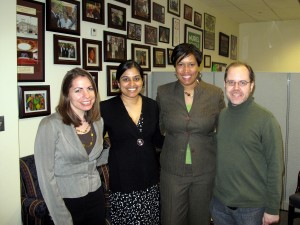
L to R: Holly Kearl, Chai Shenoy, Council Member Muriel Bowser, Ben Merrion

YAY!! I’ve got great news. New legislation introduced in Washington, DC, will make it easier for police to take action when a person has committed “the offense of misdemeanor sexual abuse, misdemeanor sexual abuse of a child or minor, or lewd, indecent, or obscene acts.” This applies to the public transportation system and the streets and so if it passes, it’s more likely that a person flashing or engaging in public masturbation will face penalty.

Background: Over the last several weeks, I’ve been part of a team at Collective Action for Safe Spaces pressuring the Washington Metropolitan Area Transportation Authority (WMATA) to do more about sexual harassment and assault on the Washington, DC-area transportation system. We testified in February before the DC City Council, specifically before Ward 4 City Council Member Muriel Bowser. Bowser was very disturbed by the information we shared with her and asked WMATA to address it. Thankfully, WMATA is addressing it.

Early on in our collaboration with WMATA, we found out from transit police that they have limitations in making arrests. For example, verbal sexual harassment, unless it’s a threat, is not a criminal offense (but for the first time, WMATA is finally tracking it to look for patterns, etc) so they cannot do anything about it (this is true most places in the USA and cause for future legislative work). We also found out that since Maryland, Virginia, and Washington, DC, all have varying laws around harassment, the transit police are limited in what they can do. They are bound by the laws of whichever area the crime takes place since the transit system spans all three areas. In Maryland, people who engage in indecent and obscene behavior (public masturbation, flashing) can be arrested without the officer having to witness it occurring. In DC and VA, the police need to witness it occurring (!!!) before they can do anything.

Once we found out about this limitation in the law, we informed Council Member Bowser. She was not aware of this limitation either and she said she’d investigate it. So the good news is she upheld that promise and has introduced legislation to ensure that in Washington, DC, an officer does not have to observe the indecent exposure occurring to take action. As Collective Action for Safe Spaces says, “Although we do NOT support more people getting arrested, we do want Metro to be safe for all, and not have to watch individuals doing obscene things while staring at you.”

The Bill:
______________________
Councilmember Muriel Bowser

A BILL

________

IN THE COUNCIL OF THE DISTRICT OF COLUMBIA

________________________

To amend section 23-581 of the District of Columbia Official Code to enhance enforcement of the indecent exposure law by allowing police officers to arrest suspects without a warrant when officers have probable cause to believe that suspects have committed lewd, indecent, or obscene acts.

BE IT ENACTED BY THE COUNCIL OF THE DISTRICT OF COLUMBIA, That this
act may be cited as the “Sexual Harassment Prevention Act of 2012”.

Sec. 2. Section 23-581 of the District of Columbia Official Code is amended as follows:
(a) Subsection (a-7) (D.C. Official Code § 23-581(a-7)) is amended to read as follows:
“(a-7) A law enforcement officer may arrest a person without a warrant if the officer has probable cause to believe that the person has committed the offense of misdemeanor sexual abuse, misdemeanor sexual abuse of a child or minor, or lewd, indecent, or obscene acts as provided in sections 22-3006, 22-3010.01, and 22-1312.”
Sec. 3. Fiscal impact statement.
The Council adopts the fiscal impact statement of the Budget Director as the fiscal impact statement required by section 602(c)(3) b of the District of Columbia Home Rule Act, approved December 24, 1973 (87 Stat. 813; D.C. Official Code § 1-206.02(c)(3)).
Sec. 4. Effective date.
This act shall take effect following approval by the Mayor (or in the event of veto by the Mayor, action by the Council to override the veto), and a 30-day period of congressional review as provided in Section 602(c)(1) of the District of Columbia Home Rule Act, approved December 24, 1973 (87 Stat. 813; D.C. Official Code §1-206(c)(1)), and publication in the District of Columbia Register.

It’s exciting that the bill will apply to acts that occur off the transit system too — it applies to acts committed anywhere in Washington, DC. If passed, the legislation will give more protection to victims and ensure that perpetrators are more likely to face punishment for their crimes.

The bill has been referred to Council Member Mendelson’s Committee on the Judiciary.  They need to hold a hearing and then vote on it in a separate mark-up hearing.  The full Council then has to vote on it twice to be submitted to the Mayor for signature.

So, there are still several steps to go, but the first step is done: the legislation was written and introduced!!! Thank you, Council Member Bowser!

Update: Here’s a Washington Examiner article on the proposed bill.

Share

Filed Under: News stories Tagged With: collective action for safe spaces, muriel bowser, street harassment, WMATA

“He continued saying the most dirty things he could, as I walked away”

April 17, 2012 By Contributor

Most of the worst street harassment stories I have are from when I was a teenager. That’s why I believe that many men who harass women look for those of us who might look more helpless, or somehow naive. I’m now 24 and in most case, putting on an angry face and talking loud makes them stop what they are doing…

I remember walking downtown with my mother, talking about some stuff and not giving any attention to what was going on around. Then, I hear some skateboard sound behind, and a guy screaming: “Nice hooker boots!”

I turn around and a young man was staring at me, with his friend laughing. I was wearing some standard punk/goth black boots. Not interested in speaking to him, I turn around and do a middle finger in his direction (OK, I was young). He and his friend start screaming: “Yeah, I’ll do that to you! Right in your p*ssy! Ouh la la!”

I felt so embarrassed that my mother had witnessed that, but she told me not to worry, that she had had a lot of those comments in her life and that I was NOT the problem.

Another time, I was walking down the street on a warm day. A man comes out of his car and does the classic number: “Hey! I know you! I’m sure I know you! Where did we meet?”

Of course, I was sure we had never met and told him so, but he was used to this and said, “Where did you study? We must have been in the same class!”

I tell him I’m still a student, so I’m quite sure we weren’t in the same class when he was still studying (he was in his 30s and I was 17), but then he comes with other questions (“Oh, in my dance class maybe?”) and just start talking about himself, like if we were friends. I didn’t know what to do so I just listened to him for a minute, than showed signs that I was going back on my way.

That’s when he starts saying: “Don’t go! We could have sex! Come to my house! I have a big erection, you can’t believe how big and hard my penis is! You’ll like it!”

He continued saying the most dirty things he could, as I walked away, looking for a shop I could go in. He even had the nerves to say: “Give me your phone number! You won’t regret it!”

This man should be ashamed. Unfortunately, when I told the story to people I knew at that time, many of them shrugged it off as thought I was actually trying to brag because a man had told me that. For a few years after that I was very ashamed to report any street harassment stories to some of my friends, since they had thought of it that way, instead of supporting me.

– Anonymous

Location: Montreal, Canada

Share your street harassment story today and help raise awareness about the problem.
Find suggestions
for what YOU can do about this human rights issue.

Share

Filed Under: Stories, street harassment

Walking While Covered

April 16, 2012 By Contributor

Via Jeddah Mind Trick Blog

This is cross-posted with permission from the blog Jeddah Mind Trick. The author is an American Muslim from Detroit, Michigan, who currently lives with her family in Jeddah, Saudi Arabia.

I heard the car creeping slowly behind me. I moved out of the way to let the driver pass on the road.  My neighborhood has no sidewalks so I had become used to yielding the right of way to cars, bikes, and the occasional mobile French Fry vendor. I was on my daily walk to the grocery to pick up items for dinner. This was before I landed a job, when visiting the produce section of the local market was the highlight of my day.

When I moved out of the car’s way, I continued walking at a leisurely pace. I was sick that morning and my head was swimming with fever. I had insisted on going for a walk against my husband’s wishes because I felt like the fresh air would make me feel better.

Even though I was no longer an obstacle on the road, the car kept up its slow creep. I turned around to look at the driver; I sensed that something was wrong. When I turned, I saw an older man with salt and pepper hair staring back at me.  He didn’t look menacing but there was something about the look in his eyes that made me feel uneasy. I turned around and proceeded to walk quickly toward my building around the corner. But the faster I walked, the faster he drove. I did not want to break out into an all-out run so I stopped cold and pretended to fiddle with something in my bag. He then drove past me and when he was completely out of sight, I walked as quickly as I could toward the end of the block.

After I turned the corner and had walked few yards, I noticed a car driving the opposite way down the street. It was the same man; he had merely driven around the corner and was now driving straight toward me. He turned around and began following closely behind me.  As he approached, he rolled his window down and whispered something to me in Arabic.  He winked.  I turned my head and kept walking into my building. I heard his car stop and he went for the door, as if to get out. I hurried to close the iron gate of the apartment complex. I heard him mutter something loudly and spin off. My heart was beating furiously as I opened the door to my apartment. My husband asked what was wrong and I told him.  He was upset and tried to rush downstairs until I told him the guy left. “That’s it, that’s the last time you are walking to the store,” he said.  “How? Am I supposed to just stay inside for the rest of my life?” I said.

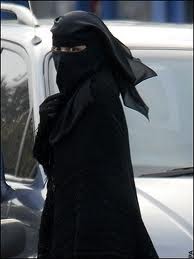
As in much of the modern world, street harassment is an epidemic in Saudi Arabia. Despite strict laws governing gender based social interaction, there are men here who make a regular habit of preying upon women.  Some people will say that a woman can “invite” harassment by dressing provocatively. That morning, I was wearing a niqab, the face covering worn by Muslim women. I was new in the Kingdom and figured that dressing like the majority of the women around me would provide a level of anonymity that would help me in navigating my new city. I wasn’t wearing gloves, but everything else, except my feet, was covered in black.  I wore slippers, simple white rubber flip-flops, on my feet. Though I was wearing niqab, my eyes were still seen, and they were red and puffy from a night spent coughing and sneezing. I had no makeup or perfume on. My abaya was loose, 2 sizes too large, and it made me look like a walking black cloud.  There was nothing provocative about the way I was dressed that day, or any other day on which I have been harassed.

To the contrary, when I venture out in my school uniform, a pink lab coat, no one says a word to me. For many men in this society, wearing an abaya and niqab is seen as more desirable.  Men prefer to have a woman who is covered but there are some who take it to the extreme and fetishize women’s hijab to the point of extreme sexual desire. One of my husband’s best friends, a Saudi, sadly lamented that some men actively seek out women in niqab because they are “sexy.”  For this reason, some men request that their wives not cover their faces because the niqab can cause unwanted attention.  I find this mind-boggling.  It is incomprehensible when you consider that the abaya and niqab are used for exactly the opposite effect.  Predators have taken something that women use as a screen for modesty and turned it on its head.  Being a woman who covers is not a safeguard against sexual harassment.

Over the past year, I have been followed at least a dozen times, harassed in stores, and was even chased by a young man riding a bicycle while I was out with my son.  Weekend mornings are the worst. Saudi culture is generally nocturnal, with many people sleeping after the dawn prayer, awaking after the late afternoon prayer when they start their day.   As such, the streets are usually deserted in the morning and this is when the vultures come out. I have learned to stay inside or travel with my husband when I have to do anything on a weekend morning. I once had to pick up a discarded 2×4 on a hot Thursday morning and threaten a man who followed me for three blocks as I went to pick up bread for breakfast.

It is sad that in a place where there are already few recreational outlets for anyone, but especially women, the mere act of leaving one’s house can be cause for harassment, or worse. There are tales of women who left for bread and never returned, women who took a taxi to a friend’s house and never returned. True, according to Islamic law, a woman should always be escorted by a mahram, or male guardian. That’s perfectly fine, but what about the women with working husbands, elderly mates, or sons that are too young (like mine) to serve as any form of human shield when out in public?

Many people cast Saudi Arabia in a very pious light. Some of my Muslim friends expressed jealousy that I would get to live in a place where Islam is the foundation upon which all interactions are built.  It is true that it is easier to practice certain elements of the religion in KSA. No one looks at you funny when you wash your feet in the bathroom or stop everything that you are doing to walk to the nearest masjid for prayer. But the Yemeni tailor who presses his erect penis on my hand while measuring me for an abaya does not represent Islam. The Saudi man, the one who motions for me to get into his car while I wait for the school bus, is not a representative of Islam either.   Also uncharacteristic of Islam are the free feels that men take while a woman is making tawwaf around the Ka’aba, or the ogling by security guards when buying tea outside of Masjid An-Nabawi.  Sometimes the very men who are assigned to serve and protect women are themselves guilty of harassment. My friend was called a “bitch” by a police officer who tried to touch her while she was out for an afternoon run near her villa. This is not Islam.  This is not true Saudi culture.

I grew up in the city of Detroit amongst a sizable Arab population. The treatment I experience here reminds me of my teenage years. I remember the guys at the gas station who would try to feel up the young girls buying candy and cigarettes for their fathers. I learned my first Arabic word, habibi, when one of the men who worked at the party store used it as his pet name for my 13 year old friend who carried breasts and hips that belied her age.  I am not saying that all Arab men are predators; that would be a racist assumption and untrue. I know many men of Arab descent who are upstanding, protective individuals who are the epitome of manhood. But I would be remiss if I didn’t say there are some cultural elements in the Arab world that can cause otherwise sane men lose their minds.

Being chased down the street is what happens when boys and girls are segregated in schools starting at age 6. It is what happens when all your life you are taught that you are superior, that women’s bodies are shameful, an object meant to be protected and obscured from view. Harassment happens when it is ingrained in you that the basic human desire to interact with members of the opposite sex is thwarted by false impressions of modesty and restraint. Women who walk in fear through streets surrounding the holiest sites in Islam have become victims of a warped interpretation of honor and modesty that forces people to extremes.  Deprivation of any sort can lead to desperation.  Very few people are taught the art of healthy interaction so the product of such a strict society can manifest itself in violent, hurtful, and disdainful ways.

During the first few months of my life in Jeddah, I used to try to look very unkempt and haggard when I went out; I wore old abayas and overrun shoes. I did everything possible to make myself undesirable. It went against everything that I believe to manipulate my appearance in this way, but I was desperate for security.  I know that the way one dresses has little to do with the possibility of being sexually harassed or assaulted, but I was clinging to some hope that I could just disappear. My unkempt appearance became my refuge. It didn’t stop the harassment but it made me feel comfortable, invisible.

Nowadays, however, I wear nice abayas and even add lip gloss when I go out. I walk proudly and stare down any man who tries to intimidate me.   I even shouted at one man who followed me into the local pharmacy.   My words don’t always work, but it is a start. Some of my friends tell me that I shouldn’t leave the house without my husband. I refuse to be trapped in my home and not live a semblance of a free life.  I know that I have to be careful so I keep my wits about me and use my street smarts when needed.  I cannot surrender my life to people who want me to live in fear. I will not let the predators win. I will not allow myself to live like a victim.

Share

Filed Under: Stories, street harassment Tagged With: saudi arabia, street harassment

“I don’t understand why a grown man needs to do that stuff to a woman that is 15 years old”

April 16, 2012 By Contributor

I was on the E train in NYC yesterday and this guy in a suit stood right in front of me. We pulled out of the station and I noticed he was like sticking out his tongue at me. I gave him a look to kill and he blew me a kiss. I stood up and moved to the other side of the train. So in like 2 seconds he comes and stands in front of me again and says, “Hi honey, what’s the matter. Are you shy?”

Honestly, I was scared at that point and I got off at the next stop. I wish I was as brave as some of the women on here but I was like, just get me out of here. I don’t understand why a grown man needs to do that stuff to a woman that is 15 years old and minding her own business.

– Erica

Location: NYC E train

Share your street harassment story today and help raise awareness about the problem.
Find suggestions
for what YOU can do about this human rights issue.

Share

Filed Under: Stories, street harassment

« Previous Page
Next Page »

Share Your Story

Share your street harassment story for the blog. Donate Now

From the Blog

  • #MeToo 2024 Study Released Today
  • Join International Anti-Street Harassment Week 2022
  • Giving Tuesday – Fund the Hotline
  • Thank You – International Anti-Street Harassment Week 2021
  • Share Your Story – Safecity and Catcalls Collaboration

Buy the Book

Search

Archives

  • September 2024
  • March 2022
  • November 2021
  • April 2021
  • March 2021
  • January 2021
  • April 2020
  • March 2020
  • February 2020
  • December 2019
  • November 2019
  • September 2019
  • August 2019
  • July 2019
  • June 2019
  • May 2019
  • April 2019
  • March 2019
  • February 2019
  • January 2019
  • December 2018
  • November 2018
  • October 2018
  • September 2018
  • August 2018
  • July 2018
  • June 2018
  • May 2018
  • April 2018
  • March 2018
  • February 2018
  • January 2018
  • December 2017
  • November 2017
  • October 2017
  • September 2017
  • August 2017
  • July 2017
  • June 2017
  • May 2017
  • April 2017
  • March 2017
  • February 2017
  • January 2017
  • December 2016
  • November 2016
  • October 2016
  • September 2016
  • August 2016
  • July 2016
  • June 2016
  • May 2016
  • April 2016
  • March 2016
  • February 2016
  • January 2016
  • December 2015
  • November 2015
  • October 2015
  • September 2015
  • August 2015
  • July 2015
  • June 2015
  • May 2015
  • April 2015
  • March 2015
  • February 2015
  • January 2015
  • December 2014
  • November 2014
  • October 2014
  • September 2014
  • August 2014
  • July 2014
  • June 2014
  • May 2014
  • April 2014
  • March 2014
  • February 2014
  • January 2014
  • December 2013
  • November 2013
  • October 2013
  • September 2013
  • August 2013
  • July 2013
  • June 2013
  • May 2013
  • April 2013
  • March 2013
  • February 2013
  • January 2013
  • December 2012
  • November 2012
  • October 2012
  • September 2012
  • August 2012
  • July 2012
  • June 2012
  • May 2012
  • April 2012
  • March 2012
  • February 2012
  • January 2012
  • December 2011
  • November 2011
  • October 2011
  • September 2011
  • August 2011
  • July 2011
  • June 2011
  • May 2011
  • April 2011
  • March 2011
  • February 2011
  • January 2011
  • December 2010
  • November 2010
  • October 2010
  • September 2010
  • August 2010
  • July 2010
  • June 2010
  • May 2010
  • April 2010
  • March 2010
  • February 2010
  • January 2010
  • December 2009
  • November 2009
  • October 2009
  • September 2009
  • August 2009
  • July 2009
  • June 2009
  • May 2009
  • April 2009
  • March 2009
  • February 2009
  • January 2009
  • December 2008
  • November 2008
  • October 2008
  • September 2008
  • August 2008
  • July 2008
  • June 2008
  • May 2008

Comment Policy

SSH will not publish any comment that is offensive or hateful and does not add to a thoughtful discussion of street harassment. Racism, homophobia, transphobia, disabalism, classism, and sexism will not be tolerated. Disclaimer: SSH may use any stories submitted to the blog in future scholarly publications on street harassment.
  • Contact
  • Events
  • Join Us
  • Donate
  • Facebook
  • Instagram
  • Pinterest
  • Tumblr
  • Twitter
  • YouTube

Copyright © 2026 Stop Street Harassment · Website Design by Sarah Marie Lacy