• About Us
    • What Is Street Harassment?
    • Why Stopping Street Harassment Matters
    • Meet the Team
      • Board of Directors
      • Past Board Members
    • In The Media
  • Our Work
    • National Street Harassment Hotline
    • International Anti-Street Harassment Week
    • Blog Correspondents
      • Past SSH Correspondents
    • Safe Public Spaces Mentoring Program
    • Publications
    • National Studies
    • Campaigns against Companies
    • Washington, D.C. Activism
  • Our Books
  • Donate
  • Store

Stop Street Harassment

Making Public Spaces Safe and Welcoming

  • Facebook
  • Instagram
  • Pinterest
  • Tumblr
  • Twitter
  • YouTube
  • Home
  • Blog
    • Harassment Stories
    • Blog Correspondents
    • Street Respect Stories
  • Help & Advice
    • National Street Harassment Hotline
    • Dealing With Harassers
      • Assertive Responses
      • Reporting Harassers
      • Bystander Responses
      • Creative Responses
    • What to Do Before or After Harassment
    • Street Harassment and the Law
  • Resources
    • Definitions
    • Statistics
    • Articles & Books
    • Anti-Harassment Groups & Campaigns
    • Male Allies
      • Educating Boys & Men
      • How to Talk to Women
      • Bystander Tips
    • Video Clips
    • Images & Flyers
  • Take Community Action
  • Contact

USA: What Would the World Be Like If All Women Were Safe?

November 15, 2015 By Correspondent

Sara Conklin, Washington, DC, USA, SSH Blog Correspondent
1234695_627388203960774_255348182_n
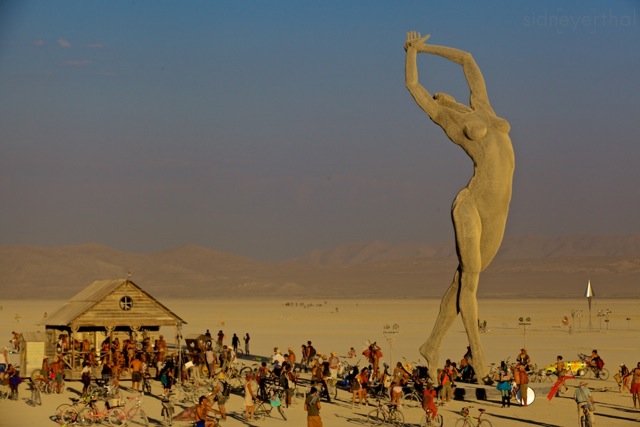
Truth is Beauty | Marco Cochrane

What would that be like? I’ve spent the past several days in quiet contemplation on the matter. After “planning” (read: pinterest’ing) my probably-not-happening-anytime-soon trip to Burning Man, I came across this striking art installation by The Bliss Project, of a 40-foot woman that poses the question, what would the world be like if all women were safe?

Well, for starters, my world would be drastically different. I have built a life around women survivors; women who have braved incomparable odds and battled life’s challenges. I work in a community center and housing complex for women experiencing homelessness. I drum alongside an all-women’s cohort of marching percussionists. I keep a tight-knit group of women warrior friends. And I champion daily, my mother and grandmother who came before me and all they’ve taught me about strength and veracity. (Heck, I even write for this blog.)

What I love the most about this sculpture of the female form is that you can’t hide from it. She is vivaciously and fiercely alive. Her presence is notably dominant on the landscape. But, as the artist Ian Mackenzie mentions, “that very energy is dangerous for women to do in the real world.”

If I closed my eyes and imagined a world in which all women were safe, I see a huge void. Would my all-women’s drumline have the same necessary element of female empowerment? Would my girlfriends have the same compassion and vitality each time we meet? And more interestingly, would the organization I work for simply exist?

Perhaps this speaks more to the lifestyle I’ve chosen, then the dramatic question the artist poses. Nonetheless, it got me thinking about my daily environment and mainly that the threat of being unsafe is what permeates my everyday life.

And what an interesting thought that is – Do you pity the person who lives with that in mind each passing day, or in solidarity, do you choose to champion her?

These are a lot of questions that I do not have the answer to. But, what I can begin to conclude is that if we are faced with a world where women will not, have not, and cannot always be safe, then I am proud there are so many sisters with me. If the impossibility is permanent, together we can lessen it. If we do indeed share the burden, I’m happy at least to know I am sharing it. For being alone in a fight is a scary thing.

Sara works in fundraising events at an organization that empowers women who face homelessness through recovery, wellness training, and housing. She runs her own photography company (saraconklinphotography.com) and a popular website that seeks to connect the world through pictures, sarapose.com.

Share

Filed Under: correspondents Tagged With: safety, solidarity, violence

India: Are we supporting all survivors of sexual violence equally?

November 9, 2015 By Correspondent

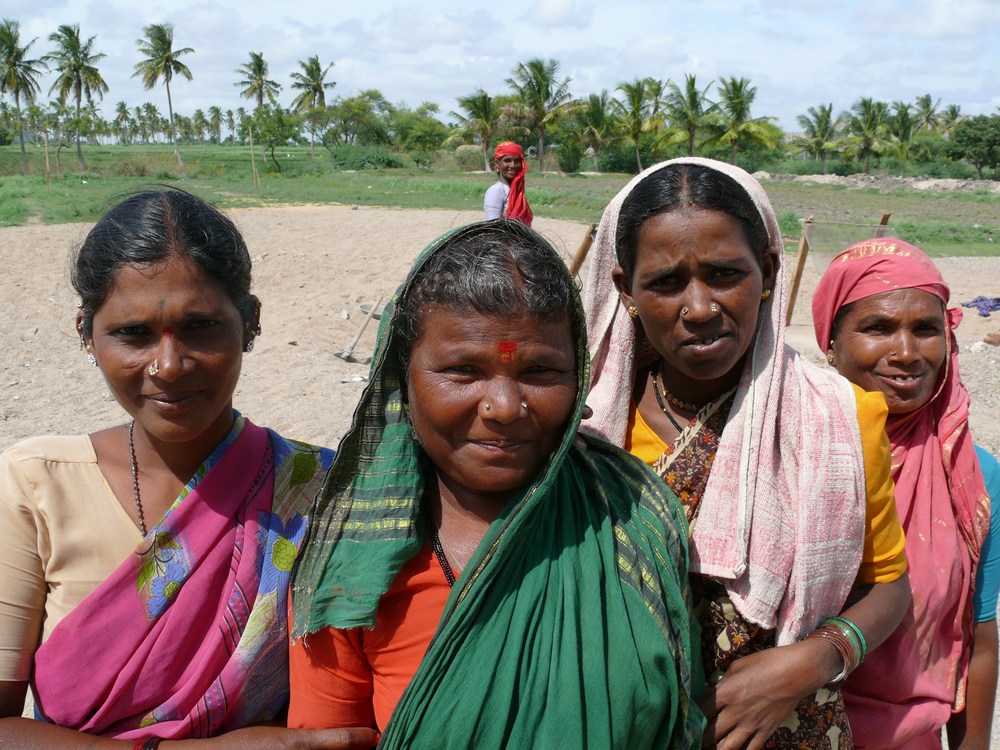
Women from the lowest caste in India, Dalits. Image via www.supportingdalitchildren.com

Meghna Bhat, Chicago, USA, SSH Blog Correspondent

In December 2012, the horrifying, brutal and fatal gang-rape and death of a young woman in New Delhi, India was followed by many other gang rapes, including the gang-rape of a young photojournalist in Mumbai in August 2013. Many other cases of sexual assault, gang-rapes and sexual harassment are becoming more visible in our news headlines. India has become known as ‘No Country for Women’, or ‘India: Land of 100 rapes a day’ and so on.

After the 2012 attack, people from all walks of life across India took to the streets protesting for the safety and rights of women. The topic of women’s safety and rape prevention dominated the news headlines. I was spellbound by the national gesture of public protests. It was mostly well-intentioned. However, I also realized that we, as a nation, don’t view and treat all survivors of sexual assault, rape and other forms of violence equally. I really wish our national protests, strict amendments and implications of anti-rape laws and calls to action among stakeholders could apply to and extend to every girl or woman sexually assaulted or sexually harassed.

Our society should be supportive and sensitive to each survivor whether she is a young girl from a middle-class family in a large metro city or if she is a poor girl from a village who barely speaks English. The same laws and resources currently allotted to “respectable victims” should be equally available for the low caste Dalit girl and the same with a sex worker or a homeless woman who was sexually assaulted.

In fact, I would suggest creating more accessible, inclusive and accommodating resources and legal help for survivors of gender violence among marginalized parts of our society. Do you know that Dalit women are most vulnerable and susceptible and have been targets of brutal and horrific sexual violence in India? What about transgender women in India, commonly known as hijras?  Many of these Dalit or/and transgender women traumatized by sexual violence face additional individual and organizational barriers due to their sex/ gender, caste, social class, occupation, etc.

What about male survivors of rape and gender-violence in India? With all the public discourse highlighting men being the perpetrators of heinous crimes, we are likely to think that only women get raped or abused. This can be attributed to the preconceived notion of men being stronger and able to protect themselves. Thus, these notions lead to glorifying the patriarchal underpinnings, and images of macho image and hyper masculinity. Public Health professional Urvashi Prasad wrote, “Male survivors have very few active organizations to support them, but more importantly perhaps, they often get little compassion or acknowledgement from society. Section 375 of the Indian Penal Code does not include males as rape victims.”

Furthermore, the presence of homophobia and laws (re)criminalizing homosexuality in our country reinforces re-victimization and trauma that LGBTQ survivors of sexual violence face in their daily lives.

All survivors should be able to seek help, including just and thorough police investigations and access to sensitive & non-judgmental medical support, legal advice, and counseling resources. All of these options should be offered to the survivor, whether she, he or they would like to report a police complaint or would like to go to the hospital or speak with a family member or crisis counselor. Survivors need to be informed of their rights and the proceedings by trained advocates.

Most importantly, it is so critical to promote comprehensive trauma-informed, victim-centered, sensitive and supportive programs for survivors of gender violence across all intersections. I am very well aware that what I am suggesting above cannot be achieved overnight. Being away from home doesn’t help either in providing the full picture of the local and grassroots efforts and initiatives being organized in India. I have been following four organizations in India (among many others) who have done some extensive impressive work for bringing justice to survivors of gender-violence. They are:

1) Lawyer’s Collective: “One of the leading public interest service providers in India with a proven record of setting high standards in human rights advocacy, legal aid and litigation.”

2) Majlis Legal Center: “Includes a group of women lawyers and social activists committed to informing, educating and empowering women on their legal rights.” The director, Flavia Agnes has been one of the pioneers of the women’s movement bringing justice to women and children’s rights.

3) The Humsafar Trust– “Is a community-based organization of self-identified Gay men, MSM, Transgender, Hijras, LBT people in Mumbai since 1994.”

4) Sangama– “A sexual minorities, sex workers and people living HIV human rights organization for individuals oppressed due to their sexual preference.”

When I am asked what’s the best way to prevent any form of gender-violence, I always recommend to start training and educating our young boys and girls in schools about respect, tolerance and gender equality! Here are two examples of such programs: Parivartan and Khel Planet.

In summary, we should be extremely thankful to our desi invisible heroes who work relentlessly and tirelessly for these survivors of gender-violence, especially sexual assault in India. There is extraordinary backstage work being done 24/7 in terms of advocacy, resources, medical help, counseling and legal justice for these survivors. Unfortunately, their contributions to social and gender justice do not make the headlines in our news media!

Meghna is a doctoral candidate in the Criminology, Law, and Justice program at the University of Illinois at Chicago, with a specialization in Gender and Women Studies. She is currently working on her dissertation, which focuses on representations of violence against women in a widely viewed form of Indian popular culture, Bollywood cinema.

Share

Filed Under: correspondents Tagged With: Delhi Gang Rape, India, sexual violence

UK: We Welcome All Men Who Are Ready to Take a Stand

November 5, 2015 By Correspondent

Tracey Wise, London, UK, SSH Blog Correspondent

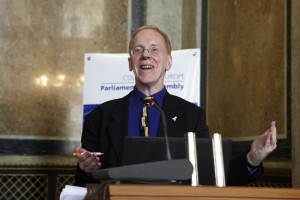
Chris Green. Image via http://www.coe.int/

Since establishing Safe Gigs for Women in June, after being groped at a big music event in the UK, it has become clear that I was not alone in facing this problem. Many women have contacted us, sharing their experiences of harassment at gigs, some saying as a result they now no longer go to gigs alone. At least three major festivals in the UK this summer reported serious sexual assaults. And let’s not forget that infamous T shirt from Coachella.

As such, it became clear that one of the principle aims of this campaign has to be to engage with gig goers to raise awareness of how their behaviour can impact others. Key to Safe Gigs for Women is the idea that this isn’t ‘man hating or women blaming’. But we must have the conversation that says it is not okay for men to grope women at music events nor is it appropriate to see the darkness and crowded space as a blanket for which it is acceptable to do this and get away with it. It will also be working to ensure that we are looking out for each other. Gigs and festivals can be a daunting place at times, and with music being very much, in our eyes, a force for good, to encourage everyone to look out for each other at all times will go a massive way to address this. The establishing of other projects addressing just this issue in the UK further highlight how this is a problem, including the White Ribbon Music project and Girls Against.

Hannah from Girls Against, said when asked why this project and why now:

“We’ve had numerous people… get in contact with us to say that they had no idea this even went on. We’d like to keep educating people… We’ve had people say that they’ve seen this happen but did nothing about it so we want to change that… We should be joining together and supporting each other so that everyone has a good time”.

Writing in support of Safe Gigs for Women on the Land of Sunshine blog, Niki Jones rightly points out that “a woman shouldn’t need a burly protector in order to enjoy a band”.

And it’s not just the UK. Recently, the US based band Speedy Ortiz set up a helpline for fans experiencing harassment at gigs.

Safe Gigs for Women was very much established in the opinion that for this to be successful, we must first encourage and defend the teaching of consent in all schools, as part of sex and relationship education. Secondly, if men are the “problem,” then men have to be part of the solution. So how do we do this?

Whilst I could stand and talk about this all day, chances are someone out there will call me a whinging feminist. But to achieve this, as I was lucky enough to hear Chris Green (director of the White Ribbon Project in the UK) advocate, men have to have the conversation with other men. Men have to call out other men on their inappropriate behaviour. Safe Gigs for Women welcomes all men ready to stand with us in this.

Born and raised in London, Tracey is a graduate of City University. She has spent the best part of her life at gigs and festivals and obsessing about music and created the “Safe Gigs for Women” project.

Share

Filed Under: correspondents Tagged With: safe gigs, what men can do

USA: Flipping the Script on Homeless Harassment

October 28, 2015 By Correspondent

Sara Conklin, Washington, DC, USA, SSH Blog Correspondent

Credit: ABC7news.com

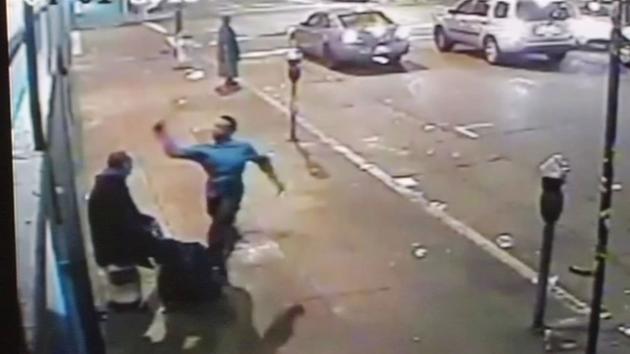
If I asked you to imagine in your head a scenario involving street harassment and a homeless person, what would you picture? If the hour I just spent scrolling through Google is any indication, you’re imagining an unassuming individual being harassed by a surly person who looks to be sleeping on a street corner. This happens, A LOT. I’ve been harassed by a seemingly unhoused individual on many occasions and as someone who works in the field of homelessness in Washington, DC, I am intimately familiar with the myriad of reasons a homeless person can “act out of order,” related to a series or traumas or serious mental illnesses/addiction stemming from chronic homelessness.

But that’s not what I want to talk about —

Far fewer people are flipping the script on the conversation of harassment and homeless people, choosing also to discuss how people experiencing homelessness are often cruelly harassed themselves.

Try to imagine instead, a homeless person who has struggled with serious depression and mental illness and asks for money on the street in an unthreatening and polite manner. Instead of a humble, “no” the solicited person replies with a vulgar and dehumanizing response. This happens more often that you’d think. I’d recommend watching this heartbreaking video, to give you a good picture of such cruelty (and these were just online tweets; the harassment in person can be much worse). One person even asks, “If home is where the heart is, do homeless people even have hearts?”

I come from an organization that supports 60% of the homeless women in our metropolitan area. Our working mantra is that, “But for a few circumstances of fortune and timing, ‘she’ could be me.” The women I have met here are survivors. They have faced unparalleled odds against them and come out on the other side. If we are discussing “street harassment” as unwanted comments, gestures, and actions forced on a stranger, particularly with an actual or perceived gender-bias, homeless women might take the cake.

I have no intention of ignoring the legitimate case that homeless men are antagonized and harassed every day, but I’ve learned firsthand from clients that identify as female, that unaccompanied homeless women disproportionately face, “multiple forms of interpersonal victimization, including sexual and physical assault at the hands of strangers, acquaintances, pimps, sex traffickers, and intimate partners on the street, in shelters, or in precarious housing situations (vawnet.org).”

In the United States we have already made public spaces unsafe for people experiencing homelessness. Reference for example, how it has been outlawed to sit down in San Francisco, or the effort to make it illegal to give people food in Philadelphia, how Manteca purposely changed the water sprinkler schedule to keep the homeless from sleeping in a park, or how Sarasota just got rid of their park benches altogether.

These degrading and brutalizing efforts coupled with verbal attacks from housed city residents can make the day-to-day life of a homeless person unbearable.

But the bigger conversation centers on how we’ve come to tolerate the harassment of a homeless person more than that of a seemingly housed person. It very well could be that the vast majority of readers are appalled by this and reject entirely the thought. But that doesn’t mean it isn’t happening.

The sad truth is, the majority of Americans treat homeless people like occupied public spaces. In other words, without context, making assumptions about why that person is there and why they can or cannot leave. Those are not our assumptions to make. But once we do, it makes it easier for us to dehumanize a person enough to permit their mistreatment.

Since many of us treat our parks and streets with a certain abandon for retribution, we tend to treat the people who occupy those spaces recklessly as well – it’s as if we feel that since the park is public, the person who sleeps there is publicly owned as well, which leaves me entitled to judge them. That sort of entitlement can lead to vocalizing slurs or prejudicial comments without fear of consequence. When a person is on their knees, it’s easier to knock them down.

As we discuss the innumerable ways in which street harassment exists in our everyday lives, and the inconceivable reality that people can be objectified and reduced to targets of harassment merely by existing in a public space, we should acknowledge the ways we treat all individuals who occupy public spaces, including those facing homelessness.

What compels someone to harass a homeless person is a concept I may never understand. But, I can begin to infer that it has something to do with entitlement in communal areas – how we choose when or when not to vocalize observations or opinions about another person sharing a collective space, can speak volumes about our compassion and empathy.

As I continue to demand respect for myself when I occupy a street or sidewalk, I will also petition others to demand the same respect for others regardless of circumstance. After all, “But for a few circumstances of fortune and timing, ‘she’ could be me.”

Sara works in fundraising events at an organization that empowers women who face homelessness through recovery, wellness training, and housing. She runs her own photography company (saraconklinphotography.com) and a popular website that seeks to connect the world through pictures, sarapose.com.
Share

Filed Under: correspondents, street harassment Tagged With: homeless

The Netherlands: Demystifying Dutch Tolerance

October 26, 2015 By Correspondent

Eve Aronson, Amsterdam, the Netherlands, SSH Blog Correspondent

Have you heard of the Dutch Myth of Tolerance? It’s not a myth in the mythical sense, and it’s not a fairytale, though it does sound admittedly magical.

Since the 17th century, the Netherlands has been a smorgasbord of races, ethnicities and religions and has continuously championed itself on what are known as “pillars” of tolerance.

The Dutch Myth of Tolerance is reflective of the disintegration of these pillars towards what has become an increasingly harsh critique of the narrative of ‘acceptance and multiculturalism’ in the Netherlands (or the lack thereof).

At first, the presence of this myth throughout my research was subtle. People told me about their experiences of street harassment and may have thrown in some (racially) identifying characteristics of their harassers. But after several months, it became evident that a more solid smokescreen lurked, and that the notion of Dutch pluralism and tolerance was not always as strong as it presented itself to be.

When people talk about street harassment in Amsterdam, it is not uncommon to highlight the race or ethnicity of one’s harassers, particularly if they are of Moroccan or Turkish decent, two of the largest minority populations in the Netherlands. Often times, the harasser is also tied to a particular neighborhood. For example, one person I talked to said: “In my experience, harassment was worse in neighborhoods with a lot of immigrants from cultures…Moroccans for example.” Another echoed: “A lot of catcalling, primarily from members of black communities”.

A report released in March of this year by the city of Amsterdam also highlighted particular minority-populated neighborhoods and communities as being more affected by street harassment, which arguably worked to further emphasize the link between street harassment and race or ethnicity.

Many of you might also recall the October 2014 video of a woman walking through the streets of New York in the US. The video heavily criticized for selectively showing a disproportionate number of men of color harassing the (white) woman in the video. Emphasizing connections between street harassment, race and location is not only completely inaccurate; it also strips accountability from a significant proportion of harassers who fall outside of these stereotypes and who are harassing women in Amsterdam just as often.

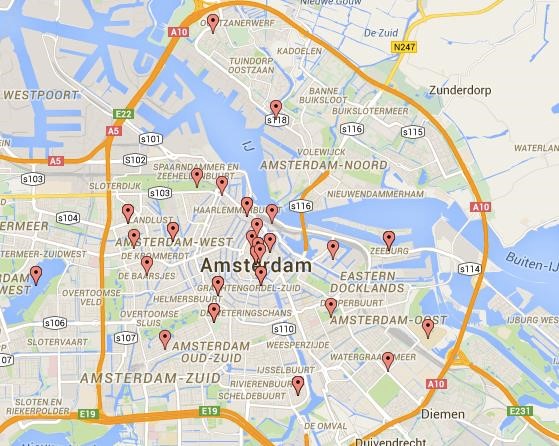
Below is a map of locations tagged by 48 respondents of a recent street harassment survey that I conducted in Amsterdam. Take a good look at where the majority of incidents are reported:

Amsterdam-BatchGeo2015(Source: BatchGeo 2015)

The majority of the geotagged incidents were reported in the center of the city, mostly around touristy areas and not in areas of the city known to have large minority populations (Biljmer, Zuid-Oost and Oost, for example). What this data does then, is encourage a revisiting of stereotypes of street harassment in Amsterdam, albeit from a purely geographic perspective. And this is just a start. The more stereotypes are checked—particularly using visual tools and visualizations—the more people are realizing that street harassment extends beyond race, ethnicity and geographical area.

What kind of impact does this have on the ground? Understanding street harassment as part of broader power structures does not mean that everyone gets this memo, and in this vein, individuals’ lived experiences are critical to take into account. But without denying individual experiences with street harassment, it is important to underline the implications of making generalized statements about races or communities.

Starting up a Hollaback! in Amsterdam is one way to work towards exposing exactly what happens on the ground and where. Geotagging experiences of street harassment not only confronts the Dutch Myth of Tolerance but it also provides an important starting point for conversations about street harassment and race in the Netherlands. Coupled with other awareness-raising initiatives and campaigns, addressing racial stereotyping in conversations about street harassment through such visual tools also encourages a look at street harassment through a much broader lens—one that unfortunately does not make the fight against street harassment easier but who said this was going to be easy? Ultimately, what taking a more comprehensive approach to street harassment does, is it makes the work more strategic and more effective in the long run.

You can find the full analysis of the Amsterdam survey results here or by contacting Eve at evearonson@gmail.com. Follow Eve and Hollaback! Amsterdam on Twitter at @evearonson and @iHollaback_AMS and show your support by liking Hollaback! Amsterdam’s Facebook page here.

Share

Filed Under: correspondents, hollaback, race, Resources, street harassment Tagged With: Amsterdam, hollaback, maps, statistics

« Previous Page
Next Page »

Share Your Story

Share your street harassment story for the blog. Donate Now

From the Blog

  • #MeToo 2024 Study Released Today
  • Join International Anti-Street Harassment Week 2022
  • Giving Tuesday – Fund the Hotline
  • Thank You – International Anti-Street Harassment Week 2021
  • Share Your Story – Safecity and Catcalls Collaboration

Buy the Book

  • Contact
  • Events
  • Join Us
  • Donate
  • Facebook
  • Instagram
  • Pinterest
  • Tumblr
  • Twitter
  • YouTube

Copyright © 2026 Stop Street Harassment · Website Design by Sarah Marie Lacy