• About Us
    • What Is Street Harassment?
    • Why Stopping Street Harassment Matters
    • Meet the Team
      • Board of Directors
      • Past Board Members
    • In The Media
  • Our Work
    • National Street Harassment Hotline
    • International Anti-Street Harassment Week
    • Blog Correspondents
      • Past SSH Correspondents
    • Safe Public Spaces Mentoring Program
    • Publications
    • National Studies
    • Campaigns against Companies
    • Washington, D.C. Activism
  • Our Books
  • Donate
  • Store

Stop Street Harassment

Making Public Spaces Safe and Welcoming

  • Facebook
  • Instagram
  • Pinterest
  • Tumblr
  • Twitter
  • YouTube
  • Home
  • Blog
    • Harassment Stories
    • Blog Correspondents
    • Street Respect Stories
  • Help & Advice
    • National Street Harassment Hotline
    • Dealing With Harassers
      • Assertive Responses
      • Reporting Harassers
      • Bystander Responses
      • Creative Responses
    • What to Do Before or After Harassment
    • Street Harassment and the Law
  • Resources
    • Definitions
    • Statistics
    • Articles & Books
    • Anti-Harassment Groups & Campaigns
    • Male Allies
      • Educating Boys & Men
      • How to Talk to Women
      • Bystander Tips
    • Video Clips
    • Images & Flyers
  • Take Community Action
  • Contact

Croatia: Breastfeeding in Public is a Street Harassment Issue

October 25, 2015 By Correspondent

Marinella Matejcic, Croatia, SSH Blog Correspondent
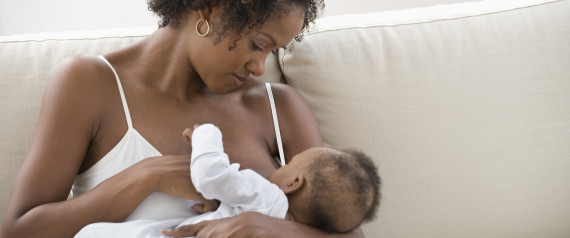
Woman breastfeeding. Image via the Huffington Post

You know how, when we talk about street harassment, most people just assume that it involves a woman, a man and physical or verbal violence? Maybe you’ll react on the sentence you just read and say: but it can involve a trans* person, as well! You would be completely right, but that’s not the issue here.

I want to talk about another form of street harassment, the one that we’re not “ranting” about enough. It incorporates patriarchy, body shaming and street violence as we know it: breastfeeding in public. Everyday Feminism and HuffingtonPost have covered the topic, but are we paying enough attention?

Sometimes, it is amiss, depending on your location and whereabouts, as well as your feminism postulates, to talk about the relation of feminism and childbearing/caring. But if we talk biology, kids are something some women have, which is perfectly fine. The broader feminist community has to incorporate mothers into their stories and keep the whole “women, sisters” agenda as far as possible from crossing a woman because of her reproductive choices. We tend to talk about sexual and reproductive health and rights, but, from time to time, ignore actual women who decided to procreate.

Saying: “I’m fine with breastfeeding, but…” doesn’t portray you as an open-minded individual – that but is what distinguishes a valid opinion from discrimination.

Some people say that it’s a disgusting site to see. Breastfeeding is disgusting because a woman’s boob is out and the baby is, ugh, eating from it? How awful is that? I really don’t even want to get into that double-standards-patriarchy talk. There is no doubt that the patriarchy itself is the core problem of why do people consider that they are entitled to judge, give advice to or obstruct any women’s actions. But I don’t think that we should discuss this topic related to general hyper-sexualisation and acceptance of women’s breasts in the media and marketing industry. That is a waste of time and emphasizes the wrong notion that woman has to do something specific with her body in order to please the general audience and expectations. Forcing a person to somehow feel ashamed because of a personal process that isn’t hurting anybody is a form of oppression, you know?

Let’s sum it up: I’m talking oppression, feminism and sexualisation. What does nurture have to do with that and how can I justify this blog post on a site street harassment, when it is clearly about breastfeeding? It’s really simple: street harassment can be broadly defined but in every definition, it includes some force of violence in public space – and banning a mother from feeding her child is violence. Sexualisation of that act is violence. There was a great article on this on Everyday Feminism, called 8 Reasons Why the Policing of Parents Who Nurse in Public Is Street Harassment. It is a good read.

Somehow I just can’t get rid of the notion that by shaming a nursing woman, we’re sending signals that a woman’s body is here just for being tangled by society’s ideas on a woman’s position. It’s fact that basically, a woman produces food and feeds her baby in a most natural way, but is seen as daring to provoke the general public by claiming her own body! What nerve, huh? Again, oppression through shaming. Sound familiar?

At one point in my life, I was a breastfeeding mom as well and had to cope with comments like, “Why don’t you just breastfeed her in the toilet, it’s not a nice sight!” or “Are you sure, somebody might see you?” or even “But that’s a private thing, don’t publicize it,” on, I guess, a weekly basis.

By opting-in for the shaming of breastfeeding mothers in the street or in some shopping place (for instance, these security officers that harassed a bunch of breastfeeding moms at a mall, because they were such a threat to public moral and everything) you are perpetuating the culture of violence and street harassment. Maybe, if you find it edgy to think about it in those terms, just try to put yourself in those shoes, while doing some dull everyday task. Imagine people telling you “don’t do that HERE”, “you’re OBSCENE”, “hush, hide!”

What would be your feelings if a complete stranger came up to you and told you to put that food of yours away because that’s not what a nice person is supposed to do outdoors and among other people?

So, what should one do when one meets a woman that nurtures her child in public? Nothing. Live and let live.

What if you breastfeed and somebody harasses you? Best for Babes has some good advice.

Views on breastfeeding in general and views about it specifically in public are so different across the globe, and we have to keep that in mind. Feeding a child in public is a choice that a woman has to have. After all, a baby has to eat.

Marinella is a freelance journalist/writer, feminist activist, and soon-to-be administrative law student. She writes for Croatian portal on gender, sex and democracy called Libela.org and covers CEE stories for globalvoicesonline.org. Follow her on Twitter @mmatejci.

Share

Filed Under: correspondents, News stories, street harassment Tagged With: breast feeding, street harassment, women's bodies

USA: Police Violence is a Form of Street Harassment

October 24, 2015 By Correspondent

Hannah Rose Johnson, Arizona, USA, SSH Blog Correspondent

This month I talked with Pat Farr, a member of Hey Baby! Collective, in Tucson, AZ, about the intersections of sexual violence that are embedded in societal institutions; the sort of intersections that are more complex to organize around—specifically how profiling by police and police brutality constitute street harassment.

Farr presented an analysis of the nuances, scopes and the limits of perfect-victim narratives. When we think of street harassment solely as a cat-calling, where is power moving, what identity is created and who is being left out?

Farr says, “…rape culture is really a complex system that creates a framework for identifying who is a victim and who is a perpetrator. And if someone doesn’t fit into these tropes of victim/perp then it they fall outside of the discourse and are not victims and not perpetrators. So I like the term perfect and imperfect victim…[…] With street harassment it’s even more difficult. There’s very few protections against street harassment to begin with. So this notion of a perfect victim becomes subjectively very difficult to define.”

The first is the Office on Violence Against Women’s definition of sexual assault, which is defined as: any type of sexual contact or behavior that occurs by force or without consent of the recipient of the unwanted sexual activity. Farr says that “The definition of sexual assault by the OVW includes street harassment.”

The second is the Center for Disease and Control’s uniform surveillance on sexual violence, which extends to noncontact unwanted sexual experiences. “This,” says Farr, “is very similar to non-consensual behavior of a sexual nature as described by the OVW.”

The third is the Equal Employment Opportunity Commission’s definition of sexual harassment which includes offensive remarks about a person’s sex. The EEOC goes on to define sex-based discrimination as: discrimination against an individual because of gender identity, including transgender status, or because of sexual orientation. “As such,” Farr argues that “because sexual harassment is a form of sexual discrimination, according to the EEOC, harassment based on a person’s gender identity or sexual orientation is a form of sex discrimination.”

“This gives us the opportunity to extend the definition of street harassment,” Farr says, “according to these definitions, it is street harassment when a transgender woman walking down the street is attacked because of her gender identity, and hence this would count as sexual violence.”

Farr brought up the case of Monica Jones—a black transwoman, sex worker rights activist and MSW student in Phoenix, AZ. She was arrested after a demonstration for sex workers when she took a ride from an undercover, and refused the driver’s proposition. Farr told me that “even though she refused the driver’s propositions, she was still arrested on the prostitution related crime against morality, manifestation of prostitution.” This kind of law, within the city municipal code crimes against morality, is known as “manifestation of prostitution.” It’s a kind of profiling law when a police officer thinks someone looks like a sex worker and is doing something in an area where sex workers would be.

“…it’s essential to recognize that people of color, lower class people, LGBQ people, transgender people, and HIV positive people all are at greater risk of police violence that’s based largely on culturally defined stereotypes of sexuality,” Farr states, “Compulsive heterosexuality, heteronormativity, white supremacy, neoliberal economics, and the prison industrial complex are all bound up with street harassment as a form of institutional violence against particular identities.”

Identities in the margins present different relationships to power which are reinforced through all of our state-sanctioned systems. These identities—these people and their lives—are vulnerable in the face of systems that reproduce heterosexuality, white supremacy, patriarchy and transphobia. These systems rely on exclusion and violence to function, and create our cultural understanding of who is a victim and what terms make a victim.

What Farr is saying here gives us a wider framework to think about who is a victim of street harassment. It is no longer only the person walking down the street being cat-called, it’s also person being profiled by police and arrested because of their gender identity and race.

This allows us to see police violence as a form of street harassment that is inevitably tied to the state.

Share

Filed Under: correspondents, LGBTQ, police harassment, race, street harassment Tagged With: ACLU, monica jones, police harassment, sexual violence, transgender

USA: Friends Don’t Ask Their Friends for “Rush Boobs”

October 23, 2015 By Correspondent

LB Klein, USA, Former SSH Blog Correspondent

Sigma Alpha Epsilon (SAE) at University of California San Diego is blowing up my RSS feed right now for requiring pledges to solicit photos of women’s breasts with “Rush SAE” written on them. These SAE brothers didn’t invent this. Google “rush boobs” (or don’t, seriously don’t) and there are myriad search results. Total Frat Move refers to using women’s breasts as promotional objects as a “timeless tradition.” This story broke when UCSD student Rachel Friedman posted a chat conversation in which her SAE new member friend senior Spenser Cornett asked her to share topless photos of Ms. Friedman and her friends.


Rachel Friedman and the message she received. Image via Cosmo

More and more fraternity chapters are receiving sexual violence prevention education. A common strategy for engaging men in preventing sexual violence is to appeal to their relationships with women. We call upon men to think of their “mothers, sisters, and girlfriends” and to consider they wouldn’t want the important women in their lives to be harmed. However Mr. Cornett’s request, and I imagine others like it, is a friendly one. It is flanked by “lol funny story” and a laughing emoji. Sexism is often embedded within men’s relationships with women. Ms. Friedman and Mr. Cornett’s friendship illustrates a need to ask more of men in these relationships.

I genuinely believe that virtually all fraternity men don’t want their mothers, girlfriends, sisters, and women friends to be raped. That just isn’t enough anymore. Many of these young men would proudly pin on a white ribbon pledging they are against rape or host a 5K to benefit a local rape crisis center. That just isn’t enough anymore. We have raised enough awareness, and we need real action. In our educational efforts, we are indeed calling men to action. We ask young men to “stand up” and “fight back” with the same hypermasculine ideals that perpetuate violence. Because men are considered leaders, we ask them to lead, to make public displays about how intolerant of violence they are. That just isn’t enough anymore. Moving toward culture change will require these young men to question tradition and advocate for structural change. It will require them to listen to women. It will require them to do something revolutionary for men to do: follow. This change will mandate that they feel a little more uncomfortable to make women a little more comfortable.

I imagine that the SAE brothers who collected topless photos of their women friends were insulted when some folks tied their behavior to sexual violence. “This is harmless,” they might say. “Boys will be boys,” others might say. “She overreacted,” several have posted in the comments (Friendly reminder: don’t read the comments). Young men are faced with choices between working toward a gender equitable futures and holding tight to tradition that has favored them. Making the day-to-day choices to resist patriarchal tradition is hard, and we need to intentionally work with men to do it. We need to help them take these risks.

Otherwise, we are asking too little of men. If we are going to say that men should care about ending sexual violence because of their relationships, we need to demand they do better in these relationships. It isn’t enough to congratulate men for not committing sexual violence or to applaud them for saying they’re against rape. That is too easy. It does not foster the critical thinking and empathy needed to shut down “rush boobs” from the inside, as opposed to relying on women to call this behavior out when they are made to feel unsafe (though brava, Rachel Friedman). We need to balance ensuring our educational programs meet men where they are, while also nudging them forward.

Sexual violence is about power and control. To truly achieve culture change, we need to ask men to give up some power: not just rapists, all men. We can’t end violence while propping up the exact oppressive traditions and systems that perpetuate it. We can’t decry rape and laugh off objectification. I am willing to believe that institutions founded as boys’ clubs (like fraternities or indeed institutions of higher education) can evolve their traditions as we approach a more gender equitable futures. However, I do think that we need to call on these traditionally patriarchal institutions to prove it. We need to raise our standards for men as they become engaged in ending sexual violence. As fraternity men become more visible in the movement to end sexual violence, we need to hold them accountable. Men shouldn’t be able to have their feminist cookies, and eat their misogyny cake too.

I am indeed somebody’s daughter and wife. I am proud of the many men in my life I count as friends, and I take those relationships seriously. Because I love these men, I hold them to a higher standard than just not raping women. My bodily autonomy, my right to be subject and not object needs to be more important than my male friends’ egos. They need to treat me like a whole person of equal worth to them. They need to not only not participate in my objectification but to prevent others from doing so, to make that behavior so abhorrent that there is a social cost to those who engage in it. They need to give up some of their social power, as they are gaining it at my expense.

The hypothetical young man or men in SAE who could have spoken out against asking their friends for “rush boobs” would have taken a risk. While sexual violence is certainly far too common, sexism is far more ubiquitous. We need young men to make small changes in the spaces in which they are currently the most comfortable. Indeed, we will incrementally achieve culture change as men give up some of their space in the boardroom, the subway, and the university campus. We need to create a culture in which young men consider challenging their bros as less problematic than reducing their women friends to topless photos (“no face necessary, lol”).

Engaging men in their roles as “fathers, sons, husbands, and friends” can be a powerful way to initially activate men to create change, but we can’t stop there. That is just not enough anymore. To achieve culture change, we need men to be inconvenienced in the exact spaces they once felt the most secure, the ones in which they benefit the most from tradition.

LB is an Atlanta-based advocate and educator dedicated to ending gender-based violence, supporting survivors, and advancing social justice.  You can follow her on twitter @LB_Klein.

Share

Filed Under: correspondents, News stories Tagged With: activism, college, fraternities, masculinity

USA: A Costume is Not an Invitation for Harassment

October 21, 2015 By Correspondent

Chelsea Cloud, Michigan, USA, SSH Blog Correspondent

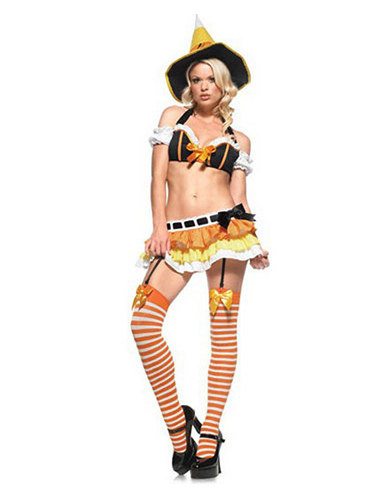
sexy costume
Image via Flickr

For women, deciding on a Halloween costume is a careful science.  Too sexy is slutty.  Not sexy enough is prude.

I wore pants to a college bar on Halloween one time and I am not exaggerating when I tell you I was the only one out of hundreds of women.  I felt weird.  There’s also the time I wore a sexy Princess Peach costume.  Halloween in Michigan is cold.  Also, teetering around on sky high heels like a newborn giraffe just to complete my outfit was hard work.  But there are far worse implications than just being cold.  These costumes make us objects.  And sadly, many people just see these costumes and not the women wearing them.

Let me be clear, I am not arguing against sexy costumes, I am angry that it’s our only costume option.  It also doesn’t seem to be a fading trend, if anything it’s getting more popular.  EVERYTHING is being sexualized now.  Oh, you want to be a female superhero?  You better believe your store- bought costume interprets female superheroes with maximum cleavage and a micro-mini skirt.  Women just love to fight crime whilst making sure they don’t have a nipple slip.

Go ahead and peruse the ‘career section’ of Party City.  Female swat team members must wear black tutus and cleavage boosting bulletproof vests.  Female nurses find that their 12 hour shifts are more comfortable in garter belts and thigh highs.  Have I made my point clear yet?  The only store- bought option is a sexy one. This disturbing trend is trickling down to teens and even younger.

Just last month a mother wrote an open letter to Party City about the disturbingly sexualized toddler costumes.  In the article there is a side by side photo of the boy cop and the girl cop and the difference is glaringly obvious.  The boy is given the option to look like a legitimate cop while the girl’s option is clearly a feminized and sexy version, complete with skirt.

Corporate America is telling girls at a young age what their worth is and that they don’t deserve to feel empowered.  And while girls should wear what makes them happy, that option should also be age appropriate and include authentic career attire.  The pressure only get’s worse as girls get older.

A teenager in the recent New York Times article about Halloween costumes addresses the pressure to go with the trend:

 The pressure to be sexy without being slutty can ruin the holiday. “It used to be my favorite holiday, but now it’s like if you don’t look good in a mini skirt and cropped top, you might as well not dress up,” says Evelyn, who has never worn a sexy costume. “I am fearful that other people will see me as a ‘slut.’ It’s kind of a bummer.”

As if teenagers don’t have enough to worry about when it comes to their image, they now have to carefully construct their costume to fit a wavering definition of sexy while not being judged or bullied by their peers.

But instead of slut shaming, the yearly ‘sexy costume debate’ should be seen as an opportunity to discuss the real problem: the harassment that inevitably happens when wearing a revealing costume.  Street harassers are equal opportunity offenders, but a female in a sexy costume is a very easy target. Even still, we hear disturbingly little about harassers. Instead, we live in a society that loves to victim blame and slut shame.

Related, lately the cosplaying community has been bringing this issue into the public eye because harassment at comic conventions is a common occurrence. The social media movement “Cosplay is not consent” started after cosplayers got fed up with being harassed verbally and physically at events.  A survey about sexual harassment at conventions such as San Diego Comic-Con revealed that 13% of attendees had received unwanted sexual comments and an alarming 8% percent had been physically assaulted.

Halloween can be viewed as a wide scale cosplay event and instead of seeing sexy costumes as an easy way to gauge someone’s willingness to participate in sexual advances and how much harassment they will tolerate, people should recognize that a “sexy” costume does not invite harassment.

While I think it’s unfair to judge anyone based on their costume choice (as long as it doesn’t cross any borders into offensive), it’s also unfair that women don’t have a choice in the matter and then are blamed if they are harassed.

A respectful man would let a woman walk by wearing whatever she wants without harassing her. Let us take this annual conversation and use it to remember that boys need to be raised to respect women no matter what they are wearing.  A costume is not an invitation for harassment.

Chelsea is a full-time sales assistant for an advertising company in West Michigan and a part-time Graphic Design student. She is proud to call herself a feminist and feels passionately about speaking up for women’s rights. You can find her on twitter @LitSmitten.

Share

Filed Under: correspondents, News stories, street harassment

Pakistan: Stop Staring

October 19, 2015 By Correspondent

Fasiha Farrukh, Pakistan, SSH Blog Correspondent

“While standing at the street corner of a crowded residential area in an early evening, I was waiting for auto rickshaw to arrive so I would not have to walk to my friend’s place. It took pretty long for any public vehicle to show up at that side; still I continued to wait as the distance was quite lengthy to the house. It was quite uncomfortable to stand there and wait. I noticed strange stares in my direction. I was unsure if they were staring at me because of my dress or because I had been standing there alone for a long time.

I was dressed appropriate to the surroundings, but as the time passed by and I could not get any rickshaw to stop, I felt it more and more that the men passing by stared hard at me and scanned me like I was some character. It started to get on my nerves and I decided to walk towards my friend’s home. I was walking fast and felt like crying after experiencing these cruel stares from these men who were harassing me only with their eyes.  All the way from that street corner to the house was the most hideous experience that I would never want to relive ever in my life.”

This was the story my friend told me after reaching my place exhausted and nearly in tears. This is the story of every woman who goes out and faces these kinds of harassing stares from the men around us.

These incidents arise only one question in my head that why are we still an ‘alien’ for the men? We are not the first generation of women or girls, we are not something unique, so why are men still unable to understand that we are normal human beings like they are?

Staring at someone is because you deem them to be an unusual thing is absolutely weird when girls and women exist everywhere. Staring at someone with lust is the most common and creepiest thing and is a form of harassment!

Of course, not all men stare and I have seen many who dislike such acts by other men and even help women when they get uncomfortable with the stares.

But still, we go through these stare harassment all the time. This is not the story of just one street, one city or one country, it happens everywhere, even in the developed ones, and it is entirely unacceptable. It crashes women’s confidence and makes them feel vulnerable. In fact, many men feel amused in an ill way by making women uncomfortable with the stares.

The only way to end this street stare harassment is by making men understand that it is not going to give them any satisfaction and this could happen to women about whom they care, possibly to whom they are related. Therefore, the best way is to end this way of harassment by not staring yourself!

Let’s have a healthy society for the next generation instead of one that is hateful and daunting.

Fasiha is a Contributor for UN Women Asia & the Pacific where she writes about gender-related issues, mainly gender equality, sexual harassment, and economic empowerment of women. You can find her on Facebook and Twitter, @FasihaFarrukh

Share

Filed Under: correspondents, street harassment

« Previous Page
Next Page »

Share Your Story

Share your street harassment story for the blog. Donate Now

From the Blog

  • #MeToo 2024 Study Released Today
  • Join International Anti-Street Harassment Week 2022
  • Giving Tuesday – Fund the Hotline
  • Thank You – International Anti-Street Harassment Week 2021
  • Share Your Story – Safecity and Catcalls Collaboration

Buy the Book

  • Contact
  • Events
  • Join Us
  • Donate
  • Facebook
  • Instagram
  • Pinterest
  • Tumblr
  • Twitter
  • YouTube

Copyright © 2026 Stop Street Harassment · Website Design by Sarah Marie Lacy