• About Us
    • What Is Street Harassment?
    • Why Stopping Street Harassment Matters
    • Meet the Team
      • Board of Directors
      • Past Board Members
    • In The Media
  • Our Work
    • National Street Harassment Hotline
    • International Anti-Street Harassment Week
    • Blog Correspondents
      • Past SSH Correspondents
    • Safe Public Spaces Mentoring Program
    • Publications
    • National Studies
    • Campaigns against Companies
    • Washington, D.C. Activism
  • Our Books
  • Donate
  • Store

Stop Street Harassment

Making Public Spaces Safe and Welcoming

  • Facebook
  • Instagram
  • Pinterest
  • Tumblr
  • Twitter
  • YouTube
  • Home
  • Blog
    • Harassment Stories
    • Blog Correspondents
    • Street Respect Stories
  • Help & Advice
    • National Street Harassment Hotline
    • Dealing With Harassers
      • Assertive Responses
      • Reporting Harassers
      • Bystander Responses
      • Creative Responses
    • What to Do Before or After Harassment
    • Street Harassment and the Law
  • Resources
    • Definitions
    • Statistics
    • Articles & Books
    • Anti-Harassment Groups & Campaigns
    • Male Allies
      • Educating Boys & Men
      • How to Talk to Women
      • Bystander Tips
    • Video Clips
    • Images & Flyers
  • Take Community Action
  • Contact

Italy: Are you sure you want to wear a skirt today?

October 15, 2015 By Correspondent

Sara Rigon, Italy, SSH Blog Correspondent

"Sit upright and cross your legs" - photo by the author
“Sit upright and cross your legs” – photo by the author

A few weeks ago my sister and I were talking about street harassment and she told me the story of a man who was caught taking pictures up the skirt of women traveling on Milan public transport. Apparently most victims never suspected their crotches and buttocks have been photographed as the man was smart enough to hide his camera in what looked like a harmless cardboard tube.

When asked about the 5000 upskirt shots, the man explained he had a passion for Italian neorealism cinema: he was giving voice to such fine art. The wannabe director was found not guilty for his épreuve d’artist, but could not enjoy freedom as police also retrieved child pornography material at his apartment along with illegal bullets and for that he was convicted to 2 years and 10 months behind bars. He is in jail, but not for uperskirting, because that is not a crime, not in Italy at least.

I felt shocked and outraged for quite awhile, I could not believe it possible. Not the upskirting, that is no surprise, it is a tragic reality. Sadly as a woman you are definitely aware of and sort of expect such violation of your body from men and society as a whole. It happens everyday when you walk down the street to work or from your yoga class: you may be victim of street harassment (catcalling, blocking path, following, masturbating or spraying semen on women , etc..) or in the best case scenario you are just bombarded by images of partially nude or stripped women or women’s body parts on gigantic billboards inviting you to buy all sort of products.

What really struck me was and still is the fact that upskirting is not a crime. Secretly taking (stealing?) pictures of private parts of clothed and unsuspecting women is allowed and within the law in Italy and in many other countries around the world, maybe even in yours. I couldn’t turn my head around it and so I did what I usually do when I can’t make sense of something: I researched the subject.
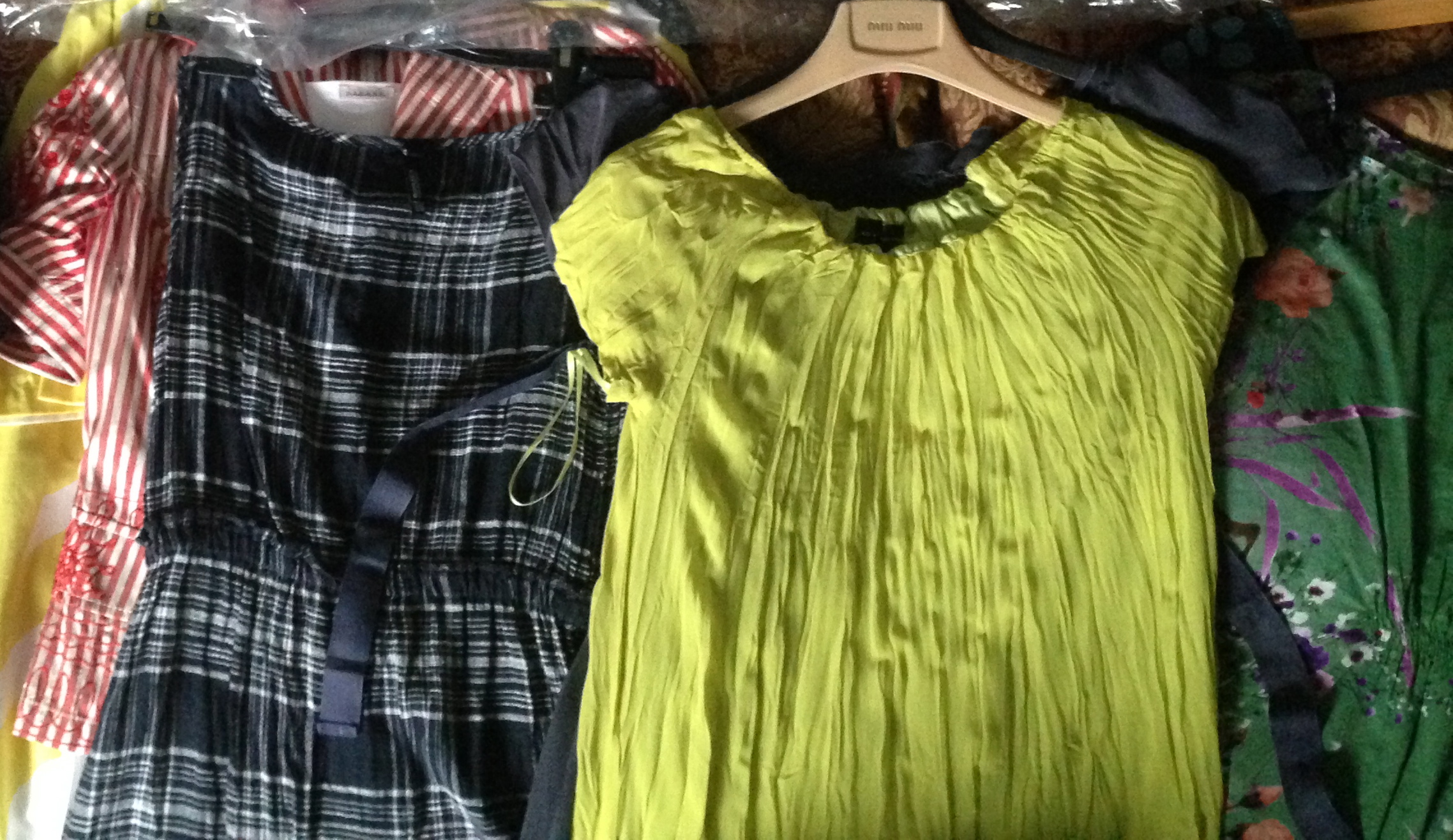
"dangerous, unsafe pretty dresses" - photo by the author
“Dangerous, unsafe pretty dresses” – photo by the author

First, to my big surprise, I learned there is in fact a specific term to identify such an outraging and offensive practice: upskirting. Next, in the attempt of grasping the magnitude of the problem, I looked the “new term” up on the internet and to my dismay I discovered that upskirting is very much spread through out the world as well as the cyberspace. The amount of FB pages and Twitter accounts dedicated to or named after upskirting is alarmingly shocking.

Mercifully, among the hundreds of websites displaying what, in all likelihood, must be thousands of upskirting snapshots from all over the world, there are several bloggers, women’s right activists and journalists who discuss upskirting ethical and legal issues, raising awareness on this demeaning practice. The main issue discussed is impunity: upskirting is commonly perceived as wrongdoing, nonetheless is legal.

Most judges around the world have difficulties convicting upskirting enthusiasts as in most countries there are no specific laws that prohibit such a practice. And yet, upskirting is such an abusive practice that you would easily think other acts and decrees must regulate it. No need for another law. After all upskirting is a non-consensual, unwanted sexual misconduct, it must infringe some other already existing regulation on voyeurism, decency or at least privacy and the right to feel safe in a pubic place. But no, that’s not the case.

You would think that upskirting is voyeurism, but that is just common sense. Legally voyeurism is about images of completely nude bodies or body parts and it occurs in a place where people have a reasonably expectation of privacy. A public place does not give any assurance of privacy, therefore in a public place voyeurism is not a crime. And there is more, while a growing number of US states have laws against upskirt photos, last year a US Superior Court Judge stated that “women who dress and position themselves so that their intimate parts may be viewable in public have no ‘reasonable expectation of privacy’ (District of Columbia v. Cleveland, 2014). No matter if underwear and intimate area were only visible from an unanticipated vantage point, that is your problem.

I personally admire law-makers and respect jurisprudence, the philosophy of law. However, such interpretation is narrow-minded and discriminatory, it is victim-shaming. Such a statement says: “Hey what is the fuss about? You are the one that started it, if you did not want your crotch area photographed you should not have worn a skirt”. This is institutionalized victimization and it is not acceptable in any civil and egalitarian society.

Forget voyeurism, so what about the violation of privacy and dignity? Apparently taking a picture up the skirt of a woman cannot be considered an misdemeanor if the victim is not aware of the offense in the first place and the image doesn’t allow the identification of a person (Italy 2015). Let me get this right: I had no perception of what they were doing to me so it didn’t happened, is that right? But it did happened. What if one of those panties was me? And I feel violated even if it was not me, because it could be me.

I wish I lived in a world where there is no need for a specific law against upskirting, a world where a woman does not have to worry about what she is wearing. Until then I am pleased and grateful to know that legislators around the world are making an effort to put a stop to such a mortifying offense

We need to update our legislations to modern technology that puts a camera in a portable phone and make it possible to take a picture up the skirt of a woman in a public and crowed place without anyone noticing. Most of all we should work strenuously to update our culture and perspective on women. We should educate people, especially young generations, that women are human beings and not just bodies, objects to increase sales or possess and disposed of as one wishes.

Sara is a registered General Practitioner in Italy and New Zealand. She is the founder and current lead of the newly established Equally Different group within the European Junior General Practitioners Organization, the Vasco da Gama Movement, branch of the World Organization of Family Doctors. Follow her on Twitter @rgn_sr.

Share

Filed Under: correspondents, News stories, public harassment

USA: Domestic Violence Awareness Month

October 12, 2015 By Correspondent

Meghna Bhat, Chicago, USA, SSH Blog Correspondent

IMG_6371 (1)This story occurred in the early to mid-1990s, when I was a middle school student in Mumbai (India). I overheard my parents talking in the kitchen about one of their friend’s daughter. I remember this akka (means ‘elder sister’ in Konkani language), then in her early twenties, was independent, educated, intelligent, assertive and compassionate. She was going to be married in a few months to this this guy, a well-established doctor and a permanent resident living in the United States.

As a teenager, this news seemed like a romantic fairy tale and their wedding ceremony was celebrated with great pomp. A few years later, my parents informed me that this akka had returned from the US and is now separated from her husband. They explained to me that her husband had physically, emotionally and psychologically abused her in those five years of marriage. Shocked, baffled and angry about what she experienced, I was unable to grasp the news. My parents were genuinely saddened but first and foremost, they empathized and expressed support towards her. Not for a second did they pity or blame her or wonder why she didn’t continue in that abusive marriage.

I never realized that my parents’ conversation with me would shape my perception towards and understanding of this form of interpersonal violence. Most importantly, their empathy and support towards a survivor of an abusive marriage would help us in understanding another aspect of gender violence. My sister and I are so thankful to them!

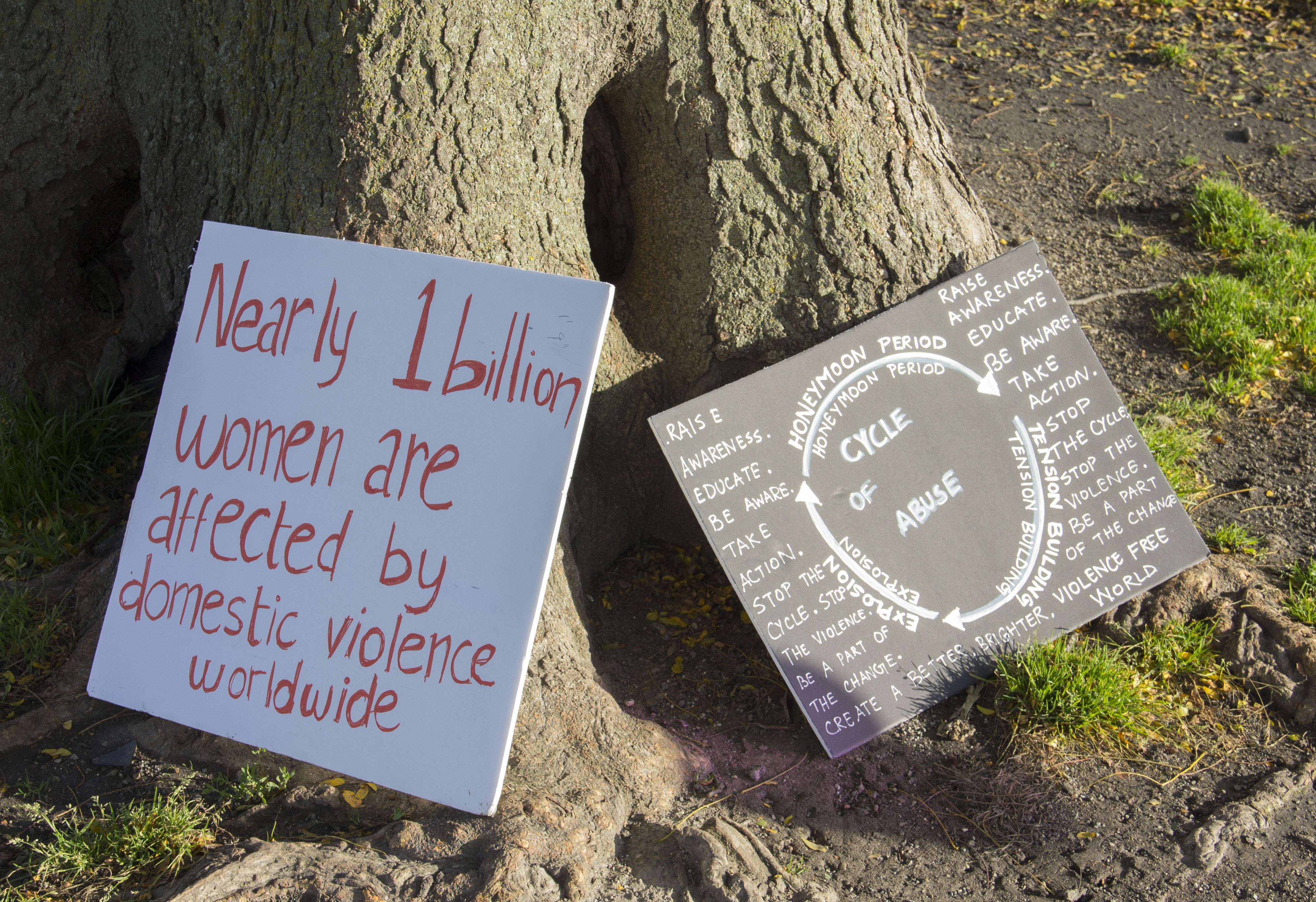
At that time, the term ‘domestic violence’ was new to many of us. The US Department of Justice defines domestic violence (DV) as ‘a pattern of abusive behavior in any relationship that is used by one partner to gain or maintain power and control over another intimate partner.  DV can be physical, sexual, emotional, economic, or psychological actions or threats of actions that influence another person. This includes any behaviors that intimidate, manipulate, humiliate, isolate, frighten, terrorize, coerce, threaten, blame, hurt, injure, or wound someone.’

As an undergraduate student in Psychology, I began to observe and realize that subtle forms of DV were more prevalent in my community. We, as human beings, are likely to be more sensitive and empathize with survivors revealing signs of physical violence such as bruises, scars, blood, etc. However, what about those women who endure emotional, financial and psychological abuse by their husbands and probably in-laws (in some cultures)? DV perpetrated by a husband against his wife is often perceived as a ‘family matter or disagreement within the four walls’ and ‘it’s none of our business to intervene’. I believe these indifferent or insensitive societal responses may stem from a combination of deeply embedded intergenerational patriarchal and cultural norms accompanied by ignorance, myths about DV and lack of access to resources among other factors. Additionally, abused married women in most cultures are often questioned, judged and mocked by their families, friends or the community for many reasons: “She is educated and employed. Why can’t she leave him?” or “So what if he is a bit short-tempered? Why can’t she make the marriage work?” or “What is she doing to irk him or trigger his temper”? Sadly, we, as a society, are likely to hold the abused woman accountable for her victimization. This is true in other instances too, like sexual harassment in the workplace or street harassment.

But a survivor’s victimization should not be trivialized and we should not resort to excuses such as ‘short-temper’, ‘family or private matter’, and so on to justify violence. What can we do as a community to support these women? Be supportive and listen, be non-judgmental, and encourage them to talk to someone who can provide them help and guidance, and if possible, help develop a safety plan.

October is National Domestic Violence Awareness Month. ‘DV thrives when we are silent; but if we take a stand and work together, we can end DV.’ Today, I dedicate this blog to the many brave and strong survivors of DV whom I know, have met and been inspired by their stories of courage and resilience. I also dedicate this blog to the lost and repressed voices affected by gender violence. A special shout out to all the counselors, legal advocates, administration, DV hotline crisis specialists, nurses and physicians, social workers, healthcare workers, and educators across the globe who work around the clock to ensure justice, healing and safe transition for these women affected by gender violence. Next, I focus on the experiences of immigrant women affected by DV.

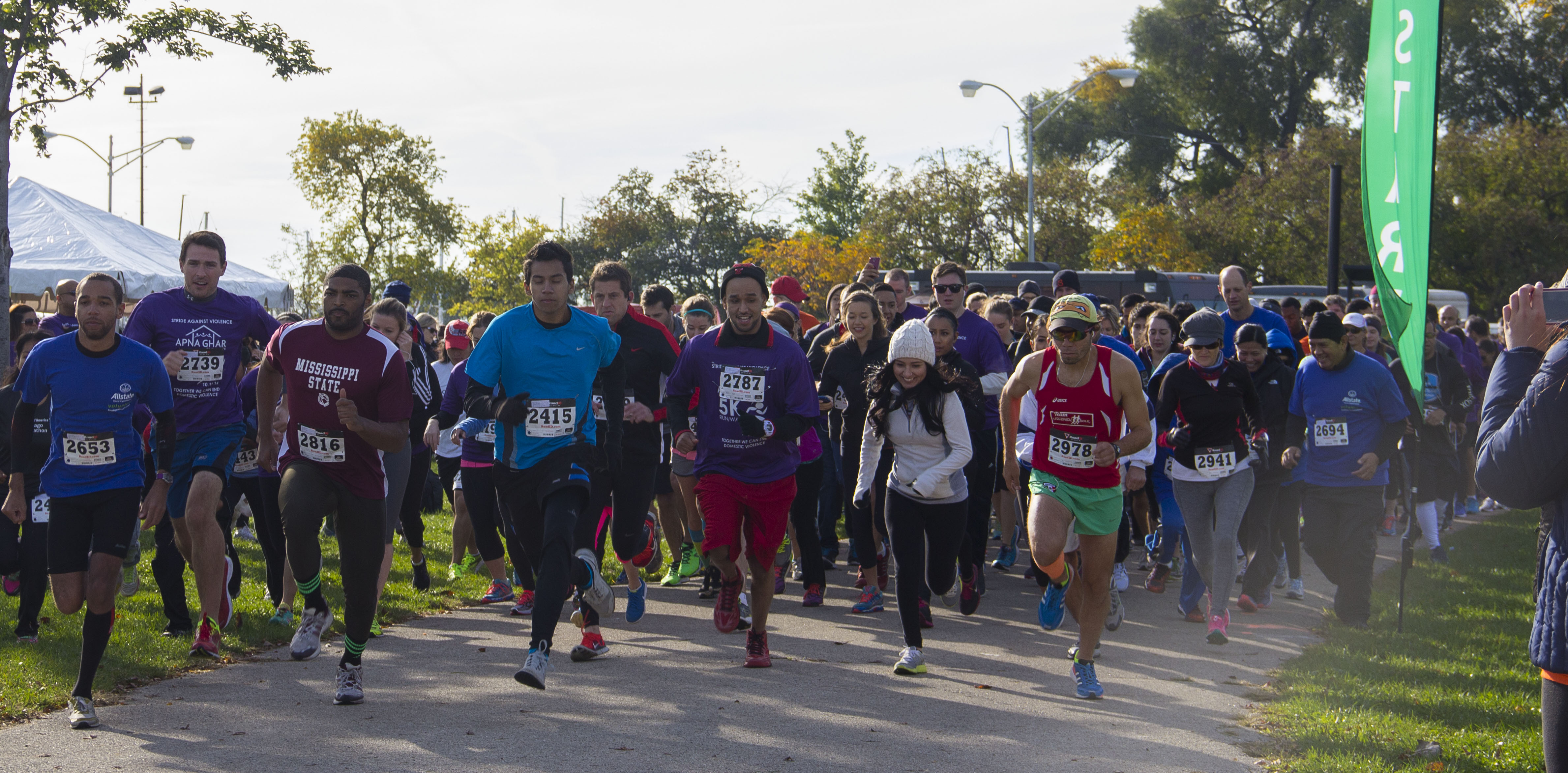
Apna_Ghar_Identity_colorAs a doctoral student in Criminology, Law, and Justice at the University of Illinois at Chicago, I came across the incredible and extensive work done by a non-profit organization, Apna Ghar (‘Our Home’), based in Chicago. Apna Ghar’s mission is to provide holistic services and conduct advocacy across immigrant communities to end gender violence. They have been assisting immigrant survivors of gender violence from 1989. Ifn the US, immigrant survivors of gender violence encounter a large amount of unique hurdles such as access to legal, social, protective and support services. The multicultural, multilingual, skilled and compassionate staff at Apna Ghar helps them to face these obstacles by offering their full range of services as these survivors begin their transition towards healing and empowerment. The staff here speaks a total of 20 languages and they help thousands of people very year through outreach, their crisis hotline, and more.

One of the annual fund-raising and public awareness events that Apna Ghar organizes is their Stride against Violence 5k event. This year, Stride Against Violence, to commemorate Domestic Violence Awareness Month, is scheduled for October 25, 2015 at the Montrose Harbor in Chicago, if you are in the area and want to attend. If you are unable to be physically present for the event, you can still sign up as a ‘virtual runner’ and support this very important cause! You can raise funds as a participant and the donations go directly to helping the survivors of gender violence at Apna Ghar. I have been fortunate to volunteer occasionally for this organization and it has been an enriching valuable learning experience. I will be there for the Strides against Violence 5K this year and hope to raise $500.

IMG_6526

What are you doing this October for the Domestic Violence Awareness Month?

Meghna is a doctoral candidate in the Criminology, Law, and Justice program at the University of Illinois at Chicago, with a specialization in Gender and Women Studies. She is currently working on her dissertation, which focuses on representations of violence against women in a widely viewed form of Indian popular culture, Bollywood cinema.

Share

Filed Under: correspondents

Romania: When We’re Taught that Women are Not Equal to Men

September 29, 2015 By Correspondent

Roxana Geru, București, Romania, SSH Blog Correspondent

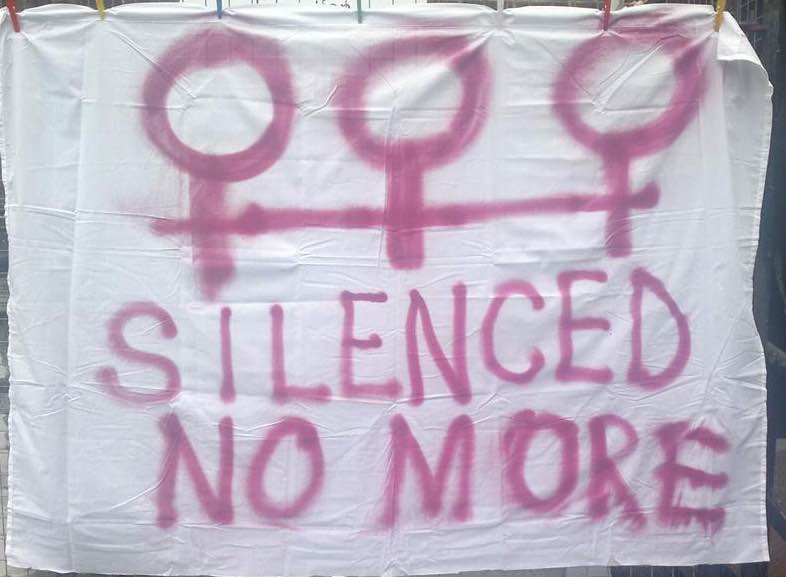
Silenced no more bannerAs a woman raised in Romania, I have been taught that I am not equal with a man. It is not necessarily my family who taught me, but my school, my friends, the church, and the SOCIETY. For a long time, I really believed it. I believed that I cannot do or I am not supposed to do some things, just because I am a woman. Like if a woman wears short pants she is considered a sexual worker, who “asks for it.” Or if a woman dares to drink a beer with a man she is an alcoholic. Or it a horrible thing to see a girl eating in McDonald’s.

Instead, it is believed that all a woman is supposed to do is be pretty, cook and give birth.

During my teens I felt upset. I did not understood why it was forbidden for me to do some things that were not for my best friend, who was a guy. And I cried. But after a few years I accepted that people have different points of view. I started to see equality as a thing which involves rights and obligations as well. And to accept that men can naturally be more physical strong than women, but that does not mean that all guys have to be strong or all the girls have be less strong. That maybe we are not born equal, but we should all have an equal chance to get where we want.

A few months ago I was at a university helping students who wanted to join the Psychology Faculty. At the beginning, we had to explain to them that they had to pay a fee and then come back. Everything seemed to be okay until one guy came back in this public institution and started to yell at us that he did wrong because of us. This “us” refers to a group of six women and a guy. Some of us tried to calm him down and explain to him that he was wrong and he misunderstood. We even came to him with some solutions for his problem. When a woman, a friend of mine, tried to speak to him, he yelled at her, “I do not speak to you. You are a woman. You are a woman and you do not have statute.”

My friend and I did not have any idea how we should reply because he became very verbally aggressive toward us.

I was shocked to see a guy around my age say that women do not have any statute. That women are nothing but objects who have to be pretty and produce kids. I wonder how that guy acts at home with his mother, his sister, his girlfriend. How will he act with his daughter? What he will teach his daughter? How will he react when his daughter comes home and says that another guy punched her. Will he defend her? Or he will congratulate the other guy?

I know my story is not exactly about street harassment, but it shows what it is like to be a woman in Romanian society. It is about how some of us are educated. It is one of the reasons why women in Romania are street harassed. It can be an answer to the question of “Why, as a woman in Romania, can someone touch my back?” or “Why, as a woman, in Romania, do some guys whistle after me?” and “Why does no one do something when someone rapes a girl?”

We have to see our culture change if we want to see street harassment and other forms of sexual violence end.

Roxana is a 21-year-old who is studying psychology and plans to do a master’s program in Sexuality and Gender Studies. She hopes to one day work within the LGBT community, with sexual workers and/or with people who are suffering from sexuality disorders.

Share

Filed Under: correspondents

Nepal: She ‘Almost’ Lives

September 27, 2015 By Correspondent

Smriti RDN Neupane, Nepal, SSH Blog Correspondent

She almost runs, in the drizzling rain,
towards the last bus of the evening, or so they said
Up the road
She almost runs under the drizzling rain
Her body putting in all the strength she has onto the ‘almost’ running,
crying out silently, for some rest, for peace,
Her body aching to be not- groped, on her way

Her body has a Saree
Draped around it like a vine creeping up
the only thing that covers her ‘dignity’,
A whisk of strong wind would blow the shield away,
She ought to hold it with her hands,
her hands, she can’t put it free, cannot fling it while she walks,
Her coarse, broad hands trying to grip to the hope that she is safe

Her hands have a bag
and bangles that jingle with her every step,
She gropes to them; the saree and the bag,
as if her life depends on it,
She walks hastily, almost running, her feet trying hard to move fast
but the vines around her not giving them enough space
Her feet trying so hard,
Hoping the path she travelled was as dry and clean as she would like

Her feet have slippers,
They keep slipping on the slippery slope
Sometimes plunges in the puddle
while her feet desperately trying to stay steady
She cannot miss the bus
when it’s already getting dark,
Not when she has probably five eager, hungry adult stomachs to cook for, at a place called home

Other adults around her,
they look, keep looking, at her vines,
and the lines beneath those vines,
The lines that peek through the vines when a gust of wind blows it,
The lines, she is desperately trying to shield
with those vines from the prying eyes,
Her eyes, mapping those eyes
She almost runs to the bus,
The bus isn’t still, keeps rolling away slowly,
slow enough to jump in

The bus has a small door
and it’s open, yet jammed,
Seven of them trying to get in, twelve trying to get out
at the same time
She can’t leave now,
not after the second bus just got missed, not when it’s turning dark
On her attempt to get in
She feels a hand pushing on her behind
Pushing her to go inside and that hand is not trying to be discreet

That hand also has a mouth
Tells her to get in fast if she wants to go
She recognizes the tone,
and the way those hands push her every time
She manages to get inside.
manages to grab the handle- too high for her
Her hands high up towards the handles,
Her lines exposed, the vines would not protect her
No

There are bodies all around her
Bodies have hands
and other parts
There is an occasional pull and push, occasional tug
Her vines and her lines
also her hair,
all exposed
There is frequent touch,
and pokes she doesn’t want to talk about
She dissociates herself from the present
Becomes numb to the happenings around her,
To her.
She thinks about work
She thinks about the struggle to prove herself every day, every time, every where
The bus rides along, oblivious of what is going on its inside and her inside.

She gets down on her stop
And the bus with a small door swirls along the road,
Away
With her
Dignity,
Self-confidence,
Happiness
Few parts of her

She thinks about tomorrow
“Tomorrow is going to be a better day”
She dreams while she walks towards the place she calls home,
The roads, rides and respect she deserves
She will get
because
She has hope!

Smriti coordinated Safe cities campaign in Nepal with a team of feminist activists of various organisations, networks and community groups from 2011 to 2014 and is still voluntarily engaged with it. She is currently engaged in an action research and advocacy on women’s leadership in climate change adaptation focusing on women’s time use.

Share

Filed Under: correspondents

USA: NO, girls, don’t loiter on the streets! Gendered access to public spaces in India

September 25, 2015 By Correspondent

Meghna Bhat, Chicago, USA, SSH Blog Correspondent

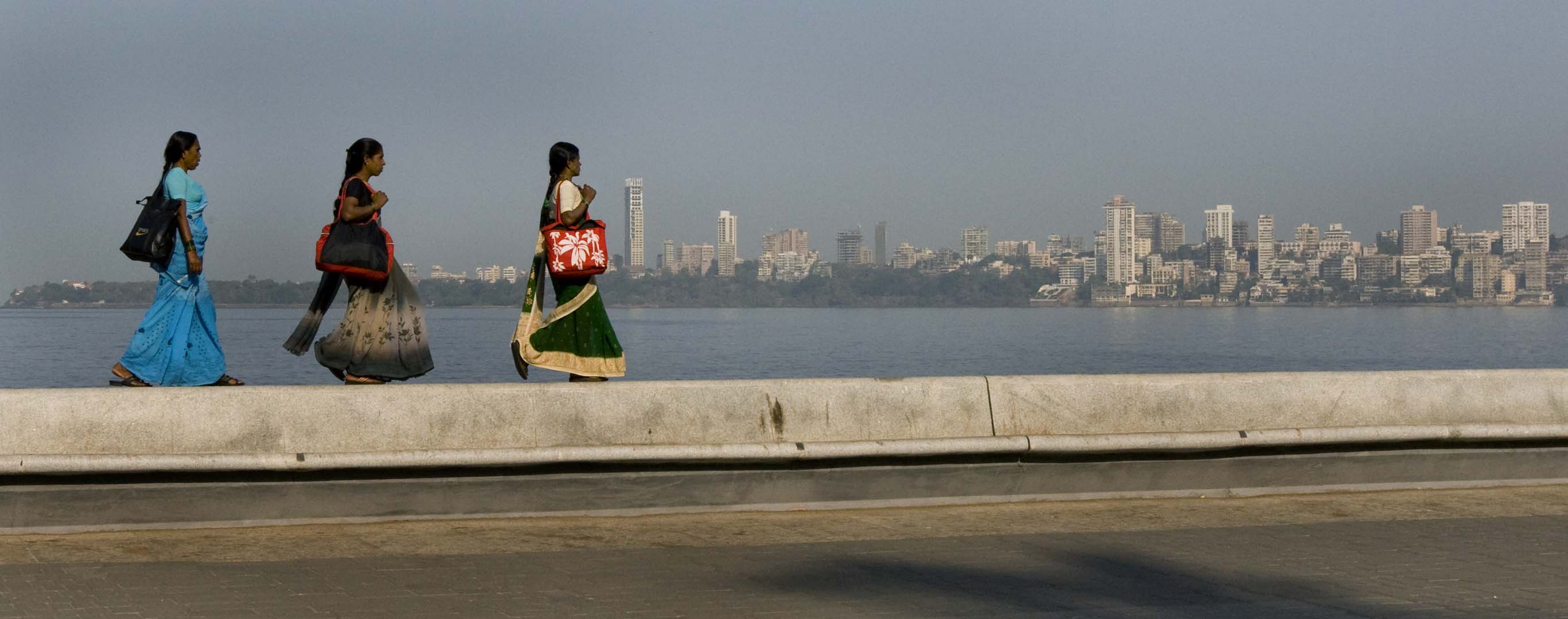
Three women in Mumbia | Wikipedia

As I got into the car last week, my husband told me a segment on women’s rights in India that was going to start on NPR radio. As I tuned in, the correspondent spoke about how a group of young women in Mumbai started cultivating a movement called Why Loiter?

These young women believe that we (as women) should be able to hang out with friends or be alone in public spaces, just because we want to and feel like. We don’t need to give a possible reason to anyone! Women are often excluded from claiming public spaces in India on the pretext of keeping them safe. They are warned not to ‘loiter’ or ‘hang out’ in public spaces and if they are, a man or family should accompany them.

That’s when I remembered how many times I was told the same thing during my school and college days and when I worked at different places. “Don’t go out or stay late in the dark,” “That road is very deserted so take the alternate road where it’s brighter”, “Don’t loiter around- wait closer to a bus-stop so it looks like you are waiting for a bus”, “Talk to a friend on your cell phone if there’s a potential pervert walking around so he doesn’t approach you”, “Wear appropriate clothes if you are going out at this time”, “Avoid standing alone or with your girlfriends at this paan-shop (tobacco shop) or dhaaba (street diner)…people shouldn’t misunderstand you” and “don’t take the late night train home on this route as there are barely any commuters, so take the bus”. “Hanging out or loitering in public spaces just for fun, absolutely NOT!”

Did years of blindly and sincerely following these warnings and messages make us less exposed to sexual harassment — or what India calls ‘eve-teasing’? Did these measures lessen our experiences of being catcalled, groped or pinched, or being sexually assaulted and attacked by some men? The answer is NO.

I wonder how much time, mental stamina and efforts I and many other women have sub-consciously and unintentionally invested in avoiding being a target of harassment or unwanted unpleasant attention. Examples of changes include planning my daily schedule, deciding what public transport to take, figuring out what time to leave and return home, and what clothes to wear depending on what time of the day and which neighborhood. There is an underlying implication that we are likely to be at risk for sexual harassment or assault if we wander outside our homes and we need to stop loitering out in public spaces to keep ourselves safe.

My parents never necessarily gave this advice to us (my younger sister and me) but these were the very obvious strong messages that we as Indian girls and women have been conditioned to hear from our society and popular culture such as films and TV serials. Don’t get me wrong- the advice is well intentioned from a parents’ perspective and it is overall good to take precautions, but these messages are mostly pelted to girls than boys. What messages are we giving to our young girls and boys? Who are likely to be ‘victims’? In India, the gender-biased advice, policing and curfew for the safety of girls and women is likely to stem from deeply embedded cultural norms and practices of raising daughters in the past.

The Why Loiter? movement was drawn from the book written by Shilpa Phadke, Sameera Khan and Shilpa Ranade (2011). This powerful book, based on the research between 2003 and 2006 in the City of Mumbai, highlights how the 21st century Indian society deals with women’s safety. The authors argue how women from different castes, social classes, neighborhoods and communities in Mumbai have been excluded from many public avenues and additionally, have to plan and negotiate their lifestyle, daily schedule, transport and work to prevent from being at risk everyday. Grounded in feminist perspectives, the authors further suggests that “loitering should be celebrated, not reviled, as an act that offers possibilities for a more inclusive city where all people have a right to city public spaces.”

Even though I have been living away from my hometown for the past 11 years, I wish I had come across a similar movement that encouraged young girls and women in Mumbai to claim public spaces without negotiating, hangout with girl friends just for fun, take a nap in the park, to chit chat until late night, and to enjoy food at street diners. So, after I read the book Why Loiter? in 2013, I started researching if there were similar social movements. One particular fascinating example that I came across is the #GirlsAtDhabas that young girls and women in Karachi, Pakistan, are promoting. I say, more power to these girls and women!

By focusing on young girls and women’s rights in India, this blog does not intend to trivialize the daily sexual harassment and structural violence our transgender and LGBTQI friends in our cities encounter in these same public spaces. Is it not possible to share these public spaces for everyone to hang out, loiter or just enjoy a late night ice cream at the neighborhood stall, without being stared at, questioned, judged, or harassed and policed?

Meghna is a doctoral candidate in the Criminology, Law, and Justice program at the University of Illinois at Chicago, with a specialization in Gender and Women Studies. She is currently working on her dissertation, which focuses on representations of violence against women in a widely viewed form of Indian popular culture, Bollywood cinema.

Share

Filed Under: correspondents, street harassment

« Previous Page
Next Page »

Share Your Story

Share your street harassment story for the blog. Donate Now

From the Blog

  • #MeToo 2024 Study Released Today
  • Join International Anti-Street Harassment Week 2022
  • Giving Tuesday – Fund the Hotline
  • Thank You – International Anti-Street Harassment Week 2021
  • Share Your Story – Safecity and Catcalls Collaboration

Buy the Book

  • Contact
  • Events
  • Join Us
  • Donate
  • Facebook
  • Instagram
  • Pinterest
  • Tumblr
  • Twitter
  • YouTube

Copyright © 2026 Stop Street Harassment · Website Design by Sarah Marie Lacy