• About Us
    • What Is Street Harassment?
    • Why Stopping Street Harassment Matters
    • Meet the Team
      • Board of Directors
      • Past Board Members
    • In The Media
  • Our Work
    • National Street Harassment Hotline
    • International Anti-Street Harassment Week
    • Blog Correspondents
      • Past SSH Correspondents
    • Safe Public Spaces Mentoring Program
    • Publications
    • National Studies
    • Campaigns against Companies
    • Washington, D.C. Activism
  • Our Books
  • Donate
  • Store

Stop Street Harassment

Making Public Spaces Safe and Welcoming

  • Facebook
  • Instagram
  • Pinterest
  • Tumblr
  • Twitter
  • YouTube
  • Home
  • Blog
    • Harassment Stories
    • Blog Correspondents
    • Street Respect Stories
  • Help & Advice
    • National Street Harassment Hotline
    • Dealing With Harassers
      • Assertive Responses
      • Reporting Harassers
      • Bystander Responses
      • Creative Responses
    • What to Do Before or After Harassment
    • Street Harassment and the Law
  • Resources
    • Definitions
    • Statistics
    • Articles & Books
    • Anti-Harassment Groups & Campaigns
    • Male Allies
      • Educating Boys & Men
      • How to Talk to Women
      • Bystander Tips
    • Video Clips
    • Images & Flyers
  • Take Community Action
  • Contact

USA: Hey Baby! Unhinged

September 11, 2015 By Correspondent

Hannah Rose Johnson, Tucson, AZ, USA, SSH Blog Correspondent

Hey Baby! Art Against Sexual Violence is an exhibition series that uses art as a vehicle and tool to end street harassment and sexual violence. After participating in this year’s shows, in April and May, I wanted to know more about this art movement. I wanted to know more about the people I passed in my office hallway, who I breezed by on 4th Avenue, who were doing this work. I wanted to piece together a genealogy. So I sat down with Wendy Sampson, an organizer who originally brought Hey Baby! to Tucson, and Manuel Abril, a current Hey Baby! organizer (and SSH board member).
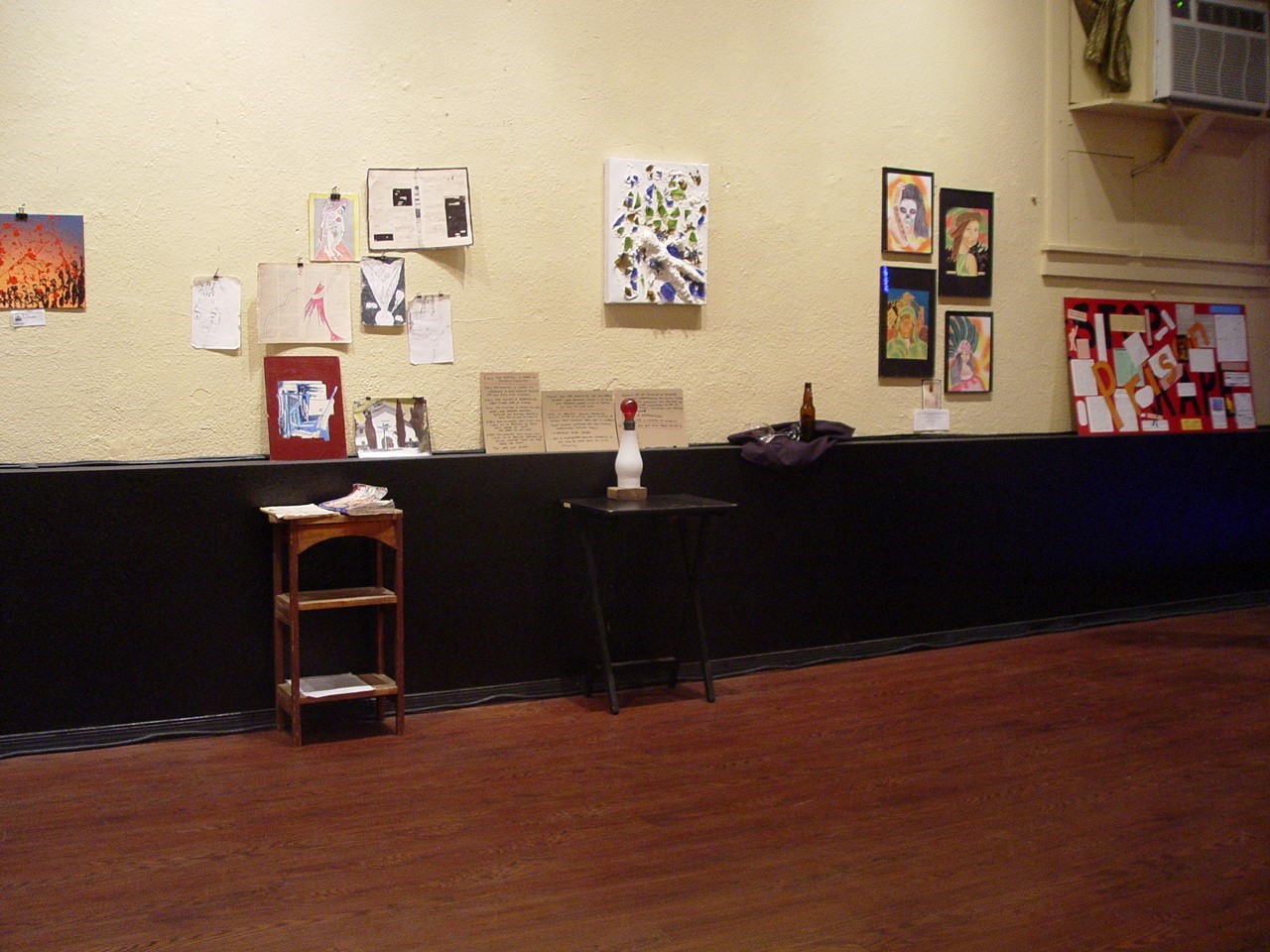
Hey Baby! Art Against Sexual Violence show 2015.

This is what I learned: (it’s not linear and it’s not a history).

Rewind to 2010. Hey Baby! was a copycat of an event that happened in North Carolina, which Sampson’s friend suggested they organize in Tucson. Sampson said, “The one in North Carolina was a one-time event and we just planned a one-time event as well. We were like oh, this was a good idea, we should do it here.”

Sampson presented a really interesting analysis on the relationship between street harassment and intimate partner violence. She said that complacency with a culture of street harassment infiltrates our relationships with each other. That if we are willing to treat one another like shit on the street, we are willing to behave like that in intimate settings. But she also said people can more easily rally around street harassment; that “people have a tangible reaction [to street harassment] and are steady in that reaction than intimate partner violence, which is messier and complicated and drains you in a different way.”

Putting on Hey Baby! provided a break amidst the emotional exhaustion of the intimate partner violence work that she was doing. Sampson said, “I remember being excited about the art we had. I remember feeling that ANGER, that can get drown out through exhaustion, and to share it with other people was really rejuvenating.”

No one knew that it would get taken up again by other activists or be institutionally grant funded for a while, and eventually come out again on its own, unhinged. After Wendy organized the event she left Arizona. For four years. She admitted that she didn’t remember much about the actual event because she was so exhausted from the accountability processes. Though she did say, “I remember putting art up…I remember someone doing poetry…there was a lot of art being laid out and a lot of things people could take home, like posters…”
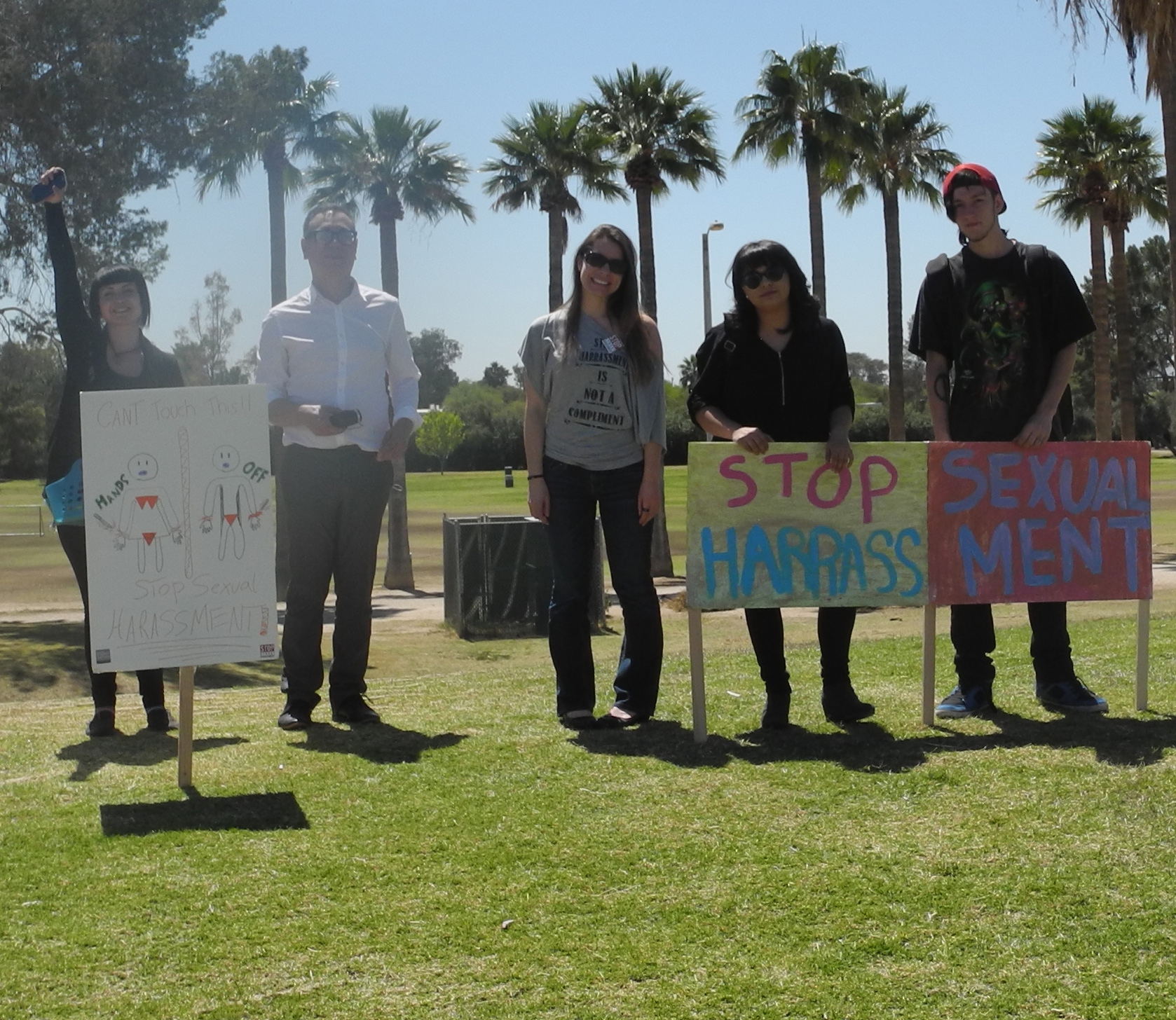
2014 Hey Baby art in Tucson
2014 Hey Baby art in Tucson (Abril is two in from the left)

I asked Abril to fill in the gaps. What he said about the ebb and flow of transitions actually isn’t the most relevant. We’re talking about a genealogy here, a series of connections that produces something that may mean something else depending on the timing and environment. And Hey Baby! got taken up with organizers, non-profits, and sexual violence prevention educators at different times and places.

What he did say that I thought was interesting was about the show this year: “We wanted to recapture the feeling of connecting with a kind of playfulness where we didn’t feel suffocated by everything that could go wrong.” The kind of wrong that comes from building a complex analysis that isn’t easily palatable.

Messiness.

Abril said that before inviting people to participate this year, “We told ourselves that we are going to f**k up and that’s going to be a part of our process…we wanted stuff that was messy and that didn’t have a predictable outcome in terms of how people were going to receive it…. And a lot of came from that…[artists and organizers] felt relieved not having to tell people what we already knew. Like depart from the place where we know rape culture exists, and pull in the other things, conditions that we live in that are socially or institutionally imposed. And try to make connections to those.”

Organizing against street-harassment is complex because when we examine the conditions of sexual violence we enter a multi-dimensional zone. Hey Baby! Art Against Sexual Violence brought together art as resistance, art as distance, and as a creative strategizing tool. We wrote, painted, collaged, sculpted and performed new narratives that exposed the intricacies from where sexual violence departs from and seeps into. Pieces that examined street harassment, catcalling, rape, date-rape, partner violence, state-violence, mental illness, incarceration, abuse within activist communities, victim-blaming, and challenging perfect-victim narratives.

After talking with Sampson and Abril, I had more questions. Curiosities about anti-street harassment movements, art as activism, and where are these people in North Carolina who organized the first event? [Editor’s note: My 2010 book on street harassment features the North Carolina event!]

I had some more tracking down to do.

For more information about Hey Baby! Check out www.facebook.com/HeyBaby.Art or www.heybabyart.tumblr.com

Hannah Rose is writing from Tucson, Arizona and Lewiston, Maine (US) as she transitions from the Southwest to the Northeast for a career in sexual violence prevention and advocacy at the college level.  You can check her out on the collaborative artistic poetic sound project HotBox Utopia.

Share

Filed Under: Activist Interviews, correspondents, street harassment

USA: “It’s Okay To Be Angry”

September 10, 2015 By Correspondent

Maryah Converse, New York, USA, SSH Blog Correspondent

“Do you think that women can be their own worst enemies? When they act as if the harassment were a compliment, or don’t speak up. Aren’t you your own worst enemies?” asked a man in the audience after a performance of #SpeakUp: The Street Harassment Play.

I did not just assume his good intentions, as Flux Theater Ensemble’s “Rules of Engagement” asked us to do in the facilitated discussion after the performance. I felt his good intentions, saw it in the dismay on his face at the reactions of all the women in the circle.

I thought, how many times have I said this to myself? “You shouldn’t have walked away. You should have stood up to that man. You’re your own worst enemy, woman!”

Then I remind myself that it is a psychological defense mechanism. I cannot confront or even take seriously every incident of street harassment in my life. I would have no time or energy for anything else. And sometimes—no, often it is physically dangerous. On my computer, I have a quote by the writer Margaret Atwood: “Men are afraid that women will laugh at them. Women are afraid that men will kill them.” I hate that she is right.

Some of the others in our circle have responded to his well-intentioned but jarring question. Then Shaun Bennet Fauntleroy said, “The worst enemy is the one who makes us feel small.” It felt like the perfect note to end our discussion.

*     *     *

Bennet Fauntleroy was not just the facilitator of our discussion group. She is also the woman behind the event, #SpeakUp: The Street Harassment Plays, and wrote one of the seven short monologues in the project.

#SpeakUp, photo via Flux Theatre Ensemble's Facebook Page
#SpeakUp, photo by Isaiah Tanenbaum. Via Flux Theatre Ensemble’s Facebook Page

Each of the monologues approached harassment from the many ways that women respond, all different, all equally valid. The second piece, “Just the Way It Is” by Nicole Pandolfo, was the only male voice, and it provoked that too-common fear response. There is the trauma response of the seventh voice, “What I Would Do to You” by Maria Alexandria Beech.

The third voice, “God Bless You Mama: A Woman’s Guide to the World” by Sol Crespo, was by far the funniest. The text dripped with sarcasm, on the verge of farce, but was played absolutely straight by Holly Chou. With heartfelt innocent sincerity, she declares, “If he hadn’t reminded me to smile, I would never have known I had the ability … or the permission!” She keeps declaring with a bright smile, “Men are SO HELPFUL!”

I could not help but notice that the loudest laughter in the room came from the men. Every time I laughed, I felt guilty, because under the humor, this can be deadly serious.

The fifth voice was like a punch in the gut. I knew from the first sentence that this was the work of Lauren Ferebee, titled “Rogue Agent.” It was no surprise that my friend Lauren would want to write a theater short for a production of this kind. Another full-length play of hers, “Somewhere Safer,” is a nuanced reflection on terrorism and the wars in Afghanistan and Syria, gender, and the choices we have to make between morality and making a living.

Here in “Rogue Agent” was the anger response to harassment, raging against the machine. “I never wanted to be a woman writer,” the narrator spits out, played with the perfect low, gravelly voice by Hanna Cheek.

I asked Lauren about her piece, and she described the lack of women’s voices in the standard literary canon, saying, “To me, the silence of women artists across history is, on a structural level, related to the silence of a woman who has been called out over and over again in public. On a societal and personal level, women who live, write and work in the public space are told over and over again ‘you don’t belong here.’ I struggle with having internalized that voice telling me that I don’t belong here, and I struggle with having internalized that larger dynamic that my work doesn’t belong here.”

When I asked Lauren why she chose theater as the medium for her message, she said she wanted to tell audiences “that it’s ok to be impacted by those experiences. It’s ok to be angry. And that we should be angry, whether anyone tells us it’s ok or not.”

That is exactly what I heard in her piece in the lines, “All I ever learned about anger was to turn it into a secret … so I talk.”

Maryah works for the Unitarian Church of All Souls in New York City where she has provided particular leadership in the Racial Justice Initiative. She has an MA in Near Eastern Languages and Cultures, and was a Fellow at the Center for Arabic Study Abroad in Cairo.  Read her blog “Arabs I’ve Known.”

Share

Filed Under: correspondents, street harassment

USA: Street Harassment as Body Shaming

September 8, 2015 By Correspondent

Sara Conklin, Washington, DC, USA, SSH Blog Correspondent

“Blondie” — Photo from Haley Morris-Cafiero’s The Watcher series

This weekend I was feeling particularly enraged about a viral video called Dear Fat People by YouTube comic, Nicole Arbour. In this video of self-proclaimed satire, “fat shaming” is heralded as something of a favor to people; if you can shame people enough, they might just lose weight.

I don’t know what universe Nicole Arbour lives in where shaming any person in any matter is considered a service to society, but I am proud to say I don’t live in the same one.

Unfortunately, the internet isn’t the only place where body image harassment exists. My first blog post was about an incident of street harassment I experienced where the line between objectification and sexism was blurred with a spewed statement of body hate.

This is a scenario that happens all too often – sexualized hecklings with specific references to one’s appearance and particularly, a woman’s curves.

I should be clear that it is neither my goal nor do I have enough time to discuss the myriad of ways in which people of all sizes and genders experience harassment in public spaces. But what I can begin to consider are the ways in which women of a certain body type experience public harassment differently, and I can do so by reflecting on my own experiences.

As Nicole Arbour so unabashedly points out in her gruesome video, plus-size women (or as I will start referring to as women) can be treated like public property, as if our bodies incentivize more of an invitation than others. A harassment perpetrator might feel like it is their privilege to point out a descriptive observation that they just don’t like, i.e. “move that fat ass along.” Melissa A. Fabello the Managing Editor of Everyday Feminism, points out that, “So long as people believe that ‘concern trolling’—harassing and threatening people under the guise of being concerned for their health;—is acceptable, attitudes like this one will not only exist, but also thrive.” Perhaps even to the extent of a “well-intentioned” blonde on YouTube projecting hate to hundreds of thousands of viewers.

In the words of another YouTube comic, Meghan Tonjes, that video was “lazy comedy wrapped in health concern trolling tied in a f***ing privilege bow.”

The sad truth: the street harassment I have experienced is most often directly related to the size of some part of my body or the way an outfit fits on it. So, what is the difference between being harassed by a comedian’s video online and being told to move my fat ass on the street? Not a lot. Both perpetuate and let flourish the notion that “calling out” people who don’t fit a certain qualifying personal descriptor makes them less than and makes them a target for words used to demean people. If you don’t believe that’s even possible, check out the brilliant photographer Haley Morris-Cafiero who captured reactions to her body in public.

We need to shake up the idea that all harassment is the same stereotype: a come-on from the guy in the hard hat to the girl in the short skirt. Truthfully, harassment in public spaces comes in more varieties than we have words to describe it. But, what is lacking in variety are the tools to combat harassment that is guised as body shaming.

I’m always reading articles about women who have witty and poignant comebacks to street harassers. I’d like to think of myself as one of those women. On most days I have an allegorical potluck of shutdowns in my head. But why, when I am directly insulted about the size of my body, do I fall silent? I feel powerless. Perhaps more of our empowering messages to women don’t always require literal references to situational street harassment. It might start at a place deeper-rooted and intrinsically engrained — It might start with body acceptance. It’s worth thinking that if I loved my whole self a little more and was aided in this self-actualization by the world around me, the allegorical potluck could be reeling with comebacks of body positive statements instead of contrived defense mechanisms.

Truthfully, my body does not occupy nearly enough space to be of such a mental occupation to you. Yet, every time you make a comment in regards to it, there is a power dynamic shift. I won’t stand by and let anyone feel powerless because of the way someone sees them. I’m worth more than your lazy and privileged comments in any public space, online or otherwise.

Sara works in fundraising events at an organization that empowers women who face homelessness through recovery, wellness training, and housing. She runs her own photography company (saraconklinphotography.com) and a popular website that seeks to connect the world through pictures, sarapose.com.

Share

Filed Under: correspondents, street harassment

USA: Dealing with Street Harassment is Emotional Labor — And I Quit

September 1, 2015 By Correspondent

Michelle Marie Ryder, USA, SSH Blog Correspondent

A sex-obsessed Harry Block in the film Deconstructing Harry asks the prostitute he’s just slept with if she likes her job. Still under the sheets, she replies “It’s okay, it beats the hell out of waitressing.”

“That’s funny,” Harry laughs, “every hooker I ever speak to tells me that it beats the hell out of waitressing. Waitressing’s gotta be the worst fucking job in the world!”

Perhaps not THE worst job, waitressing is without a doubt ONE of the worst jobs. I’ve toiled away, overworked and underpaid, in a number of unenviable trades, including as a janitor hauling trash and scrubbing toilets, but what made waitressing so unbearable was that thing that often separates men’s work from women’s work: emotional labor.

In her book, The Managed Heart: The Commercialization of Human Feeling, noted sociologist Arlie Hochschild defined emotional labor in the workplace as “the management of feeling to create a publicly observable facial and bodily display… sold for a wage.”

Emotional labor is a kind of mandatory fakeness, a display of affected emotion, usually warmth and enthusiasm, in order to manage the expectations of the customer. It commonly entails displays of deference from those who “occupy disadvantaged structural positions within society,” and as a result, is strongly associated with occupations dismissed as women’s work, such as waitressing, nursing, teaching, childcare, social work and sex work. Not surprisingly, emotional labor contributes to occupational segregation and the gender pay gap.

In highly sexualized industries like the restaurant business, emotional labor makes substantial psychological demands on the individual. Attesting to this, after just a few months on the job I had to make a promise to myself daily not to burn the place down.

The power differential between customer and server meant male customers felt entitled to my company, my time and even my body. My hospitality was often mistaken for flirtation, and in a culture of sexism and male entitlement, this “mandatory fakeness” served as justification for sexual objectification and harassment.

The last straw for me was when a male patron asked if he could take professional photographs of me. He was puzzled when I declined his offer, confident I desired nothing more than to be the privileged object of his gaze. He was double my age and it was hard to miss his “Lolita Complex.” I could see Nabokovian fantasies flowering between his eyes every time I looked at him.

The thought of being fetish fuel for this man’s erotic preoccupations – and to have it all captured on film – pushed me to my breaking point. That night I walked out with no intention of returning.

I felt liberated. The air never tasted so sweet and I managed a few lungfuls of it before a stranger at the bus stop demanding my attention and asking me questions like what I did for a living (oh the irony!) tried to grope me. That’s when I realized a woman’s work is never done, only now there was no paycheck or Title VII protections.

Freshly unemployed, I couldn’t escape the burden of emotional labor. It was still my job to make creeps feel at home. Either I defer to the male ego on the street or I reject its advances and disrupt a sense of entitlement so draconian I risk my own safety. The threat of violence is always there, ominous, circling, ready to unleash its attacking power because gender-based street harassment is nothing less than an expression of power in a society heavily invested in minimizing and normalizing violence against women.

The type of emotional labor women are expected to perform in public is exhausting and requires split-second decision making that is shaped by our socialization to be open, kind, friendly and forgiving.

This means that despite years of calling out harassers, I still struggle to break the logic of this system. Often, before my sympathetic nervous system can determine “fight or flight,” an even deeper level of social programming kicks into gear and pulls the “polite” lever instinctively. It’s an opening harassers exploit to escalate the situation because anything other than unapologetic hostility is interpreted as an invitation. This is what happened at the bus stop.

Women are raised from birth to please others. It’s why over half of the female workforce ends up in jobs that require them to display friendliness and defer to the emotional demands of others. It’s why a woman walking down the street (or waiting tables) is viewed as sexually available and existing solely to satisfy men.

It’s why we are told to smile wherever we go.

Emotional labor is a double standard that makes public space a playground for men and a battleground for women. And it is work I am increasingly refusing to do. Consider slam poet Venessa Marco’s masterful poem “Patriarchy” my long overdue resignation speech.

Because I quit.

Michelle is a freelance writer and community activist. She has written for Infita7.com, Bluestockings Magazine, and The New Verse News on a range of social justice issues, and shares her poetry regularly at poetrywho.blogspot.com.

Share

Filed Under: correspondents, Stories, street harassment

Thank You 2nd Cohort and Welcome 3rd Cohort of Blog Correspondents

August 29, 2015 By HKearl

Many thanks to our second cohort of blog correspondents this year. They tackled topics like reproductive rights, school dress codes, slut shaming, hitchhiking, the generational divide, how technology can help street harassment happen, and several of them conducted interviews with street harassment activists in their community.

Meet the Correspondents of the Third Cohort of 2015

Eve Aronson, Amsterdam, the Netherlands

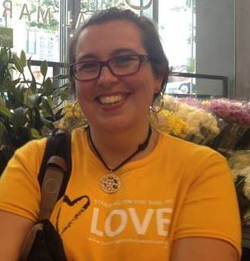
Eve Aronson Eve is the Director of Hollaback! Amsterdam and dedicates her time to raising awareness and assessing policy on street harassment in the Netherlands and beyond. Her recent work, “Psst Schatje!: Street Harassment in Amsterdam, Online and Beyond” provides a critical analysis of the street harassment landscape in the Netherlands and explores innovative, digital solutions to the problem. Driven by a passion to bring light to human rights abuses and different forms of gender-based violence, Eve devotes her time to shedding light on and combatting street harassment and human trafficking through her non-profit work, previous work as a journalist and on- and offline activism. Originally from the U.S., Eve recently completed a dual Masters program in Women and Gender Studies in the Netherlands and in Hungary. She is an avid backpacker and lover of languages. Follow Eve on Twitter at @evearonson or learn more about her here.

Meghna Bhat, Chicago, USA

Meghna BhatMeghna is a doctoral candidate in the Criminology, Law, and Justice program at the University of Illinois at Chicago, with a specialization in Gender and Women Studies. She is currently working on her dissertation, which focuses on representations of violence against women in a widely viewed form of Indian popular culture, Bollywood cinema. Having grown up in the metropolitan city of Mumbai (India) and having lived in the USA for 11 years, Meghna has witnessed and experienced gender-based oppression, including street harassment, from an early age. As a South Asian woman, these unsettling experiences motivated her to pursue this field and be an outspoken advocate for LGBTQI rights, prevention of hate crimes and discrimination, de-stigmatization of mental health taboos, and finding resources and safe spaces for survivors of gender-based violence. Meghna finds painting, walking by the lake, photography, traveling, and dance therapeutic for self-care.

Chelsea Cloud, Michigan, USA

Chelsea CloudChelsea is a full-time sales assistant for an advertising company in West Michigan and a part-time Graphic Design student. She is proud to call herself a feminist and feels passionately about speaking up for women’s rights. In the past few years, Chelsea has developed a habit of running (and actually enjoying it sometimes.) Her experiences with street harassment while out on her runs have prompted her to advocate through writing. Her passion for writing started at a very early age, when she discovered the power of words and how even a simple poem can unite and empower. Chelsea loves otters, adventures, reading YA fiction and The Walking Dead. You can find her on twitter @LitSmitten.

Sara Conklin, Washington, DC, USA

Sara ConklinSara is currently living, working, and dancing her way through Washington, DC. With an apparent aversion to land-locked states, Sara has lived in Boston, Miami, San Francisco, and Jacksonville. She professionally works in fundraising events, at an organization that empowers women who face homelessness through recovery, wellness training, and housing. Feeling constantly inspired at work by the tremendous amount of strength from these women, Sara chose to write for Stop Street Harassment to encourage dialogue and to help provide a space of empowerment for anyone facing harassment. In her personal life, Sara is an avid traveler and will have touched down on 6 continents as of October 2015 and plans to play with the penguins on Antarctica sometime in the near future. She runs her own photography company (saraconklinphotography.com) and a popular website that seeks to connect the world through pictures, sarapose.com.

Maryah Converse, New York City, USA

Maryah ConverseMaryah has an MA in Near Eastern Languages and Cultures, and was a Fellow at the Center for Arabic Study Abroad in Cairo. She lived three blocks from Tahrir Square during the Egyptian Revolution, an intriguing, unexpected utopia from street harassment. When that utopia abruptly ended, she became interested in understanding street harassment. She works for the Unitarian Church of All Souls in New York City, a liberal religious tradition deeply invested in social justice work, where she has provided particular leadership in the Racial Justice Initiative. She is especially interested in the ways that the activism of Black Lives Matter intersects with global justice movements for LGBT communities, disability rights, environmental protection, reproductive rights, gender equality, economic justice and Middle East peace. She also translates, teaches Arabic and writes memoir about her experiences living in Jordan and Egypt; occasional excerpts appear in her blog “Arabs I’ve Known.”

Larisa Marina Cristea, Romania

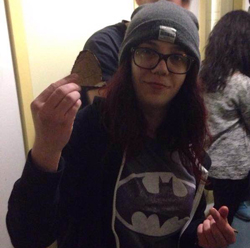
Larisa is a master’s student in Marketing and Advertising, with a newly discovered passion for feminism and gender equality. She has volunteered with institutionalized youth and co-founded the “Drawing your future” NGO. She tends to consider herself a people lover and a pacifist. She has been writing fiction stories since she was 12. She loves reading good books – usually fiction, and afterwards fantasizes about the beautiful places in the books, wondering if she will ever get there. That’s why another passion she has is travelling and meeting new people. She loves to hear their stories, learn their way of thinking and acting and then, share what she’s learned with others. She feels inspired by music, feeling more confident and able to write better. She likes the little things in life, including spending quality time with good, enriching and inspiring people.

Roxana Geru, Romania

Roxana GeruRoxana is a 21-year-old who is studying psychology. She plans to do a master’s program in Sexuality and Gender Studies. She hopes to one day work within the LGBT community, with sexual workers and/or with people who are suffering from sexuality disorders. She enjoys volunteering and traveling. She likes to fight for human rights, because she truly believes that you should not punish or bully someone just because they different from you and also, because she wants to see a safe and fair world for the next generations. She recently had the chance to study in France for a semester and then received a scholarship to study at a summer school in Denmark. This changed her thinking: she had fear when she walked down the streets in France and Denmark, but in Denmark you really should not be worried. This helped her realize how stupid it is for her as a human to be afraid.

Hannah Rose Johnson, USAHannah Rose Johnson

Hannah Rose often feels like she’s floating through a slow, bright fog. In school she studied a collage of sociology, gender studies, art and writing. She has tea bags of feminism, queerness, madness, and longing steeped inside of herself. You can check her out on the collaborative artistic poetic sound project HotBox Utopia. Hannah will be writing from Tucson, Arizona and Lewiston, Maine (US) as she transitions from the Southwest to the Northeast for a career in sexual violence prevention and advocacy at the college level.

Fasiha Khan, Pakistan

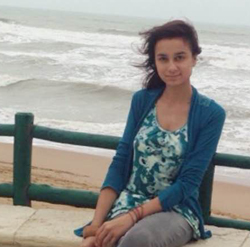
Fasiha KhanEven with the background in Finance studies, Fasiha realized that she has a love for writing! She decided to do something productive and got a chance to be a Contributor for UN Women Asia & the Pacific. She writes about gender-related issues, mainly gender equality, sexual harassment, and economic empowerment of women. She is playing her part towards the betterment of women in the region and around the globe. She also serves as the Global Champion with UN Women’s program, Empower Women, which focuses on Women’s Economic Empowerment. They are aiming to make working norms equal & justifiable for the women & also highlight the female entrepreneurs who have worked against all the odds. Plus, they also help the institutions and governing bodies to devise better policies for women of the world. With Stop Street Harassment, she looks forward to writing to create awareness so we can work to build a healthy and safer society for women. She loves music, reading, writing and traveling. You can find her on Facebook and Twitter, @FasihaFarrukh

Marinella Matejčić, Croatia Marinella Matejčić

Marinella is a freelance journalist/writer, feminist activist, and soon-to-be administrative law student. Her feminist work is mostly oriented on sexual and reproductive health and rights and she is enrolled in the Women Deliver Young Leaders program. Marinella writes for Croatian portal on gender, sex and democracy called Libela.org and covers CEE stories for globalvoicesonline.org. Her favourite pastime is reading and discussing the essence of life with her eight-year-old daughter. Feel free to follow her on Twitter @mmatejci.

Smriti RDN Neupane, Nepal

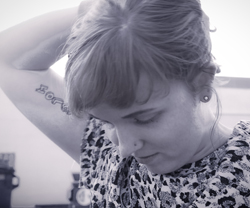
Smriti is a feminist who dreams of a world filled with love, kindness and justice. She wishes that the world were a home without any boundaries. Smriti RDN NeupaneShe is an optimist and believes that every little thing we do matters. She coordinated Safe cities campaign in Nepal with a team of feminist activists of various organisations, networks and community groups from 2011 to 2014 and is still voluntarily engaged with it. She has been a part of the multi country research team pertaining to women’s engagement in unpaid care work. She advocates for recognition, reduction and redistribution of work burden of women to increase women’s representation at all levels. She is currently engaged in an action research and advocacy on women’s leadership in climate change adaptation focusing on women’s time use. Doing workshops and facilitating training with women and girls on women’s rights issues gives her energy and the drive to work on. She also believes that children and youth are the agents of change that we want to see in our world and engages with them whenever she gets an opportunity. She loves to read and write and has a blog which she intends to make active.


Sara Rigon, Italy

Sara is a registered General Practitioner in Italy and New Zealand; she also collaborates with NGOs that offer Sara Rigonmedical health care to migrants. A women’s right activist, she is the founder and current lead of the newly established Equally Different group within the European Junior General Practitioners Organization, the Vasco da Gama Movement, branch of the World Organization of Family Doctors. The VdGM Equally Different group tackles gender inequalities in everyday life. We fight conventional stereotypes and gender roles as built-in components of our culture and foundation of prejudice as well as gender violence. The group also collaborates with the VdGM Violence Against Women group to raise awareness on this tragic epidemic phenomenon. When she is not working Sara enjoys making and eating pizza, travelling and twitting @rgn_sr.

Takeallah Serena Rivera, Seattle, USA

Takeallah is a 25-year old queer/Afro-Latinx/Indigenous feminist activist, freelance writer, community organizer, mama, comic book nerd, and wanderlust; her efforts are usually focused on anti-poverty and anti-racism work, Takeallah Serena Riveradomestic violence and sexual assault awareness, and reproductive, sexual, and maternal health. She is currently pursuing degrees in Education, with hopes of becoming a High Science/English/ESL Teacher in a predominately low-income, People of Color area by day, college Gender Studies Professor by night, and Editor whenever she has free time! She joined Stop Street Harassment in order to share her stories from a Queer, Woman of Color perspective and to encourage other Queer Women of Color to do the same. Takeallah spends her free time exploring Seattle’s bookstores, binge-watching documentaries on Netflix, and perfecting her side-eye. Follow her on Instagram @BurningBraRadicalDoula, Twiter @The BurningBra, and check out her monthly column on The Trifecta Tribe, “The Burning Bra Chronicles.”

Yuriana Sobrino, Boston, USA

Yuriana SobrinoYuriana is a drummer and an advocate for domestic violence survivors. She’s from Mexico but is currently living in Boston MA. At the age of 6 years old she started playing music with her brothers. Since then music has been her life and the passion for it brought her to move to Boston in 2007 to study at Berklee College of Music where she graduated with a Performance Degree. In October of 2014, she started working as a domestic violence advocate at the Massachusetts Statewide Domestic Violence Hotline, Safelink, where she is currently the Assistant Coordinator. There she’s been learning about crisis intervention, safety planning, domestic violence and its effects, resources available for survivors and especially about how to understand and listen to them from a non-judgmental perspective. She is very enthusiastic about helping to end abuse in all its forms and specially in creating awareness about how to prevent it. Learn more about her at her website www.yurianasobrino.com and you can follow her on Twitter, @YurianaSobrino.

Tracey Wise, London, UK

Tracey WiseBorn and raised in London, Tracey is a graduate of City University. She has spent the best part of her life at gigs and festivals and obsessing about music. She considers herself outside of work, best described as alternative. Alongside this, she is politically aware. After a recent trip to a gig that ended with an act of sexual harassment, it seemed natural to combine her love of music with her political awareness. From this, she created the “Safe Gigs for Women” project. Currently based in London, but with plans to expand, her aims are threefold: Firstly, talking to venues to support them in making changes towards safer environments and taking complaints of sexual harassment seriously. Secondly, challenging prevailing attitudes of gig goers. Lastly, getting bands and artists talking about our work, in the hope it provokes wider debate.


Share

Filed Under: correspondents, SSH programs, street harassment

« Previous Page
Next Page »

Share Your Story

Share your street harassment story for the blog. Donate Now

From the Blog

  • #MeToo 2024 Study Released Today
  • Join International Anti-Street Harassment Week 2022
  • Giving Tuesday – Fund the Hotline
  • Thank You – International Anti-Street Harassment Week 2021
  • Share Your Story – Safecity and Catcalls Collaboration

Buy the Book

  • Contact
  • Events
  • Join Us
  • Donate
  • Facebook
  • Instagram
  • Pinterest
  • Tumblr
  • Twitter
  • YouTube

Copyright © 2026 Stop Street Harassment · Website Design by Sarah Marie Lacy