• About Us
    • What Is Street Harassment?
    • Why Stopping Street Harassment Matters
    • Meet the Team
      • Board of Directors
      • Past Board Members
    • In The Media
  • Our Work
    • National Street Harassment Hotline
    • International Anti-Street Harassment Week
    • Blog Correspondents
      • Past SSH Correspondents
    • Safe Public Spaces Mentoring Program
    • Publications
    • National Studies
    • Campaigns against Companies
    • Washington, D.C. Activism
  • Our Books
  • Donate
  • Store

Stop Street Harassment

Making Public Spaces Safe and Welcoming

  • Facebook
  • Instagram
  • Pinterest
  • Tumblr
  • Twitter
  • YouTube
  • Home
  • Blog
    • Harassment Stories
    • Blog Correspondents
    • Street Respect Stories
  • Help & Advice
    • National Street Harassment Hotline
    • Dealing With Harassers
      • Assertive Responses
      • Reporting Harassers
      • Bystander Responses
      • Creative Responses
    • What to Do Before or After Harassment
    • Street Harassment and the Law
  • Resources
    • Definitions
    • Statistics
    • Articles & Books
    • Anti-Harassment Groups & Campaigns
    • Male Allies
      • Educating Boys & Men
      • How to Talk to Women
      • Bystander Tips
    • Video Clips
    • Images & Flyers
  • Take Community Action
  • Contact

USA: The Power of No

July 23, 2015 By Correspondent

Laura Voth, USA, SSH Blog Correspondent

One of the most powerful actions a woman can take is to say no. Of course, because it is an act of power from a woman, saying no is also tantamount to playing Russian roulette.

As women, we can never be certain of the potential consequences of saying no to men. Saying no can earn us a downcast but respectful concession, or it could mean a bullet in your body. No could result in a demand for a reason, or it could end in a figure following you down the street, showing up at the gym, or repeated texts. No could mean rape threats on your voicemail or nasty language at the water cooler—or it could simply mean an awkward few days around the pal who asked you to dinner.

To avoid the consequences of the word no, we put up armor to protect ourselves. We listen to those who advise us to never walk alone at night and to never drink too much, even though we know that anything will be “too much” if we’re accosted later. We flash our fashionable rings if a man gets too close. We casually mention “my husband” or “my boyfriend” regardless of our relationship status, because we know that they will respect the property of another man more than a woman’s verbal no. We download apps that alert police if they aren’t disabled within a certain amount of time; before the advent of smartphones, we told our friends to raise the alarm if we didn’t contact them before a predetermined hour.

Of course, it never hurts to be safe—but it is now time to ask ourselves why we place the responsibility for women’s safety on women themselves when it was the action of another person that caused a trauma. Why is it that the men who surround us are not held responsible for honoring an explicit or implicit no?

There are those who believe that the potential consequences of no aren’t severe enough to merit the fear that colors most women’s daily routines and interactions. They claim that women are rarely raped, murdered, or harmed at all as a result of rejecting a man. These individuals argue that such cases are sensationalized in headlines and news blurbs; that such actions are rare and are the result of individual prejudice or mental illness (despite the fact that individuals who are seriously mentally ill are far more likely to be the victims of violent crimes than the perpetrators).

However, any woman who has ever felt the cold shock of fear that follows a threatening remark or a particularly insidious glare—let alone the realization that she is being followed or stalked or in any kind of immediate danger—is well aware of the knowledge that she could be next. We wonder, Am I the next headline, the next missing person, the next broken body? Is this it for me; will I be gone in a matter of hours because a man was offended by my rejection?

A public no—or “leave me alone,” or “stop it,” or any explicit or implicit variation of the word—in response to street harassment is particularly powerful, especially when it is vocal and emphatic. Saying “stop” to a man who doesn’t take the word seriously is incredibly brave…and also incredibly dangerous.

We prepare ourselves to do battle every time we leave the house in the morning, secure in the knowledge that we may—and for many of us, will—be harassed and bullied in the streets. We are painfully aware that rejecting a man, even a crude individual on the street, has the potential to end in a hostile way and yet we still find it within ourselves to go about our daily lives. What else can we do?

Laura is an emerging adult-slash-college student studying to enter a healthcare profession. In addition to studying and writing, Laura works at her university’s women’s center where she helps design and implement programs on all things lady. 

Share

Filed Under: correspondents, street harassment

The Netherlands: An Interview with Gaya Branderhorst of Straatintimidatie

July 21, 2015 By Correspondent

Julka Szymańska, the Netherlands, SSH Blog Correspondent

Gaya Branderhorst, from her website www.gaya.nl/

Street harassment is a global issue and the Netherlands is no exception, but to this date many people treated it as a fact of life, a minor inconvenience for women, who “should just take the compliment”. But street harassment is not a compliment and it can be a very large, scary inconvenience; the Dutch public is, fortunately, starting to wake up to this notion.

To speed up this awareness and fight the problem, the website Straatintimidatie (the Dutch word for street harassment) was created, alongside a citizen’s initiative that calls for penalizing street harassment with fines.

If you’re a Dutch national, you can still sign the initiative here and if you master the Dutch language, please give them a like on Facebook or tweet with #straatintimidatie on Twitter.

I had a conversation with founder Gaya Branderhorst to find out more about this important project:

J: Could you please introduce yourself and tell us a little bit about the team behind the website Straatintimidatie.nl and the accompanied citizens’ initiative against street harassment?

G: My name is Gaya Branderhorst and I’m from the Netherlands, but recently moved to New York for a new job. Before I left — approximately a year ago — I started a project against street harassment, which in this case is a citizens’ initiative requiring 40,000 signatures. This initiative primarily consists of a proposed bill that would punish the sexual harassment of women in public with a fine. At the start of this project I surrounded myself with a small group of supporters, for example: an attorney who wrote the bill itself, a person who manages the social media etc. As well as a well-known Dutch comedian (Soundos el Ahmadi) and an emeritus professor of Human Rights (Cees Flinterman).

J: How did this initiative came about exactly?

G: The team behind the citizen’s initiative against street harassment consists of both women and men, the gender ratio is about 50/50. This was a conscious decision on my part, because street harassment overwhelmingly happens to women, but the harassing is dominantly done by men, so to solve this problem we need men as well. Men should speak up against other men who harass women and tell them to stop this behavior. We also see that almost half of the people who sign the initiative are male. You have to understand that the majority of Dutch men do not condone street harassment, it’s the minority of men who harass the majority of women.

J: I’ve seen a video on YouTube you made in which a group of women turn the tables on random men on the street by catcalling them and asking them how this made them feel afterwards. What a funny, witty action! How did you come up with it?

G: The idea of ‘reverse catcalling’ isn’t entirely new, the Dolle Mina’s (a prominent feminist group during the Second Wave of feminism in the Netherlands) did this too. As I understand it, they did so for different reasons, mainly for laughs, is what a former Dolle Mina told me. But we did it after hearing the commentary of people questioning “if catcalling is really that bad? Isn’t it complimenting women’s beauty in a way?”

So we figured we could turn this around in order to showcase that men don’t find it complimentary to be catcalled either. It turns out we were absolutely right about that: you can see in the video that virtually none of the men are pleased about it, they don’t experience it as a compliment either. And for good reason, because catcalling truly isn’t a compliment at all, it’s a vicious phenomenon that people often don’t see for what it is: harassment. Street harassment is worlds apart from getting a respectful compliment and it honestly surprised me to notice how many people are confused about this. But by reversing the dynamic it suddenly becomes a lot clearer that street harassment is unpleasant. So that’s why we created the video.

J: The Dutch often pride themselves in their liberalism and emancipation of women and minorities, but an initiative again street harassment is clearly still necessary. So, what’s the deal with this country?

G: On one hand the Netherlands are doing relatively well in terms of equality in comparison to some other countries. So in a way that’s true, for example: same sex marriage is finally gaining more ground in the United States (at time of publication we’re happy to report that the supreme court of the USA has decided to lift the ban on same sex marriage last month) and we already had that for quite a while of course. The same goes for women’s right to choose for an abortion, that’s not that big of a deal anymore in the Netherlands either. In a lot of things we are ahead of other countries, even other Western countries, but as a consequence, the danger looms that we as a nation start slacking off. That this so called “tolerant attitude” digresses to a sort of indifference, which is something entirely different than tolerance.

Especially when it comes to the rights of women, this tolerance often turns into a “whatever, been there done that” mindset. And that’s increasingly visible in the realm of women’s rights: there are quite a few things in the Netherlands that are contradictory to the notion that men and women are equals. These things include the wage gap, the amount of women on top of the corporate ladder and the prevalence of domestic- and sexual violence against women and girls to name a few. And of course street harassment, something so many women have experience with. If you take a look at the women in our team, they all have had to deal with street harassment, which is part of the reasons why they’re in our team in the first place. This goes for the women who sign our initiative as well: some of the stories they tell in the comments they leave us are outright shocking.

I don’t understand why –with all out tolerance and progressiveness– street harassment isn’t more of a priority in Holland.

J: What’s in store for the future of this citizen’s initiative against street harassment and the situation surrounding street harassment in the Netherlands in general?

G: Last year I was a guest in the television talkshow Knevel & van den Brink and one of the other guests at the table just happened to be Minister of Social Affairs Lodewijk Asscher, that was a happy coincidence. I was asked if street harassment really is such a significant problem in the Netherlands and my reply was that I think it most definitely is. I told them that every woman I talk to struggles with this sometimes, but that we can’t be 100% certain, because there are no statistics on the matter. Looking at the minister for this paid off, because by now a nation-wide study has been carried out. So even though the proposed bill isn’t far enough in the process yet, we can see that the public debate on street harassment is catching on, something I’m glad about.

On top of that we’re also talking with Member of Parliament Achmed Marcouch about the issue, hopefully this leads to results as well. In our neighboring countries street harassment is a hot topic too, we’re not the only ones in Holland. Belgium for example has already implemented a law against street harassment and France and Egypt are on the same track. Both internationally and nationally things are happening to combat the problem, I think there’s a growing consciousness about street harassment. But if it will be enough? I’m not sure, from my personal, subjective perspective: I don’t see the instances decreasing. There is still plenty of work ahead of us

J: Thank you so much for this interview.

G: You’re very welcome.

 Julka is a 25-year-old feminist activist and soon-to-be Cultural Science student with a generous amount of life experiences -including street harassment – and even more passion for social justice.

Share

Filed Under: Activist Interviews, correspondents, street harassment

UK: Art and Objectification

July 20, 2015 By Correspondent

Ruth Mair, UK, SSH Blog Correspondent

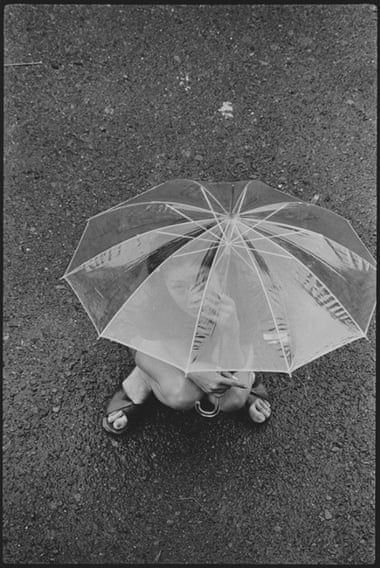
Yoko Fukase, image via The Guardian

I have caught people photographing me without my permission and I usually try to mess up their photo in some silly small way, like pulling a face or rolling my eyes. I have also caught people drawing me on the bus, and I have heard of others having similar experience. Sometimes those creating their art based on strangers are repeat offenders (“Oh that dude on that bus with the sketchbook, yeah I’ve seen him before”), and somehow, they are almost always men. I do not know whether this is because men are the ones confident enough to pull such tricks, or defend themselves if caught at it. Perhaps it’s because there is a surplus of male artists out there without willing and consenting subjects for their art. Or maybe the women doing the equivalent thing are better at not getting caught.

In this context, I have been thinking a lot about women in art. Both as subjects of art, and also as artists. But the problem about women who have art made about them, is that they are subjects of it, subjected to it. Guerilla Girls have made some great pieces concerning this issue; it was via Guerilla Girls that I learned about the difference in number of women portrayed in art in major American art galleries, versus the number of pieces of art by women that were displayed in those galleries. And that was before even getting into question of the vast chasm between the money earned by female artists and that earned by male artists.

These are things we’ve come to expect one we acknowledge the existence of the patriarchy, and once you start digging, there is a lot of discussion concerning this. However what I am writing about here is the position of the woman as a subject, and fact that this can be done secretly, without consent, in passing, in the street, raised a lot of questions for me. It was a Guardian article that led me to this topic, and it’s been stewing in my head for several days, with a lot of related feelings and thoughts about consent and the feeling of being watched, or being a performer.

Subject of art, or complicit in its creation. Masahisa Fukase created a collection of photographs in 1974 that focused entirely on his wife Yoko. She is in every photo, complicit, consenting, even performing for him, the creator of the photo of which she is a subject. This project was 13 years in the making, and throughout that time, Fukase focused intensely on his wife and the creation of images of her. It might seem an obvious outcome to say that they got divorced. Yoko was quoted in the article as having said that her life with Fukase was “suffocating dullness interspersed by violent and near suicidal flashes of excitement”. This surprised me, but then I’m not married to an artist so it’s likely that I was interpreting her position as muse and subject in a different way to someone who has actually experienced that kind of life would have done.

All I could think was how suffocating it would be, how intrusive and exhausting, to have been observed in all that detail, through the eye of a lens for 13 years. And although Yoko was clearly an active participant in this project, I found that the photos begged the question of where the personal ended and the performance began.

Further, the question of consent, and the potential for violation through the medium (and even using the excuse) of art, is something I find deeply troubling. Like the story of Yoko Fukase which still troubles me. There are so many questions I would love to ask her about those 13 years; whether she knew which photos were to be used in the collection, whether she had any say in this, and what happened when she did not feel like having her photograph taken.

Aside from my small moments of messing up photos strangers have tried to take of me, I’ve never confronted anyone doing things like that. Like many other forms of street harassment, confronting those perpetrating it is full of difficulties and second guessing; were they really photographing me? Will they think I’m arrogant for assuming it’s me? Am I arrogant for assuming that? Shouldn’t I be complimented that someone wants to use my face or silhouette or passing blurred figure for their work?

But the in the same way that street harassment is a violation, so is this.

Ruth is a human rights MA student finishing her MA dissertation on the legal and normative rights of terror suspects in the UK (spoiler alert: rights are being violated). She also plays bass in a band called Kinshot, sews as often as she can, and spends time getting annoyed at the cat sleeping on top of her computer.

Share

Filed Under: correspondents, News stories, street harassment

UK: The Back Off Campaign – Ensuring Safety and Choice for Women

July 15, 2015 By Correspondent

Emma Rachel Deane, UK, SSH Blog Correspondent

Over the last 5 years the UK has seen a surge in anti-abortion campaigning targeted at women. Although abortion is not fully decriminalised in the UK, it is estimated that around 200,000 pregnancies are terminated in Britain each year. Two groups in particular, 40 days for Life and Abort67, have increased anti-abortion protest activity outside clinics. Many of the activists wear cameras strapped to their chests and carry banners and placards showing dismembered fetuses in an attempt to shame women for the decisions they are making for their own bodies. In addition to this, women have reported being followed and questioned by protesters while the daily harassment of staff members has made their working lives so uncomfortable that some have withdrawn their services.

I spoke to Abigail Fitzgibbon, the Head of Advocacy and Campaigns at British Pregnancy Advisory Service (BPAS), Britain’s leading provider of abortion services in the UK about this.

She said, “We have tried to work with the police wherever we have clinics to use existing legislation such as public order and harassment laws, but nothing has worked. The Home Office keeps saying that there is legislation in place and it should be used but we know it doesn’t work for this particular problem. Sometimes the police don’t even come to the clinics and if they do there’s very little action they can take to help.”

It is certainly true that the majority of seasoned anti-abortion activists who protest women’s choice are well aware of current public order legislation and are able to navigate around it to remain on the right side of the law. Unfortunately, the law allows protesters to remain standing just outside abortion clinics displaying graphic images and espousing unsolicited advice to women on what could be the most vulnerable day of their lives. It is time to recognise that the legislation we have in place to prevent harassment can no longer deal with this specific problem effectively.

Fitzgibbon went on to say, “It was with a heavy heart that we launched the Back Off Campaign. We didn’t ever think harassment outside clinics would get bad enough in the UK to warrant it. ”

Created by BPAS and supported by various high profile organisations such as Mumsnet and The Royal College of Gynecologists and Obstetricians, the Back Off Campaign proposes the introduction of “buffer zones” around clinics in which protest activity cannot occur under the law. The introduction of such zones would put UK legislation in line with countries such as France, Canada and America and would allow women to get through the doors of a clinic without being approached by anti-choice activists or presented with shame-mongering images. The zones would also allow activists their right to protest at a respectful distance from the clinic while enabling women to access a lawful medical procedure in confidence.

The introduction of such safe spaces outside abortion clinics in the UK is a total necessity if organisations like BPAS are to contend with the tactics of anti-choice activists. Fitzgibbon told me, “The threat the activists pose isn’t just that they harass women and staff outside clinics, but that they are actually trying to close clinics down or prevent them from opening in the first place. We came very close to that happening to a BPAS clinic in Blackfriars. Unfortunately another clinic, not a BPAS one, did eventually have to shut down due to the unmanageable protests. There’s a handful of anti-abortion protesters who will go to these lengths, but you only need a handful to create absolute havoc.”

Under current legislation a BPAS patient could complain that she felt harassed and intimidated in public but if she is to see any kind of justice after reporting her ordeal she would then have to testify in court against her harasser or harassers. As Fitzgibbon says, “It seems a massive price to ask someone to pay. It pushes the problem back onto women again and almost punishes them for wanting to stand up for themselves.”

In 2014 Dawn Purvis, director of an abortion provider in Northern Ireland, secured a harassment conviction against Bernadette Smyth, leader of ‘Precious Life’, an organisation notorious for it’s anti-choice ‘street activism’. The conviction took almost a year to come about, during which time Dawn was subjected to questions in court surrounding her honesty and “fortitude”. Smyth has since won her appeal and the conviction was thrown out of court last month.

It’s no secret that a great deal of the UK’s pro-life movement stems from certain wings of particular churches. Abort67, for example, is linked to the Jubilee Community Church in Worthing, which BPAS has attempted to work with on repeated occasions in order to create a solution to the problem of inappropriate protesting by its members. Fitzgibbon has found the organisation to be less than helpful. “”When we appealed to them to help they told us that they supported the protesters. Its one thing to be anti-abortion and lobby parliament or appeal to congregations to write to MPs, it’s quite another to condone the harassment of women who believe different things. Whatever your feelings are on abortion, we should all be able to agree that the intimidation of women is not acceptable.”

It is certainly arguable that the line between the right to protest and a woman’s right to access medical care can be drawn in exactly that way. As Fitzgibbon put it, “The Back Off Campaign isn’t about trying to make a political point, its about what these protests are doing to individual women. The idea that this is about two sides of a debate is ridiculous. If someone wants to debate BPAS, or me, or somebody who is a campaigner then they’re more than welcome to, but taking that fight to individual patients is unacceptable.”

It can’t be ignored that this kind of protest activity around bodily autonomy is very specific to women and Fitzgibbon was clear in her view about this aspect of the argument. “For me, it’s just blatant misogyny and sexism which stems from two ideas. Firstly, that a woman is not bright enough to understand what’s happening when she has an abortion and secondly, something more sinister, which involves sexual ethics and the ability to control women.”

When anti-abortion street activists tell us that they are ‘just here to help’ it is certainly very interesting to imagine how they arrived at the conclusion that women needed their help in the first place. It is difficult to picture a world in which a man would face the same level of unsolicited advice for choosing to undergo a vasectomy. No one would accept the premise that he couldn’t possibly understand what the procedure involves and that he would need to be shown graphic images of testicles mid-operation to comprehend it.

When asked about her fears if the Back Off Campaign is unsuccessful Fitzgibbon replied, “We don’t want to frighten anyone, there’s no need to panic, but we all need to be mindful about what has happened in America in the past. The last thing we want to do is make women scared, but this is getting worse and nobody is paying attention to us.”

When men make up over 70% of British parliament it is hardly a challenge to work out why women’s interests are so often put on the back burner. I have no doubt that a parliament representative of the society it governs would go a long way in ensuring that the needs of its people were being met. Political representation and the decriminalisation of abortion are two of ‘fourth fave’ feminism’s biggest challenges. While these two problems combine to perpetuate a culture in which the harassment of women outside medical centres is accepted it is up to us to take action and support initiatives like the Back Off Campaign.

Find out more about BPAS here and write to your local MP here.

Emma Rachel Deane is a London-based retail manager for a fast growing women’s lifestyle brand and an outspoken advocate for women’s social justice issues. She can be found blogging on Raging Hag or tweeting @emmaracheldeane.

Share

Filed Under: correspondents

France/Brazil: A Reflection on Slut Shaming and Gender Inequality

July 14, 2015 By HKearl

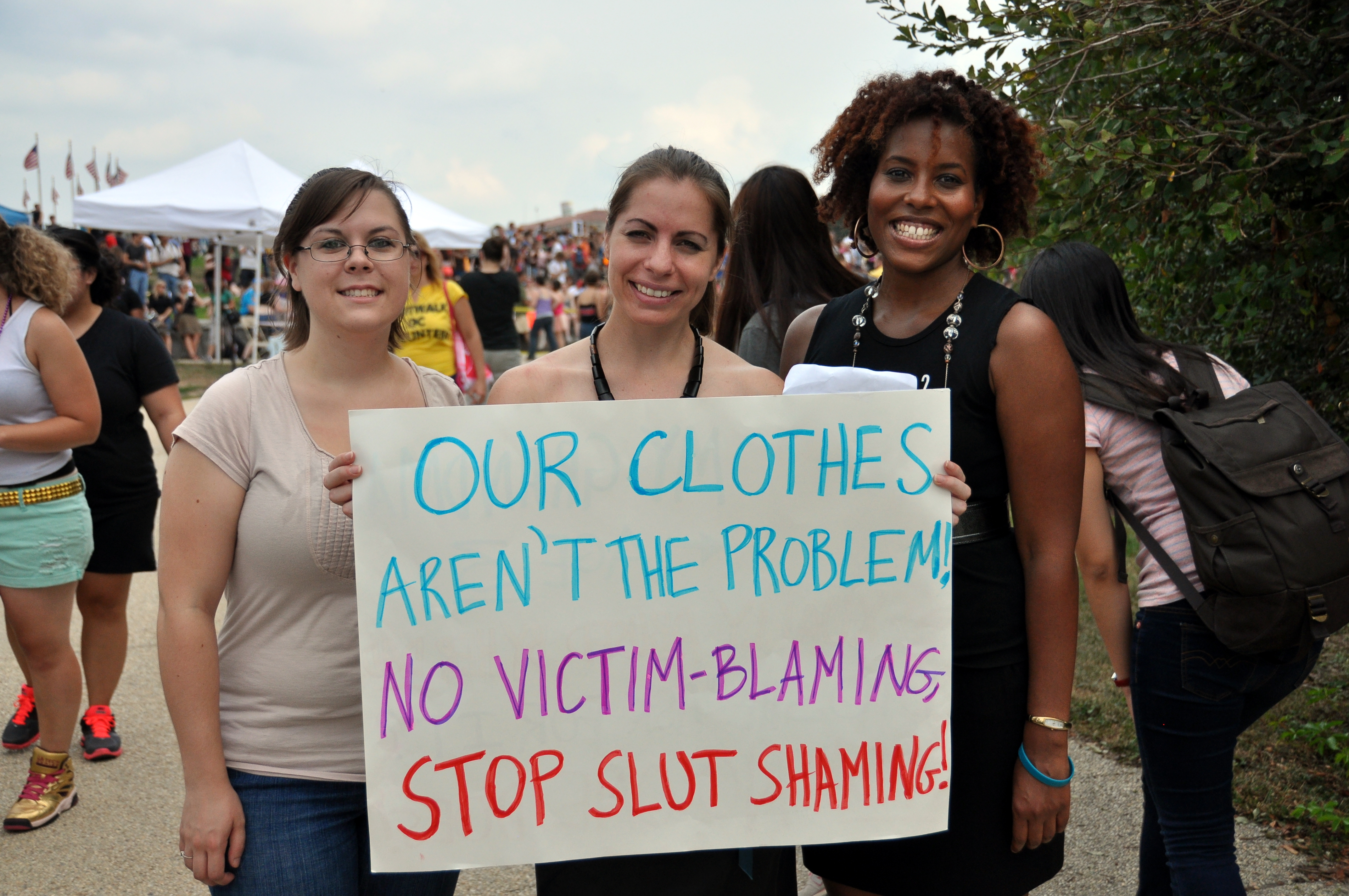
 8.13.11 SlutWalk DC - pics by Mark 003Luiza Pougy Magalhaes, France/Brazil, SSH Blog Correspondent

When discussing gender inequality the blame is usually laid on men, whilst women are victimized. Albeit men often do hold fault, but ignoring the female role can be damaging.

First and for most, I do not mean, in any way to excuse the actions of those who choose to harass, assault, or disrespect. I do not believe that females provoke this behavior on men or are in any way “asking for it.” Absolutely, I’m a firm believer of ‘teaching boys not to rape rather than girls how to dress’. I have also candidly argued with those with misogynistic values, who called my clothing distracting and feminism unneeded. Nonetheless, I am fully aware that the way women treat each other only instigate the dominance of males in today’s society.

The statement “when a man sleeps around he is a hero, but if a woman does, she’s slut” although common in petitions against male privileges, still remains awfully accurate. How many girls have been slandered for their sexual endeavors while their partners applauded? This is not only unfair, but primitive to say the least, and girls should be standing up against this sort of mentality. However, while caught up in their angst to battle for gender equality, demand for sexual freedom, and fight against double standards, women are failing to realize that they are part of the problem. After all, what woman can truly say she has never attacked another female by calling her a slut, a whore, or a tramp? Very few, and here is where the problem lies.

Slut shaming, or the act of demeaning women for any sort of perceived sexual behavior, is more often than not, done by females. The epidemic, which often goes unnoticed, is in fact a very harmful act. It destroys the self-esteem of many young women every day, leaving them to regard being sexually awake as shameful, wrong, and abnormal. In more extreme cases, slut shaming has even destroyed lives.

So why do females regularly overlook it? How can we denounce men who condemn us for how we dress or the way we walk, while ignoring women who do the exact same? How can we complain about feeling violated, disgusted, and dirty when catcalled, if we are triggering the same emotions on each other? It seems a little hypocritical.

Women must realize that such name-calling supports intolerance and is derogatory of our gender. If we so desperately demand for equality, we should refrain from using such denominations, as trivial as they may seem. As Ghandi so wisely said, we must be the change we wish to see in the world. Maybe it will get us further than we can imagine. Maybe, the male society would forgo judging us inferior if we didn’t set such depreciate labels on one another. Maybe, they would feel obliged to treat us with minimal respect if we didn’t disrespect each other so much. Maybe, more women would stand up for their rights if they felt the support of other females. And maybe – just maybe, by refusing to be a part of slut shaming, we can make a huge difference. Empowering and respecting other women is the most powerful weapon held by females in the battle for gender equality. So, let’s start using it.

I hereby make a pledge to end slut shaming once and for all. Women must unify to terminate petty judgement and start promoting acceptance. We should understand, respect, and recognize that different women are comfortable with different sexual behaviors. No one lacks femininity or is less of woman for being sexually awake. No one should feel ashamed of their desires and decisions. Let’s embrace sexuality at all levels and treat each other the same way we are fighting men to treat us. Let’s empower to be empowered. Whereas it may not abolish inequality, it will most certainly help the lives of many and move us one step closer to living life with the pride and dignity we deserve.

I vow to empower women, rather than demean, to advocate for freedom, rather than detriment, to show support rather than disapproval. Most of all, I vow to never reduce women by using such belittle adjectives. And along with this vow, I leave you with a plea to do the same.

Luiza is a 20-year-old from Brazil who considers herself a citizen of the world. As a teenager she moved to Singapore and now she studies International Business in France.

Share

Filed Under: correspondents

« Previous Page
Next Page »

Share Your Story

Share your street harassment story for the blog. Donate Now

From the Blog

  • #MeToo 2024 Study Released Today
  • Join International Anti-Street Harassment Week 2022
  • Giving Tuesday – Fund the Hotline
  • Thank You – International Anti-Street Harassment Week 2021
  • Share Your Story – Safecity and Catcalls Collaboration

Buy the Book

  • Contact
  • Events
  • Join Us
  • Donate
  • Facebook
  • Instagram
  • Pinterest
  • Tumblr
  • Twitter
  • YouTube

Copyright © 2026 Stop Street Harassment · Website Design by Sarah Marie Lacy