• About Us
    • What Is Street Harassment?
    • Why Stopping Street Harassment Matters
    • Meet the Team
      • Board of Directors
      • Past Board Members
    • In The Media
  • Our Work
    • National Street Harassment Hotline
    • International Anti-Street Harassment Week
    • Blog Correspondents
      • Past SSH Correspondents
    • Safe Public Spaces Mentoring Program
    • Publications
    • National Studies
    • Campaigns against Companies
    • Washington, D.C. Activism
  • Our Books
  • Donate
  • Store

Stop Street Harassment

Making Public Spaces Safe and Welcoming

  • Facebook
  • Instagram
  • Pinterest
  • Tumblr
  • Twitter
  • YouTube
  • Home
  • Blog
    • Harassment Stories
    • Blog Correspondents
    • Street Respect Stories
  • Help & Advice
    • National Street Harassment Hotline
    • Dealing With Harassers
      • Assertive Responses
      • Reporting Harassers
      • Bystander Responses
      • Creative Responses
    • What to Do Before or After Harassment
    • Street Harassment and the Law
  • Resources
    • Definitions
    • Statistics
    • Articles & Books
    • Anti-Harassment Groups & Campaigns
    • Male Allies
      • Educating Boys & Men
      • How to Talk to Women
      • Bystander Tips
    • Video Clips
    • Images & Flyers
  • Take Community Action
  • Contact

Kyrgyzstan: Construction Worker Harassers

September 30, 2013 By Correspondent

By: Salidat Hamilova, in collaboration with Aikanysh Jeenbaeva, Bishkek, Kyrgyzstan, SSH Correspondents

English version:

Image via http://kloop.kg/

Among the many forms of street harassment in Bishkek, the one that deserves special attention is harassment by workers at the city’s numerous construction sites. Bishkek is currently experiencing a construction ‘boom’ (or to be more precise – a construction bubble) and the central part of the city is being rapidly developed with new ‘elite’ residential buildings, shopping malls and business centers that make these neighborhoods inaccessible to common inhabitants and push out people who have been living and working there for decades. However, this is another topic for later.

Every time you pass near one of the buildings under construction, you can count on receiving an unwanted share of attention from workers sitting above you at the level of a 3-6th floor. Upon seeing a female passerby, they express their agitation with shouts, squeals, sexist remarks, obscene gestures and sounds. You are walking along the fence separating you from the building to the accompaniment of whistles and shouts and all you want to do at that moment is for the earth to swallow you up and block out the sounds and the satisfied faces leering down at you. Actually, no. What you want at that moment is for the building to collapse and bury the harassers under its ruins.

What can explain this urge of construction workers to harass passing women and girls beside the usual sexist attitudes and beliefs? Probably, the feeling of impunity and inaccessibility granted to them by the height at which they are working. Indeed, it is highly unlikely that you would attempt to climb up the scaffolding to punish the harassers.

I am not trying to accuse all construction workers of harassing women and girls, as I am perfectly aware that many builders would never behave in such a way. Nevertheless, this kind of harassment happens regularly to the majority of women and girls. When sharing their indignation over the behavior of construction workers with me, my sisters told me that some builders even throw pebbles and pieces of rubble at them and, sometimes, splash the girls walking below with dirty water. One is forced to give these spots a wide berth to keep one’s nerves, my sisters admitted.

There are plenty of these stories: any girl/woman can talk about tens/hundreds/thousands of similar instances of harassment on the streets. However, we often simply swallow insults, suppress our anger and humiliation and try to forget about it as quickly as possible. In the end, universal suppression and disregard make street harassment invisible and thwart the fight against it.

We must stop keeping silent and running away from yet another “complimenting pebble”, we must stop avoiding “unsafe” places and limiting our space and the right to the city. Fighting against harassment on one’s own is extremely hard, therefore, Bishkek, we need to unite!

Salidat is an undergraduate student at Kyrgyz National University and a dedicated volunteer at the Bishkek Feminist Collective SQ. Aikanysh graduated from the University of Freiburg with a degree in European Literatures and Cultures and recently from the Diplomatic Academy of the KR with a degree in International Relations. Aikanysh is a co-founding member and coordinator of the Bishkek Feminist Collective SQ.

Bishkek Feminist Collective SQ was founded in 2012 by activists from various communities of Bishkek city. Follow BFC SQ on Twitter, @bish_feminists and on Facebook.


Russian version

На русском языке:

Среди многочисленных видов уличных домогательств в Бишкеке стоит особо выделить домогательства со стороны работников на стройках города. В Бишкеке сейчас идет строительный “бум” (точнее пузырь) и центральная часть города стремительно застраивается новыми “элитными” жилыми домами, торговыми и бизнес-центрами, таким образом делая эти районы недосягаемыми для простых обывателей, а также постепенно вытесняют из центра людей, которые жили и работали там десятилетиями. Но это – другая тема и о ней позже.

Так вот, каждый раз, проходя мимо очередной стройки, можно смело рассчитывать на то, что ты не останешься без ненужной доли внимания со стороны незнакомых рабочих, сидящих где-нибудь на уровне 3-6 этажа. При виде очередной прохожей они выражают свое возбуждение криками, повизгиванием, сексистскими замечаниями, непристойными жестами и звуками. А ты идешь вдоль забора, отделяющего тебя от стройки под аккомпанемент этого визга и свиста и больше всего тебе хочется провалиться под землю, чтобы ничего не слышать и не видеть эти довольные, ухмыляющиеся лица. Хотя нет, больше всего тебе хочется, чтобы здание тотчас же рухнуло и придавило всех этих крикунов под своими руинами.

Чем можно объяснить такое стремление работников строек приставать к проходящим мимо девушкам и женщинам, помимо обычных сексистских убеждений? Возможно, оно усиливается чувством безнаказанности и недосягаемости, которое дает им высота. Действительно, ведь не полезешь по лесам на верхние этажи, чтобы надавать идиотам по лицу?

Я не стремлюсь обвинять всех строителей Бишкека, так как знаю, что среди них есть и те, кто никогда не позволят себе такое поведение. Но, тем не менее, домогательства со стороны строителей происходят регулярно и почти со всеми девочками, девушками, женщинами. Моя сестренки, делясь со мной своим возмущением по поводу строителей, рассказывали, что некоторые из них кидаются камешками и мелким строительным мусором и обрызгивают проходящих девушек грязной водой. Приходится обходить эти места во избежание траты своих нервов, признались сестренки.

Таких историй полным полно: любая девушка/женщина может рассказать о десятке/сотни/тысячи случаях домогательства на улицах. Но очень часто мы просто проглатываем обиду, подавляем злость и унижение и пытаемся поскорее забыть о происшедшем. Всеобщее замалчивание и игнорирование, в итоге, делают домогательства невидимой проблемой и крайне затрудняют борьбу с ними.

Мы должны перестать молчать и убегать в то время как в нас летит очередной “камень-комплимент”, прекратить обходить «небезопасные места», ограничивая себя в пространстве и праве на город. Бороться с пониманием домогательства как нормы в одиночку очень сложно, поэтому, Бишкек, давай объединяться!

Салидат, в сотрудничестве с Айканыш.


Share

Filed Under: correspondents, Stories

UK: Freshers Week… AKA Intro to University Sexism 101

September 29, 2013 By Correspondent

By: Levi Grayshon, Manchester, England, SSH Correspondent

Freshers’ Week. Image via The Badger

Ah, university. The time in a person’s life when she or he is dropped off at their university halls by worried parents, armed with nothing but Ikea bed linen and a bottle of value vodka, ready to tackle student life. But often, for female students, that first week can prove a tough one.

It’s no secret that “LAD Culture” is rife amongst UK universities, something which I myself have noticed becoming more and more prominent as I progressed through my three years at university. In my first year, I was rarely bothered on a night out with friends. During Freshers’ Week (orientation week) my third year, however, it was a completely different story.

During “One Night,” a popular event run by the university, I was in queue and a group of men harassed me by taking photographs of me, and mocked me when I requested that they deleted them. Inside the club, they found me and groped me, calling me “crazy” when I told them to leave me alone, and I was fed the line “he’s a footballer, he does what he wants” – a line which I heard them repeat to another girl in the club.

Later in the night, another LAD-type groped me, and shouted aggressively in my face when I pushed him away and told him to leave me alone, which, naturally, his friends found hilarious. All of this happened within the space of around an hour and a half, which caused me to leave early, furious and disappointed.

Events like these are not uncommon, and, going by what has been uncovered by Laura Bates from the Everyday Sexism Project lately, pretty mild. Female students have reported being pinned against railings, being rated by their appearances in nightclub queues, and being told that “being spiked is lucky.”

Even worse than this, some universities are fuelling this behaviour. Recently, Cardiff Metropolitan University came under fire for using an image of a student wearing a t-shirt with a rape joke written on it in order to promote a club night. Last year, a pamphlet promoted by my own university was put under scrutiny after perpetrating misogynist abuse towards women who engaged in one night stands, claiming that they were “dirty,” yet it applauded the male students who engaged in such activities.

As reported in The Independent last year, universities also hold club nights with sexist themes, such as “Geeks and Sluts” and “CEO’s and Corporate Hoes”. The same article reported that 68% of female students had been sexually harassed whilst at university – are sexist club nights to blame for this high percentage?

On the other hand, some universities are doing their best to combat the harassment suffered by their female students. Edinburgh University banned the Robin Thicke song “Blurred Lines”, which has been criticised widely for its lyrics that “promote non-consenual sex.” Four more universities (Kingston, Derby, Leeds and West Scotland) swiftly followed suit.

Additionally, numerous universities are joining the NUS Zero Tolerance to Sexual Harassment campaign to work toward becoming a safer place for female students. I hope many more will follow suit.

Levi graduated from university with a degree in Film and TV screenwriting this summer. As a freelance writer, she has been writing for The F-Word and Gamer-UK. You can follow her rants and ramblings on Twitter, @part_heart.

Share

Filed Under: correspondents, Stories, street harassment

USA: Bike Escorts Keep Brooklyn Safe

September 28, 2013 By Correspondent

By: Maggie Freleng, NYC, USA, SSH Correspondent
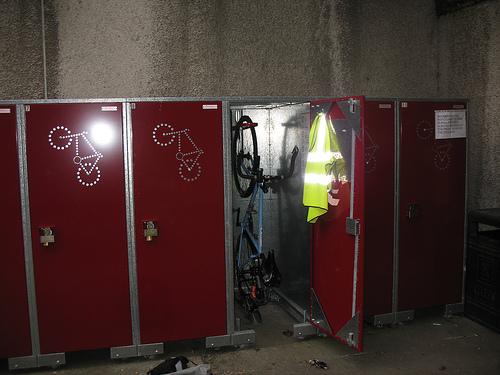
Photo Credit: Hello, I am Bruce on Flickr/Creative Commons (CC BY-NC-ND 2.0)

Walking home alone late at night can be scary, no matter where you live. For some people, a safe cab ride home is not an option, and with lack of a better options and resources they may be forced into uncomfortable, unsafe situations.

Fortunately there is Brooklyn Bike Patrol (BBP), dedicated to “keeping Brooklyn safe” during what could be an unsafe, threatening walk home.

BBP is a volunteer group escorting women to their homes late at night from anywhere; a bar, friend’s home, restaurant, bus stop or subway.

Louisa Laz-Hirsch, 21, said she is grateful for BBP, particularly when she first moved to Brooklyn.

“I was a penny counting bartender so, unfortunately I couldn’t afford to take cabs every time I got off work at 2:00 in the morning,” she said. “My apartment wasn’t an incredibly long walk from the myrtle-broadway stop, but even within those 8 or so blocks I felt uneasy being a young woman alone late at night.”

BBP operates seven days a week, Sunday-Thursday 8 p.m. – 12 a.m. and Friday-Saturday 10 p.m. – 4 a.m. All you have to do is call 718-744-7592, give a heads up, and an escort on a bike will be waiting to meet you.

Since forming in 2011 after a string of sexual attacks near Park Slope, BBP services 58 train stops in Brooklyn initially starting near Prospect Park and now extending through to Williamsburg.

All volunteers have been background checked by the 72nd Precinct so you know you are safe walking with them.

“It was such a relief to find out about BBP,” Laz-Hirsch said. “It’s so comforting knowing that there’s so many people who care enough about the safety of their neighbors to devote that much of their free-time to guaranteeing they feel comfortable in their own neighborhood.”

BBP has been endorsed by St. Francis Xavier Church and NYS Senator Eric Adams and the 72nd, 77th, 78th and 68th Precincts and Brooklyn Borough President Marty Markowitz and the Brooklyn DA’s Office.

Laz-Hirsch said, speaking about getting home safe at night, “It’s messed up that that’s even a concern.” However, it is a concern, unfortunately, and Brooklyn is glad to have Brooklyn Bike Patrol when things get uneasy!

Maggie is a Brooklyn based freelance writer and photographer focusing on social justice and women’s issues. She currently writes for Vitamin W. Maggie graduated with a B.A in Journalism and English from the University of Massachusetts, Amherst in 2011, concentrating on dystopian literature. You can read more of her writing on her blog or follow her on Twitter, @dixiy89.


 

Share

Filed Under: correspondents, Stories, street harassment

Vulgar, threatening harassment in Cambridge

September 28, 2013 By Contributor

Walking home by myself at 3 a.m. in the centre of Cambridge, UK, a group of drunk boys at a bus stop start catcalling me, and one says, “Ah you’d better run away now love or that one will try and rape you,” gesturing to his friend.

Another says, “Good thing you’ve got glasses on, this way he can wank in your face.” (The idea being that the cum wouldn’t go in my eyes, I guess?).

– Anonymous

Location: Cambridge, UK


Share

Filed Under: Stories, street harassment

USA: The Myth of the “Right” Response

September 27, 2013 By Correspondent

By Sara Schwartzkopf, Colorado, USA, SSH Correspondent

“What was that about?” I asked as we got off the bus.

“What do you mean?” my friend Hoa replied.

“Well, you wouldn’t even look at the guy.”

“My mom always said to just ignore them.”

It was dark, and cold out in Denver that night and my friend and I had just gotten off the bus on our way back home from a kung fu belt test. We were discussing an older man from the bus, who had taken an interest in us when he heard Hoa talking on her phone in Vietnamese. He sat down near us, and then started trying to ask Hoa what language that was. I say he tried, because Hoa didn’t even spare him a glance. She stared straight ahead, not even acknowledging the man’s presence. The man looked incredibly perplexed, eventually shrugged and went back to minding his own business. I had never seen a stranger ignored so thoroughly, much less done it myself. I suppose I thought it would be rude.

Sometimes there is no standard for a proper reaction. There is no “right” way to deal with harassment, just like there is no “right” way to deal with sexual assault. Now while there are many resources on how you can respond to public harassment, most of these come from what works for the author, and are centered in the type of abuse that the author has endured. That’s an important distinction to make. What I go through as a light-skinned young woman in Colorado is exponentially different to what a dark-skinned woman will go through in New York City. How I was taught to interact with strangers was different than how my friend was taught.

Earlier this month an article that was originally published on Luna Luna was reposted on xoJane. This article by Alecia Lynn Eberhardt, titled “Stop Saying ‘I Have a Boyfriend’ to Deflect Unwanted Attention,” posits that using this line is a problematic thing for women to do. It caused quite a stir among feminists of color on Twitter. Now Eberhardt is right about something – it is absolute nonsense that the only way to get a stranger to leave you alone is to claim that you already “belong” to someone else. It should be perfectly normal to go out and enjoy yourself without the assumption that you are looking for a date.

What I find odd is when Eberhardt says that women are bringing this upon themselves. By using an excuse, we act as if the behavior is ok rather than getting to the point of the matter which is that you want nothing to do with this person. In her piece, we stop pushy behavior by being blunt. In part, I agree with her. I should be able to give a simple no and have that be the end of it. And maybe, if I did engage a guy in a talk about his behavior, I would be able to get him to change his actions.

Here’s the thing though – it’s not my job on a night out, walking down the street, grocery shopping, or running to stop what I’m doing and educate a complete stranger on their behavior. I don’t feel as though I’m disrespecting myself or women to say this: My existence is not a teachable moment.

The other thing is that sometimes it’s simply not safe to engage with a street harasser or any sort of overly-persistent man. I assume Eberhardt based her advice on overly-persistent men trying to get a date at a bar. Much of the criticism Eberhardt received online came from women of color. Many of them recounted experiences of being grabbed, chased, assaulted, or being verbally threatened when they tried to get out of a situation. Street harassment looks very different for some women.

While sexual assault and street harassment fall into two different categories (most sexual assaults are committed by someone known to the victim, whereas street harassment normally comes from strangers), they are reflective of how society views women. Street harassment is still socially acceptable to large amount of people, and there aren’t very many studies on it. In fact, I couldn’t find one that looks at street harassment in the United States by race. It is worth noting that, women of color are assaulted at higher rates than White women (the exception being Asian women), with Native American women being assaulted at almost double the rate of White women. Given these facts, it shouldn’t be surprising that minority communities teach their girls to interact with strangers differently. It also shouldn’t be surprising that women of color feel more threatened by street harassment, and respond to this.

I’m incredibly hesitant to offer one-size-fits-all advice for a situation.  I think each one of us can find ways to respond that fit us as individuals, and there are a lot of ways to respond. Heck, there’s even work you can do outside of a situation to discourage harassment. In the meantime, don’t feel bad about not wanting to engage an annoying dude in lengthy debate.

Sara is a recent graduate of the University of Denver where she majored in Sociology, International Studies, and minored in Japanese. She has previously written on issues relevant to the Native American community at Le Prestige Du Monde, pulling heavily on her experiences as a mixed-race Kiowa and Chickasaw.

Share

Filed Under: correspondents, Stories, street harassment

« Previous Page
Next Page »

Share Your Story

Share your street harassment story for the blog. Donate Now

From the Blog

  • #MeToo 2024 Study Released Today
  • Join International Anti-Street Harassment Week 2022
  • Giving Tuesday – Fund the Hotline
  • Thank You – International Anti-Street Harassment Week 2021
  • Share Your Story – Safecity and Catcalls Collaboration

Buy the Book

  • Contact
  • Events
  • Join Us
  • Donate
  • Facebook
  • Instagram
  • Pinterest
  • Tumblr
  • Twitter
  • YouTube

Copyright © 2026 Stop Street Harassment · Website Design by Sarah Marie Lacy