• About Us
    • What Is Street Harassment?
    • Why Stopping Street Harassment Matters
    • Meet the Team
      • Board of Directors
      • Past Board Members
    • In The Media
  • Our Work
    • National Street Harassment Hotline
    • International Anti-Street Harassment Week
    • Blog Correspondents
      • Past SSH Correspondents
    • Safe Public Spaces Mentoring Program
    • Publications
    • National Studies
    • Campaigns against Companies
    • Washington, D.C. Activism
  • Our Books
  • Donate
  • Store

Stop Street Harassment

Making Public Spaces Safe and Welcoming

  • Facebook
  • Instagram
  • Pinterest
  • Tumblr
  • Twitter
  • YouTube
  • Home
  • Blog
    • Harassment Stories
    • Blog Correspondents
    • Street Respect Stories
  • Help & Advice
    • National Street Harassment Hotline
    • Dealing With Harassers
      • Assertive Responses
      • Reporting Harassers
      • Bystander Responses
      • Creative Responses
    • What to Do Before or After Harassment
    • Street Harassment and the Law
  • Resources
    • Definitions
    • Statistics
    • Articles & Books
    • Anti-Harassment Groups & Campaigns
    • Male Allies
      • Educating Boys & Men
      • How to Talk to Women
      • Bystander Tips
    • Video Clips
    • Images & Flyers
  • Take Community Action
  • Contact

“Stop looking all mad!”

January 13, 2015 By Contributor

Walking from my car, I feel two men staring at me while whispering something under their breath. Irritated, look up and lock eyes with them for half a second each.

Once they’ve past me, one of the men yells, “Stop looking so angry!”

I turn around, strongly locking eyes with each of them sternly asking, “Why can’t I be angry?!”

He returns, “I don’t know, but stop looking all mad!”

At this point, I’m shaking, wishing I had hulk strength to stomp the shit out of these men. I angrily walk towards the store.

I turn around, speed-walking with my fists tight, and yell, “YOU DON’T KNOW?! I know that If you actually gave a SHIT about my emotions and feelings you would be respectful and let me have my uninterrupted peace! I can feel whatever the f*** I want!”

If I were a man, I guarantee I wouldn’t have been yelled at for looking upset. Society advertises women as sexy, happy, giggly, and having emotions looking similar to Lisa Frank’s art.
Both men AND women should feel comfortable and safe to feel whatever it is they are feeling.

– TM

Location: Long Beach, CA

Share your street harassment story for the blog.
See the book 50 Stories about Stopping Street Harassers for more idea

Share

Filed Under: Stories, street harassment

“If you’re dressed like this you shouldn’t be surprised if you get raped”

January 12, 2015 By Contributor

Yesterday I went to prom with my friends and after some time, my best friend and I decided to get some fries because we were really hungry. While walking there several men approached us and harassed us with catcalls but that was just the start. What made me really angry was when we walked back and one guy walked by and said, “If you’re dressed like this you shouldn’t be surprised if you get raped.”

This needs to stop. I was already scared of walking alone outside when it’s dark but now I’m horrified. And if anybody thinks ʺnot all menʺ THERE WERE TWO MEN WHO DIDNT HARASS US OUT OF AT LEAST 20 MEN.

Optional: What’s one way you think we can make public places safer for everyone?

We need to teach people that it’s not the victims fault and we need to teach boys and men to behave (I’m not saying it’s just women that are victims but I’m talking about my experience here) and tell them it’s not f***ing ok to talk like that!

– Anonymous

Location: Graz, Austria

Share your street harassment story for the blog.
See the book 50 Stories about Stopping Street Harassers for more idea
 

Share

Filed Under: Stories, street harassment

Street Harassment Weekly – Jan. 5-11, 2015

January 12, 2015 By BPurdy

Welcome to the Street Harassment Weekly, your update on all the street harassment news you missed from the past week. Here’s what’s been going on:
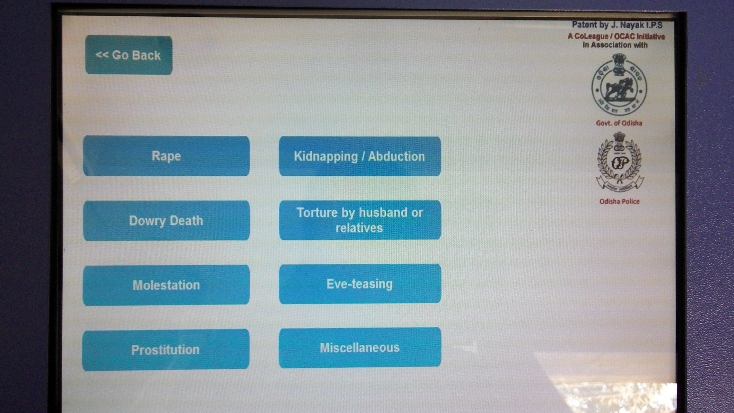
The ATM At Which Women Can Report Sexual Assault – “In the Indian state of Odisha, the state government estimates that around 60 per cent of sexual assaults against women go unreported. The ICLIK, developed by the Odisha government and OCAC, a local computer company, allows women to log a report of assault or harassment while appearing to visit a bank machine.”

Indian “Sex Offender” Forced to Bend Over To Be Smacked By Women– “Is this India’s new, creative way of disciplining sex offenders? A man, 23, accused of sexually harassing several young women in central India was reportedly forced to bend over in the middle of a public street to have his buttocks smacked by a group of angry schoolgirls.”

Commentary: Why Do We Ask For Gender-Segregated Transport For Women If The Problem Is Men Behaving Badly? – “Women need to be able to occupy public spaces and use public transport in the same way that men do. We need to go to work and school and walk the streets without fear – and a women-only train car doesn’t do anything but offer a temporary solution filled with too many gaps. If we want to stop harassment on subways and buses, we need to start with men and getting them to change their actions.”

Acid Attacks: The Other Half of the Story You Don’t Know– “Acid attacks are seen as one of the most horrendous crimes against women. However, not only women, men are equally prone to the attacks. Chandras Mishra from Meerut is an acid attack victim. He was attacked with the lethal chemical three years back by his landlord’s son, who he had stopped from eve teasing a woman.”

Four Arrested for Eve-Teasing in Hyderabad – “The victim, in her complaint to the police, said that on Friday while she and her sister were returning from a shop the accused started to tease her. When she stopped and questioned them, one of the accused tried to pull her scarf.”

One Tweet Sums Up The Struggle Every NYC Woman Faces On the Sidewalk – “This is called “manslamming,” which Jessica Roy, who interviewed Breslaw about her experience for the Cut, defines as “the sidewalk M.O. of men who remain apparently oblivious to the personal space of those around them” who “will walk directly into you without even acknowledging it” should someone fail to move out of their path.”

It Happened To Me: I Was Catcalled Wearing the Equivalent of a Down Comforter – “Women get catcalled in skirts. They are catcalled in jeans. They get whistled at in trench coats, in yoga pants, in business suits. The problem with catcalling does not lie with women’s clothing. Rather, the problem is with the men who do it.”

The Backlash Against African Women – “Public strippings represent the front lines of a cultural war against women’s advancements in traditionally conservative but rapidly urbanizing societies. They aren’t really about what women are wearing. They are much more about where women are going.”

Street Harassment: Why It’s Not Ok To Comment On Me – “A woman’s body is part of a person; it’s not an object. I am a woman, and my body belongs to me and no one else. Strangers on the street having the right to comment on it? When did that happen? Did I miss the memo?”

CONTEST:
Female Singer-Songwriters wanted to help create anti-street harassment video

UPCOMING EVENT:
Challenging Violence Against Women and Girls on UK Public Transport–
DATE: Tuesday 20th January 2015
TIME: 10.45 to 13.00 (with lunch provided 13.00-14.00)
VENUE: Room G1 & G2, British Transport Police Force Headquarters, 25 Camden Road, London NW1 9LN

 

Share

Filed Under: News stories, street harassment, weekly round up Tagged With: acid attacks, Hyderabad India, ICLIK, India, jessica valenti, manslamming, NYC, Odisha, public stripping, UK Public Transport, women-only public transportation

Street harassment and women’s equality in Africa

January 11, 2015 By HKearl

There have been numerous incidents of men scrutinizing, harassing, and stripping women of their clothing in the streets from Cameroon to Zimbabwe, from Kenya to South Africa as “punishment” for dressing “immodestly.” Sisonke Msimang writes about this alarming practice in a very powerful New York Times piece today and how street harassment is connected to women’s equality. This is an excerpt:

“Public strippings represent the front lines of a cultural war against women’s advancements in traditionally conservative but rapidly urbanizing societies. They aren’t really about what women are wearing. They are much more about where women are going.

And many African women are going places quickly. Ngozi Okonjo-Iweala became the first female finance minister in Nigeria; Liberia’s president, Ellen Johnson Sirleaf, is one of a handful of elected female heads of state in the world. Lupita Nyong’o’s Oscar win and Chimamanda Ngozi Adichie’s literary successes have brought attention to the artistic triumphs of a younger generation of women.

Nowhere has progress been more remarkable than in Africa’s legislatures. Africans have significantly outpaced their female peers in America and Europe. In the United States, women hold less than 20 percent of the seats in Congress; similarly, in Britain, women make up just over one-fifth of the members of the House of Commons. Compare this to South Africa, where more than 40 percent of representatives in the National Assembly are women, or Rwanda, where 64 percent of all members of Parliament are women — making it the only country in the world where women outnumber men in the legislature.

Beginning in the 1980s, many African countries started to invest in girls’ education and in small enterprise projects. A generation later, an equal number of girls and boys are enrolled in primary schools across the continent. Many women are successful entrepreneurs and, of course, politicians. Precisely because of these rapid changes in women’s status, the backlash from churches, political parties, traditional leaders and rural officials has been forceful. Outrage at bold women is both spontaneous and organized. The mob mentality that leads to public strippings arises in urban milieus where male aggression against women is seen as acceptable. Meanwhile, many churches systematically preach female subservience, while traditional tribal leaders often blame women for dislodging men from their rightful places in modern societies…

Ordinary African women, it seems, are bearing the brunt of their sisters’ progress. Street harassment is often a sign of deep-seated resentment of women’s changing status in society. For men who were raised to believe that they are entitled to be breadwinners and receive sexual gratification and domestic subservience from women, the shift hasn’t been easy. For younger men, modern values have jostled sharply against the lessons about manhood they learned at home. With high levels of unemployment and gaping inequalities, old conceptions of masculinity die hard.”

Share

Filed Under: News stories, street harassment

“I was followed by about six teenage boys”

January 11, 2015 By Contributor

While I was still attending high school, I would often walk to meet my mother at her place of work. My mother is a middle school teacher and her school is very close to mine. Walking to her school was hardest when I was alone and the boys would comment about how “fine my body was” or how pretty I was, often in rude and creepy detail. Once I made the mistake of leaving my school late, because I had a club meeting. Consequently, I was followed by about six teenage boys, a posse I suppose. They were cat calling me, and became angry and aggressive when I calmly refused to respond. It wasn’t until I finally saw a security guard still on campus that my body stopped shaking and the fear subsided. The boys saw him as well and walked in the opposite direction. I ran to my mother’s school that day.

– Miramar

Share your street harassment story for the blog.
See the book 50 Stories about Stopping Street Harassers for more idea

Share

Filed Under: Stories, street harassment

« Previous Page
Next Page »

Share Your Story

Share your street harassment story for the blog. Donate Now

From the Blog

  • #MeToo 2024 Study Released Today
  • Join International Anti-Street Harassment Week 2022
  • Giving Tuesday – Fund the Hotline
  • Thank You – International Anti-Street Harassment Week 2021
  • Share Your Story – Safecity and Catcalls Collaboration

Buy the Book

  • Contact
  • Events
  • Join Us
  • Donate
  • Facebook
  • Instagram
  • Pinterest
  • Tumblr
  • Twitter
  • YouTube

Copyright © 2026 Stop Street Harassment · Website Design by Sarah Marie Lacy