• About Us
    • What Is Street Harassment?
    • Why Stopping Street Harassment Matters
    • Meet the Team
      • Board of Directors
      • Past Board Members
    • In The Media
  • Our Work
    • National Street Harassment Hotline
    • International Anti-Street Harassment Week
    • Blog Correspondents
      • Past SSH Correspondents
    • Safe Public Spaces Mentoring Program
    • Publications
    • National Studies
    • Campaigns against Companies
    • Washington, D.C. Activism
  • Our Books
  • Donate
  • Store

Stop Street Harassment

Making Public Spaces Safe and Welcoming

  • Facebook
  • Instagram
  • Pinterest
  • Tumblr
  • Twitter
  • YouTube
  • Home
  • Blog
    • Harassment Stories
    • Blog Correspondents
    • Street Respect Stories
  • Help & Advice
    • National Street Harassment Hotline
    • Dealing With Harassers
      • Assertive Responses
      • Reporting Harassers
      • Bystander Responses
      • Creative Responses
    • What to Do Before or After Harassment
    • Street Harassment and the Law
  • Resources
    • Definitions
    • Statistics
    • Articles & Books
    • Anti-Harassment Groups & Campaigns
    • Male Allies
      • Educating Boys & Men
      • How to Talk to Women
      • Bystander Tips
    • Video Clips
    • Images & Flyers
  • Take Community Action
  • Contact

Canada: How to Make Cities more Inclusive and Safe for Women (Part II)

November 19, 2016 By Correspondent

A talk with Kathryn Travers from Women in Cities International about the principles of design that shape our perception of the places we live in.

Alexandra Jurecko, Montreal, Canada, SSH Blog Correspondent
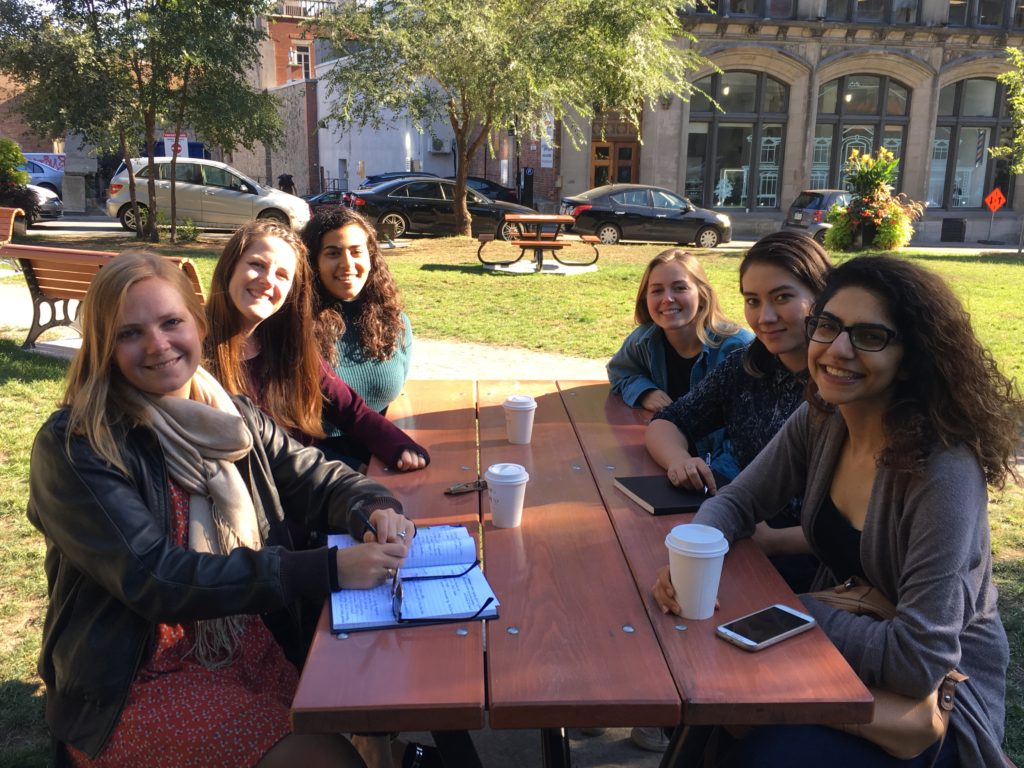
The WICI team
The WICI team

The first part of my interview with Kathryn Travers from Women in Cities International (WICI) revolved around everyday street harassment in Montreal and other urban centers and the culture that enables it. This second part sets out to explore how design influences the ways in which we perceive our surroundings and how urban development could make our cities more inclusive and safe for everyone.

Design can be a powerful factor in shaping our perception of public space. Just in thinking about my own neighbourhood in Montreal, I immediately know which places feel open and comfortable, and which routes I like to avoid at night. “There are important gender gaps that should be addressed in cities”, says Kathryn.

When it comes to implementing design principles to create safer public spaces for women, “Montreal is actually kind of a pioneering city,” Kathryn points out. Six of the seven principles of design employed by WICI to conduct women’s safety audits across the world have originated from the Femmes et Ville program conducted by the City of Montreal in the 1990s.

These principles were developed by the City of Montreal to create a standard for gender-inclusive urban planning. “One of the first applications of these principles of design were the Montreal metro station exits”, explains Kathryn. “Before, you would walk up from the metro and be in this closed brick box. You never knew what was on the other side.” By implementing the first principle of design, “See and be seen”, the city redesigned the exits to be more open, with window fronts for better visibility.

The principles furthermore include instructions on how to ensure the ability to “Hear and be heard”, to “Get away and get help”, to “Know where you are and where you are going”, to “Live in a clean and welcoming environment”, and lastly, to “Work together” through community participation and social activities. Their work on the Creating safer Communities for Marginalized Women and Everyone project (2007-2011) inspired WICI to add a seventh principle of design, the principle of “Accessibility and Inclusion”.

WICI’s approach is based on cooperation with local groups: “These groups already have an established relationship of trust with local women.” In doing so, WICI gives local groups the tools to document their experiences while allowing them to develop their own ideas and recommendations for change. “We never come with solutions. We don’t have solutions,” Kathryn stresses.

By reaching out to those who are most excluded within their own communities, WICI strives to make cities more inclusive for everyone. “If we can be more inclusive now as we are working to address these gender gaps”, Kathryn explains, “then our cities will be able to better respond to the diverse needs of women and men who live there. This is how we build more inclusive cities.”

One such project brought WICI together with women from the association of Action de femmes handicapées in Montreal. In their work together they focused on the relocation of a paratransit stop at a Montreal university. “The paratransit stop was in the loading dock in the back of the university. These women who are wheelchair-dependent had to wait in the loading zone after classes at night; it made no sense,” remembers Kathryn. Once a local group has identified a problem, WICI supports their cause by establishing channels of communications to municipal or state-level governments. “We lobbied to move the stop across the street where there was already a bus stop and a space to wait with proper lighting. It took a lot of time but we eventually got it. It was a really significant achievement.”

In focusing on gender equality and women’s participation in urban development, WICI highlights how design influences the ways in which we move through public space. Design can force us to experience exclusion, or make us feel unsafe. Or, in adhering to basic principles of design, urban planning can become a powerful tool in making our cities safer and more accessible for everyone.

Alexandra is a freelance writer and recent graduate of Heidelberg University in Germany, where she earned a BA in South Asian Studies and English Literature. Having moved across the pond to live and work in Montreal, she now focuses on refreshing her French skills while volunteering her time to various community-outreach programs. You can follow her on twitter @alexjurecko.

Share

Filed Under: Activist Interviews, correspondents, street harassment Tagged With: canada, safe city, safety audit, women in cities international

Two Efforts to Document and Map Hateful Acts, Post-Election

November 18, 2016 By HKearl

Here is an update on places where you can report discriminatory harassment in the USA, since we know there has been an uptick since the Presidential election.

FIRST:

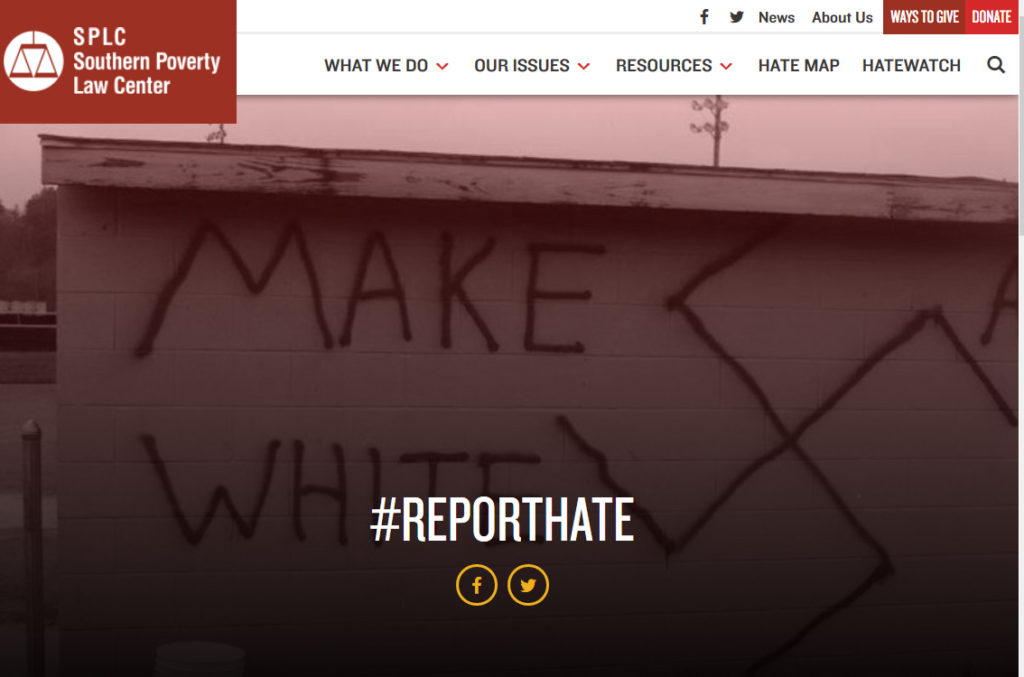
reporthatesplc

The Southern Poverty Law Center (SPLC) is collecting reports of hateful and harassing acts.

On November 18, they wrote:

“This is the second update from the Southern Poverty Law Center’s effort to collect reports of hateful incidents of harassment around the country. This report covers the full week (Wednesday Nov. 9 to Wednesday Nov. 16) since the presidential election.

The SPLC collected reports from news articles, social media, and direct submissions from the #ReportHate intake page. The SPLC made efforts to verify each report but many included in the count remain anecdotal.

While the total number of incidents has risen, the trend line points to a steady drop-off. Around 65 percent of the incidents collected occurred in the first three days following the election.


SECOND:

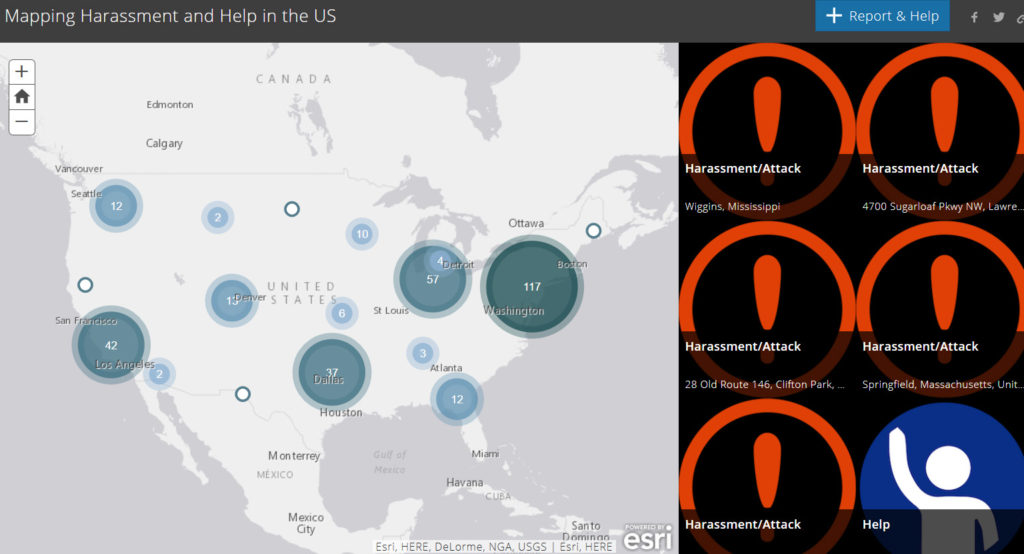
harassmentandhelp

“In the wake of the 2016 US elections reports of harassment and hate crimes directed at minority groups of all kinds have been widespread. The purpose of this multi-team effort is to collect and map reports of harassment and hate crimes against [discriminated against] communities. We also seek to collect and map reports of [discriminated against] communities being helped.

Important: This is not an emergency response system. If you are the victim (or an eyewitness) of harassment/attacks, please call 911.

This project is a collaboration between CrisisMappers, Harvard University, MIT and UCLA.
Contact: contact@harassmap.us”

Share

Filed Under: disabilities, LGBTQ, News stories, public harassment, race, Resources, Stories, street harassment

UK: UNmuted’s Vlog Part 1 – Talking Street Harassment at Young Feminists London

November 15, 2016 By Correspondent

londonNess Lyons for UNmuted Productions, UK, SSH Blog Correspondent

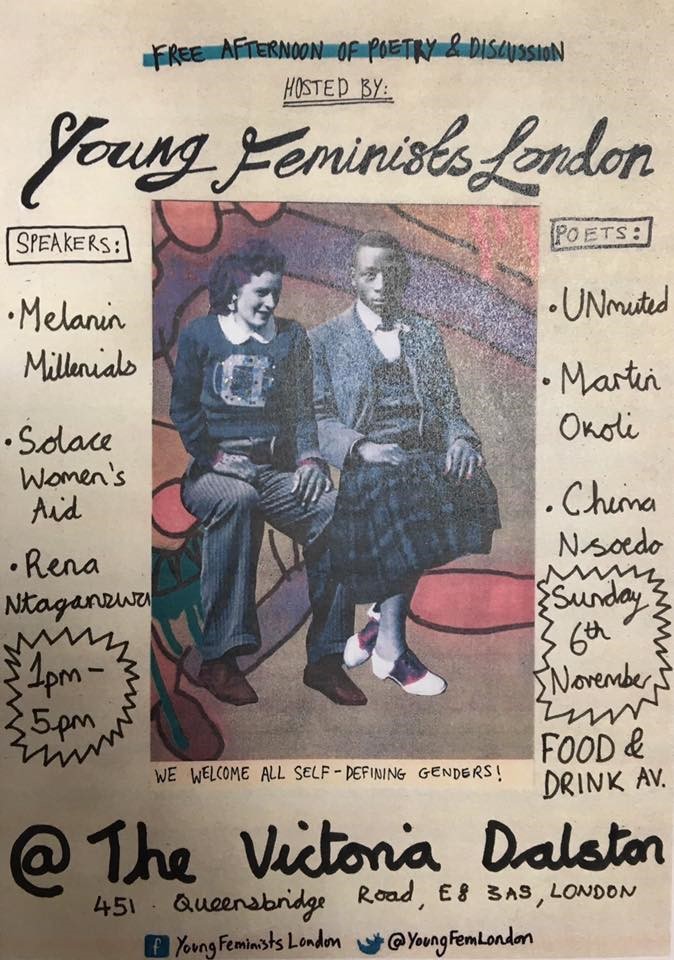
On Sunday 6th November, myself and new UNmuted Productions member Nicola Bland had the pleasure of performing poetry and leading an audience discussion at a fab event hosted by Young Feminists London. There were several wonderful other poets and speakers taking part and it was a real joy to talk feminism – and womanism – with such a great group of women and men.

After Nicola performed the full-length version of my spoken word poem “I Smile Politely“, (including sections that are not in UNmuted’s short film of the same name), we asked for volunteers from the audience to answer some questions on camera about the themes raised in the piece. We made these interviews, together with a few snippets of Nicola performing ‘I Smile Politely’, into a two-part vlog for Stop Street Harassment.

This is Part One, with funny, thoughtful and smart answers to the questions:

• What’s the most ridiculous catcall or unwanted chat-up line you’ve had?
• What does street harassment mean to you?
• When (if!) you’re ‘smiling politely’ in response to unwanted sexual attention, what are you actually thinking?

Watch here and please share!

umutedyfl

Ness Lyons is a playwright, filmmaker and spoken word poet. She runs UNmuted Productions, is a member of Soho Theatre Writers’ Lab and is currently developing a script with an award-winning production company. Follow her work at: nesslyons.net and on Twitter: @lyonsness

Share

Filed Under: correspondents, street harassment Tagged With: feminist, London, video, young women

Even Olympic Runners Face Street Harassment

November 14, 2016 By HKearl

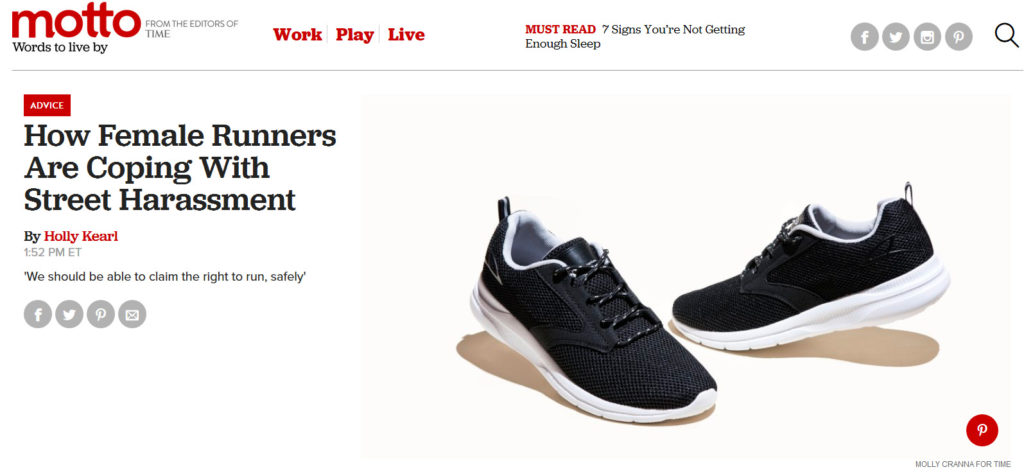
motto-timeAn October 2016 Runner’s World survey shows that street harassment is a problem for many, many women (and a few men). I wrote about this problem in a new article for TIME Magazine’s MOTTO section – read it here.

As part of my research for the article, I interviewed U.S. Olympian (x2) Kara Goucher and Runner’s World editor Meghan Kita, who oversaw the survey. I could only include a small portion of their interviews in the article, but because I thought they had many important things to say, they gave me permission to print more of their interviews here.

KARA GOUCHER:

Photo by Stewart Dawson, via Flickr
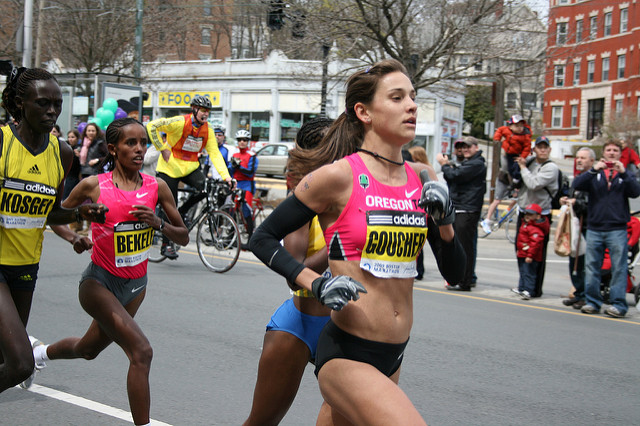
Kara Goucher in the 2009 Boston Marathon. Photo by Stewart Dawson, via CC on Flickr

First up is Kara Goucher, who in addition to running in two Olympics, has achievements that include: winning a NCAA Cross Country championship in 2000, winning the bronze medal in the 10,000m at the IAAF World Championships in 2007, and having the fastest-ever marathon debut for a woman in the world with 2:25:53 in New York City in 2008.

I falsely assumed that she must have a crew of people running with her and therefore, perhaps rarely or never experienced street harassment. I was wrong. Just like every other female runner I know, she’s faced harassment. Safety concerns impact her training regiment.

HOLLY: How old were you when you first began running?

KARA: I ran my first race at age 6, but started organized running at age 12.

HOLLY: Have you faced sexual harassment and/or had safety concerns during your running career?

KARA: Cat calls and whistles are common place. There have been times in my life where I actually felt threatened. I think that most women can relate to this.

HOLLY: What’s one specific example of sexual harassment you’ve experienced while running? How did it make you feel? What did you do when it happened?

KARA: The first time I felt truly scared was in 2000. Adam and I had qualified for the finals in the 5000 meters at the Olympic Trials that were held in Sacramento.  We, along with our coach, had headed to Lake Tahoe to get away for a few days before the final. We arrived in Lake Tahoe as the sun was setting. We set off for our runs and Adam quickly ran away from me. A few minutes later a truck came along side me with two men inside. They started whistling and calling out to me. I turned down a road and started running as fast as I could. They drove off. But a few blocks later they turned onto the road I was on and started yelling out to me, harassing things. I was terrified. I sprinted back to our hotel and didn’t finish my run. That night I had nightmares about it. I have been followed running since, but that first time really stands out as the time I realized I was very vulnerable when I was out running alone.

HOLLY: Has sexual harassment and/or safety concerns affected your running career in any way? If so, how?

KARA: Absolutely. I am nervous when I run before sun up or after sun down. I try to follow paths that are lit or are naturally busier with other runners. I used to run on a beautiful single track trail in Portland, OR, until my coach informed me that his wife was chased by a man running there. I was too frightened to go back on my own. I realized just how easy it would be for someone to attack me. I try to not let it control my life, but it does affect choices I make in training.

HOLLY: Is there anything else you want to say on the topic?

KARA: Running makes me feel strong and capable so I don’t like the way the vulnerability can take that from me. Running is the greatest joy in my life aside from my personal relationships. I’m not going to let anyone take that from me.


MEGHAN KITA:

Meghan Kita, image via her Twitter account

Meghan Kita, a marathoner, has worked as an editor at Runner’s World for five years. After three women runners in three different states were murdered, a blog post about it on the Runners World website became the site’s most popular post to date. Meghan followed it up with a post, “The Problem is Not Women Running Alone,” which also generated a lot of discussion. From there, she spearheaded a survey about runner safety and street harassment, the first of its kind. Here is my interview with her:

HOLLY: When did you first begin running?

MEGHAN: In 2002, 14 years ago. I was in high school and joined the track team to get in shape for soccer. I liked it so much that I ran cross country in the fall instead.

HOLLY: What has been your experience with street harassment while running?

MEGHAN: It doesn’t happen that often and I marked “sometimes” in the survey. Maybe I’ll hear a honk per month. Partially this is because I run early in the morning. If it happens, it usually is when I’m running at lunch near work. It happens often enough that it’s irritating. And occasionally it has been more serve. I was followed twice one year. I was followed by someone in a car both times. I’m not totally clear they were following me but they were acting weird and I couldn’t figure out any other reason for their behavior. Both times I just got out of there. I’ve faced enough creepy behavior to be on high alert.

HOLLY: Has street harassment or general safety concerns affected your running career?

MEGHAN: Yes. I bought pepper spray after the 1st incident of following. I don’t carry it all the time, but I’ll carry it if I’m running early in the morning in parks when not that many people are around. Parks make me nervous as there’s not a quick way to get out. The second time I was followed, I didn’t have it as I didn’t think I was in danger. It just goes to show that harassment can happen anywhere and at any time and when you’re expecting it, it may not happen and vice versa. It’s unpredictable.

HOLLY: What are your thoughts on how street harassment and safety concerns cause most women to have different running experiences from men?

MEGHAN: Harassment feeds into pre-existing safety concerns. Every woman has been raised to think something bad can happen just because you’re a woman and may be an easier target, sexual violence is more of a likelihood for you. You’re already on high alert for that and street harassment reinforces that you’re vulnerable etc. Harassment keeps safety in the forefront of women’s mind even though it usually doesn’t lead to anything beyond annoyance.

It keeps us on high alert in a way that I don’t think men’s experience. There are several running routes men have recommended and I’ll spend the entire time thinking, there are woods on left and river on the right and the best way to get off the trail is 3 miles ahead, how is this fun? What if someone pops out and I would have to out run them? This thinking hinders my enjoyment of remote areas that men seem to enjoy running. I wish it wasn’t that way but it is self-preservation. You hear terrible stories, see men reacting badly and why wouldn’t you have your guard up?

Many thanks to Kara and Meghan for sharing their stories. Thank you also to Meghan for spearheading the survey. Thank you to Runner’s World for taking the issue seriously. And thank you to our ally and friend Michelle Hamilton for writing an article about street harassment and the survey in the December issue of Runner’s World. It will be on newsstands soon!

You can also listen to a Runner’s World Podcast episode about this issue + share your stories with #HarassedMidRun.

Share

Filed Under: Activist Interviews, street harassment Tagged With: kara goucher, meghan kita, runners world, running

“In Deutschland läuft Street Harrasement teilweise sehr subtil ab”

November 12, 2016 By HKearl

Was mich beim Durchlesen des Buches als Vorschau bei Amazon, wieder mal schockierte ist, dass man als Frau tatsächlich oft den Job wechseln muss, und bei der Wohnungssuche genau hinschauen muss, ob die Wohnung auch tatsächlich frei von harrasierenden Nachbarn ist – bäm!

Die ganzen Geschichten, die ich in Deutschland bei #aufschrei, Stopp Street Harrasement und anderen Foren gelesen hatte, bei denen finde ich mich überall wieder. Nur das mit der Wohnung und der beruflichen Arbeit, das habe ich bisher noch nicht gewusst.

Wie alle Frauen dachte ich, das ist mein eigenes individuelles Problem.

Das Schlimme bei der ganzen Street Harrasement-Sache ist, dass man als Frau individuell exponiert wird ! Dass heißt, dass es immer so dargestellt wird, dass einem nur selber passiert – anderen nicht! Und der Grund dafür ist, dass man das durch seine dümmliche, lächerliche, komische oder ungeschickte Gesamtpersönlichkeit alles selbst produziert resp. provoziert hat – also infolge selbst daran schuld ist.

Anstatt Hilfe, Schutz und Trost, bekommt man hier in Deutschland Beschimpfungen ab. Das allein reicht aber nicht – nein es werden darauf auch noch Schuldgefühle gepackt !!! Jede einzelne Frau ist für diese Katastrophe selbst und ganz alleine verantwortlich. Es ist nahezu unerträglich.

Mehr oder minder deutlich bekommt man das immer wohldosiert von seinen Mitmenschen vermittelt, falls man sich denen überhaupt noch anvertraut. In Deutschland läuft Street Harrasement teilweise sehr subtil ab. Also – beispielsweise merkt man beim Gehen auf der Straße oder beim Warten auf die Bahn, oder sogar beim Autofahren, dass sich plötzlich so eine schwere, perverse, hochaggressive und belastende Kraft im Rücken befindet – oft auch schon körpernah. Bis man sich dessen aber bewusst ist, ist man schon erschreckt und dreht sich refexartig um. Dann schaut man in die bösartig und ironisch grinsende Fratze eines Mannes – der einem direkt in die Augen schaut! Ein richtig stechender Blick, der schmerzhaft ist! Es ist klar, was dieser Mann sich in diesem Moment vorstellt! Aber damit nicht genug – er tut auch noch so, als ob der Versuch der ungewollten Kontaktaufnahme von mir ausginge!

Das Alter und das Aussehen des Mannes ist gleichgültig, das geht durch alle Schichten und Altersgruppen. Und er lässt nicht locker – die ganze Fahrt geht das so – minutenlang – ich werde angestarrt und fixiert, gefühlte Stunden. Ich vermeide jeglichen Blickkontakt und versuche tiefenentspannt zu sein und zu bleiben. Das ist im Alltag schwer, denn man hat, wie jeder andere Mensch auch, ein Leben mit all seinen Problemen, Verpflichtungen und Belastungen. Und auch Tage an denen man gute Laune hat. Es erregt Aufmerksamkeit – das ist mir zudem auch noch sehr unangenehm und peinlich! Alle schauen geifernd zu! Wenn die Bahn nicht voll ist, gehe ich weg, setze mich woanders hin. Und wenn ich Zeit habe, steige ich aus und nehme den nächsten Zug. Sind andere Leute dabei – dann kann ich in der Regel aller Fälle davon ausgehen, dass ich nicht mit Unterstützung und Hilfe rechnen kann – NEIN ! Und NEIN – schlimmer noch ! Die anwesenden Männer, (auch Frauen!), halten gegen mich zusammen, sie versuchen mich zu kompromittieren, versuchen mich bloßzustellen. Mit der Absicht und der Hoffnung, dass ich die Fassung verliere, dass es zum Eklat kommt, bei dem ich die negative Hauptrolle habe. Ich bin die eigentlich Böse.

Ich werde zu viert oder zu fünft auf diese perverse passiv-aggressive Art attackiert und belästigt, man(n) starrt und fixiert mich an, mit der Absicht mich möglichst beschimpfen zu können. Werde ich infolge wütend oder sage etwas dagegen, dann hat er sein Ziel erreicht und ich werde beschimpft. Ich werde als dumme Ziege hingestellt. Beliebter Ausspruch dabei ist, mit einer völlig unverständlichen Haltung, sarkastischem Grinsen und einer gehörigen Portion Ironie in der Stimme:”was hat sie denn nur – wasn mit der los ?! HaHaHa !”.

Optional: What’s one way you think we can make public places safer for everyone?

It must be done a puplik acknowledgement everyday and for everyone. All these thing sagte happened undercover.

– Tamina

Location: Germany: Street, at work, Train, waiting for paying in the markets

Need support? Call the toll-free National Street Harassment hotline: 855-897-5910

Share your street harassment story for the blog.
See the book 50 Stories about Stopping Street Harassers for idea
s.

Share

Filed Under: Stories, street harassment

« Previous Page
Next Page »

Share Your Story

Share your street harassment story for the blog. Donate Now

From the Blog

  • #MeToo 2024 Study Released Today
  • Join International Anti-Street Harassment Week 2022
  • Giving Tuesday – Fund the Hotline
  • Thank You – International Anti-Street Harassment Week 2021
  • Share Your Story – Safecity and Catcalls Collaboration

Buy the Book

  • Contact
  • Events
  • Join Us
  • Donate
  • Facebook
  • Instagram
  • Pinterest
  • Tumblr
  • Twitter
  • YouTube

Copyright © 2026 Stop Street Harassment · Website Design by Sarah Marie Lacy